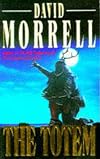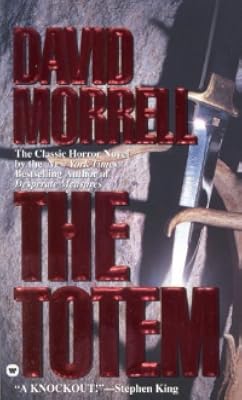
The Totem
by David Morrell
On This Page
Description
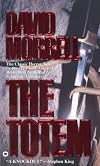
When police chief Nathan Slaughter settles in the tiny mountain community of Potter's Field, Wyoming, his most fervent prayer is that he has left behind him forever the nightmare he barely survived on a blizzardy night in Detroit. But nothing prepares him for the greater sanity-threatening nightmare he is about to confront. Beginning with the discovery of mutilated cattle on outlying ranches, Slaughter is drawn deeper and deeper into a vortex of terror as animals become savage and children show more go insane, trapping the entire town in a frenzy of violence. As Slaughter races against time to expose the horrifying secret behind the increasingly savage attacks, he also struggles to overcome his deepest fears. show lessTags
Recommendations


















Member Reviews
Nathan Slaughter, a hard-edged, burned-out cop from Detroit, has been the Chief of Police in Potter's Field, Wyoming, ever since he was shot in a liqour store robbery. Fleeing from a nervous breakdown and the insecurity that followed, Slaughter fails at raising horses in the mountain town and then accepts the Chief job, more to compensate for his own fears than anything else. His job leaves him mostly chasing down the town drunk and dogs that bark all night. But then ranchers began to find their cattle killed and mutilated and a young boy, bitten by a raccon, vicisouly attacks his mother, biting and ripping at her throat like a wild animal. Theese unusual crimes bear an unusual connection to a 1960's hippie commune, long thought show more defunct. Slaughter must learn the connection before the town boils over into mayhem with the townspeople either quickly going mad or bent on murder.
Slaughter (another winner for best character name ever used) is driven by the need to control himself and his surroundings. His fear of failure and insecurity disgust him so thoroughly that he often over reacts, puffing out and over compensating for the weak behavior. As is usually the case, no one in his circle of friends and colleagues sees any weakness in him; his feelings of weakness are singularly personal. The story is really an examination in the human struggle to gain and maintain control of emotions and fears, with Slaughter as its main subject. Other characters are also afflicted in varying degrees with the same troubles and each deals with them differently and with varied success. The primary character besides Slaughter who faces such demons is Dunlap, another burn-out. Dunlap is a reporter with a serious drinking problem, who is often sent to the bottle of a morning to get through the day. The juxtaposition of Slaughter and Dunlap, their small victories and defeats in the battle to stay in control is the driving force behind the book.
Morrell, typically known for thrillers and espionage, takes on the classic story of the werewolve and gives it a new life, attempting to ascribe a scientific explanation for the origin of the myth. As usual, Morrell gives us characters much more carefully and deeply drawn than is the norm for the horro genre. Indeed, the first publication of the story in 1979 was an abbreviated version of the story Morrell actually wrote. The publisher was unhappy with both the length of the book and the lack of a 'love interest'. Morrell succombed and gave the publishing house what they wanted. In 1991, however, after the novel had gained recognition, he found the orginal manuscript and gave it to a publisher willing to stick with his vision. The result is a true, classic horror story, only better written than most.
The only disappointment, for me,were the last two to three pages. I was happy with the ending, as Morrell gave Slaughter an opportunity to go to extraordinary lengths to gain control. But Morrell opted to put together a ragtag 'family' of sorts for Slaughter, built from the survivors of the final, bloody battle. The group and some of the things Slaughter says in the last few paragraphs seemed inconsistent with the rest of the character's life on the pages. Nonetheless, this is a great book and I'd recommend it to anyone, especially horror fans or Morrell fans who haven't read it yet.
4 bones!!!! show less
Slaughter (another winner for best character name ever used) is driven by the need to control himself and his surroundings. His fear of failure and insecurity disgust him so thoroughly that he often over reacts, puffing out and over compensating for the weak behavior. As is usually the case, no one in his circle of friends and colleagues sees any weakness in him; his feelings of weakness are singularly personal. The story is really an examination in the human struggle to gain and maintain control of emotions and fears, with Slaughter as its main subject. Other characters are also afflicted in varying degrees with the same troubles and each deals with them differently and with varied success. The primary character besides Slaughter who faces such demons is Dunlap, another burn-out. Dunlap is a reporter with a serious drinking problem, who is often sent to the bottle of a morning to get through the day. The juxtaposition of Slaughter and Dunlap, their small victories and defeats in the battle to stay in control is the driving force behind the book.
Morrell, typically known for thrillers and espionage, takes on the classic story of the werewolve and gives it a new life, attempting to ascribe a scientific explanation for the origin of the myth. As usual, Morrell gives us characters much more carefully and deeply drawn than is the norm for the horro genre. Indeed, the first publication of the story in 1979 was an abbreviated version of the story Morrell actually wrote. The publisher was unhappy with both the length of the book and the lack of a 'love interest'. Morrell succombed and gave the publishing house what they wanted. In 1991, however, after the novel had gained recognition, he found the orginal manuscript and gave it to a publisher willing to stick with his vision. The result is a true, classic horror story, only better written than most.
The only disappointment, for me,were the last two to three pages. I was happy with the ending, as Morrell gave Slaughter an opportunity to go to extraordinary lengths to gain control. But Morrell opted to put together a ragtag 'family' of sorts for Slaughter, built from the survivors of the final, bloody battle. The group and some of the things Slaughter says in the last few paragraphs seemed inconsistent with the rest of the character's life on the pages. Nonetheless, this is a great book and I'd recommend it to anyone, especially horror fans or Morrell fans who haven't read it yet.
4 bones!!!! show less
The small Wyoming town of Potters Field is in the middle of cattle and horse country. When animals begin to get mutilated wild dogs, wolves, coyotes or even a cougar are the usual suspects, except the livestock is not being eaten, just eviscerated. Enter (appropriately named) Nathan Slaughter, transplanted Detroit cop looking for a quieter life, unsuccessful horse breeder and current sheriff. That quiet life is about to blown out of the water. Slaughter is eventually joined by a washed up, alcoholic reporter hoping for a big story to get his life and career back on track, a medical examiner with daddy issues and the local Mayor who refuses to give up his power no matter what the cost. As they muddle through the clues as to what might be show more happening up on the ridge strange events begin to happen in town as well.
I picked up this (audio) book for several reasons; I am a David Morrell fan, the book was listed in one of the volumes of Best 100 Horror Books, I was looking for a good scary story to read and by Mr. Morrell’s own admission he was not satisfied with the first publication of the book in 1979 so went back to the original manuscript and republished the book “the way it was supposed to be published” without the extensive editing and the publisher’s mandate that it include a “love interest”. I have not read the original publication but, honestly, cannot imagine that it could have been any worse than this edition. Believe me, it was difficult to write that sentence because I am such a fan of Mr. Morrell. When the story started I was anticipating a good horror story with, possibly, some elements of Native American folklore woven in – there was a tease of that, but it was never really expanded. Maybe it should have been? Then is took a sharp right turn into becoming a medical thriller. The story stayed on that course for the rest of the book, but it was a curvy road at best, drawing in elements that made me think there were going to be supernatural transformations (nope), or ghosts (nope), or at the very least maybe a mythical beast hanging out in the wilds of Wyoming (nope). Well, then there was this cult that set up a commune in the 1970’s that all disappeared … no that theme was never really tied up with any kind of satisfaction.
Wow, this was one confused book. The only story line that caused me a slight shiver and goose bumps was the little boy sneaking out of bed at night in search of a raccoon he saw. His fear of how his parents would react when they discovered he snuck out created a more tangible sense of foreboding than did any of the other so called horrors in the book. I loved being privy to his thought processes as he was scheming and worrying about how to keep himself out of trouble. Unfortunately, that whole episode went off the rails too quickly and then totally got lost in the muddled confusion of the rest of the book. I plodded along hoping eventually it would all come together in a huge AHA! moment at the end. Sadly, it didn’t. When the muttering blob came crawling down Main Street I threw my hands in the air (figuratively since I usually listen to audio books in the car) and just kept listening to see how on earth this was all going to end. In case you are curious – not well.
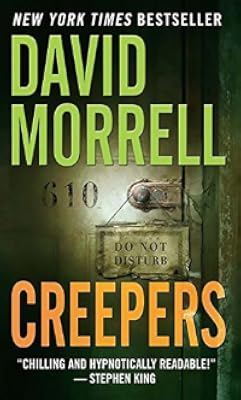
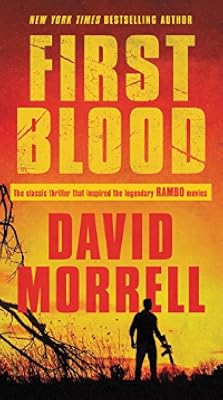
If you are looking for good vintage David Morrell pick up Creepers (scary), First Blood (action) or even The Spy Who Came For Christmas (humorous espionage) … don’t start (or maybe even bother) with The Totem. show less
I picked up this (audio) book for several reasons; I am a David Morrell fan, the book was listed in one of the volumes of Best 100 Horror Books, I was looking for a good scary story to read and by Mr. Morrell’s own admission he was not satisfied with the first publication of the book in 1979 so went back to the original manuscript and republished the book “the way it was supposed to be published” without the extensive editing and the publisher’s mandate that it include a “love interest”. I have not read the original publication but, honestly, cannot imagine that it could have been any worse than this edition. Believe me, it was difficult to write that sentence because I am such a fan of Mr. Morrell. When the story started I was anticipating a good horror story with, possibly, some elements of Native American folklore woven in – there was a tease of that, but it was never really expanded. Maybe it should have been? Then is took a sharp right turn into becoming a medical thriller. The story stayed on that course for the rest of the book, but it was a curvy road at best, drawing in elements that made me think there were going to be supernatural transformations (nope), or ghosts (nope), or at the very least maybe a mythical beast hanging out in the wilds of Wyoming (nope). Well, then there was this cult that set up a commune in the 1970’s that all disappeared … no that theme was never really tied up with any kind of satisfaction.
Wow, this was one confused book. The only story line that caused me a slight shiver and goose bumps was the little boy sneaking out of bed at night in search of a raccoon he saw. His fear of how his parents would react when they discovered he snuck out created a more tangible sense of foreboding than did any of the other so called horrors in the book. I loved being privy to his thought processes as he was scheming and worrying about how to keep himself out of trouble. Unfortunately, that whole episode went off the rails too quickly and then totally got lost in the muddled confusion of the rest of the book. I plodded along hoping eventually it would all come together in a huge AHA! moment at the end. Sadly, it didn’t. When the muttering blob came crawling down Main Street I threw my hands in the air (figuratively since I usually listen to audio books in the car) and just kept listening to see how on earth this was all going to end. In case you are curious – not well.
If you are looking for good vintage David Morrell pick up Creepers (scary), First Blood (action) or even The Spy Who Came For Christmas (humorous espionage) … don’t start (or maybe even bother) with The Totem. show less
*Partial spoilers ahead*
Horror is practically extinct as a genre of popular fiction these days: it died a slow death after the market became oversaturated with an excess of gaudy, brightly-colored paperbacks in the 1980s and early '90s. (Not coincidentally, this was the same period in which the horror film died, and largely for the same reasons.) Most of them were poorly and hastily written; they were not meant to stand the test of time, and they haven't. A few of these novels, however, have transcended the narrow confines of their era and target audience. One of them is David Morrell's The Totem, which arrived at the very beginning of the horror boom in 1979. It's a modern, non-supernatural take on the mythology of the werewolf, and show more manages to be both intellectually and viscerally satisfying. I was profoundly disturbed by the ending, which is exactly what I look for (but so rarely find) in a horror novel.
Essential reading! Four and a half stars. show less
Horror is practically extinct as a genre of popular fiction these days: it died a slow death after the market became oversaturated with an excess of gaudy, brightly-colored paperbacks in the 1980s and early '90s. (Not coincidentally, this was the same period in which the horror film died, and largely for the same reasons.) Most of them were poorly and hastily written; they were not meant to stand the test of time, and they haven't. A few of these novels, however, have transcended the narrow confines of their era and target audience. One of them is David Morrell's The Totem, which arrived at the very beginning of the horror boom in 1979. It's a modern, non-supernatural take on the mythology of the werewolf, and show more manages to be both intellectually and viscerally satisfying. I was profoundly disturbed by the ending, which is exactly what I look for (but so rarely find) in a horror novel.
Essential reading! Four and a half stars. show less
I was very impressed with The Totem, David Morrell's take on the werewolf myth.
Down at the heel reporter Gordon Dunlap is sent to the small Wyoming town of Potter's Field where, in 1970, a wealthy eccentric decided to open a commune up in the hills above the town. The hippies and the townsfolk were like oil and water. There was a shooting and the hippies slowly drifted away. Dunlap is sent to do a retrospective.
He gets more than he's bargained for. In an attempt to protect the town's good name, the mayor teams him with Police Chief Slaughter. While investigating the remains of the commune, the reporter is drawn into the middle of a sinister investigation of a string of animal mutilations that become murders. It seems the extremely cold show more winter has brought something down from the hills. Something that spreads and becomes more brutal as the moon becomes full...
The characters were the real strength of this novel. Morrell presents us with a group of men (all the lead characters are male) who are severely flawed and in need of redemption of one sort or another. Dunlap, Slaughter (and I appreciate that David Morrell took the time to deal with what could be such a goofy name) and the medical examiner are believable characters with depth. Morrell makes you care about the characters, and not just whether they will survive the events of the story.
His description isn't as sharp as it was in his later book, Creepers. However, I have to give him major points for setting his werewolf tale in Wyoming. Setting his spooky tale there gave it a unique spin. As I read through the descriptions of the little town of Potter's Field and the ranches surrounding it, I just kept picturing the beautiful scenery from Brokeback Mountain. Blending that countryside with the eerie tale being told paid off much better than expected and gave it a unique flavor.
It wasn't the slick, fast paced thriller I was expecting from my previous Morrell experience, Creepers. It wasn't a slow book, but it was brooding and character driven and I liked that quite a bit. show less
Down at the heel reporter Gordon Dunlap is sent to the small Wyoming town of Potter's Field where, in 1970, a wealthy eccentric decided to open a commune up in the hills above the town. The hippies and the townsfolk were like oil and water. There was a shooting and the hippies slowly drifted away. Dunlap is sent to do a retrospective.
He gets more than he's bargained for. In an attempt to protect the town's good name, the mayor teams him with Police Chief Slaughter. While investigating the remains of the commune, the reporter is drawn into the middle of a sinister investigation of a string of animal mutilations that become murders. It seems the extremely cold show more winter has brought something down from the hills. Something that spreads and becomes more brutal as the moon becomes full...
The characters were the real strength of this novel. Morrell presents us with a group of men (all the lead characters are male) who are severely flawed and in need of redemption of one sort or another. Dunlap, Slaughter (and I appreciate that David Morrell took the time to deal with what could be such a goofy name) and the medical examiner are believable characters with depth. Morrell makes you care about the characters, and not just whether they will survive the events of the story.
His description isn't as sharp as it was in his later book, Creepers. However, I have to give him major points for setting his werewolf tale in Wyoming. Setting his spooky tale there gave it a unique spin. As I read through the descriptions of the little town of Potter's Field and the ranches surrounding it, I just kept picturing the beautiful scenery from Brokeback Mountain. Blending that countryside with the eerie tale being told paid off much better than expected and gave it a unique flavor.
It wasn't the slick, fast paced thriller I was expecting from my previous Morrell experience, Creepers. It wasn't a slow book, but it was brooding and character driven and I liked that quite a bit. show less
Just finished a reread of this one, and it's still a great horror novel - one of the all time greats for me. It has pace, verve, genuine thrills and scares and maintains a humanity in the characters all the way through to the climax. It's a wonderful thing and I love it.
I'm very hard to scare, but the passage where the first "thing" (don't want to give it away) wanders into town sent chills running down my spine and I had to turn on some lights in my house.
A small isolated town. A hard winter has forced something to come down from the surrounding mountains to feed on the local ranchers steers. Soon you will hear creatures howling in the moonlit night...
Recommended for all werewolf myth aficionados!
Recommended for all werewolf myth aficionados!
Members
- Recently Added By
Lists

Best Horror Mega-List
342 works; 6 members

Jones and Newman's Horror: The 100 Best Books
100 works; 4 members
Author Information

137+ Works 12,909 Members
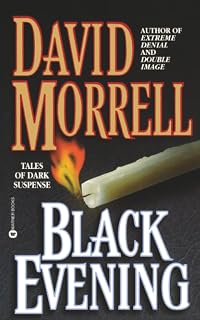
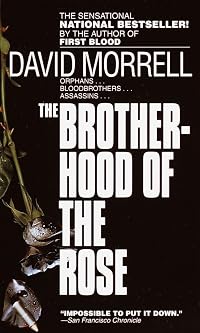
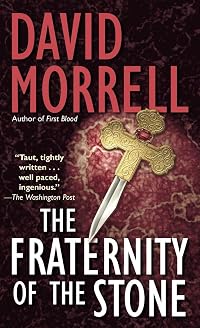
David Morrell, an award-winning Canadian writer of horror fiction, was born in 1943 in Kitchener, Ontario, Canada. He was educated at the University of Waterloo and earned his Ph.D. from Pennsylvania State University. Morrell is best known as the creator of John Rambo, the hero of his first novel, First Blood. The novel was adapted for screen and show more starred Sylvester Stallone. Although Morrell was not happy with the depiction of the Rambo character in the movie, he did write several sequels to First Blood and two further scripts for the sequels to the original movie. He also wrote a number of other books including The Brotherhood of the Rose which became a best seller in 1984. David Morrell has written one scholarly work, John Barth: An Introduction, published by Pennsylvania State University in 1977 and has taught at the University of Iowa. He now lives in the United States with his wife and daughter (another child, a son, is deceased). (Bowker Author Biography) David Morrell, 1943 - Storyteller David Morrell was born in 1943 in Kitchener, Ontario. He received a B.A. from the University of Waterloo and an M.A. and Ph.D. from Pennsylvania State University. He was then a professor of American literature at the University of Iowa. Morrell's debut novel was "First Blood" and introduced the well-known John Rambo character. It was made into a successful movie that starred Sylvester Stalone. He followed with a series of thrillers filled with espionage, assassination and worldwide terrorism, which include "The Brotherhood of the Rose," "The Fraternity of the Stone," "The League of Night and Fog," and "The Covenant of the Flame." "Black Evening" is an examination of his own life and includes both his first published short stories and his latest award winning books. (Bowker Author Biography) show less
Some Editions
Awards and Honors
Notable Lists
Series
Belongs to Publisher Series
Heyne Allgemeine Reihe (01/6582)
Work Relationships
Common Knowledge
- Canonical title*
- Totem
- Original title
- The Totem
- Original publication date
- 1979
- People/Characters
- Nathan Slaughter (Police Chief); Gordon Dunlap; Quiller; Rettig; Owens
- Important places
- Potter's Field, Wyoming, USA
- Epigraph
- ——totem, noun:
1. among primitive people, an animal or natural object considered as being related by blood to a given family or clan and taken as its symbol.
2. an image of this.
The power of the moon on animals and people is well known. Passing over the parallel between a woman's monthly cycle and the phases of the moon, we note the predominance of industrial accidents when the moon is at its fullest... (show all), the tendency of dogs and other canine animals to bay at it, of lunatics to do the same. Perpetuating ancient myth, we link the moon with love and with fertility. We speak of harvest moon. We speak of someone's being moonstruck. The very motion of the earth, its tides and shifting substones, are related to the moon. We even set aside one day in worship of it, Monday, what in ancient times was Moon day.
Jacob Steiger,
The Pathology of Madness - Dedication
For Geoffrey Household,
1900—1988,
the thriller writer beyond compare.- First words
- A solitary rider on a ridge.
- Last words
- (Click to show. Warning: May contain spoilers.)Slaughter leaned back, smiling, as the setting sun cast an alpenglow on Lucas who rode straight and strong, and a colt veered from its mother, and they gamboled in the sun.
- Blurbers
- King, Stephen (1995 Warner Pbk.) (1995 Warner Pbk.)
*Some information comes from Common Knowledge in other languages. Click "Edit" for more information.
Classifications
Statistics
- Members
- 369
- Popularity
- 85,135
- Reviews
- 10
- Rating
- (3.39)
- Languages
- 8 — Czech, English, French, German, Hungarian, Italian, Polish, Portuguese
- Media
- Paper, Audiobook, Ebook
- ISBNs
- 29
- UPCs
- 1
- ASINs
- 8