On This Page
Description
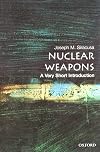
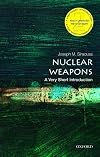
In a fluid and uncertain world, wracked by fears of terrorism, the Bomb matters. Indeed it may matter more today than at any time before or during the Cold War. This book reveals why - providing a lucid and chilling account of nuclear weapons, their history, their role in global politics, and how we have - so far - managed to avoid armageddon. - ;Despite not having been used in anger since Hiroshima and Nagasaki, the Bomb is still the biggest threat that faces us in the 21st century. As Bill show more Clinton's first secretary of defence, Les Aspin, aptly put it: 'The Cold War is over, the Soviet Union show lessTags
Recommendations





Member Reviews
At a little over 150 pages, this book covers a lot of ground in a short format. Unfortunately, while I did think it was pretty good, its focus wasn't entirely what I wanted, and it lacked in some areas. There is an initial introduction to the creation of atomic bombs from a very minimal and layman's technical perspective, but then the book launches into the history of nuclear power, the history behind the Manhattan Project and the WW II race for the atomic bomb, America's legacy of being the first and only country to use it, and the bulk of the rest of the book is a history and discussion of the Cold War politics, diplomacy, and military strategic readiness (from a US perspective) between the US and the Soviet Union. The book ends with show more a minor bit on how, with the fall of the Soviet Union, the US has had to try to find a place for the Bomb in its arsenal, for some people, how to justify not only maintaining a large stockpile, but improving it, for others, how to decrease a load of weapons large enough to destroy this planet many times over. It ends by acknowledging the fact that now that there's not another nuclear "enemy" to construct a strategy around, and with the advent of non-state sponsored organizations, terrorists and the like, the effort to construct a new ideology and strategy is much more difficult than it used to be.
All of that was good, if not occasionally repetitive. What I had hoped to see was more scientific and technical detail behind, not only the creation of the early bombs, but current technology, and where we are heading. And I didn't get that. I also wanted to see more of a discussion on the ethics behind this, and on the justifications of maintaining the current seven nuclear powers while working to ensure no other country, and especially no other country the US "disapproves" of (Iran...), obtains nuclear weapons or a nuclear weapon industry. I mean, why is it okay for Pakistan to have them, but not Iran? Why is it okay for Israel to be thought of of having them (they won't admit to it), while other countries cannot? I'm not saying I support the idea of more or warmongering countries getting nuclear weapons, but who made America the planet's god, to decide who gets them and who doesn't? That strikes me as incredibly arrogant and hypocritical. And I'm American! Naturally, the world would be better off without nuclear weapons, but that genie is out of the bottle, so this is a complex problem requiring, yes, political and diplomatic discussions and solutions, and not saber rattling. I'm currently reading another book on "limited" nuclear warfare for the 21st century. It's incredibly interesting, and I think it would make a good companion piece to this book, maybe as Volume 2 of a two volume series. Because that's where the world has gone, that's where the world should and will have to go if we intend to not commit global suicide, and nuclear power countries need to dialogue about these issues and more.
This book doesn't have the highest rating out there, and I've read a lot of reviews and it seems mostly due to lack of sufficient discussion on a wide range of topics, such as I've brought up. But I think its lower rating is unfair, because the subtitle for the book is "A Very Short Introduction." What the hell do you expect for 150 pages?!? Of course I would have liked more. For that, I need to buy a 750 page textbook for $200. This was exactly what it advertised itself to be, so I feel it merits four stars at a minimum. If this is a topic that interests you, I certainly recommend it. show less
All of that was good, if not occasionally repetitive. What I had hoped to see was more scientific and technical detail behind, not only the creation of the early bombs, but current technology, and where we are heading. And I didn't get that. I also wanted to see more of a discussion on the ethics behind this, and on the justifications of maintaining the current seven nuclear powers while working to ensure no other country, and especially no other country the US "disapproves" of (Iran...), obtains nuclear weapons or a nuclear weapon industry. I mean, why is it okay for Pakistan to have them, but not Iran? Why is it okay for Israel to be thought of of having them (they won't admit to it), while other countries cannot? I'm not saying I support the idea of more or warmongering countries getting nuclear weapons, but who made America the planet's god, to decide who gets them and who doesn't? That strikes me as incredibly arrogant and hypocritical. And I'm American! Naturally, the world would be better off without nuclear weapons, but that genie is out of the bottle, so this is a complex problem requiring, yes, political and diplomatic discussions and solutions, and not saber rattling. I'm currently reading another book on "limited" nuclear warfare for the 21st century. It's incredibly interesting, and I think it would make a good companion piece to this book, maybe as Volume 2 of a two volume series. Because that's where the world has gone, that's where the world should and will have to go if we intend to not commit global suicide, and nuclear power countries need to dialogue about these issues and more.
This book doesn't have the highest rating out there, and I've read a lot of reviews and it seems mostly due to lack of sufficient discussion on a wide range of topics, such as I've brought up. But I think its lower rating is unfair, because the subtitle for the book is "A Very Short Introduction." What the hell do you expect for 150 pages?!? Of course I would have liked more. For that, I need to buy a 750 page textbook for $200. This was exactly what it advertised itself to be, so I feel it merits four stars at a minimum. If this is a topic that interests you, I certainly recommend it. show less
Ratings
Members
- Recently Added By
Author Information
18 Works 334 Members
Joseph M. Siracusa currently teaches at Griffith University, Australia.
Series

Common Knowledge
- Canonical title
- Nuclear Weapons: A Very Short Introduction
- First words
- In 1951, the newly established US Federal Civil Defense Administration (FCDA) commissioned production of a film to instruct children how to react in the event of a nuclear attack.
- Last words
- (Click to show. Warning: May contain spoilers.)Indeed, the bomb still matters.
Classifications
- Genres
- Nonfiction, General Nonfiction, History, Science & Nature
- DDC/MDS
- 623.45119 — Applied science & technology Engineering Military Vehicles: Land, Air, & Sea Technology of Weapons and Armaments Explosives, Rockets, and Bombs
- LCC
- U264 .S555 — Military Science Military science (General) Atomic warfare. Atomic weapons
- BISAC
Statistics
- Members
- 145
- Popularity
- 218,569
- Reviews
- 1
- Rating
- (3.42)
- Languages
- English
- Media
- Paper, Ebook
- ISBNs
- 13
- ASINs
- 4