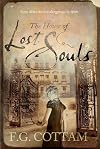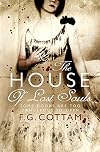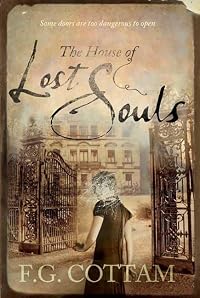
The House of Lost Souls
by F. G. Cottam 
On This Page
Description
The Fischer House was the scene of a vicious crime in the 1920s - a crime which still resonates as the century turns. At its heart was a beautiful, enigmatic woman called Pandora Gobson-Hoare, a photographer of a genius whose only one legacy is a handful of photographs and the clues to a mystery. Paul Seaton was lured to the house 10 years ago and escaped, a damaged man. Now three students will die unless he dares go back. But this time he has ex-soldier Nick Mason at his side, and maybe show more Mason's military skills and visceral courage will be enough.. show less
Tags
Recommendations
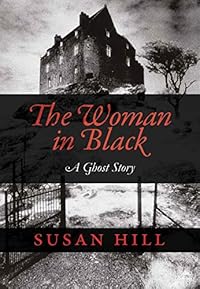

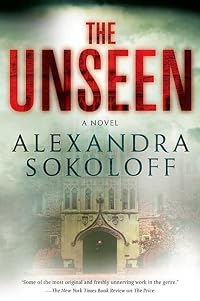
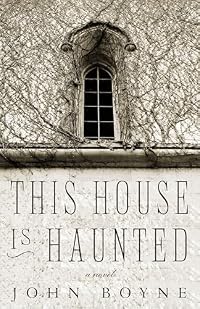

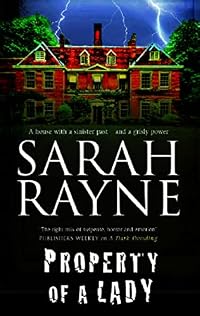

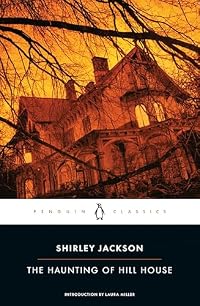
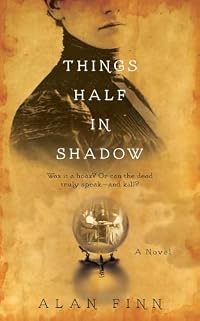

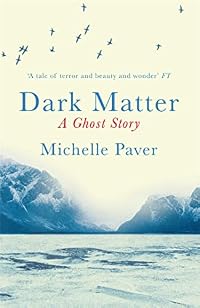
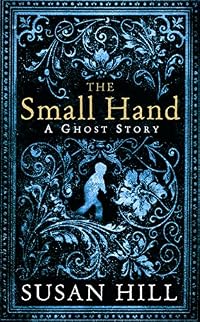
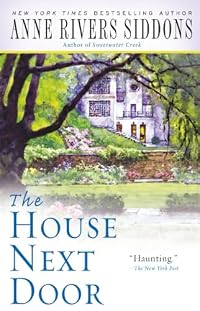

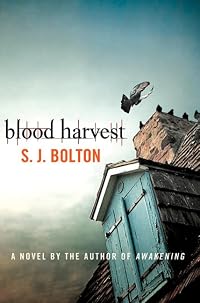
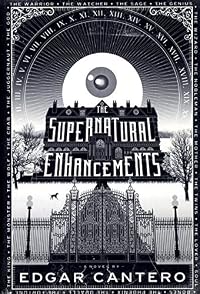

Member Recommendations
Member Reviews
This book had me sleeping with the lights on, and I actually had to make the choice to only read it during the day. It is not your typical horror story, but rather a dark haunting novel that makes you jump at shadows or listen for odd noises for hours. I had a hard time putting it down, until I came to the end.... I felt like I had been climbing up this mountain of suspense, only to reach the top and find nothing there. Everything fell into place too easily, and the resolution felt rushed. It was a huge disappointment. The climb was a lot of fun though.
Cottam's books are so well written, so beautifully atmospheric, so genuinely disquieting and often downright chilling that it's a wonder he isn't better known within the genre. The House of Lost Souls, despite a couple of bare spots that weaken the tension, is a book that begs to be read in a single sitting or as fervidly as opportunity presents itself. There are ghosts, black magic, loves lost, and redemption... and, yes, a haunted house. Extremely enjoyable.
Like the Bertie Bott’s Any-Flavour Beans beloved of Harry Potter, this quartet of thrillers is full of surprises and it’s only when you have tasted one, as it were, that you know if you have chosen a rosebud or an earwax flavour.
If opium has a flavour then FG Cottam’s masterpiece House of Lost Souls reeks of it: thrilling, addictive, dangerous, hypnotic and deadly.
A period literary horror story featuring as diverse cast including Aleister Crowley, Dennis Wheatley and Herman Goring – not to mention alluring society photographer Pandora Gibson-Hoare – and a haunted mansion on the Isle of Wight, the book is a cross-genre treat.
Beautifully written with frighteningly invasive descriptions, literate, complex, conspiratorial and show more threatening, House of Lost Souls is not your traditional schlock horror [a-la Dennis Wheatley]: this terror is far more pervasively believable. show less
If opium has a flavour then FG Cottam’s masterpiece House of Lost Souls reeks of it: thrilling, addictive, dangerous, hypnotic and deadly.
A period literary horror story featuring as diverse cast including Aleister Crowley, Dennis Wheatley and Herman Goring – not to mention alluring society photographer Pandora Gibson-Hoare – and a haunted mansion on the Isle of Wight, the book is a cross-genre treat.
Beautifully written with frighteningly invasive descriptions, literate, complex, conspiratorial and show more threatening, House of Lost Souls is not your traditional schlock horror [a-la Dennis Wheatley]: this terror is far more pervasively believable. show less
This book was a very satisfying read. F. G. Cottam has done an excellent job creating fully realized characters who inspire empathy in the reader. The plot was not one that I could work out beforehand; the author threw in enough foreshadowing without giving away the plot twists. As for the occult entity involved; we were shown just enough, told just enough, heard just enough, to realize it was a badass, formidable monster of some sort. Demonic origins are implied, but not set in stone to ruin the suspension of disbelief for a non christian such as myself.
Two elements of the book appealed to me for purely personal reasons; I loved the Irishness of main character Paul Seaton and the references to the hot summer of 1983, which I have fond show more memories of.
I will be seeking out more work from this author in the future and will recommend his work. show less
Two elements of the book appealed to me for purely personal reasons; I loved the Irishness of main character Paul Seaton and the references to the hot summer of 1983, which I have fond show more memories of.
I will be seeking out more work from this author in the future and will recommend his work. show less
I have to agree with the previous review that this book didn't pan out as I expected. It all got a bit 'overblown' for me towards the end; however the first two thirds of the book were page turningly enjoyable and very creepy in places. I was hooked by the first chapter and the 'horror' here was subtle and imagined rather than the more obvious encounters at the end of the tale.
I have a liking for works of fiction that imagine real figures from history in them and in this book we encounter Aleister Crowley and Dennis Wheatley among others. Their malevolent presence and increasingly frequent break-throughs into the main character's world are chillingly described by the author... and they have to do little more than smile, induce period show more music in a room and move ever closer when the protagonist isn't looking to make the reader's skin crawl. For me, this was clever, subtle writing.
The reason I have given this book 4 stars is that I found the ending somewhat disappointing as a solid beast of a creature emerged to stamp through the more delicate, unsettling horror that we experienced at the start of the book. I also found some of the links between characters less than credible. However, I'd definitely recommend this as an enjoyable read and will keep an eye out for more from this author. show less
I have a liking for works of fiction that imagine real figures from history in them and in this book we encounter Aleister Crowley and Dennis Wheatley among others. Their malevolent presence and increasingly frequent break-throughs into the main character's world are chillingly described by the author... and they have to do little more than smile, induce period show more music in a room and move ever closer when the protagonist isn't looking to make the reader's skin crawl. For me, this was clever, subtle writing.
The reason I have given this book 4 stars is that I found the ending somewhat disappointing as a solid beast of a creature emerged to stamp through the more delicate, unsettling horror that we experienced at the start of the book. I also found some of the links between characters less than credible. However, I'd definitely recommend this as an enjoyable read and will keep an eye out for more from this author. show less
A good supernatural thriller is a rare thing, and one doesn’t expect it of a writer in their first novel. But Cottam manages a story on his first time out that combines suspenseful horror with actual good writing.
Paul Seaton had a run in with horror at the deserted Fischer House several years before the story begins, but thinks he has put it behind him. Then four students enter the house. One commits suicide and the other three are edging into madness. Seaton must face Fischer House again to save their lives. This scares him worse than anything- as well it should. Because the builder of Fischer House was a Satanist, who, along with his friends, has made a deal with the devil. And the deal is still ‘alive’ in the house. Along with show more Nick Mason, the brother of one of the students, he must figure out the details of the deal and put an end to it.
The book switches from the present to the past numerous times- most of the book takes place in various past eras- and Cottam manages to hold this together well, better than many authors do. What I did find confusing was the large cast of characters, some of which I continually mixed up.
Creepy things happen continually along the way, both in the present and the backstory. New revelations occur at a rapid clip. Sadly, I thought that the ending happened in far too quick a manner- it could have been much more powerful- but it’s still well tied up. I’ll be waiting eagerly for future books by the author. show less
Paul Seaton had a run in with horror at the deserted Fischer House several years before the story begins, but thinks he has put it behind him. Then four students enter the house. One commits suicide and the other three are edging into madness. Seaton must face Fischer House again to save their lives. This scares him worse than anything- as well it should. Because the builder of Fischer House was a Satanist, who, along with his friends, has made a deal with the devil. And the deal is still ‘alive’ in the house. Along with show more Nick Mason, the brother of one of the students, he must figure out the details of the deal and put an end to it.
The book switches from the present to the past numerous times- most of the book takes place in various past eras- and Cottam manages to hold this together well, better than many authors do. What I did find confusing was the large cast of characters, some of which I continually mixed up.
Creepy things happen continually along the way, both in the present and the backstory. New revelations occur at a rapid clip. Sadly, I thought that the ending happened in far too quick a manner- it could have been much more powerful- but it’s still well tied up. I’ll be waiting eagerly for future books by the author. show less
An interesting, but uneven book.
The first, say, half of the book I quite enjoyed. Some of the descriptions make it sound as if it's going be something like Hell House or maybe The Haunting of Hill House. It's not that book at all. It's not a ghost story, nor a haunted house, really. The business about the four girls is just window dressing, a plot device. I'd say it's about black magic. The better half is more of a period piece, reminiscent of something Dennis Wheatley might have written. Which is fitting, since both Dennis Wheatley himself, as well as Aliester Crowley appear as actual characters.
It's evocative of books like The Devil Rides Out and Moonchild and of the whole "between the wars" decadence, as magic (make that "magick") show more rituals carried out in the thirties cause reverberations decades later, especially in the damaged psyche of protagonist Paul Seaton. The story of a gathering of black magicians at a remote estate on the Isle of Wight in the fall of 1927 is excellent. The subtle way that it haunts Paul Seaton is nicely done.
I read this over a lazy holiday weekend. We've got a supply of some homemade white wine that came out a bit too acid to be enjoyable, and over the holiday we ran through several bottles making "St Germain cocktails," a kind of wine cooler made with St Germain liqueur. The liqueur's current marketing campaign is very much "1920's." It was very appropriate. But once the expensive liqueur runs out, the leftover bottles of the base wine are not so great. Undrinkable, in fact. So it is with Lost Souls. Once the action shifts to resolving things in the present day, it sort of falls apart. Completely falls apart, in fact.
Where the first 3/4 of the book is fueled by atmosphere and decadence, The last part of the book is fueled by coincidence, off-stage resolutions and really just an amazing deus ex machina. I'd rather avoid outright spoilers, but the ending takes this book from 4 starts down to 2.5 show less
The first, say, half of the book I quite enjoyed. Some of the descriptions make it sound as if it's going be something like Hell House or maybe The Haunting of Hill House. It's not that book at all. It's not a ghost story, nor a haunted house, really. The business about the four girls is just window dressing, a plot device. I'd say it's about black magic. The better half is more of a period piece, reminiscent of something Dennis Wheatley might have written. Which is fitting, since both Dennis Wheatley himself, as well as Aliester Crowley appear as actual characters.
It's evocative of books like The Devil Rides Out and Moonchild and of the whole "between the wars" decadence, as magic (make that "magick") show more rituals carried out in the thirties cause reverberations decades later, especially in the damaged psyche of protagonist Paul Seaton. The story of a gathering of black magicians at a remote estate on the Isle of Wight in the fall of 1927 is excellent. The subtle way that it haunts Paul Seaton is nicely done.
I read this over a lazy holiday weekend. We've got a supply of some homemade white wine that came out a bit too acid to be enjoyable, and over the holiday we ran through several bottles making "St Germain cocktails," a kind of wine cooler made with St Germain liqueur. The liqueur's current marketing campaign is very much "1920's." It was very appropriate. But once the expensive liqueur runs out, the leftover bottles of the base wine are not so great. Undrinkable, in fact. So it is with Lost Souls. Once the action shifts to resolving things in the present day, it sort of falls apart. Completely falls apart, in fact.
Where the first 3/4 of the book is fueled by atmosphere and decadence, The last part of the book is fueled by coincidence, off-stage resolutions and really just an amazing deus ex machina. I'd rather avoid outright spoilers, but the ending takes this book from 4 starts down to 2.5 show less
Members
- Recently Added By
Lists

To Read - Horror
137 works; 14 members

Ghosts
278 works; 17 members

ALA The Reading List
490 works; 28 members

Haunted Places and Ghost Stories Reading List
99 works; 4 members
Author Information

22 Works 1,167 Members
F. G. Cottam is a LibraryThing Author, an author who lists their personal library on LibraryThing.
Awards and Honors
Awards
Common Knowledge
- Original publication date
- 2007-10-01 (UK) (UK); 2009-07 (US) (US)
- People/Characters
- Paul Seaton; Nick Mason; Sarah Mason; Rebecca Mason; Rachel Beal; Ellen Paulus (show all 17); Andrew Clarke; Peter Antrobus; Marthe; Malcolm Corey; Klaus Fischer; Pandora Gibson-Hoare; Aleister Crowley; Dennis Wheatley; Hermann Göring; Lucinda Grey; Edwin Poole
- Important places
- Fischer House; Isle of Wight, England, UK; London, England, UK; Whitstable, Kent, England, UK; Surrey, England, UK
- Dedication
- For my girls and for my boy, with love and pride.
- First words
- Nick Mason thought it ironic that he had always been so skilled at the covert aspect of the craft.
- Quotations
- You could cripple yourself with needless caution. Or you could die of complacency.
- Last words
- (Click to show. Warning: May contain spoilers.)But the light was close now and Paul Seaton felt he might have earned the right, at last, to live in it.
- Blurbers
- Wilson, F. Paul; Donohue, Keith; Goodman, Carol
- Canonical DDC/MDS
- 823.92
- Canonical LCC
- PR6103.O88
Classifications
Statistics
- Members
- 341
- Popularity
- 92,448
- Reviews
- 20
- Rating
- (3.42)
- Languages
- English, German, Polish
- Media
- Paper, Audiobook, Ebook
- ISBNs
- 10
- ASINs
- 3