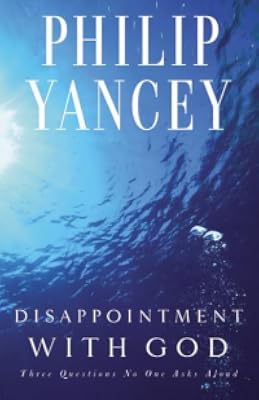
Disappointment with God
by Philip Yancey
On This Page
Description
Philip Yancey has a gift for articulating the knotty issues of faith. In Disappointment with God, he poses three questions that Christians wonder but seldom ask aloud: Is God unfair? Is he silent? Is he hidden? This insightful and deeply personal book points to the odd disparity between our concept of God and the realities of life. Why, if God is so hungry for relationship with us, does he seem so distant? Why, if he cares for us, do bad things happen? What can we expect from him after all? show more Yancey answers these questions with clarity, richness, and biblical assurance. He takes us beyond the things that make for disillusionment to a deeper faith, a certitude of God's love, and a thirst to reach not just for what God gives, but for who he is. show lessTags
Recommendations















Member Recommendations
Member Reviews
到底對神失望代表什麼呢?打開一本一直擱在書櫃上未曾看的書 Disappointment with God,看看有什麼得著。作者 Philip Yancey 在書中問三個問題: Is God Unfair? Is God Silent? Is God Hidden? 作者在書中前半,針對這三個問題,說到在舊約歴史中,神在以色列人前顯現,定下戒命律例典章,並依此施行各樣獎賞與懲罰。但是,就算神公平、顯現及直接與人說話,但神的子民對神的態度又如何呢?前一刻才剛剛說完不能造偶像,下一刻就造了金牛犢出來。以色列人沒有因為見到神的顯現、聽到神的說話而變得順服。 show more 作者在下半部,以約伯記作為討論這題目的題材。舉出例如就像一兩歲的孩童不明白成人的心意一樣,人不能理解神的計劃;人也不明白在宇宙中自己所擔當的是什麼(約伯不知道約伯記的引子);又提出父神以聖子道成肉身去承擔世界一切的罪,比世上任何一切的不公平更加不公平(全然無罪的耶穌去擔當所有的罪)。作者講了很多很多的理由,那些理由都是充份的,但或者要問的是,這到底對非常失望的人是否相關呢? 作者提及一個離開了神的朋友,那人原是一個神學生,對上述的問題,跟作者能有同樣的理解。所以問題到頭來,還是在「信」上:知道的是一樣,有人會選擇信,有人會選擇不信。問題是,所謂「信」,就是去信一些「要我們相信」的東西。 不過,我想,對神的失望,並不關乎神的不公平、沉默及隱匿。我覺得更基本的,是我們怎樣理解神(或者說怎樣相信神)。我們就算清楚明白到我們沒可能明白神的作為,神的道比我們高,那又如何呢?跟我又有何干呢?我們依然可能會失望。 最近正在看哈巴谷書,先知在書中問神:「耶和華啊!我懇求,你不垂聽,要到幾時呢?我向你呼叫“有狂暴的事”,你卻不拯救。你為甚麼使我看見惡行?有奸惡的事,你為甚麼見而不理?」「你的眼目純潔,不看邪惡,不能坐視奸惡;為甚麼見行詭詐的人而不理?惡人吞滅比自己公義的人,你為甚麼緘默呢?」二千幾年前,先知質問神的,難道跟我們今天有所不同嗎? 先知最後說:「我一聽見,就全身發抖;因這聲音,我嘴唇震顫。腐爛侵蝕我骨,我在站立之地戰兢。我靜候災難之日,犯境的民上來。無花果樹縱不發芽,葡萄樹不結果,橄欖樹無所出,田裡無收成,圈內沒有羊,棚裡也沒有牛,我卻要因耶和華歡喜,以救我的 神為樂。」 連一丁點兒的希望也見不到,連最微細的徵兆也沒有,但先知依然以耶和華為樂。我想,或者這才是對神失望應有的回應。 show less
It wasn’t what I expected, but it was so good. It’s like having a conversation with him about friends or yourself and the hard things they or you’ve experienced, the ones that make you think, no matter if you believe in God or not, “How could a loving God possibly stand by and just watch this happen to me?” And in a gentle, caring tone, he helps you tease out the knots of this reality. You end with a wonderful description of what faith really is. That resonated with my story.
My favorite chapter was chapter 29.
My favorite chapter was chapter 29.
Philip Yancey asks three questions in this book about God and why he doesn't intervene in the here and now. Through examination of the Bible, Yancey finds that God used to do just that. These actions didn't foster faith or respect from his people though. After a while, the people went back to their old ways.
Surely a giant display of power would convert a ton of people right? Everyone would follow that thing and believe. Yancey argues that this is not so, and uses the Bible as demonstrable proof to that effect. Even as Jesus, God didn't do things like turn stones to bread and other stuff, even if he could. Jesus and by extension God, wanted our love and respect, not our fawning devotion.
It answered some of my questions about God being a show more jerk, but I still don't really like the Bible all that much. Also, I don't really trust it as a source of divine inspiration or anything like that. show less
Surely a giant display of power would convert a ton of people right? Everyone would follow that thing and believe. Yancey argues that this is not so, and uses the Bible as demonstrable proof to that effect. Even as Jesus, God didn't do things like turn stones to bread and other stuff, even if he could. Jesus and by extension God, wanted our love and respect, not our fawning devotion.
It answered some of my questions about God being a show more jerk, but I still don't really like the Bible all that much. Also, I don't really trust it as a source of divine inspiration or anything like that. show less
When I first read this in 1999, I thought it was an excellent and inspiring book. It looks at people who have felt let down by God. Focussing on the book of Job, the three main questions asked are: Is God hidden? Is he silent? Is he fair?
There are no clichés or pat answers, but several honest attempts to find some meaning and reason in the apparently random quirks of life.
On second reading, ten years later, I did not find it so inspiring... possibly because I remembered much of the contents so there was nothing new. And on my third reading, I thought it encouraging and a great reminder.
Recommended to anyone who has found God or the Christian life disappointing, or who has friends asking difficult questions on this topic.
Latest full show more review: https://suesbookreviews.blogspot.com/2022/07/disappointment-with-god-by-philip-y... show less
There are no clichés or pat answers, but several honest attempts to find some meaning and reason in the apparently random quirks of life.
On second reading, ten years later, I did not find it so inspiring... possibly because I remembered much of the contents so there was nothing new. And on my third reading, I thought it encouraging and a great reminder.
Recommended to anyone who has found God or the Christian life disappointing, or who has friends asking difficult questions on this topic.
Latest full show more review: https://suesbookreviews.blogspot.com/2022/07/disappointment-with-god-by-philip-y... show less
Rated: A-
I love Philip Yancy and his theology and journalism. In this book, he answers three questions: Is God unfair? (no, life's unfair, not God). Is God silent? Is God hidden? He provides a practical perspective for believers and doubters. Plus, the book is offers a unique commentary on the Book of Job.
"They had doubted him once, but after the Resurrection they would not doubt him again."
"In his book 'Wishful Thinking', Fredrick Buechner sums up God's speech. 'God doesn't explain. He explodes. He asks Job who he thinks he is anyway. He says that to try to explain the kind of things Job wants explained would be like trying to explain Einstein to a little-neck clam....God doesn't reveal his grand design. He reveals himself.' The show more message behind the splendid poetry boils down to this: Until you know a little more about running the physical universe, Job, don't tell me how to run the moral universe."
"The same urgent questions torment almost every suffering person: Why? Why me? What is God trying to tell me? In the Book of Job, God deflects those questions of cause, and focuses instead on our response of faith"
"Knowledge is passive, intellectual; suffering is active, personal. No intellectual answer will solve suffering. Perhaps this is why God sent his own Son as one response to human pain, to experience it and absorb it into himself. The Incarnation did not "solve" human suffering, but at least it was an active and personal response in the truest sense, no words can speak more loudly than the Word."
"Faith means believing in advance what will only make sense in reverse....trusting God when there is no apparent evidence of him."
"As Rabbi Abraham Heschel observed, 'Faith like Job's cannot be shaken because it si the result of having been shaken.'" show less
I love Philip Yancy and his theology and journalism. In this book, he answers three questions: Is God unfair? (no, life's unfair, not God). Is God silent? Is God hidden? He provides a practical perspective for believers and doubters. Plus, the book is offers a unique commentary on the Book of Job.
"They had doubted him once, but after the Resurrection they would not doubt him again."
"In his book 'Wishful Thinking', Fredrick Buechner sums up God's speech. 'God doesn't explain. He explodes. He asks Job who he thinks he is anyway. He says that to try to explain the kind of things Job wants explained would be like trying to explain Einstein to a little-neck clam....God doesn't reveal his grand design. He reveals himself.' The show more message behind the splendid poetry boils down to this: Until you know a little more about running the physical universe, Job, don't tell me how to run the moral universe."
"The same urgent questions torment almost every suffering person: Why? Why me? What is God trying to tell me? In the Book of Job, God deflects those questions of cause, and focuses instead on our response of faith"
"Knowledge is passive, intellectual; suffering is active, personal. No intellectual answer will solve suffering. Perhaps this is why God sent his own Son as one response to human pain, to experience it and absorb it into himself. The Incarnation did not "solve" human suffering, but at least it was an active and personal response in the truest sense, no words can speak more loudly than the Word."
"Faith means believing in advance what will only make sense in reverse....trusting God when there is no apparent evidence of him."
"As Rabbi Abraham Heschel observed, 'Faith like Job's cannot be shaken because it si the result of having been shaken.'" show less
Yancy begins his book with examples of circumstances from several Christians who have suffered greatly and feel disappointed with or abandoned by God. The author chooses the situation of Richard, the person suffering the least of the examples (but a fellow author), to follow throughout the book.
Using OT scriptures, Mr. Yancy tries to explain the mind of God. His attempt actually turns eerie (downright creepy) when Yancy imagines himself as God questioning in his mind whether or not man would obey when created.
It is my opinion that Mr. Yancy conveys the message that those who are disappointed in God are pretenders. They are people who never had “real” faith so they never were true believers. Instead of helping a friend out of a show more spiritual depression, Mr. Yancy slapped him down and decided he just did not have enough faith.
There was no compassion in the book for the suffering Christian. Mr. Yancy has his own experience being a pretender as he explains in the book that he deliberately pretended to be a Christian in college until one day he began praying out loud and “had a vision of Jesus”. It is also my opinion that Mr. Yancy’s answers in this book are no better than the callous conversations the friends of Job had for his sufferings.
Mr. Yancy’s questions in the book were:
1. Is God unfair?
2. Is God silent?
3. Is God hidden?
My questions for Mr. Yancy are:
1. Are you trying to prove the old adage “Christians shoot their wounded”?
2. Do you have no compassion for a suffering Christian?
3. Did a tree have to die for this book?
I have suffered the worst thing a parent can suffer and I would never recommend this book to a Christian who is going through trials. show less
Using OT scriptures, Mr. Yancy tries to explain the mind of God. His attempt actually turns eerie (downright creepy) when Yancy imagines himself as God questioning in his mind whether or not man would obey when created.
It is my opinion that Mr. Yancy conveys the message that those who are disappointed in God are pretenders. They are people who never had “real” faith so they never were true believers. Instead of helping a friend out of a show more spiritual depression, Mr. Yancy slapped him down and decided he just did not have enough faith.
There was no compassion in the book for the suffering Christian. Mr. Yancy has his own experience being a pretender as he explains in the book that he deliberately pretended to be a Christian in college until one day he began praying out loud and “had a vision of Jesus”. It is also my opinion that Mr. Yancy’s answers in this book are no better than the callous conversations the friends of Job had for his sufferings.
Mr. Yancy’s questions in the book were:
1. Is God unfair?
2. Is God silent?
3. Is God hidden?
My questions for Mr. Yancy are:
1. Are you trying to prove the old adage “Christians shoot their wounded”?
2. Do you have no compassion for a suffering Christian?
3. Did a tree have to die for this book?
I have suffered the worst thing a parent can suffer and I would never recommend this book to a Christian who is going through trials. show less
I really enjoyed this book, even though the readability was a bit tedious. It deals with the topic of how sometimes (or most times) we feel like God isn't near us. We go through tough times and wonder where God is in all of that, but really, another way to view it is where are we in all of this? What is our response to God when we endure heartache or disease?
Many people want to see God, to have miracles happen all the time, to have every prayer answered. Philip Yancey gives some good arguments as to why God doesn't do this. It's not because he doesn't care or he's not powerful. It's because back in the day, when he did those things with the Israelites, they turned away from Him. A really interesting way of thinking about things, though.
Many people want to see God, to have miracles happen all the time, to have every prayer answered. Philip Yancey gives some good arguments as to why God doesn't do this. It's not because he doesn't care or he's not powerful. It's because back in the day, when he did those things with the Israelites, they turned away from Him. A really interesting way of thinking about things, though.
Members
- Recently Added By
Lists

Xenos Christian Fellowship Book Suggestions
102 works; 2 members

Sonlight Books
1,487 works; 25 members
Author Information

239+ Works 40,297 Members
Philip Yancey is a journalist and writer who writes a featured column in Christianity Today. The author of more than a dozen books. He is the recipient of a Christianity Today Book of the Year Award, two ECPA Book of the Year Awards, and eleven Gold Medallions. He lives in Evergreen, Colorado. (Publisher Provided) Philip Yancey received graduate show more degrees in communication and English from Wheaton College and the University of Chicago. He worked as a journalist in Chicago for about twenty years, editing the youth magazine Campus Life and writing for a wide variety of magazines including Reader's Digest and the Saturday Evening Post. He is an editor at large of Christianity Today. His Christianity Today column ran from 1985 to 2009. He is the author of numerous books including Disappointment with God, Where Is God When It Hurts?, The Jesus I Never Knew, What's So Amazing About Grace?, The Bible Jesus Read, Reaching for the Invisible God, Rumors of Another World, Prayer: Does It Make Any Difference?, and What Good Is God?: In Search of a Faith That Matters. He has received 13 Gold Medallion Awards from Christian publishers and booksellers. (Bowker Author Biography) show less
Awards and Honors
Awards
Series
Belongs to Publisher Series
Work Relationships
Common Knowledge
- Canonical title
- Disappointment with God
- Original title
- Disappointment with God
- Alternate titles
- 無語問上帝. English; 無語問上帝; Disappointment with God : three questions no one asks aloud
- Original publication date
- 1988
- Dedication
- For my brother,
who is still disappointed - First words
- After I had begun work on this project, I received phone calls from a few people in my church who had heard about it.
- Last words
- (Click to show. Warning: May contain spoilers.)It was a startling feeling of wild hope, a feeling so new and overwhelming that it seemed fully worth risking my life on.
- Original language*
- Englisch
*Some information comes from Common Knowledge in other languages. Click "Edit" for more information.
Classifications
Statistics
- Members
- 2,592
- Popularity
- 7,314
- Reviews
- 25
- Rating
- (4.03)
- Languages
- 11 — Czech, Dutch, English, Finnish, German, Norwegian (Bokmål), Portuguese, Romanian, Spanish, Swedish, Chinese, traditional
- Media
- Paper, Audiobook, Ebook
- ISBNs
- 38
- UPCs
- 5
- ASINs
- 20