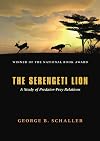
The Serengeti Lion: A Study of Predator-Prey Relations
by George B. Schaller
On This Page
Description
Field observations provide abundant data on all aspects of lion behavior, including its social system, population dynamics, hunting behavior, predation patterns, and other factors which contribute to an understanding of the lion as a member of the natural community. The book includes individual chapters on the leopard, cheetah, wild dog, and others. It also includes much information on the lion's prey species, including distribution, migration, and social organization. These data form the show more basis of the concluding chapter on the dynamics of predation.-- show lessTags
Recommendations





























Member Reviews
A very early work from research on African lions, conducted by the author over a three-year period. At the time very little was known about lions- only a few people had studied them. Schaller's intent was to find out what impact lions had on various prey species, and since the lives and habits of all the animals in the area are so interconnected, he included other predators in his study too. Mostly of course, it is about the lions- how they used the land, pride dynamics, hunting methods, how often they hunted and how much they ate (compared to how much other animals stole or what the lions abandoned), mortality rate of different age groups, numbers of prey animals killed per species, age group, location, time of year, etc. There's lots show more of numbers, percentages and charts which makes it valuable scientific data but rather dry reading. More interesting for me are the details about the lion's lives. I had no idea, for example, that the pride structure was so fluid- males being replaced every three to six years, young often moving out, large numbers of nomads, mating between residents and nomads, etc. I'm surprised at how indifferent the lionesses seemed towards their own cubs- when food was scarce the lioness would eat herself and leave the cubs to starve- and they were also not actively protected much it sounds. Curious to the reason, but Schaller had no insight. (In contrast, wild dogs would carry food to their young, and let them eat first at a carcass). Sounds like the cubs had an advantage in another way though- they would often nurse from other females in the pride, not just their own mother. And here's an unimportant but very odd detail which surprised me- did you know some lions have a horny nail protruding from the end of their tail? Like a manticore spike, hidden in the tuft of fur there. I'd never heard of this before!
The book also looks at the different prey species- how they react to lions, how their numbers are impacted by predation, what animals in the population are most vulnerable, etc. Also details on the main predators that live in the same area as lions- cheetah, hyenas, wild dogs, jackals, vultures, leopards and man. Interesting to note that lions don't seem to choose the weakest or sick prey, whereas wild dogs and cheetah apparently do. Schaller's final conclusion was that lions are an important part of the system in keeping prey numbers in check (even though they don't necessarily eat the sick ones) and should be protected. At the time, predators were wantonly killed for all kinds of reasons- wild dogs and hyenas just because people thought their feeding methods and habits were distasteful, lions for trophies or to protect livestock- so I believe his research helped a lot to provide a true picture of how important the lion's place is in the ecosystem.
from the Dogear Diary show less
The book also looks at the different prey species- how they react to lions, how their numbers are impacted by predation, what animals in the population are most vulnerable, etc. Also details on the main predators that live in the same area as lions- cheetah, hyenas, wild dogs, jackals, vultures, leopards and man. Interesting to note that lions don't seem to choose the weakest or sick prey, whereas wild dogs and cheetah apparently do. Schaller's final conclusion was that lions are an important part of the system in keeping prey numbers in check (even though they don't necessarily eat the sick ones) and should be protected. At the time, predators were wantonly killed for all kinds of reasons- wild dogs and hyenas just because people thought their feeding methods and habits were distasteful, lions for trophies or to protect livestock- so I believe his research helped a lot to provide a true picture of how important the lion's place is in the ecosystem.
from the Dogear Diary show less
Ratings
Members
- Recently Added By
Author Information

28+ Works 730 Members
Zoologist George B. Schaller was born in 1933. He is the science director of international programs for the New York Zoological Society's Center for Field Biology and Conservation. After studying wildlife in the Serengeti National Park in Tanzania, Schaller wrote The Serengeti Lion: A Study of Predator-Prey Relations, which won the 1972 National show more Book Award. After studying the panda in China, Schaller wrote The Last Panda, a book detailing his discoveries. (Bowker Author Biography) show less
Awards and Honors
Awards
Common Knowledge
- Canonical title
- The Serengeti Lion: A Study of Predator-Prey Relations
Classifications
- Genres
- Nonfiction, Science & Nature, General Nonfiction
- DDC/MDS
- 599.74428 — Natural sciences & mathematics Animals Mammals Carnivora; Cats, Dogs, Bears, Seals Feliformia [Land carnivores now 599.74–599.78] [Feliformia now 599.74–599.75] [Felines now at 599.75]
- LCC
- QL737 .C23 .S298 — Science Zoology Zoology Chordates. Vertebrates Mammals
- BISAC
Statistics
- Members
- 74
- Popularity
- 427,053
- Reviews
- 1
- Rating
- (4.11)
- Languages
- English, German
- Media
- Paper, Ebook
- ISBNs
- 4
- ASINs
- 1