
Patrick Bateson (1938–2017)
Author of Design for a Life: How Behavior and Personality Develop
About the Author
Image credit: Patrick Bateson in Armidale, New South Wales, with a tawny frogmouth before it was returned to its natural habitat.
Works by Patrick Bateson
Associated Works
Tagged
Common Knowledge
- Legal name
- Bateson, Paul Patrick Gordon
- Other names
- Bateson, P. P. G.
- Birthdate
- 1938-03-31
- Date of death
- 2017-08-01
- Gender
- male
- Education
- University of Cambridge (BA - Zoology, PhD - Animal Behaviour)
- Occupations
- biologist
university professor - Organizations
- King's College, Cambridge
Zoological Society of London - Awards and honors
- Knight Bachelor, 2003
FRS, 1983 - Nationality
- UK
- Birthplace
- Chinnor, England, UK
- Associated Place (for map)
- England, UK
Members
Reviews
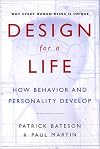
How is it possible for each of 6 billion human beings to be unique? How does each of us grow up to be the person we are? How do behavior and personality develop?
In this wonderfully readable book, two distinguished scientists explain how biology and psychology join to shape the behavior of individual human beings. They counter the mistaken notion that science has discovered individual genes that determine certain personality traits; instead, they explain what roles genes actually play in the show more formation of personality. The authors show how change is a vital component of human behavior, restoring the concept of free will to its central place in human psychology. In tracing human development from a fertilized egg to an adult, they explain the important roles that nature and nurture play.
Design for a Life is an eloquent, lucid description of behavioral development, the science that explains how personality emerges. In place of the conventional opposition of nature (genes) and nurture (environment), Bateson and Martin offer a fresh synthesis. Design for a Life brings biology and psychology together by using the metaphor of cooking to show how both the raw ingredients and the cooking process must be successfully combined to produce a meal.
Written in a clear and enjoyable style, Design for a Life helps us to understand the science behind some of today's controversies in fields as diverse as parenting, education, sexuality, social policy, and medicine. The authors brilliantly blend scientific examples and literary anecdotes to illustrate the concepts they describe. Anyone interested in behavioral development and the emergence of personality will find this book indispensable, both entertaining and profound. show less
In this wonderfully readable book, two distinguished scientists explain how biology and psychology join to shape the behavior of individual human beings. They counter the mistaken notion that science has discovered individual genes that determine certain personality traits; instead, they explain what roles genes actually play in the show more formation of personality. The authors show how change is a vital component of human behavior, restoring the concept of free will to its central place in human psychology. In tracing human development from a fertilized egg to an adult, they explain the important roles that nature and nurture play.
Design for a Life is an eloquent, lucid description of behavioral development, the science that explains how personality emerges. In place of the conventional opposition of nature (genes) and nurture (environment), Bateson and Martin offer a fresh synthesis. Design for a Life brings biology and psychology together by using the metaphor of cooking to show how both the raw ingredients and the cooking process must be successfully combined to produce a meal.
Written in a clear and enjoyable style, Design for a Life helps us to understand the science behind some of today's controversies in fields as diverse as parenting, education, sexuality, social policy, and medicine. The authors brilliantly blend scientific examples and literary anecdotes to illustrate the concepts they describe. Anyone interested in behavioral development and the emergence of personality will find this book indispensable, both entertaining and profound. show less

(posted on my blog: davenichols.net)
In Design for a Life, Bateson and Martin look at how the interaction of nature and nurture affect human behavior. While the book does sample many bits of interesting research covering the subjects, it feels light on details and cursory in its explorations.
Design skips around quickly from subject to subject as the authors explore various points in the debate and research into how nature (genetics) and nurture (parenting and environment) determine human show more behavior. They look at numerous studies involved in isolating influences and discuss whether this points toward genetic or epigenetic sourcing.
While the book does stay on message and maintains a decent narrative, the manner in which the research and details were interjected felt muddled and off-the-mark. Often, the authors jump from one study to another to another without a solid narrative bridge to keep the reader interested. At times, the authors simply describe the basic results of a study without much analysis or integration into the larger argument. I feel a more streamlined and judicious selection of included research would have left more room for a proper presentation of the data without leaving the discussion feeling underwhelming on substance and detail.
Still, Design has many good points and provides a nice overview of the landscape of the nature / nurture argument as it stood at the time of publication in 2001. While not the best book I've read on the subject, it still holds value for the interested reader of biology, genetics, psychology, and behavior. Three stars. show less
In Design for a Life, Bateson and Martin look at how the interaction of nature and nurture affect human behavior. While the book does sample many bits of interesting research covering the subjects, it feels light on details and cursory in its explorations.
Design skips around quickly from subject to subject as the authors explore various points in the debate and research into how nature (genetics) and nurture (parenting and environment) determine human show more behavior. They look at numerous studies involved in isolating influences and discuss whether this points toward genetic or epigenetic sourcing.
While the book does stay on message and maintains a decent narrative, the manner in which the research and details were interjected felt muddled and off-the-mark. Often, the authors jump from one study to another to another without a solid narrative bridge to keep the reader interested. At times, the authors simply describe the basic results of a study without much analysis or integration into the larger argument. I feel a more streamlined and judicious selection of included research would have left more room for a proper presentation of the data without leaving the discussion feeling underwhelming on substance and detail.
Still, Design has many good points and provides a nice overview of the landscape of the nature / nurture argument as it stood at the time of publication in 2001. While not the best book I've read on the subject, it still holds value for the interested reader of biology, genetics, psychology, and behavior. Three stars. show less
You May Also Like


Associated Authors
Statistics
- Works
- 18
- Also by
- 1
- Members
- 262
- Popularity
- #87,813
- Rating
- 3.6
- Reviews
- 2
- ISBNs
- 54
- Languages
- 1