On This Page
Description
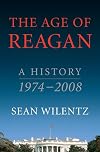
Wilentz, the eminent Princeton historian, argues that for the past thirty-five years U.S. political history has been defined by the new politics of conservatism brokered by its major powerhorse, Ronald Reagan. Following an analysis of Reagan's presidency, Wilentz concludes that Reagan not only transformed the stage of geopolitics, but also the American judiciary and government bureaucracy, while lifting the hearts of Americans who lived through Vietnam and Carter years.Tags
Recommendations
















Member Reviews
An excellent chronicle of events that's marred, not by Wilentz's take on Reagan, which is as positive as any objective viewer could wish, but by his defense of Clinton, whose various actual misdeeds are buried in the narrative of Republican lunacy that focused on his penis instead of his politics. Another goodreads reviewer has suggested, disapprovingly, that "this book is intended for students of political history, but clearly not for republicans." Well, yes.
It's usually a good sign when a book about recent American politics is attacked from both sides, and that's the case here. Wilentz debunks the Reagan mythologies (i.e., Reagan did not swoop down like Superman to end World Communism; nor was he an idiot who just bumbled his way show more through the presidency with notes on the back of napkins), and puts in their place a reasonable argument: that Reagan's real achievement was resisting the realists in his administration, which made Gorbachev's actions in the USSR possible. Wilentz goes so far as to suggest that this is one of the greatest accomplishments of any US president, ever. Republicans, apparently, don't like to hear that kind of thing.
On the other hand, what could have been an excellent short study in the business of the press after Watergate--the muckraking mentality, Wilentz suggests, made politics less doable through the eighties and nineties--turns instead into a defense of Clinton. His actual, important policy decisions, his 'third way' of politics (according to which the polls rule, rather than reason), and his genuine foreign policy mistakes are all given little play; instead, Wilentz suggests that the real story is how Clinton was almost brought down by a smaller but still considerable right wing conspiracy that was only possible because of the prurience and incompetence of the press. Very disappointing.
But not as disappointing as subtitling a book "A History, 1974-2008" and then including only an epilogue on the last 8 years of that period. Perhaps he felt he just couldn't deal objectively with Bush II, but in that case, what's wrong with 'A History, 1974-2000'?
In any case, all the big scandals and stories are here, and Wilentz writes quite well, so it's a pleasure to read (and not, thankfully, in the way that journalistic accounts are a pleasure to read. Wilentz doesn't need to use the present tense to make his account seem important). show less
It's usually a good sign when a book about recent American politics is attacked from both sides, and that's the case here. Wilentz debunks the Reagan mythologies (i.e., Reagan did not swoop down like Superman to end World Communism; nor was he an idiot who just bumbled his way show more through the presidency with notes on the back of napkins), and puts in their place a reasonable argument: that Reagan's real achievement was resisting the realists in his administration, which made Gorbachev's actions in the USSR possible. Wilentz goes so far as to suggest that this is one of the greatest accomplishments of any US president, ever. Republicans, apparently, don't like to hear that kind of thing.
On the other hand, what could have been an excellent short study in the business of the press after Watergate--the muckraking mentality, Wilentz suggests, made politics less doable through the eighties and nineties--turns instead into a defense of Clinton. His actual, important policy decisions, his 'third way' of politics (according to which the polls rule, rather than reason), and his genuine foreign policy mistakes are all given little play; instead, Wilentz suggests that the real story is how Clinton was almost brought down by a smaller but still considerable right wing conspiracy that was only possible because of the prurience and incompetence of the press. Very disappointing.
But not as disappointing as subtitling a book "A History, 1974-2008" and then including only an epilogue on the last 8 years of that period. Perhaps he felt he just couldn't deal objectively with Bush II, but in that case, what's wrong with 'A History, 1974-2000'?
In any case, all the big scandals and stories are here, and Wilentz writes quite well, so it's a pleasure to read (and not, thankfully, in the way that journalistic accounts are a pleasure to read. Wilentz doesn't need to use the present tense to make his account seem important). show less
Wilentz approaches his subject as historian; this is a work of analysis not hagiography. The conditions that brought Reagan to power and the echoes of his colleagues and fellow-travelers (Bushs, Rumsfeld, etc.) mark the gamut of the Age of this study. I was very young when Reagan ruled, but I wasn't too you to recall the hue and cry over his militarism (Granada, Libya), expenditure (SDI), etc. So, I was a bit suprised to his funeral handled like that of a passing saint. Wilentz helps to explain much of that and many other myseteris. Why did Reagan cling to "Star Wars" in spite of technological complexity, high cost, and the fact it irked the USSR? He felt it would bring peace to the whole world and protect America, says the author. How show more did Iran/Contra happen under his nose? Because Ronnie was in the driver's seat and narrowly avoided impeachement, says this author.
An interesting book, which gives context to the neo-con movement and gives examples of how the Republican party was not destroyed by its own radical right base. show less
An interesting book, which gives context to the neo-con movement and gives examples of how the Republican party was not destroyed by its own radical right base. show less
As one of my Goodreads friends put it, "a perfectly serviceable overview of the reagan era." If you don't know much about political history over the past 40 years (which isn't something to be ashamed of), you will enjoy this book and get a lot out of it.
For my part, I used to be a political junkie before the dysfunction of DC disillusioned me and caused me to cut my consumption of political news to a trickle. I have been and continue to be a history junkie. As a result, there was little in _The Age of Reagan_ that was new to me.
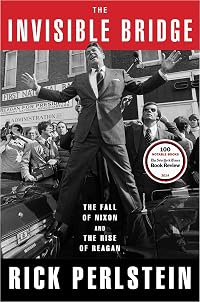
Rick Perlstein's history of the conservative moment is more provocative and better written. I have read Perlstein's _Nixonland_ and _The Invisible Bridge: the Fall of Nixon and the Rise of Reagan._ Haven't yet show more read _Before the Storm_ about Barry Goldwater.
I guess that tells you something: in a review of Wilentz's book, I'm pining for Perlstein's books. show less
For my part, I used to be a political junkie before the dysfunction of DC disillusioned me and caused me to cut my consumption of political news to a trickle. I have been and continue to be a history junkie. As a result, there was little in _The Age of Reagan_ that was new to me.
Rick Perlstein's history of the conservative moment is more provocative and better written. I have read Perlstein's _Nixonland_ and _The Invisible Bridge: the Fall of Nixon and the Rise of Reagan._ Haven't yet show more read _Before the Storm_ about Barry Goldwater.
I guess that tells you something: in a review of Wilentz's book, I'm pining for Perlstein's books. show less
I expected this book to focus specifically on President Reagan and the modern conservative movement, however it's broader than that. Wilentz examines the impacts and legacy of the Presidents from Nixon through G.W. Bush. The author has attempted an element of fairness, praising the good and condemning the bad in each of the past administrations. Of course, since this is a political topic, people with strong party feelings from either side of the aisle will find fault with the authors criticism of their favorite president or party. Political books bring out strong emotions in people, the only book judged to be 'fair' would probably only be a book you write yourself. That said, I thought the author provided a decent summary of our recent show more political history. show less
Ratings
Members
- Recently Added By
Author Information

22+ Works 3,264 Members
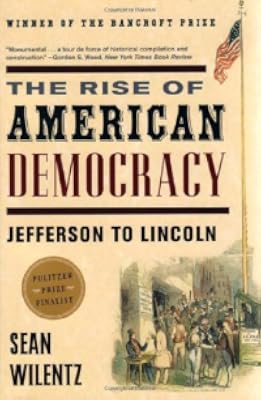
Robert sean Wilentz was born in 1951 in New York City. He earned his first B.A. from Colunbia University in 1972 and his second from Oxford University in 1974 on a Kellett Fellowship. He continued his education at Yale University where he earned his M.A. degree in 1975 and his PhD. in 1980. His writings are focused on the importance of class and show more race in the early national period. He has also co-authored books on nineteenth-century religion and working class life. His book The Rise of American Democracy: Jefferson to Lincoln, won the Bancroft Prize. He has also written about modern U.S. history in his book, The Age of Reagan: A History, 1974-2008. He has been the Sidney and Ruth Lapidus Professor of History at Princeton University since 1979. Robert Wilentz is also a contributing editor at The New Republic. He writes on music, the arts, history and politics. He received a Grammy nomination and a 2005 ASCAP Deems Taylor Award for musical commentary on the musician Bob Dylan. (Bowker Author Biography) show less
Awards and Honors
Distinctions
Series

Common Knowledge
- Original publication date
- 2008
- People/Characters
- Ronald Reagan; Jimmy Carter; George H. W. Bush; Bill Clinton; George W. Bush; Gerald Ford
- Important places
- USA
- Dedication
- To the Memory of Alfred Kazin and Arthur M. Schlesinger Jr.
- First words
- Just as the period of American history from 1933 to the late 1960s - between the rise of the New Deal and fall of Lyndon B. Johnson's Great Society - was chiefly one of liberal reform, so the past thirty-five years have been ... (show all)an era of conservatism.
Classifications
- Genres
- History, Nonfiction, General Nonfiction, Politics and Government, Biography & Memoir
- DDC/MDS
- 973.927 — History & geography History of North America United States 1901- Cold War, Vietnam War, Digital Age (1953-2001) Ronald Reagan (1981-1989) Reaganomics, Cold War Escalation, Iran-Contra Affair
- LCC
- E839.5 .W535 — History of the United States United States Later twentieth century, 1961-2000 Political history
- BISAC
Statistics
- Members
- 361
- Popularity
- 87,659
- Reviews
- 4
- Rating
- (3.39)
- Languages
- English
- Media
- Paper, Audiobook
- ISBNs
- 7
- ASINs
- 2