On This Page
Description
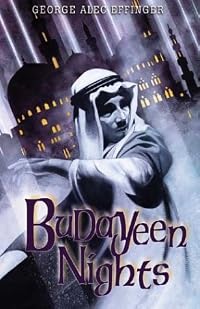
A "brilliant collection" of short stories set in a "marvelously realized, imaginary Muslim city" from the Hugo and Nebula Award-winning author (Publishers Weekly, starred review). Long identified as a science fiction writer, except in his own eyes, George Alec Effinger had some of his biggest critical and commercial success with a series even he recognized and characterized as SF. Set in the marvelously realized, imaginary Muslim city of Budayeen, the three novels, When Gravity Fails, A Fire show more in the Sun and The Exile Kiss garnered rave reviews, award nominations and a wide readership. In addition, Effinger came to be recognized as one of the foundational writers of cyberpunk. Although the novels are perhaps how Budayeen and their hero, Marid Audran, are best known, there are a handful of shorter pieces that add to the vividly drawn and deeply authentic picture of an imagined world and seven short stories, the first part of an uncompleted novel and a story fragment add to the mental images of this exotic and yet somehow completely familiar city and world that Effinger created. This book was originally published by Golden Gryphon Press and comes with a Forword and story notes by Effinger's widow, Barbara Hambly. The lead story in this collection, "Schrodinger's Kitten," won the Hugo, Nebula and Seiun Awards. show lessTags
Recommendations












































Member Reviews
There are really only two audiences for this book: those who can’t get enough of Effinger’s future Arabic setting of the Budayeen and those interested in Effinger himself.
Both audiences are well served by the “Foreword” by Barbara Hambly as well as her introductory notes for all the included pieces. She writes with affection, knowledge, and occasional annoyance about Effinger and the stories here. (She never mentions that she was married to Effinger from 1998 to 2000.)
Effinger, she says, had a
"very dark side to his nature, a fascination with the underworld and the demimonde that came about, I think, because many of his mother’s friends were hookers and strippers back in Cleveland "
Those strippers and hookers included a show more transexual one who was murdered by a customer and the murder not investigated by the New Orleans police. Effinger’s “outrage and helplessness” about that led to When Gravity Fails. The world of the Budayeen is very much like the French Quarter he inhabited in New Orleans with a bit of Greenwich Village in New York City, another place Effinger lived, thrown in.
Effinger took quite a bit of trouble to depict Islamic culture correctly. The local Islamic Cooperative Association pronounced it respectful to that culture and faith but added they were liberal Sunnis. Who knew what a Shiite would think?
When Gravity Fails was intended to be a single book. However, when it became popular, Bantam Books wanted more. Effinger said the Budayeen was the first world he created that had true “depth and richness”.
A minor character in the Budayeen novels, poet Sandor Courane, is an alter ego of Effinger as Marîd Audran was.
It amused George that many readers take Marîd at Marîd’s own evaluation of himself: cool, clever, street-smart, sharp. But in fact, George said, if you look at what Marîd actually does rather than what he says, he is in fact cowardly, not nearly as clever as he thinks he is, and has a major drug problem which he never quite gets around to addressing.
Like George — dearly as I loved him.
Drugs, depression, and chronic pain from chronic ulcerative colitis took their toll on Effinger in his last twelve years of life, and his output became sparse.
“Schrödinger’s Kitten” is a 1988 story that won both Hugo and Nebula awards which just goes to show awards aren’t a very good measure of enduring appeal. This is a multiple worlds story, but it isn’t particularly memorable compared to others like Frederik Pohl’s The Coming of the Quantum Cats. It’s is a Budayeen story because the protagonist, Jehan Fatima Ashufi, a twelve year old girl, lives there when the story opens. She is plagued by precognitive visions. The story opens with her stabbing a boy whom she will knows will rape her in the future. As she slips back and forth in timelines, past and present, we see her both executed and rescued by visiting physicist David Hilbert who buys her freedom from execution.
She seems to become his mistress and later, revealed to have a talent for physics, assistant to Werner Heisenberg, and her casual religious remarks to him lead to his formulation of the Uncertainty Principle. Later, she becomes an assistant to Schrödinger. Yes, this story deals with Nazi Germany’s atomic bomb program. It’s well told as it moves back and forth in time and between the alternate versions of her life. It’s just not, with its basic concept – another alternate WWII story – that novel or memorable.
“Marîd Changes His Mind” would seem to be here only for completeness sake. It was originally published in Isaac Asimov’s Science Fiction Magazine, but it was also the first two chapters of A Fire in the Sun. Hambly’s introductory notes says that Effinger liked to recycle characters. The nightclub owner M. Gargotier and his daughter Maddie show up in other stories including “The City in the Sand” and a heist novel, Felicia.
“Slow, Slow Burn” is, as Hambly says, one of the best stories in the book. It centers on Honey Pilar, recorder of pornographic moddies frequently mentioned in the Budayeen novels. Those chipping her moddies into their wired brains can either experience sex like or with the world’s most desired woman. Originally published in Playboy, it has the slick feel of some of that magazine’s fiction.
The story has several scenes: advertisements for Honey’s latest moddy (which is marketed to ninth graders among others), tv reports about Honey, the recording of Honey’s latest moddy, and, mostly, Honey’s relationship with Ray, her fourth husband and manager. Honey speaks in weirdly ungrammatical sentences, and Ray, understandably for a man living in the shadow of Honey, likes to assert his independence in various ways. But how long is Honey is going to put up with that?
Oddly, Ray seems to have lustful thoughts for a local woman who is running a “numbers station”. Nothing is really done with that, so maybe Effinger just liked the added weirdness. There is something of a tonal and conceptual discontinuity with the Budayeen novels given that you would never know this is a balkanized world.
The idea for “Marîd and the Trial of Blood” came from Hambly herself who commissioned it for her anthology, Sisters of the Night. It contained stories where vampires were rationalized in various ways. Here Audran encounters the stripper Sheba whose addictive personality has caused her to compulsively chip a Dracula moddy where she is Dracula. This results in her killing some people. Audran amusingly resorts to a Van Helsing moddy to know how to deal with her. The story ends on a somewhat disturbing moral note, but it’s entirely consistent with earlier events in the story and the Budayeen novels themselves.
“King of the Cyber Rifles” doesn’t take place in the Budayeen nor does it have any of the characters from the Budayeen novels, but it is set in the same world. It’s hero, Jân Muhammed, mans an outpost on a mountain pass, his moddies enable him to chip into various sensors and weapons. But the system is sabotaged, and he must decide how to respond not only in defending the pass but in punishing the saboteur. Hambly sees something of Effinger in Muhammed, a man both gregarious and “half-afraid” of people, who takes pride in his “miniscule, mindless, and insignificant” task.
“Marîd Throws a Party” is nothing less than the first two chapters of what was to the fourth Budayeen novel, Word of Night. Effinger wrote them in 1990, and, when he died in 2002, they were still all he had written on that novel. Hambly and Effinger did work out an outline for the novel.
The book opens with Audran observing that the most frightening words in the world are “Do you know what you did last night?” Audran’s day starts out with news of another “gift” from Friedlander Bey. Audran is to have another operation on his brain – the experimental surgery we heard about in A Fire in the Sun – the next morning before he and Bey go on the pilgrimage to Mecca.
Audran spends his day plotting revenge on the hapless Faud who conned him out of some money in The Exile Kiss. At his club that night, a man mysteriously ends up dead, and Audran’s sexual kinks are expanded. Kumzu, Audran’s slave, is not at all happy the next morning about developments
I’d read “The World As We Know It” before, but I wasn’t aware that its unnamed narrator is Audran. This story takes place after what was to be the end of the five novel series. Audran is an outcast from the city and hiding from his old enemy Shaykh Reda (presumably Friedlander Bey is dead).
The story involves “consensual realities”, partly holographic illusions, part virtual reality, and part stage illusions. Audran, for instance, has an office rather like Raymond Chandler’s Philip Marlowe. He’s called to investigate some vandalism at a place running a consensual reality simulation of a Mars colony. As a crime story, it’s not entirely satisfying. Hambly sees it as a bit of a metaphor for New Wave master Effinger holding his own against the up-and-coming cyberpunks. Here one character tells Audran he’s “A small legend, an ignoble kind of legend, but if you were younger, our age . . . “
“The City on the Sand” is another fine story, and, indeed, the “ultimate tale of the Budayeen Nights”. It was published in 1973, yet it has almost all the details of the later Budayeen novels, many inspired by New Orleans. It features another reoccurring Effinger character, the “lost, shabby, and hopeless expatriate Ernst Weinraub (or Weintraub).” Sandor Courane also shows up as does M. Gargotier.
Like many in New Orleans, Weinraub is a would-be writer who wants to be noticed as he scribbles things on napkins. Mostly he just pretends to write and contemplate, as Effinger did of New Orleans, the city he finds himself in. Weinraub’s pretensions are rather amusing.
Nothing much happens in a story which has Weinraub sitting outside a café for almost 24 hours, getting increasingly drunk. We eventually come to wonder how many of his thoughts about his past are really just drunken fantasies of self-pity and grandeur. He is constantly mocked obscenely by an Arab boy (evidently another sort of recurring Effinger character). Here Weinraub is jealous of the attention the poet Courane gets. There is a plot (who knows how much is delusion and how much mockery of Weinraub?) where Courane and a local militia leader (another feature of the Budayeen novels which shows up in The Exile Kiss) ask him to write propaganda for them.
“The Plastic Pasha” is the very last thing Effinger was working on before he died in 2002. Hambly’s introductory note says it involves Audran’s younger brother who was sold into slavery by their mother. The story involves a religious conference and the political intrigue around it with the issue being the status of the personality moddies in Islam. The brother is now ruler of Algeria. The story was to be about (and this is not at all clear from the fragment we have) a moddy that enables its user to be the “perfect Islamic governor” and who gets to wear it. Oddly, Hambly notes, the personality is a simulation of Thomas Jefferson (a hero of Effinger’s), so there is a question, if the moddy’s use is allowed, who would really be in charge. show less
Both audiences are well served by the “Foreword” by Barbara Hambly as well as her introductory notes for all the included pieces. She writes with affection, knowledge, and occasional annoyance about Effinger and the stories here. (She never mentions that she was married to Effinger from 1998 to 2000.)
Effinger, she says, had a
"very dark side to his nature, a fascination with the underworld and the demimonde that came about, I think, because many of his mother’s friends were hookers and strippers back in Cleveland "
Those strippers and hookers included a show more transexual one who was murdered by a customer and the murder not investigated by the New Orleans police. Effinger’s “outrage and helplessness” about that led to When Gravity Fails. The world of the Budayeen is very much like the French Quarter he inhabited in New Orleans with a bit of Greenwich Village in New York City, another place Effinger lived, thrown in.
Effinger took quite a bit of trouble to depict Islamic culture correctly. The local Islamic Cooperative Association pronounced it respectful to that culture and faith but added they were liberal Sunnis. Who knew what a Shiite would think?
When Gravity Fails was intended to be a single book. However, when it became popular, Bantam Books wanted more. Effinger said the Budayeen was the first world he created that had true “depth and richness”.
A minor character in the Budayeen novels, poet Sandor Courane, is an alter ego of Effinger as Marîd Audran was.
It amused George that many readers take Marîd at Marîd’s own evaluation of himself: cool, clever, street-smart, sharp. But in fact, George said, if you look at what Marîd actually does rather than what he says, he is in fact cowardly, not nearly as clever as he thinks he is, and has a major drug problem which he never quite gets around to addressing.
Like George — dearly as I loved him.
Drugs, depression, and chronic pain from chronic ulcerative colitis took their toll on Effinger in his last twelve years of life, and his output became sparse.
“Schrödinger’s Kitten” is a 1988 story that won both Hugo and Nebula awards which just goes to show awards aren’t a very good measure of enduring appeal. This is a multiple worlds story, but it isn’t particularly memorable compared to others like Frederik Pohl’s The Coming of the Quantum Cats. It’s is a Budayeen story because the protagonist, Jehan Fatima Ashufi, a twelve year old girl, lives there when the story opens. She is plagued by precognitive visions. The story opens with her stabbing a boy whom she will knows will rape her in the future. As she slips back and forth in timelines, past and present, we see her both executed and rescued by visiting physicist David Hilbert who buys her freedom from execution.
She seems to become his mistress and later, revealed to have a talent for physics, assistant to Werner Heisenberg, and her casual religious remarks to him lead to his formulation of the Uncertainty Principle. Later, she becomes an assistant to Schrödinger. Yes, this story deals with Nazi Germany’s atomic bomb program. It’s well told as it moves back and forth in time and between the alternate versions of her life. It’s just not, with its basic concept – another alternate WWII story – that novel or memorable.
“Marîd Changes His Mind” would seem to be here only for completeness sake. It was originally published in Isaac Asimov’s Science Fiction Magazine, but it was also the first two chapters of A Fire in the Sun. Hambly’s introductory notes says that Effinger liked to recycle characters. The nightclub owner M. Gargotier and his daughter Maddie show up in other stories including “The City in the Sand” and a heist novel, Felicia.
“Slow, Slow Burn” is, as Hambly says, one of the best stories in the book. It centers on Honey Pilar, recorder of pornographic moddies frequently mentioned in the Budayeen novels. Those chipping her moddies into their wired brains can either experience sex like or with the world’s most desired woman. Originally published in Playboy, it has the slick feel of some of that magazine’s fiction.
The story has several scenes: advertisements for Honey’s latest moddy (which is marketed to ninth graders among others), tv reports about Honey, the recording of Honey’s latest moddy, and, mostly, Honey’s relationship with Ray, her fourth husband and manager. Honey speaks in weirdly ungrammatical sentences, and Ray, understandably for a man living in the shadow of Honey, likes to assert his independence in various ways. But how long is Honey is going to put up with that?
Oddly, Ray seems to have lustful thoughts for a local woman who is running a “numbers station”. Nothing is really done with that, so maybe Effinger just liked the added weirdness. There is something of a tonal and conceptual discontinuity with the Budayeen novels given that you would never know this is a balkanized world.
The idea for “Marîd and the Trial of Blood” came from Hambly herself who commissioned it for her anthology, Sisters of the Night. It contained stories where vampires were rationalized in various ways. Here Audran encounters the stripper Sheba whose addictive personality has caused her to compulsively chip a Dracula moddy where she is Dracula. This results in her killing some people. Audran amusingly resorts to a Van Helsing moddy to know how to deal with her. The story ends on a somewhat disturbing moral note, but it’s entirely consistent with earlier events in the story and the Budayeen novels themselves.
“King of the Cyber Rifles” doesn’t take place in the Budayeen nor does it have any of the characters from the Budayeen novels, but it is set in the same world. It’s hero, Jân Muhammed, mans an outpost on a mountain pass, his moddies enable him to chip into various sensors and weapons. But the system is sabotaged, and he must decide how to respond not only in defending the pass but in punishing the saboteur. Hambly sees something of Effinger in Muhammed, a man both gregarious and “half-afraid” of people, who takes pride in his “miniscule, mindless, and insignificant” task.
“Marîd Throws a Party” is nothing less than the first two chapters of what was to the fourth Budayeen novel, Word of Night. Effinger wrote them in 1990, and, when he died in 2002, they were still all he had written on that novel. Hambly and Effinger did work out an outline for the novel.
The book opens with Audran observing that the most frightening words in the world are “Do you know what you did last night?” Audran’s day starts out with news of another “gift” from Friedlander Bey. Audran is to have another operation on his brain – the experimental surgery we heard about in A Fire in the Sun – the next morning before he and Bey go on the pilgrimage to Mecca.
Audran spends his day plotting revenge on the hapless Faud who conned him out of some money in The Exile Kiss. At his club that night, a man mysteriously ends up dead, and Audran’s sexual kinks are expanded. Kumzu, Audran’s slave, is not at all happy the next morning about developments
I’d read “The World As We Know It” before, but I wasn’t aware that its unnamed narrator is Audran. This story takes place after what was to be the end of the five novel series. Audran is an outcast from the city and hiding from his old enemy Shaykh Reda (presumably Friedlander Bey is dead).
The story involves “consensual realities”, partly holographic illusions, part virtual reality, and part stage illusions. Audran, for instance, has an office rather like Raymond Chandler’s Philip Marlowe. He’s called to investigate some vandalism at a place running a consensual reality simulation of a Mars colony. As a crime story, it’s not entirely satisfying. Hambly sees it as a bit of a metaphor for New Wave master Effinger holding his own against the up-and-coming cyberpunks. Here one character tells Audran he’s “A small legend, an ignoble kind of legend, but if you were younger, our age . . . “
“The City on the Sand” is another fine story, and, indeed, the “ultimate tale of the Budayeen Nights”. It was published in 1973, yet it has almost all the details of the later Budayeen novels, many inspired by New Orleans. It features another reoccurring Effinger character, the “lost, shabby, and hopeless expatriate Ernst Weinraub (or Weintraub).” Sandor Courane also shows up as does M. Gargotier.
Like many in New Orleans, Weinraub is a would-be writer who wants to be noticed as he scribbles things on napkins. Mostly he just pretends to write and contemplate, as Effinger did of New Orleans, the city he finds himself in. Weinraub’s pretensions are rather amusing.
Nothing much happens in a story which has Weinraub sitting outside a café for almost 24 hours, getting increasingly drunk. We eventually come to wonder how many of his thoughts about his past are really just drunken fantasies of self-pity and grandeur. He is constantly mocked obscenely by an Arab boy (evidently another sort of recurring Effinger character). Here Weinraub is jealous of the attention the poet Courane gets. There is a plot (who knows how much is delusion and how much mockery of Weinraub?) where Courane and a local militia leader (another feature of the Budayeen novels which shows up in The Exile Kiss) ask him to write propaganda for them.
“The Plastic Pasha” is the very last thing Effinger was working on before he died in 2002. Hambly’s introductory note says it involves Audran’s younger brother who was sold into slavery by their mother. The story involves a religious conference and the political intrigue around it with the issue being the status of the personality moddies in Islam. The brother is now ruler of Algeria. The story was to be about (and this is not at all clear from the fragment we have) a moddy that enables its user to be the “perfect Islamic governor” and who gets to wear it. Oddly, Hambly notes, the personality is a simulation of Thomas Jefferson (a hero of Effinger’s), so there is a question, if the moddy’s use is allowed, who would really be in charge. show less
This book is the final piece in the Marîd Audran/Budayeen series. A collection of stories, both published and unpublished, included fragments of books that were never finished. Effingers' last wife, [a:Barbara Hambly|10333|Barbara Hambly|http://photo.goodreads.com/authors/1251133270p2/10333.jpg], wrote the forward as well as an introduction to each of the stories.
Schrödingers Kitten
The first story is completely unlike the Budayeen novels. Indeed the Budayeen is barely mentioned and a lot of it takes place in pre-world war 2 Germany. As such it is also in a completely different time to Auran. This isn't sci-fi or cyberpunk but more philosophy via physics about the uncertainty and endless possibities of the future. Jumping forward and show more back between various possibilities it's a little confusing but an interesting start to the book.
Marîd Changes His Mind
This was an odd inclusion. It's the first 6 chapters of the second Marîd Audran book and I wouldn't expect people who hadn't read that to be reading this. As I only just recently read that book I will skip over it this time.
Slow, Slow Burn
In the world of moddies and daddies one name stands out above any other. The most desired, the most adored, the most experienced - Honey Pílar. The star of the top-selling "erotica" moddies Pílars' name is on every street and every shelf but who she really is has never been explored til now. In her mid-forties and on her fourth marriage she is like Howard Hughes, rich beyond all belief but eccentric and rarely does she leave her home. Her husband Kit is growing tired of this dumb, dull woman whose only good point is her body and what she does with it and this isn't the paradise marriage others think it should be. But there seems to be something more. Is Pílar really as stupid as she seems? What is with the cryptic recording? Is the world growing tired of Honey Pílar? I feel there is a lot more to explore and it's a shame Effinger died before he got that chance.
Marîd and the Trail of Blood
So far my favourite story of this book. It reminds me of the first book. Audran is on the trail of a killer who seems to be a vampire. There is only one way to fight a vampire - by using a moddy of vampire hunter Van Helsing. I love the way the moddies alter actions and thoughts without (most of the time) stopping their own thoughts from being part of it. I wish this was explored more rather than being a minor part of the overall series. Also featuring one of my favourite characters, Bill the Taxi Driver, this is a taste of where I was hoping the series was going.
King of the Cyber Rifles
This story is set in an unnamed Persian mountain pass and tells the take of a soldier, Jân Muhammad, whose job is to live alone in his bunker and defend the pass using technology linked to moddies and daddies. It's interesting to look at a perspective of the technology that's not pleasure based but military. Apart from that though there isn't a lot of substance to it. It feels like an introductory chapter as all it does is introduce a main character and a setting then just stops.
Marîd Throws a Party
Effinger unfortunately died before he could write the fourth Audran book, Word of Night. But he did write the first couple chapters. It's frustrating in a way as he was setting up some good events. Audran and Bey's pilgrimage to Mecca, Marîd's revenge on Fuad and what gets me most, the introduction of a technology upgrade. The neural net introduced in the second book was coming back and going into Marîd's head. It would have been a return to what made the first book so great. That mix of old-school world and religion with futuristic technology. Such a shame we'll never know what Effinger had in store. I'm sure it would have been a great book.
The World as We Know It
Originally the Audran books were meant to be a 5 book series. That was cut short early but Effinger always had in mind where it was going. This short story is set after the fifth book. We don't know what happened to Marîd in the intervening time but it appears he has lost a great deal. Now working as a PI under an assumed name he's an ageing man in a changed world. Moddies and daddies are considered ancient technology and the new thing is CR - consensual reality. When a local company has issues they can't make public who else could they turn to. I think I like this story the least out of this book. It's disjointed and feels very incomplete as if whole paragraphs or more are missing. It doesn't make a great deal of sense and feels like it was included just so they could publish everything Effinger wrote about the Budayeen.
The City on the Sand
A sad, philosophical, semi-autobiographical tale of a writer/poet in exile spending his days and nights drinking in the Budayeen. Modelled on Effinger the write Ernst Weinraub came to the Budayeen for an unknown reason with hints that he was escaping some drama in his past. He spends his time drinking at scratching out meaningless writing on napkins and scrap paper hoping for some recognition or acknowledgment of his "superior" intellect. Occasionally others come by the café in inhabits - the proprietor; the leader of the Jaish (local militia) trying to persuade Weinraub to spy for them; Sandor Courane, protagonist of other Effiger stories and another representation of himself; and Kebap the possibly imaginary street urchin who is far wiser than his years. It was an OK but I found it a bit boring and was glad when it was finished.
The Plastic Pasha
The final piece of this books is a fragment of a story Effinger started in the weeks before his death. Barely a chapter in length the only thing you can get out of it is it not set in the Budayeen and seemed to be about politics. Any more than that I cannot say as it ends abruptly. Honestly I can't see why it was included. I know it was the last thing he wrote but it was extremely unfinished and probably would have been better left out.
So what are my final thoughts on this book. Firstly I wouldn't recommend it to anyone who hasn't read the rest of the Budayeen books. Secondly I'm not sure it needed to be released, or at least not as it was. A collection of his stories that have previously been released, sure. But the unfinished fragments, those I'm not so sure about. I don't understand the need to publish everything an author ever wrote. If I died I wouldn't want anything I hadn't finished and been satisfied with to be published. Yes it shows where Effinger was planning on taken the Budayeen series but he died over ten years after he wrote [b:The Exile Kiss|358990|The Exile Kiss|George Alec Effinger|http://photo.goodreads.com/books/1312020161s/358990.jpg|349113]. Maybe he didn't finish the fourth book because he wasn't happy with it, or just wanted to write something else. So here we get the scrap he left behind that he may never have wanted to be seen.
There were some good parts but overall it was a sad book of pieces and fragments that tell of potential lost. show less
Schrödingers Kitten
The first story is completely unlike the Budayeen novels. Indeed the Budayeen is barely mentioned and a lot of it takes place in pre-world war 2 Germany. As such it is also in a completely different time to Auran. This isn't sci-fi or cyberpunk but more philosophy via physics about the uncertainty and endless possibities of the future. Jumping forward and show more back between various possibilities it's a little confusing but an interesting start to the book.
Marîd Changes His Mind
This was an odd inclusion. It's the first 6 chapters of the second Marîd Audran book and I wouldn't expect people who hadn't read that to be reading this. As I only just recently read that book I will skip over it this time.
Slow, Slow Burn
In the world of moddies and daddies one name stands out above any other. The most desired, the most adored, the most experienced - Honey Pílar. The star of the top-selling "erotica" moddies Pílars' name is on every street and every shelf but who she really is has never been explored til now. In her mid-forties and on her fourth marriage she is like Howard Hughes, rich beyond all belief but eccentric and rarely does she leave her home. Her husband Kit is growing tired of this dumb, dull woman whose only good point is her body and what she does with it and this isn't the paradise marriage others think it should be. But there seems to be something more. Is Pílar really as stupid as she seems? What is with the cryptic recording? Is the world growing tired of Honey Pílar? I feel there is a lot more to explore and it's a shame Effinger died before he got that chance.
Marîd and the Trail of Blood
So far my favourite story of this book. It reminds me of the first book. Audran is on the trail of a killer who seems to be a vampire. There is only one way to fight a vampire - by using a moddy of vampire hunter Van Helsing. I love the way the moddies alter actions and thoughts without (most of the time) stopping their own thoughts from being part of it. I wish this was explored more rather than being a minor part of the overall series. Also featuring one of my favourite characters, Bill the Taxi Driver, this is a taste of where I was hoping the series was going.
King of the Cyber Rifles
This story is set in an unnamed Persian mountain pass and tells the take of a soldier, Jân Muhammad, whose job is to live alone in his bunker and defend the pass using technology linked to moddies and daddies. It's interesting to look at a perspective of the technology that's not pleasure based but military. Apart from that though there isn't a lot of substance to it. It feels like an introductory chapter as all it does is introduce a main character and a setting then just stops.
Marîd Throws a Party
Effinger unfortunately died before he could write the fourth Audran book, Word of Night. But he did write the first couple chapters. It's frustrating in a way as he was setting up some good events. Audran and Bey's pilgrimage to Mecca, Marîd's revenge on Fuad and what gets me most, the introduction of a technology upgrade. The neural net introduced in the second book was coming back and going into Marîd's head. It would have been a return to what made the first book so great. That mix of old-school world and religion with futuristic technology. Such a shame we'll never know what Effinger had in store. I'm sure it would have been a great book.
The World as We Know It
Originally the Audran books were meant to be a 5 book series. That was cut short early but Effinger always had in mind where it was going. This short story is set after the fifth book. We don't know what happened to Marîd in the intervening time but it appears he has lost a great deal. Now working as a PI under an assumed name he's an ageing man in a changed world. Moddies and daddies are considered ancient technology and the new thing is CR - consensual reality. When a local company has issues they can't make public who else could they turn to. I think I like this story the least out of this book. It's disjointed and feels very incomplete as if whole paragraphs or more are missing. It doesn't make a great deal of sense and feels like it was included just so they could publish everything Effinger wrote about the Budayeen.
The City on the Sand
A sad, philosophical, semi-autobiographical tale of a writer/poet in exile spending his days and nights drinking in the Budayeen. Modelled on Effinger the write Ernst Weinraub came to the Budayeen for an unknown reason with hints that he was escaping some drama in his past. He spends his time drinking at scratching out meaningless writing on napkins and scrap paper hoping for some recognition or acknowledgment of his "superior" intellect. Occasionally others come by the café in inhabits - the proprietor; the leader of the Jaish (local militia) trying to persuade Weinraub to spy for them; Sandor Courane, protagonist of other Effiger stories and another representation of himself; and Kebap the possibly imaginary street urchin who is far wiser than his years. It was an OK but I found it a bit boring and was glad when it was finished.
The Plastic Pasha
The final piece of this books is a fragment of a story Effinger started in the weeks before his death. Barely a chapter in length the only thing you can get out of it is it not set in the Budayeen and seemed to be about politics. Any more than that I cannot say as it ends abruptly. Honestly I can't see why it was included. I know it was the last thing he wrote but it was extremely unfinished and probably would have been better left out.
So what are my final thoughts on this book. Firstly I wouldn't recommend it to anyone who hasn't read the rest of the Budayeen books. Secondly I'm not sure it needed to be released, or at least not as it was. A collection of his stories that have previously been released, sure. But the unfinished fragments, those I'm not so sure about. I don't understand the need to publish everything an author ever wrote. If I died I wouldn't want anything I hadn't finished and been satisfied with to be published. Yes it shows where Effinger was planning on taken the Budayeen series but he died over ten years after he wrote [b:The Exile Kiss|358990|The Exile Kiss|George Alec Effinger|http://photo.goodreads.com/books/1312020161s/358990.jpg|349113]. Maybe he didn't finish the fourth book because he wasn't happy with it, or just wanted to write something else. So here we get the scrap he left behind that he may never have wanted to be seen.
There were some good parts but overall it was a sad book of pieces and fragments that tell of potential lost. show less
I had been hoping for more novels in Effinger's Budayeen series, but he died in 2002, leaving the fourth novel unfinished. The first two chapters of that novel are included here, and it would have been a great one! It seems Effinger was going to have Marid Audran and Friedlander Bey travel to Mecca! A description of the hajj in the 22nd century - all the more reason to mourn the author's passing.
The other stories included here shed a little more light on Marid's story - especially "The World As We Know It," which has a middle-aged Marid working on a cyberpunk mystery. The story leaves a lot to be desired, but the insight into Marid's character after Friedlander Bey loses power in the city is enough to satisfy Effinger fans.
The other stories included here shed a little more light on Marid's story - especially "The World As We Know It," which has a middle-aged Marid working on a cyberpunk mystery. The story leaves a lot to be desired, but the insight into Marid's character after Friedlander Bey loses power in the city is enough to satisfy Effinger fans.
The weakest of the bunch unfortunately. The award winning story was very good but the rest falls super flat.
Ratings
Members
- Recently Added By
Published Reviews
ThingScore 100
Effinger's original dialouge really blows me away. The hard-boiled action crackles with language inspired by the noble Qur'an and the poetry of Omar Khayyam. The meticulous research of every detail Muslim culture weaves seamlessly with fully realized portraits from the mean streets. Tough-as-nails corrupt cops and transgender hookers conduct their business with all the formalized flourishes of show more Arabic ettiqute. Like Turkish coffee, it fills the atmosphere with a rich complexity and leaves you more than a little wired. show less
added by PhoenixTerran
Author Information

115+ Works 6,117 Members
Some Editions
Series

Belongs to Publisher Series
Golden Gryphon (28)
Work Relationships
Contains
Common Knowledge
- Original publication date
- 2003
- Dedication
- For Nell, Denise, Helen, Valerie,
and all the others without whom
there would be no Budayeen.
–GAE - Publisher's editor
- Halpern, Marty
Classifications
Statistics
- Members
- 229
- Popularity
- 141,713
- Reviews
- 4
- Rating
- (3.52)
- Languages
- English, French
- Media
- Paper, Audiobook, Ebook
- ISBNs
- 7
- ASINs
- 3