On This Page
Description
Michael Moorcock is the author of numerous novels, including the Elric series, Cornelius Quartet, Gloriana, and The White Wolf's Son. He has received the Nebula, World Fantasy, and British Science Fiction awards and is a Grandmaster of the Science Fiction and Fantasy Writers of America. As editor of the science fiction magazine New Worlds, he was one of the progenitors of the controversial New Wave movement. His nonfiction works have appeared in the Daily Telegraph, Guardian, and New show more Statesman. He lives in Bastrop, Texas. Alan Wall is a novelist, a short story writer, a poet, an essayist, and a professor of writing and literature at the University of Chester. His novels include Bless the Thief, China, The Lightning Cage, The School of Night, and Sylvie's Riddle. Michael Moorcock is the author of numerous novels, including the Elric series, Cornelius Quartet, Gloriana, and The White Wolf's Son. He has received the Nebula, World Fantasy, and British Science Fiction awards and is a Grandmaster of the Science Fiction and Fantasy Writers of America. As editor of the science fiction magazine New Worlds, he was one of the progenitors of the controversial New Wave movement. His nonfiction works have appeared in the Daily Telegraph, Guardian, and New Statesman. He lives in Bastrop, Texas. Alan Wall is a novelist, a short story writer, a poet, an essayist, and a professor of writing and literature at the University of Chester. His novels include Bless the Thief, China, The Lightning Cage, The School of Night, and Sylvie's Riddle. show lessTags
Recommendations

















Member Reviews
Ever heard of an unreliable narrator? I hadn't, so this book was a bit of a shock and a revelation. I must have been 13-15 years old and I'd been devouring Moorcock's fantasies at a rate of knots, without worrying at all about the allegorical or Tolkien-reactionary nature of them, which I didn't really catch up on for a few more years. So I was in the library and came across this book and picked it up without thinking or looking closely, just 'cos it had "Moorcok" written on the spine...it was a surprise, therefore, to be confronted by a historical novel that employs that pretending to be based on real documents technique that there is probably a name for and not a hint of fantasy in sight.
Except there is actually plenty of fantasy, show more really, as Moorcock plainly states in his foreword, where he introduces the narrator of the book as if he is a personal acquaintance who recently died and says the following narrative is based on recorded conversations between the two of them. Moorcock states that Pyat - a protagonist that could hardly be called a hero - is a liar and moderately demented. But I didn't really get it until 3/4 of the way through the novel, when I realised that Pyat was talking complete BS and probably had been several times before, now that I stop to think about it....
It was tough going, with really long paragraphs, a fairly slow pace and a narrative that would wander between telling the tale and ranting about politics, race and religion fairly arbitrarily. It was educational, though; not only did I learn what an unreliable narrator is, I learned the meaning of "pogrom" and a bit about the history of the Russian October Revolution and subsequent civil war. (Mainly that is was really complicated and confusing and that most of the Big Names didn't have much clue what was going on either.)
Being a glutton for punishment I went on to read the sequel....
Fast-forward about twenty years and the fourth and final volume in the series has been published and I decide I ought to read them and figure out what it was all about.
So here we go again; Moorcock states in his foreword that Pyat is a liar - I think, man, he says right here that he can't be trusted - what an idiot I was! Was the narrative going to be as tough going as I remembered? No. The average paragraph length is quite long by contemporary standards, with some of them longer than a page, but this is worst at the beginning and end. Most of the rambling and ranting is confined to the beginning and end, too, subtly disguising the fact that Moorcock keeps the main portion of the narrative relatively straight-forward. It's not remotely so hard as reading William Langland as I am doing right now and calling it fun. Exactly how much of Pyat's adventures are completely made up, exagerated versions of the "truth" or unadorned "fact" cannot be ascertained - one has to judge for oneself, just as Moorcock says back in the foreword - but the general sweep of history can be relied on, I think, because that seems to be the point:
Pyat was born in 1900 in the Ukraine and lives through all of the most extreme turmoil of the first half of the century, his life being defined by it. Through Pyat, Moorcock gets to talk about all this history - in this volume covering the time from about 1912 up to and inclusive of 1920 in detail. The main strength of the book is how convincing Pyat is as a character and how ironic - Pyat is an anti-semitic ethnic Jew who follows the Christian Orthodox Church, for instance. Pyat is not overly likable - a boaster and liar, spending most of his time pursuing his self interest (or survival, later, which is easier to sympathise with) or his vices and being outrageously racist. But he is not a complete monster either; he genuinely attempts to look after his family and childhood friend when politics deteriorates into revolution and war.
The evocation of social atmosphere whether it be Bohemian Odessa and Kiev or those same cities living amidst famine and destruction only a few years later is excellent and perhaps one of Moorcock's primary purposes - but I'll have to read the other three volumes to be sure. show less
Except there is actually plenty of fantasy, show more really, as Moorcock plainly states in his foreword, where he introduces the narrator of the book as if he is a personal acquaintance who recently died and says the following narrative is based on recorded conversations between the two of them. Moorcock states that Pyat - a protagonist that could hardly be called a hero - is a liar and moderately demented. But I didn't really get it until 3/4 of the way through the novel, when I realised that Pyat was talking complete BS and probably had been several times before, now that I stop to think about it....
It was tough going, with really long paragraphs, a fairly slow pace and a narrative that would wander between telling the tale and ranting about politics, race and religion fairly arbitrarily. It was educational, though; not only did I learn what an unreliable narrator is, I learned the meaning of "pogrom" and a bit about the history of the Russian October Revolution and subsequent civil war. (Mainly that is was really complicated and confusing and that most of the Big Names didn't have much clue what was going on either.)
Being a glutton for punishment I went on to read the sequel....
Fast-forward about twenty years and the fourth and final volume in the series has been published and I decide I ought to read them and figure out what it was all about.
So here we go again; Moorcock states in his foreword that Pyat is a liar - I think, man, he says right here that he can't be trusted - what an idiot I was! Was the narrative going to be as tough going as I remembered? No. The average paragraph length is quite long by contemporary standards, with some of them longer than a page, but this is worst at the beginning and end. Most of the rambling and ranting is confined to the beginning and end, too, subtly disguising the fact that Moorcock keeps the main portion of the narrative relatively straight-forward. It's not remotely so hard as reading William Langland as I am doing right now and calling it fun. Exactly how much of Pyat's adventures are completely made up, exagerated versions of the "truth" or unadorned "fact" cannot be ascertained - one has to judge for oneself, just as Moorcock says back in the foreword - but the general sweep of history can be relied on, I think, because that seems to be the point:
Pyat was born in 1900 in the Ukraine and lives through all of the most extreme turmoil of the first half of the century, his life being defined by it. Through Pyat, Moorcock gets to talk about all this history - in this volume covering the time from about 1912 up to and inclusive of 1920 in detail. The main strength of the book is how convincing Pyat is as a character and how ironic - Pyat is an anti-semitic ethnic Jew who follows the Christian Orthodox Church, for instance. Pyat is not overly likable - a boaster and liar, spending most of his time pursuing his self interest (or survival, later, which is easier to sympathise with) or his vices and being outrageously racist. But he is not a complete monster either; he genuinely attempts to look after his family and childhood friend when politics deteriorates into revolution and war.
The evocation of social atmosphere whether it be Bohemian Odessa and Kiev or those same cities living amidst famine and destruction only a few years later is excellent and perhaps one of Moorcock's primary purposes - but I'll have to read the other three volumes to be sure. show less
Despite featuring one of the most offensive narrators in modern fiction, this is a wonderful read. Moorcock has an incredible command of language and he gives it full rein here. The places, people, and events pop and shimmer with incredible power and you feel constantly present, involved, drawn into the chaos and mayhem of Pyat's world.
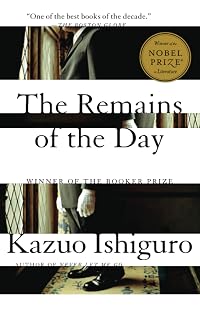
Akin to works like Lermontov's 'A Hero Of Our Times' and Ishiguro's 'The Remains of the Day' in its exquisite use of an unreliable narrator, and vying with Dickens at his best in terms of the sharp social criticism and satire, this is a fascinating look at a young Russian coming of age during the early years of the twentieth century. The work culminates during 1917, the Russian revolution, and Pyat's show more inability to fit in with Bolsheviks, Cossacks, or White Russians is simultaneously disturbing and hilarious. The overblown pomposity of Pyat, his obsession with God, science, and above all himself, make him the perfect foil for examining the early years of the twentieth century. Moorcock has always been a genius, even from his early fantasy and science fiction. The Jerry Cornelius works are as important a literary experiment as anything devised during the twentieth century, and Mother London stands as one of the finest novels about England's capital city ever written. In the Pyat Quartet Moorcock has allowed himself free reign to examine the horrors of anti-semitism, culminating in the Holocaust. But there is far more to this work than a simple examination of the evils that men do. Fashion, politics, drugs, sex, war, and much more make up the tapestry of this work, but fundamentally Moorcock has written a tale that takes as its central theme the manifold ways in which people degrade and destroy other people for being too different, and sometimes (and perhaps most importantly) for being too similar. That he has managed to maintain so much humanity and joy in his fictional world is a testament to his power as one of the leading voices in world fiction. show less
Akin to works like Lermontov's 'A Hero Of Our Times' and Ishiguro's 'The Remains of the Day' in its exquisite use of an unreliable narrator, and vying with Dickens at his best in terms of the sharp social criticism and satire, this is a fascinating look at a young Russian coming of age during the early years of the twentieth century. The work culminates during 1917, the Russian revolution, and Pyat's show more inability to fit in with Bolsheviks, Cossacks, or White Russians is simultaneously disturbing and hilarious. The overblown pomposity of Pyat, his obsession with God, science, and above all himself, make him the perfect foil for examining the early years of the twentieth century. Moorcock has always been a genius, even from his early fantasy and science fiction. The Jerry Cornelius works are as important a literary experiment as anything devised during the twentieth century, and Mother London stands as one of the finest novels about England's capital city ever written. In the Pyat Quartet Moorcock has allowed himself free reign to examine the horrors of anti-semitism, culminating in the Holocaust. But there is far more to this work than a simple examination of the evils that men do. Fashion, politics, drugs, sex, war, and much more make up the tapestry of this work, but fundamentally Moorcock has written a tale that takes as its central theme the manifold ways in which people degrade and destroy other people for being too different, and sometimes (and perhaps most importantly) for being too similar. That he has managed to maintain so much humanity and joy in his fictional world is a testament to his power as one of the leading voices in world fiction. show less
I think this had been sat on my bookshelf for approximately 30 years before I got round to reading it. Its a bit long winded and tedious in places, but lots of fun in others. The unreliable narrator meanders through life partaking in sex, drugs and implausible science.
This is all taking place in Kiev, Odessa, St Petersburg against the backdrop of the Russian Revolution. Of course reading it in 2022 the Ukrainian place names are all too familiar due to the current war, which gives an extra layer of interest.
Its the first in a 4 part series, I'm not sure I'll get to the others if I'm honest. I just found it a bit of a trudge overall.
This is all taking place in Kiev, Odessa, St Petersburg against the backdrop of the Russian Revolution. Of course reading it in 2022 the Ukrainian place names are all too familiar due to the current war, which gives an extra layer of interest.
Its the first in a 4 part series, I'm not sure I'll get to the others if I'm honest. I just found it a bit of a trudge overall.
A wonderfully tangy picaresque romp through the chaos of the Ukrainian civil war in the aftermath of the 1917 revolution. The scenes in Odessa are particularly delightful.
Jack Isidore of Seville, CA* as played in the film adaptation by Rade Serbedzija, telling the story of the Russian Revolution from the barstool next to you, with lots of antisemetic rants and flights of nostalgic fancy. Doesn't sound too interesting, but actually weirdly fascinating. There are three sequels. But I need a break.
*See Philip K. Dick's Confessions of a Crap Artist
*See Philip K. Dick's Confessions of a Crap Artist
The first part of Moorcock's Pyat quartet, Byzantium Endures is Pyatnitski's life story from being a boy to the age of 20. A character obsessed about religion, and his own self-worth, he has to duck and dive to survive in the maelstrom of WW1 and the Russian Civil War.
Ratings
Members
- Recently Added By
Lists

A Ukraine Reading List
129 works; 90 members
Author Information

661+ Works 65,347 Members
Michael Moorcock, 1939 - Writer Michael Moorcock was born December 18, 1939 in Mitcham, Surrey, England. Moorcock was the editor of the juvenile magazine Tarzan Adventures from 1956-58, an editor and writer for the Sexton Blake Library and for comic strips and children's annuals from 1959-61, an editor and pamphleteer for Liberal Party in 1962, show more and became editor and publisher for the science fiction magazine New Worlds in 1964. He has worked as a singer-guitarist, has worked with the rock bands Hawkwind and Blue Oyster Cult and is a member of the rock band Michael Moorcock and the Deep Fix. Moorcock's writing covers a wide range of science fiction and fantasy genres. "The Chronicles of Castle Brass" was a sword and sorcery novel, and "Breakfast in the Ruins: A Novel of Inhumanity" uses the character Karl Glogauer as a different person in different times. Karl participates in the political violence of the French Revolution, the Paris Commune, and a Nazi concentration camp. Moorcock also wrote books and stories that featured the character Jerry Cornelius, who had no consistent character or appearance. "The Condition of Muzak" completed the initial Jerry Cornelius tetralogy and won Guardian Literary Prize in 1977. "Byzantium Endures" and "The Laughter of Carthage" are two autobiographical novels of the Russian emigre Colonel Pyat and were the closest Moorcock came to conventional literary fiction. "Byzantium Endures" focuses on the first twenty years of Pyat's life and tells of his role in the Russian revolution. Pyat survives the revolution and the subsequent civil war by working first for one side and then another. "The Laughter of Carthage" covers Pyat's life from 1920-1924 telling of his escape from Communist Russia and his travels in Europe and America. It's a sweeping picture of the world during the 1920's because it takes the character from living in Constantinople to Hollywood. Moorcock returned to the New Wave style in "Blood: A Southern Fantasy" (1994) and combined mainstream fiction with fantasy in "The Brothel of Rosenstrasse," which is set in the imaginary city of Mirenburg. MoorCock won the 1967 Nebula Award for Behold the Man and the 1979 World Fantasy Award for his novel, Gloriana. (Bowker Author Biography) show less
Some Editions
Series

Common Knowledge
- Original publication date
- 1981
- People/Characters
- Maxim Arturovitch Pyatnitski
- Important places
- Kyiv, Ukraine; Odesa, Ukraine; St Petersburg, Russia
- Dedication
- Dedicated to the memory of Babel and Mandelstam.
For Ernst, a father, and for Josef, a brother
FOR JILL
Classifications
Statistics
- Members
- 343
- Popularity
- 92,189
- Reviews
- 6
- Rating
- (3.76)
- Languages
- English, German
- Media
- Paper, Ebook
- ISBNs
- 13
- ASINs
- 8