On This Page
Description
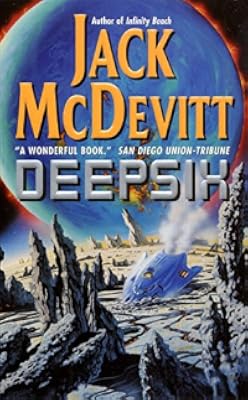
In the year 2204, tragedy and terror forced a scientific team to prematurely evacuate Maleiva III. Nineteen years later, a rogue moon hurtling through space is about to obliterate the last opportunity to study this rare, life-supporting planet. With less than three weeks left before the disaster, superluminal pilot Priscilla "Hutch" Hutchins -- the only even remotely qualified professional within lightyears of the ill-fated planet -- must lead a small scientific team to the surface to glean show more whatever they can about its lifeforms and lost civilizations before time runs out. But catastrophe awaits when they are stranded on this strange and complex world of puzzles and impossibilities. And now Hutch and her people must somehow survive on a hostile world going rapidly mad -- as the clock ticks toward apocalypse for a doomed enigma now called... show lessTags
Recommendations











Member Reviews
I'm a sucker for enormous shenanigans in science fiction. Whether these shenanigans be in the shape of enormous Big Dumb Objects like Larry Niven's Ringworld or Stephen Baxter's Ring, or whether they be natural occurrences but on a scale so big that they make the reader go "Crikey, that's a big scale." Falling firmly into this second camp is the crux of the plot of Deepsix: a gas giant is on a collision course with a planet that our plucky heroes find themselves stranded upon.
That aspect of the book was great, I just wasn't that impressed by the rest. The plot devices that McDevitt uses to get the heroes onto the planet but not easily rescued are a little contrived, as is the debate that develops between the evil scientists who want to show more watch the collision rather than rescue the people on the planet and the gruff captain of the would-be rescue ship who begs to differ. Obviously the story wouldn't be half so good without these contrivances, but they could be easier to swallow.
I wasn't aware when I picked up the book that it was the second part of a hexalogy. While I'd like to say that it stands just fine by itself, it's more than likely that knowing the characters a little better would've made the story more enjoyable. If I ever get hold of the other books in the series I certainly wouldn't be averse to re-reading this one. show less
That aspect of the book was great, I just wasn't that impressed by the rest. The plot devices that McDevitt uses to get the heroes onto the planet but not easily rescued are a little contrived, as is the debate that develops between the evil scientists who want to show more watch the collision rather than rescue the people on the planet and the gruff captain of the would-be rescue ship who begs to differ. Obviously the story wouldn't be half so good without these contrivances, but they could be easier to swallow.
I wasn't aware when I picked up the book that it was the second part of a hexalogy. While I'd like to say that it stands just fine by itself, it's more than likely that knowing the characters a little better would've made the story more enjoyable. If I ever get hold of the other books in the series I certainly wouldn't be averse to re-reading this one. show less
I enjoyed book two of the Academy series considerably more than the first one. The pacing was a little better, even though the overall tone and feel were the same. My guess is that McDevitt was settling into his voice for the series. Our pilot Hutchins is the only returning character, which I'm actually pleased with and I hope sets up a patter moving forward. Keeping with our theme of space archeology, we have some new (unrelated thus far to those presented in Engines of God) mysteries, some of which are solved, some of which are pleasingly and realistically left mysteries. We get some more star trek like scientific problem solving with just enough action to keep things moving. Of the new cast, at least two characters are pretty show more unlikable, but in very realistic and believable ways, so kudos for making me not care about them in a good way! show less
Maleiva III is one very unlucky planet - another world, Morgan's World, ejected from its own star system a long time ago is on a collision course with it - and due to the sizes of the two planets, Maleiva III is about to be annihilated while the much bigger gas giant will just pass and continue on its part, grabbing some dust along the line.
Of course the problems on this planet did not start with Morgan. Three thousand years earlier, the whole star system ended up inside of a dust field which caused the previously Earth-like planet to enter a severe Ice Age. Had it not been for the disaster about to hit it, it would have exited the dust a few hundred years in the future, making it possible for humanity to terraform it. As it is, the show more Academy dispatches a team to look for signs of civilization - just to lose most of it to the local fauna. As neither the people on the ground, nor the scans showed any intelligence, the politics of the Academy took over and the planet was never revisited. And now, 20 years or so later, the collision is about to happen and for the first time since that fateful expedition in the last years of the 21st century, the world looks again at Maleiva III. A ship full of scientists is in the area to observe the collision and learn a lot more about the universe.
Except that the first thing they discover are signs of civilization - under the ice, big cities start becoming obvious, with weeks left before being lost forever. They seem to be medieval-level - so it seems like the inhabitants of Deepsix (also known as Maleiva III) never made it to the stars. And the ship of scientists has no archeologists - noone expected to find anything ON the ground. So Priscilla Hutchins gets rerouted and declared an archeologist (despite being just a pilot - but at least she has an idea what she is doing) and sent on the ground to investigate. Before long a ship full of tourists also show up and one of them, an author who is everything you would have hoped to not exist in the 22nd century in his attitudes towards women, decides that he is important enough and flies down to the ground. And disaster strikes - although things do not look too bad - help is on the way.
While all this is happening on the planet, things get even more complicated - the scientists find an object in orbit which appears to belong to a civilization which does not match what is on the ground and a sorry excuse for a human being puts corporate interest ahead of human life and the disaster turns lethal. Hutchins and the team on the ground goes on a long march to try to save themselves - and everyone up in orbit decides to work on a plan B - McGyver would have been really proud of them. And even knowing that there are later Hutchins novels, due to the difference in time between the two novels, the rescue was not really guaranteed. Which made the end of the novel better. And while everyone is working on rescuing the remaining 4 humans, we slowly learn the story of the planet and what happened to the people who called it home.
McDevitt's style is not for everyone - he gets extremely technical and spends more time on technology, natural sciences and archeology than on characters. An yet, he made me care about everyone on the ground - even if some of them were cartoonish in their descriptions and more types than people, the action carries the story.
The novel is the second in the Academy series but it only mentions the Omega clouds which were found in the first novel - Deepsix and its issues are not related to the clouds in any way or form. It technically contains spoilers for the first novel (so it is not a good idea to read it if you plan to read the first) but it is a standalone story which does not need the first novel. I hope that later novels will get back to the clouds.
Another enjoyable novel by McDevitt - as long as you are ok with his style. show less
Of course the problems on this planet did not start with Morgan. Three thousand years earlier, the whole star system ended up inside of a dust field which caused the previously Earth-like planet to enter a severe Ice Age. Had it not been for the disaster about to hit it, it would have exited the dust a few hundred years in the future, making it possible for humanity to terraform it. As it is, the show more Academy dispatches a team to look for signs of civilization - just to lose most of it to the local fauna. As neither the people on the ground, nor the scans showed any intelligence, the politics of the Academy took over and the planet was never revisited. And now, 20 years or so later, the collision is about to happen and for the first time since that fateful expedition in the last years of the 21st century, the world looks again at Maleiva III. A ship full of scientists is in the area to observe the collision and learn a lot more about the universe.
Except that the first thing they discover are signs of civilization - under the ice, big cities start becoming obvious, with weeks left before being lost forever. They seem to be medieval-level - so it seems like the inhabitants of Deepsix (also known as Maleiva III) never made it to the stars. And the ship of scientists has no archeologists - noone expected to find anything ON the ground. So Priscilla Hutchins gets rerouted and declared an archeologist (despite being just a pilot - but at least she has an idea what she is doing) and sent on the ground to investigate. Before long a ship full of tourists also show up and one of them, an author who is everything you would have hoped to not exist in the 22nd century in his attitudes towards women, decides that he is important enough and flies down to the ground. And disaster strikes - although things do not look too bad - help is on the way.
While all this is happening on the planet, things get even more complicated - the scientists find an object in orbit which appears to belong to a civilization which does not match what is on the ground and a sorry excuse for a human being puts corporate interest ahead of human life and the disaster turns lethal. Hutchins and the team on the ground goes on a long march to try to save themselves - and everyone up in orbit decides to work on a plan B - McGyver would have been really proud of them. And even knowing that there are later Hutchins novels, due to the difference in time between the two novels, the rescue was not really guaranteed. Which made the end of the novel better. And while everyone is working on rescuing the remaining 4 humans, we slowly learn the story of the planet and what happened to the people who called it home.
McDevitt's style is not for everyone - he gets extremely technical and spends more time on technology, natural sciences and archeology than on characters. An yet, he made me care about everyone on the ground - even if some of them were cartoonish in their descriptions and more types than people, the action carries the story.
The novel is the second in the Academy series but it only mentions the Omega clouds which were found in the first novel - Deepsix and its issues are not related to the clouds in any way or form. It technically contains spoilers for the first novel (so it is not a good idea to read it if you plan to read the first) but it is a standalone story which does not need the first novel. I hope that later novels will get back to the clouds.
Another enjoyable novel by McDevitt - as long as you are ok with his style. show less
20 years after an initial disastrous expedition to Maleiva III, another expedition is sent to observe the destruction of the planet in a collision with a gas giant. Although there was not supposed to be intelligent life on the planet, scans reveal the remains of cities.
The archaeology in space was well done and left me wanting to know more, but I found the race against time to rescue the stranded explorers dragged a bit, with me just wishing they'd get on with it. The climax of the actual rescue in the last 15% or so was exciting, though. The biggest drawback was the character of Gregory MacAllister, a conservative populist "common sense" journalist who seemed to be fighting exactly the same enemies in 2220 as his predecessors in show more 1990s/early 2000s America (women, academics, the poor - undeserving almost by definition). As the epigraph for each chapter was taken from his writings, this grew tiresome very quickly. show less
The archaeology in space was well done and left me wanting to know more, but I found the race against time to rescue the stranded explorers dragged a bit, with me just wishing they'd get on with it. The climax of the actual rescue in the last 15% or so was exciting, though. The biggest drawback was the character of Gregory MacAllister, a conservative populist "common sense" journalist who seemed to be fighting exactly the same enemies in 2220 as his predecessors in show more 1990s/early 2000s America (women, academics, the poor - undeserving almost by definition). As the epigraph for each chapter was taken from his writings, this grew tiresome very quickly. show less
Planet Deepsix is going to be smashed to smithereens in about three weeks by a gas giant slamming through the system.... it is a life supporting and attractive planet, however an expedition twenty years earlier ran into immediate disaster with aggressive alien life forms and the 'Academy' deemed it too dangerous to explore..... now suddenly with obliteration imminent it is decided to send a qualified party (sort of) that is in the area to take a last look. Hutch is the leader and among them are one Nightingale who was in the first disastrous exploration party and was blamed for all that went wrong. To everyone's amazement and excitement they find evidence of previous sentient cultures..... but..... then their own disasters begin, show more landers get wrecked or conveniently (to some) 'lost' , several of the group die, an (almost) elderly but obnoxious sexist/cynic of a big shot writer (oh yeah!) gets stuck with them and their only chance is to get 200 kilometers distant to where a lander was abandoned 20 years earlier.... and the trek begins. They find more archaeological mysteries, culminating in the biggest one of all .... meanwhile up on the 'superluminals' a fantastic rescue operation is being mounted using a sky hook made of the incredible materials found floating in orbit around the planet. Murphy's Law dominates every second of Deepsix, in a most relentless way, but after the first bunch are knocked off, mercifully before we get to know them, things settle and (almost) all the rest make it. A spoiler maybe, but a helpful one. It was an absorbing read very well done of its kind. It is very poignant and sad, seeing a whole world get smashed, but McDevitt did a good job making it bearable. Close but not too close, if you know what I mean. Apparently this is the second in a series...... uh oh. Although I have it on good authority Deepsix is the best. **** sf show less
The best thing I can say about McDevitt's SF is that it's always consistent, rich, and adventuresome.
While I never expect anything wild or any the pushing of the boundaries, I can always enjoy planetary exploration and the archeology of ancient, long-dead alien races. It's a mystery wrapped in interesting physical dimensions for worlds, such as this one. It's much more massive than earth but the density is still within the perfect zone... and yet we know everything has to go to hell.
Yep. More death, a planet set to be completely destroyed, and a crew of academics and explorers trapped on the surface by massively bad luck. Add other spaceships responding to the distress, instantaneous communications and a media circus thanks to a few show more well placed and vocal peeps in the crew, and everyone's tuned in to this exciting rescue.
Too bad the rescue is doomed.
I was reminded of the very best portions (and extravagant portions) of a certain Lost In Space movie. Only expanded, improved, made less stupid. :)
This novel was quite enjoyable. Exciting popcorn fiction full of great tech, standard humans, and a modern sensibility NOT reminiscent of the golden age SF mythos. It might be less spicy than most SF, but it's definitely some of the most accessible.
Especially for fans of adventure. :) show less
While I never expect anything wild or any the pushing of the boundaries, I can always enjoy planetary exploration and the archeology of ancient, long-dead alien races. It's a mystery wrapped in interesting physical dimensions for worlds, such as this one. It's much more massive than earth but the density is still within the perfect zone... and yet we know everything has to go to hell.
Yep. More death, a planet set to be completely destroyed, and a crew of academics and explorers trapped on the surface by massively bad luck. Add other spaceships responding to the distress, instantaneous communications and a media circus thanks to a few show more well placed and vocal peeps in the crew, and everyone's tuned in to this exciting rescue.
Too bad the rescue is doomed.
I was reminded of the very best portions (and extravagant portions) of a certain Lost In Space movie. Only expanded, improved, made less stupid. :)
This novel was quite enjoyable. Exciting popcorn fiction full of great tech, standard humans, and a modern sensibility NOT reminiscent of the golden age SF mythos. It might be less spicy than most SF, but it's definitely some of the most accessible.
Especially for fans of adventure. :) show less
Deepsix is the second novel in the Priscilla Hutchins series. Priscilla has once again found herself in an archaeological mystery that must be solved before a cataclysm befalls the world she is on.
Scientists and tourists have converged on Maleiva III, aka Deepsix, to witness the destruction of the world by a rogue gas giant. The gas giant, nicknamed Morgan, is on a collision course with Deepsix and will tear it apart just as comet Shoemaker-Levy was torn apart by Jupiter. But as the scientists are awaiting the event, one of them discovers what appears to be a tower, sticking out of the ice. Deepsix has been locked in an ice age for centuries. A previous expedition failed to find any signs of civilization, though the mission ended show more abruptly when the local wildlife attacked the landing party. The mission was aborted and no one had returned to the world in the two decades since.
"Hutch", as her friends call her, while en route to Earth, is detoured to Deepsix. The Science Academy wants her to investigate the tower and discover everything that she possibly can about the builders of the tower and what their fate may have been. While she and a handful of volunteers are exploring the tower, another shuttle, carrying a pilot and two journalists (one rookie and one obnoxiously famous), has landed to conduct an interview with the tower as a backdrop. Shortly after their arrival, a massive earthquake hits. In the aftermath, both shuttles are wrecked. Hutch and the survivors have to figure out a way to get off the planet before it is destroyed as none of the ships in orbit have any shuttles capable of landing on the surface!
While the premise may be a bit of a stretch, it doesn't sink the story. Overall I found the book to be ok, but it fell way short of the previous Hutch novel, the excellent The Engines of God. Deepsix got off to a slow start, taking over 100 pages (paperback) to really get going. The main characters took even longer to develop, but McDevitt eventually develops them and even has a couple of them overcome their flaws. The story dragged on and off until near the end when Morgan's gravitational pull starts to wreak havoc with the planet. If McDevitt had found a way to cut out some of the filler, like the scenes with the forgettable minor characters, it would've made for a quicker paced and more enjoyable story. show less
Scientists and tourists have converged on Maleiva III, aka Deepsix, to witness the destruction of the world by a rogue gas giant. The gas giant, nicknamed Morgan, is on a collision course with Deepsix and will tear it apart just as comet Shoemaker-Levy was torn apart by Jupiter. But as the scientists are awaiting the event, one of them discovers what appears to be a tower, sticking out of the ice. Deepsix has been locked in an ice age for centuries. A previous expedition failed to find any signs of civilization, though the mission ended show more abruptly when the local wildlife attacked the landing party. The mission was aborted and no one had returned to the world in the two decades since.
"Hutch", as her friends call her, while en route to Earth, is detoured to Deepsix. The Science Academy wants her to investigate the tower and discover everything that she possibly can about the builders of the tower and what their fate may have been. While she and a handful of volunteers are exploring the tower, another shuttle, carrying a pilot and two journalists (one rookie and one obnoxiously famous), has landed to conduct an interview with the tower as a backdrop. Shortly after their arrival, a massive earthquake hits. In the aftermath, both shuttles are wrecked. Hutch and the survivors have to figure out a way to get off the planet before it is destroyed as none of the ships in orbit have any shuttles capable of landing on the surface!
While the premise may be a bit of a stretch, it doesn't sink the story. Overall I found the book to be ok, but it fell way short of the previous Hutch novel, the excellent The Engines of God. Deepsix got off to a slow start, taking over 100 pages (paperback) to really get going. The main characters took even longer to develop, but McDevitt eventually develops them and even has a couple of them overcome their flaws. The story dragged on and off until near the end when Morgan's gravitational pull starts to wreak havoc with the planet. If McDevitt had found a way to cut out some of the filler, like the scenes with the forgettable minor characters, it would've made for a quicker paced and more enjoyable story. show less
Members
- Recently Added By
Lists

Jean's Sci Fi/Fantasy Reading list
189 works; 12 members

hypatian_kat to-read
429 works; 3 members
Author Information

124+ Works 20,933 Members
Jack McDevitt (born 1935) is an American science fiction author whose novels frequently deal with attempts to make contact with alien races, and with archaeology or xenoarchaeology. He attended La Salle University, where a short story of his won the annual Freshman Short Story Contest and was published in the school's literary magazine, Four show more Quarters. He received a Master's degree in literature from Wesleyan University in 1971. Before becoming a full-time author, he was an English teacher, naval officer, Philadelphia taxi driver, customs officer and motivational trainer. His first published story was The Emerson Effect in The Twilight Zone Magazine in 1981. Two years later, he published his first novel, The Hercules Text, which won the Philip K. Dick Special Award. He won the 2006 Nebula Award for Best Novel for Seeker, the UPC International Prize for his novella Ships in the Night in 1991, and the John W. Campbell Memorial Award for best SF novel for Omega in 2003. (Bowker Author Biography) show less
Some Editions
Awards and Honors
Series

Belongs to Publisher Series
Common Knowledge
- Canonical title*
- Deepsix
- Alternate titles
- Deep six; Deep 6
- Original publication date
- 2001-03
- People/Characters
- Priscilla 'Hutch' Hutchins
- Important places
- Maleiva III ; Morgan's World
- Dedication*
- Pour Walter Cuirle qui continue à fournir les effets spéciaux.
- First words*
- Ils sont entrés par là.
- Last words*
- (Click to show. Warning: May contain spoilers.)Et qu'il se pourrait fort bien que Helm soit à son tour jeté en pâture aux lions en guise de préambule aux décisions de justice qui seront nécessairement prises si jamais Penkavic est reconnu non coupable.
- Blurbers
- King, Stephen; Swanwick, Michael; Sawyer, Robert J.
*Some information comes from Common Knowledge in other languages. Click "Edit" for more information.
Classifications
Statistics
- Members
- 1,230
- Popularity
- 20,166
- Reviews
- 34
- Rating
- (3.72)
- Languages
- 7 — Czech, English, French, German, Hungarian, Polish, Spanish
- Media
- Paper, Audiobook, Ebook
- ISBNs
- 19
- UPCs
- 1
- ASINs
- 9