The Monster of Florence
by Douglas Preston, Mario Spezi
On This Page
Description
In 2000, Douglas Preston fulfilled a dream to move his family to Italy. Then he discovered that the olive grove in front of their 14th century farmhouse had been the scene of the most infamous double-murders in Italian history, committed by a serial killer known as the monster of Florence. Preston, intrigued, meets Italian investigative journalist Mario Spezi to learn more. This is the true story of their search for--and identification of--the man they believe committed the crimes, and their show more chilling interview with him. And then, in a strange twist of fate, Preston and Spezi themselves become targets of the police investigation. Preston has his phone tapped, is interrogated, and told to leave the country. Spezi fares worse: he is thrown into Italy's grim Capanne prison, accused of being the Monster of Florence himself. Like one of Preston's thrillers, The monster Of Florence tells a remarkable and harrowing story involving murder, mutilation, and suicide--and at the center of it, Preston and Spezi, caught in a bizarre prosecutorial vendetta. show lessTags
Recommendations













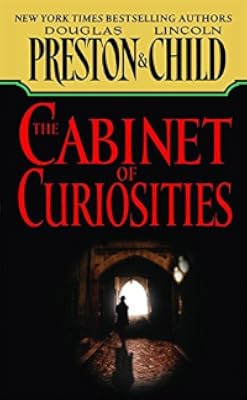
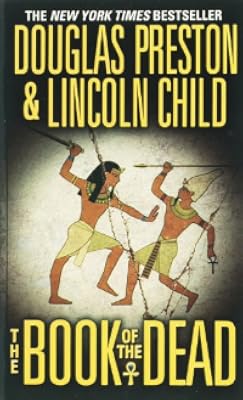
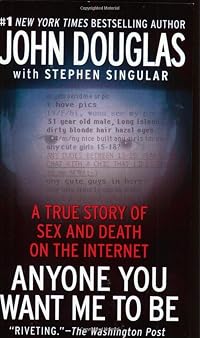
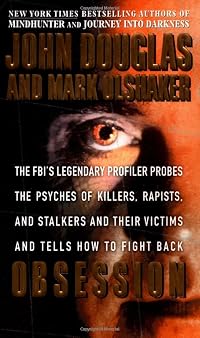
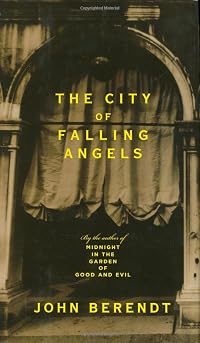






Member Recommendations

cbl_tn The same public prosecutor in Perugia brought charges is at the center of both the Monster of Florence and Meredith Kercher murder investigations.
Caramellunacy True stories of corruption in the justice system. The Monster of Florence is about the search for a serial killer in Italy, The Innocent Man is a man falsely convicted and on death row.
22
ehines Very different books in terms of tone--one a rather disturbing true-crime, the other a sardonic murder mystery. But both have some interesting insights into late 20th-century Italy.
Member Reviews
This was an incredible, and horrifying (though not for the reasons you may suspect) book! Author Douglas Preston loves Italy and moves his family there, where he has decided on the course for his next book - which will take place in Florence. Once there he meets up with journalist Mario Spezi for some background research on how the police and carabinieri work, only to be regaled by and dragged into the story of the Monster of Florence. Utterly convoluted suspect lists and wild crazy conspiracy theories abound while Preston and Spezi try to find the truth in all this mess and uncover the real Monster.
I have to admit, a certain Italian higher-up in all this has infuriated me and I cannot remotely understand why he is still working and show more ruining lives. But the book was fabulous, suspenseful and full of hard truths, can't get much better! show less
I have to admit, a certain Italian higher-up in all this has infuriated me and I cannot remotely understand why he is still working and show more ruining lives. But the book was fabulous, suspenseful and full of hard truths, can't get much better! show less
Almost on a whim, successful thriller writer Douglas Preston decides to move his family to Florence, Italy because he has fallen in love with the beauty and history of the place. He rents an ancient farmhouse and his young children quickly become fluent in the language. They make friends and Preston begins researching the novel he will write about Italy. One of the contacts he makes is with a hard-boiled journalist named Mario Spezi. While mining his almost limitless knowledge about Italian crime and criminal proceedings, Preston learns that the house he now lives in is crime scene adjacent. And not just any crime scene, but the scene of one of Italy's most infamous serial killings.
The case is still under investigation although the show more murders happened in the 70s. Fascinated, Preston begins to research this crime instead and soon teams up with Spezi to write about book in which they attempt to find the real killer. To Preston's shock, journalistic investigation is neither appreciated nor ultimately tolerated by the Italian law enforcement authorities. The current belief of the investigators is that the killings were the work of a Satanic cult whose members are among the most socially connected members of society. Apparently, this obscure group of people was working together to murder people and steal their sexual organs for various clandestine rituals. Yep. That's really what the Italian police believe. They have literally NO EVIDENCE to support this theory but they won't let that stop them.
When it comes to their attention that Preston and Spezi are about to publish a book which tells a very different story about the killings and reveals the investigation's bone-headed incompetence and paranoid ravings, things take a corrupt turn. Spezi himself is thrown in jail as the culprit and Preston is commanded to leave Italy and never return on pain of prosecution.
The rest of the book tells the story of Spezi's fight to be freed from a corrupt system and his undying determination to see the real killer brought to justice.
This story is so crazy, I would have thrown it out as trash if it wasn't an authentic story of what actually happened. Amazing! show less
The case is still under investigation although the show more murders happened in the 70s. Fascinated, Preston begins to research this crime instead and soon teams up with Spezi to write about book in which they attempt to find the real killer. To Preston's shock, journalistic investigation is neither appreciated nor ultimately tolerated by the Italian law enforcement authorities. The current belief of the investigators is that the killings were the work of a Satanic cult whose members are among the most socially connected members of society. Apparently, this obscure group of people was working together to murder people and steal their sexual organs for various clandestine rituals. Yep. That's really what the Italian police believe. They have literally NO EVIDENCE to support this theory but they won't let that stop them.
When it comes to their attention that Preston and Spezi are about to publish a book which tells a very different story about the killings and reveals the investigation's bone-headed incompetence and paranoid ravings, things take a corrupt turn. Spezi himself is thrown in jail as the culprit and Preston is commanded to leave Italy and never return on pain of prosecution.
The rest of the book tells the story of Spezi's fight to be freed from a corrupt system and his undying determination to see the real killer brought to justice.
This story is so crazy, I would have thrown it out as trash if it wasn't an authentic story of what actually happened. Amazing! show less
Rating: 4 out of 5
Storied cities, renaissance history, warped psyches, and a thriller author. What’s not to love about the prospect of this book? Honestly though, when I picked up this book, I had no idea what it was about. I saw the colorful cover with classical art, flipped it over and saw something inane about a serial killer and an olive grove, and thought: this is exactly the type of mind-numbing material that I need to break out of my reading slump (is this a healthy response?).
Preston plops us right into the story of the Monster of Florence, a serial killer who preyed on couples he caught *cough* in flagrante delicto. Being a novelist, Preston writes like one, with vivid descriptions, recounted conversations accompanied by show more an obscene amount of tobacco smoke, peppered with tidbits of local Florentine history (I keep promising myself I’ll read the Rise and Fall of the House of Medicithat's been languishing on my shelf for a couple of years).
Initially I was slightly annoyed with Preston’s self-insertions - I’m beginning to realize that I have a lot of literary peeves - unnecessary authorial commentary in non-fiction is exceedingly vexatious. This reached a head when Preston made a comment to the effect that the Florentine locals had a sick fascination with the Monster. That nearly made me cast aside the book, remarking that the description could be the most hypocritical assertion I’ve ever read, I mean, c’mon you’re writing about the serial killer, isn’t your fascination also sick? By the time we get to the second main story, it all starts to fall in place, the authorial self-insertions, along with some duly warranted disparagement of local practices.
Basically, this book goes from being another run-of-the-mill book on a serial killer/murder, with all the psychological trimmings and core, into a story of censorship, journalistic intimidation, and government corruption. During the course of the investigation, Preston allied himself with Mario Spezi, an Italian journalist who covered the Monster from the very beginning. The duo investigate and work together, eventually teaming up to write a book (this book), but their conclusions run contrary to the line being told by the Italian police, who take the casting of doubt on their official investigation seriously, an investigation which alleges that the “Monster” is a ring of orgiastically fornicating, cannibalistic Satanists operating in Florence since the time of the Renaissance. This theory is supported by the testimony of serial witnesses and an intrepid blogger who could be generously described as a lunatic. Spezi and Preston, for having the audacity to question such a convoluted conspiracy, eventually stir up such a hornets nest that they end up being stalked by police, having their phones tapped, and eventually charged with crimes. Spezi has his car damaged by the police installation of covert trackers and audio recorders, eventually being arrested and put in jail. Preston ends up leaving Italy and being afraid to return because of reprisals.
The whole sequence of events is an absurd, concerning, and horrifying example of censorship and intimidation. Eventually, and rightfully, journalistic and free speech associations become outraged, an international fervor is stirred up, and Spezi gets released and cleared of charges. But the entire fiasco is deeply disturbing, especially considering that this happened in the West in the 21st century.
If you’re a regular reader of true crime/serial killer stuff, I’m not sure you’ll really care for this book. The first half is mostly about the Monster of Florence, and I’m sure you’ll find that interesting, but the second half is about censorship. Despite my ‘just what I need’ comment, I’m not a serial killer reader, I get to maybe two or three true crime books a year (out of ~100), but this is the first book I’ve read expressly on a serial killer. A lot of the Goodreads reviews note that they didn’t care for the second half of the book, calling the discussion on censorship and intimidation tedious and boring, and while I can see where they’re coming from, the librarian and free-speech advocate within me actually thought this was the more interesting part.
Come for the serial killer, stay for the censorship discussion. show less
Storied cities, renaissance history, warped psyches, and a thriller author. What’s not to love about the prospect of this book? Honestly though, when I picked up this book, I had no idea what it was about. I saw the colorful cover with classical art, flipped it over and saw something inane about a serial killer and an olive grove, and thought: this is exactly the type of mind-numbing material that I need to break out of my reading slump (is this a healthy response?).
Preston plops us right into the story of the Monster of Florence, a serial killer who preyed on couples he caught *cough* in flagrante delicto. Being a novelist, Preston writes like one, with vivid descriptions, recounted conversations accompanied by show more an obscene amount of tobacco smoke, peppered with tidbits of local Florentine history (I keep promising myself I’ll read the Rise and Fall of the House of Medicithat's been languishing on my shelf for a couple of years).
Initially I was slightly annoyed with Preston’s self-insertions - I’m beginning to realize that I have a lot of literary peeves - unnecessary authorial commentary in non-fiction is exceedingly vexatious. This reached a head when Preston made a comment to the effect that the Florentine locals had a sick fascination with the Monster. That nearly made me cast aside the book, remarking that the description could be the most hypocritical assertion I’ve ever read, I mean, c’mon you’re writing about the serial killer, isn’t your fascination also sick? By the time we get to the second main story, it all starts to fall in place, the authorial self-insertions, along with some duly warranted disparagement of local practices.
Basically, this book goes from being another run-of-the-mill book on a serial killer/murder, with all the psychological trimmings and core, into a story of censorship, journalistic intimidation, and government corruption. During the course of the investigation, Preston allied himself with Mario Spezi, an Italian journalist who covered the Monster from the very beginning. The duo investigate and work together, eventually teaming up to write a book (this book), but their conclusions run contrary to the line being told by the Italian police, who take the casting of doubt on their official investigation seriously, an investigation which alleges that the “Monster” is a ring of orgiastically fornicating, cannibalistic Satanists operating in Florence since the time of the Renaissance. This theory is supported by the testimony of serial witnesses and an intrepid blogger who could be generously described as a lunatic. Spezi and Preston, for having the audacity to question such a convoluted conspiracy, eventually stir up such a hornets nest that they end up being stalked by police, having their phones tapped, and eventually charged with crimes. Spezi has his car damaged by the police installation of covert trackers and audio recorders, eventually being arrested and put in jail. Preston ends up leaving Italy and being afraid to return because of reprisals.
The whole sequence of events is an absurd, concerning, and horrifying example of censorship and intimidation. Eventually, and rightfully, journalistic and free speech associations become outraged, an international fervor is stirred up, and Spezi gets released and cleared of charges. But the entire fiasco is deeply disturbing, especially considering that this happened in the West in the 21st century.
If you’re a regular reader of true crime/serial killer stuff, I’m not sure you’ll really care for this book. The first half is mostly about the Monster of Florence, and I’m sure you’ll find that interesting, but the second half is about censorship. Despite my ‘just what I need’ comment, I’m not a serial killer reader, I get to maybe two or three true crime books a year (out of ~100), but this is the first book I’ve read expressly on a serial killer. A lot of the Goodreads reviews note that they didn’t care for the second half of the book, calling the discussion on censorship and intimidation tedious and boring, and while I can see where they’re coming from, the librarian and free-speech advocate within me actually thought this was the more interesting part.
Come for the serial killer, stay for the censorship discussion. show less
Thriller writer Douglas Preston went to Italy with his family intending to write a novel. Instead, he became caught up in a decades old unsolved mystery regarding a serial killer dubbed the Monster of Florence. Preston became friends with Italian journalist Mario Spezi, who had been covering the Monster of Florence investigation for years. Spezi shared with Preston the history of the Monster killings, his discoveries about the killings, and his conclusions about the Monster's identity. The two collaborated on a book to be published in Italy in 2006. In the weeks leading up to the publication date, the two became targets of the Prosecutor of Perugia. After jailing a series of suspects who proved to be innocent when the next murder took show more place during their incarceration, the Italian investigators abandoned a trail that seemed like it must eventually lead to the serial killer. The Prosecutor of Perugia then pursued a theory involving ritual killings by a conspiracy of occult worshipers from among the ranks of the upper middle and wealthy classes. His accusations were strangely similar to the assertions of a self-proclaimed psychic. The remainder of the story is an account of Preston's experience with the Italian justice system and issues of journalistic freedom.
Spezi and Preston's theory of the Monster's crimes makes much more sense than that of the Italian investigators. It fits the FBI profile, which the Italian investigators requested but then ignored. Perception seemed to be more important than the truth to the Italian authorities. Their initial theory of the crime seemed to be very close to the truth. The killer had to be one of a small circle of suspects with regional and family ties. The investigators began to appear foolish when they arrested one after another of the men in this circle, only to have the next murder occur while the suspect was in custody. Instead of continuing to narrow down the suspects within that circle, they abandoned that trail and refused to reopen it. All evidence was made to fit their new conspiracy theory. An object as innocuous as a doorstop became an occult object. Their behavior seemed like something right out of 17th century Salem, Massachusetts. They were literally on a witch hunt.
In the book's conclusion, Preston mentions that the Prosecutor of Perugia was in charge of the investigation of Meredith Kercher's murder and the prosecution of Amanda Knox. This prosecutor's propensity for forcing evidence to fit his theory and refusing to accept any evidence that discredits his theory removes any lingering doubt in my mind of Amanda Knox's innocence of Meredith Kercher's murder. Her book is now on my wishlist. show less
Spezi and Preston's theory of the Monster's crimes makes much more sense than that of the Italian investigators. It fits the FBI profile, which the Italian investigators requested but then ignored. Perception seemed to be more important than the truth to the Italian authorities. Their initial theory of the crime seemed to be very close to the truth. The killer had to be one of a small circle of suspects with regional and family ties. The investigators began to appear foolish when they arrested one after another of the men in this circle, only to have the next murder occur while the suspect was in custody. Instead of continuing to narrow down the suspects within that circle, they abandoned that trail and refused to reopen it. All evidence was made to fit their new conspiracy theory. An object as innocuous as a doorstop became an occult object. Their behavior seemed like something right out of 17th century Salem, Massachusetts. They were literally on a witch hunt.
In the book's conclusion, Preston mentions that the Prosecutor of Perugia was in charge of the investigation of Meredith Kercher's murder and the prosecution of Amanda Knox. This prosecutor's propensity for forcing evidence to fit his theory and refusing to accept any evidence that discredits his theory removes any lingering doubt in my mind of Amanda Knox's innocence of Meredith Kercher's murder. Her book is now on my wishlist. show less
True crime stories tend to be full of twists and turns, unexpected revelations and strange personalities, but this particular series of crimes - and, more particularly, the spectacularly bad investigations the Italian police led in a series of attempts to solve the crimes - is probably one of the most bizarre cases one is ever likely to come across. It starts with a series of double murders with mutilation, continues into investigations involving incomers to Tuscany, turning into a remarkably convoluted theory of satanic cults and pedophilia amongst the rich and powerful, and eventually leading to the arrest and interrogation of each of the authors of the very book we are reading. Truly remarkable! The fact that Mr. Preston is a highly show more accomplished author of fiction and the fact that Mr. Spezi is a celebrated journalist in Italy both lend another level of authority to the work and, of course, both also mean that the narrative flows and the storytelling is compelling. Amazing stuff; recommended. show less
This is a non-fiction book about a serial killer in Florence, Italy. The case is unsolved. The first half of the book goes through the crimes, describing the murders of couples "caught in the act" in their cars in the hills of Florence. As horrifying as the description of the crimes is, it is nothing compared to the incompetency of the Italian police and judicial system. It was so frustrating to read about how horribly this case has been handled by officials. The book points towards a suspect, but there is no resolution. It is an interesting book, but I felt the writing style left a bit to be desired - kind of choppy and it doesn't flow very well. I'm glad I read it though - just don't expect the fabulous In Cold Blood and you'll enjoy it.
Holy cow. I'm not sure I've ever read a true crime (other than In Cold Blood) and this was a wild one to start off with!
The "Monster of Florence" was a serial killer who struck mostly in the 1980s in the area outside Florence, killing young couples who were getting frisky in their cars. I'm not sure how most true crime books work, but in this situation the details of how the police and the carabinieri handled the case were even more interesting than the crimes and possible criminals. Not only were crime scenes contaminated and evidence misplaced (sometimes deliberately), but it didn't take long before police and prosecutors started going off on wild goose chases, manipulating details to fit their theories, and spinning those theories show more into absolutely absurd directions. The most ridiculous are conspiracy theories almost as crazy as something you'd hear from QAnon, though for the most part they're limited to local rather than global scale. And as we all know well by now in 2021, you can't go anywhere near a conspiracy theory without getting caught in it yourself, which is exactly what happens to Preston and Spezi.
Douglas Preston is a bestselling thriller writer here in the U.S. while Mario Spezi is an Italian journalist who made his career following the unnecessarily bonkers developments in the case of the Monster of Florence serial killer, about which he had written several previous books. The two became friends while Preston was living in Italy--partly on a lark and partly to research a book--and they collaborated on this book, which was published first overseas. They divided the book roughly in half, with Spezi writing the first part--the meat of the "true crime" portion--and Preston the second, picking up at the point when they started working on the case together.
The differences between the two sections are unmissable: Spezi's portion is journalistic, with almost no extra details or personal information added for flavor. This isn't a problem, per se--he does a fantastic job of laying out a very complicated series of events surrounding the crimes and the absolute messes made of their investigations in a way that is easy to follow, and if he had written the whole thing I wouldn't have felt disappointed by the experience in the slightest. But when Preston takes over in the second portion it's absolutely clear that he's a trade writer: adjectives, asides, personal details and emotions, and--crucially--a switch to first person liven up the action and elevate the book above a simple history/true crime.
Some reviewers hated that, but I actually loved it so much that it made me wish that Preston had worked with Spezi to get a little more personality into the fist part of the book. He seems like a fascinating person, but we as readers don't get much of an impression of Spezi the human being. Still, if this was the way they were going to write the book, I'm glad that Preston wrote the second half. As a thriller writer, he knows exactly how to rack up the tension--though since this is nonfiction, he can't take credit for the final-act twist in the afterword:the notorious Amanda Knox case was mismanaged by the same conspiracy theorist of a prosecutor who handled the Monster/Spezi/Preston case .
Spezi and Preston believed they had identified the man who is the actual Monster of Florence. (There was only one piece of evidence that felt like a weak spot, but unfortunately I didn't make note of it. Argh!) There were some truly egregious injustices in the course of the investigations Spezi described, and which Spezi and Preston hoped to expose in a major article. They also made what might have been a major breakthrough. So everything looks pretty good and exciting: the thriller writer is part of a real thriller story and the journalist might see his work do some real, solid good in the world. Problem is, the prosecution and the local judge are depending on this case to make their careers, and their wacko theories--more than a little inspired by a single online conspiracy theorist, in the days before casual social media contact was a thing--are totally contradicted by the cold, hard facts that Spezi has gathered.
It's not totally clear whether the police purposefully concoct the connection between Spezi and the crimes he's studied or whether they actually believe what they say. Before last year, I would have thought it was all deliberate fabrication, and Spezi and Preston do hint that this may have happened...but after this past year, I think it's entirely possible that a few supposedly smart folks got sucked into QAnon-level craziness and actually believed it. It seems more likely than that lawyers would risk tanking their careers on some harebrained fever dreams.
Preston being a well-known, wealthy American man, there isn't much the Italian law can do other than scare him. Spezi is not so lucky. The second half of the book may be Preston's to write, but much of it recounts a true crime that boils down to freedom of the press.
If you're looking for true crime and excitement, you'll probably enjoy The Monster of Florence. But if, like me, you're hoping for a little historical or social context, you'll come up short. What was Florence like, socially and economically, when the first murders occurred in the 60s, and how had things changed by the 80s, when most of the murders happened? What caused the migration of Sardinians to mainland Italy? Is this culture of corruption common among Italian police or were these isolated cases of investigations gone off the rails? How unique in Spezi in his journalistic connections to police--is he unusually well-connected, are his relationships typical for journalists in Italy? Is it common for crime reporters to be threatened for reporting on a case in a way that the police and judicial system don't like?
Despite that one weakness--contextual shallowness-- I had trouble putting this book down, which is high praise indeed. I only regret that it seems there will never be peace and justice for the families of the Monster's victims: I did a little bit of research after I finished and it looks like the case has never been reopened, even though the terrible quality of the investigations had been acknowledged by other judges by the time the book went to press in the U.S.
Random Thought Roundup
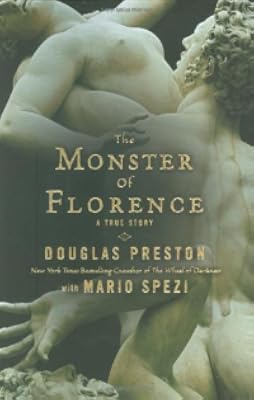
> I have no idea why Giambologna's The Rape of the Sabine Women is on the front cover. The murder victims weren't raped or kidnapped, and the victims were all pairs rather than individuals.
> Fascinating tidbit a propos of nothing: "Florentines have always harbored a suspicion of their own nobility--so much so that they early Florentine republic barred them from holding public office" (p.36).
> Apparently the Florentine Italian dialect was chosen to be official Italian. I thought it would have been Roman, given its closer connection to Latin and the great Roman Empire...but then, I should have realized otherwise, considering how long Rome was basically a backwater while Florence was one of the greatest cities in Europe.
> "In Italy, a man condemned to a life sentence is automatically granted an appeal before the Courte d'Assisse d'Appello, with a new prosecutor and a fresh panel of judges" (p. 147). What a great idea! One last chance to catch and rectify a miscarriage of justice.
> When Douglas returns to Italy after 9-11, a friend reads an extract from a poem, Constantine Cavafy's "Waiting for the Barbarians". I won't type up the last lines, which Preston quoted, but they are quite profound.
Finally, as a last note, I have to say that I'm annoyed with the publishers for including "spoilers" in the captions of the photos in the insert. show less
The "Monster of Florence" was a serial killer who struck mostly in the 1980s in the area outside Florence, killing young couples who were getting frisky in their cars. I'm not sure how most true crime books work, but in this situation the details of how the police and the carabinieri handled the case were even more interesting than the crimes and possible criminals. Not only were crime scenes contaminated and evidence misplaced (sometimes deliberately), but it didn't take long before police and prosecutors started going off on wild goose chases, manipulating details to fit their theories, and spinning those theories show more into absolutely absurd directions. The most ridiculous are conspiracy theories almost as crazy as something you'd hear from QAnon, though for the most part they're limited to local rather than global scale. And as we all know well by now in 2021, you can't go anywhere near a conspiracy theory without getting caught in it yourself, which is exactly what happens to Preston and Spezi.
Douglas Preston is a bestselling thriller writer here in the U.S. while Mario Spezi is an Italian journalist who made his career following the unnecessarily bonkers developments in the case of the Monster of Florence serial killer, about which he had written several previous books. The two became friends while Preston was living in Italy--partly on a lark and partly to research a book--and they collaborated on this book, which was published first overseas. They divided the book roughly in half, with Spezi writing the first part--the meat of the "true crime" portion--and Preston the second, picking up at the point when they started working on the case together.
The differences between the two sections are unmissable: Spezi's portion is journalistic, with almost no extra details or personal information added for flavor. This isn't a problem, per se--he does a fantastic job of laying out a very complicated series of events surrounding the crimes and the absolute messes made of their investigations in a way that is easy to follow, and if he had written the whole thing I wouldn't have felt disappointed by the experience in the slightest. But when Preston takes over in the second portion it's absolutely clear that he's a trade writer: adjectives, asides, personal details and emotions, and--crucially--a switch to first person liven up the action and elevate the book above a simple history/true crime.
Some reviewers hated that, but I actually loved it so much that it made me wish that Preston had worked with Spezi to get a little more personality into the fist part of the book. He seems like a fascinating person, but we as readers don't get much of an impression of Spezi the human being. Still, if this was the way they were going to write the book, I'm glad that Preston wrote the second half. As a thriller writer, he knows exactly how to rack up the tension--though since this is nonfiction, he can't take credit for the final-act twist in the afterword:
Spezi and Preston believed they had identified the man who is the actual Monster of Florence. (There was only one piece of evidence that felt like a weak spot, but unfortunately I didn't make note of it. Argh!) There were some truly egregious injustices in the course of the investigations Spezi described, and which Spezi and Preston hoped to expose in a major article. They also made what might have been a major breakthrough. So everything looks pretty good and exciting: the thriller writer is part of a real thriller story and the journalist might see his work do some real, solid good in the world. Problem is, the prosecution and the local judge are depending on this case to make their careers, and their wacko theories--more than a little inspired by a single online conspiracy theorist, in the days before casual social media contact was a thing--are totally contradicted by the cold, hard facts that Spezi has gathered.
It's not totally clear whether the police purposefully concoct the connection between Spezi and the crimes he's studied or whether they actually believe what they say. Before last year, I would have thought it was all deliberate fabrication, and Spezi and Preston do hint that this may have happened...but after this past year, I think it's entirely possible that a few supposedly smart folks got sucked into QAnon-level craziness and actually believed it. It seems more likely than that lawyers would risk tanking their careers on some harebrained fever dreams.
Preston being a well-known, wealthy American man, there isn't much the Italian law can do other than scare him. Spezi is not so lucky. The second half of the book may be Preston's to write, but much of it recounts a true crime that boils down to freedom of the press.
If you're looking for true crime and excitement, you'll probably enjoy The Monster of Florence. But if, like me, you're hoping for a little historical or social context, you'll come up short. What was Florence like, socially and economically, when the first murders occurred in the 60s, and how had things changed by the 80s, when most of the murders happened? What caused the migration of Sardinians to mainland Italy? Is this culture of corruption common among Italian police or were these isolated cases of investigations gone off the rails? How unique in Spezi in his journalistic connections to police--is he unusually well-connected, are his relationships typical for journalists in Italy? Is it common for crime reporters to be threatened for reporting on a case in a way that the police and judicial system don't like?
Despite that one weakness--contextual shallowness-- I had trouble putting this book down, which is high praise indeed. I only regret that it seems there will never be peace and justice for the families of the Monster's victims: I did a little bit of research after I finished and it looks like the case has never been reopened, even though the terrible quality of the investigations had been acknowledged by other judges by the time the book went to press in the U.S.
Random Thought Roundup
> I have no idea why Giambologna's The Rape of the Sabine Women is on the front cover. The murder victims weren't raped or kidnapped, and the victims were all pairs rather than individuals.
> Fascinating tidbit a propos of nothing: "Florentines have always harbored a suspicion of their own nobility--so much so that they early Florentine republic barred them from holding public office" (p.36).
> Apparently the Florentine Italian dialect was chosen to be official Italian. I thought it would have been Roman, given its closer connection to Latin and the great Roman Empire...but then, I should have realized otherwise, considering how long Rome was basically a backwater while Florence was one of the greatest cities in Europe.
> "In Italy, a man condemned to a life sentence is automatically granted an appeal before the Courte d'Assisse d'Appello, with a new prosecutor and a fresh panel of judges" (p. 147). What a great idea! One last chance to catch and rectify a miscarriage of justice.
> When Douglas returns to Italy after 9-11, a friend reads an extract from a poem, Constantine Cavafy's "Waiting for the Barbarians". I won't type up the last lines, which Preston quoted, but they are quite profound.
Finally, as a last note, I have to say that I'm annoyed with the publishers for including "spoilers" in the captions of the photos in the insert. show less
Members
- Recently Added By
Lists

True Crime
216 works; 16 members

Books set in Firenze (Florence, Italy)
35 works; 1 member

75 Books Challenge Halloween Read "Official" Selections
71 works; 7 members
Author Information

115+ Works 86,005 Members
Douglas Jerome Preston was born on May 20, 1956 in Cambridge, Massachusetts. He received a B.A. in English literature from Pomona College in 1978. His career began at the American Museum of Natural History, where he worked as an editor and writer from 1978 to 1985. He also was a lecturer in English at Princeton University. He became a full-time show more writer of both fiction and nonfiction books in 1986. Many of his fiction works are co-written with Lincoln Child including Relic, Riptide, Thunderhead, The Wheel of Darkness, Cemetery Dance, and Gideon's Corpse. His nonfiction works include Dinosaurs in the Attic; Cities of Gold: A Journey Across the American Southwest in Pursuit of Coronado; Talking to the Ground; and The Royal Road. He has written for numerous magazines including The New Yorker; Natural History; Harper's; Smithsonian; National Geographic; and Travel and Leisure. He became a New York Times Best Selling author with his titles Two Graves and Crimson Shores which he co-wrote with Lincoln Child, and his titles White Fire, The Lost Island Blue Labyrinth and The Lost City of the Monkey God. (Bowker Author Biography) show less

6 Works 3,014 Members
Some Editions
Awards and Honors
Awards
Distinctions
Common Knowledge
- Canonical title
- The Monster of Florence
- Original publication date
- 2008-06-10
- People/Characters
- Douglas Preston; Mario Spezi; Maurizio Cimmino; Carmela De Nuccio; Giovanni Foggi; Stefania Pettini (show all 21); Pasquale Gentilcore; Enzo Spalletti; Stefano Baldi; Susanna Cambi; Carlo Santangelo; Antonella Migliorini; Paolo Mainardi; Giovanni Vinci; Salvatore Vinci; Antonio Vinci; Piero Luigi Vigna; Michele Giuttari; Lorenzo Nesi; Gabriella Carlizzi; Luigi Ruocco
- Important places
- Florence, Tuscany, Italy
- Important events
- Monster of Florence Serial Killings (1974-1985)
- Related movies
- The Monster of Florence (2011 | IMDb)
- Dedication
- To my partners in our Italian adventure: my wife, Christine, and
my children Aletheia and Isaac. And to my daughter Selene, who
wisely kept her feet planted firmly in America.
—Douglas Preston
... (show all)A mia moglie Myriam e a mia figlia Eleonora,
che hanno scusato la mia ossessione.
—Mario Spezi - First words
- In 1969, the year men landed on the moon, I spent an unforgettable summer in Italy.
- Last words
- (Click to show. Warning: May contain spoilers.)After all, this is Italy.
- Canonical DDC/MDS
- 364.152320945511
- Canonical LCC
- HV6535.I83
Classifications
- Genres
- General Nonfiction, Nonfiction
- DDC/MDS
- 364.152320945511 — Society, government, & culture Social problems and social services Crime Criminal offenses Offenses against the person Homicide Murder Serial killers
- LCC
- HV6535 .I83 — Social sciences Social pathology. Social and public welfare. Criminology Social pathology. Social and public welfare. Criminology Crimes and offenses
- BISAC
Statistics
- Members
- 2,960
- Popularity
- 6,059
- Reviews
- 112
- Rating
- (3.55)
- Languages
- 12 — Danish, Dutch, English, French, German, Italian, Norwegian, Polish, Portuguese, Romanian, Spanish, Swedish
- Media
- Paper, Audiobook, Ebook
- ISBNs
- 42
- ASINs
- 22