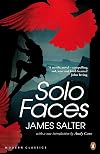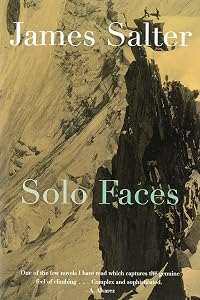
Solo Faces
by James Salter
On This Page
Description
A novel about a lonely mountain climber from the author of All That Is: "Beautifully composed . . . will remind readers of Camus and Saint-Exupéry" (The Washington Post).Vernon Rand is a charismatic figure whose great love—whose life, in fact—is climbing. He lives alone in California, where he combats the drudgery of a roofing job with the thrill of climbing in the nearby mountain ranges. Sure of only his talent and nerve, Rand decides to test himself in the French Alps, with their show more true mountaineering and famed, fearsome peaks. He soon learns that the most perilous moments are, for him, the moments when he feels truly alive. One of the great novels of the outdoors, Solo Faces is as thrilling, beautiful, and immediate as the Alpine peaks that have enthralled climbers for centuries. This ebook features an illustrated biography of James Salter including rare photos from the author's personal collection.. show less
Tags
Recommendations















































Member Reviews
Another Salter novel featuring a young American man in France, traveling and hardly bothering with a means of income. In this case our hero, Rand, is traveling upwards, ascending the most difficult mountain faces of the French Alps. He has no money, or hardly any, beyond what comes from the odd illegal job or the women with whom he's sleeping. Possessions could not matter less to him; what he desires, mainly, is the climb.
For the climb, Rand will sacrifice show more all else. Certainly interpersonal relationships are well back in his concern. Not that he does not recognize and feel the camaraderie of the mountain climbing fraternity, at least those whose skills he respects - a small group that includes Cabot, his closest friend/competitor, but which does not seem to include most of the guides and climbers who come to Chamonix, the small French town at the base of the mountains. And he finds fame when he leads a difficult ascent in poor weather to rescue two climbers, taking a route up that was dismissed as too risky by the professional guides and official rescuers. But did he do that for selfless, or self-centered grandiose, reasons? Well, perhaps both.
While Rand comes off as heroic when he's conquering mountains, his relationships with women are anything but. The reader first sees this when Rand abruptly leaves his girlfriend in America to move to France. Salter slips in a little detail here that is telling:
In France he has relationships with a number of women, most importantly Catherin. She becomes pregnant, news which Rand reacts to with cold distaste. "I don't want to be tied down", he tells her. She promises him he can always do whatever he likes, but he is not placated.
The novel takes a sharp turn when Rand, on a dangerous solo climb, turns back before the summit and retreats, defeated. His confidence, his belief in his ability to cling to the side of the smoothest, most difficult piece of rock, is shattered. Without that, he is no good as a climber. And having thrown everything else aside, what is left to him?
Salter's prose, again, is terrifically good. Sharp and hard. A favorite passage is his description of English climbers:
In the morning he woke among peaks incredibly white against the muted sky. There is something greater than the life of the cities, greater than money and possessions; there is a manhood that can never be taken away. For this, one gives everything.Comfort, he remarks elsewhere, kills.
For the climb, Rand will sacrifice show more all else. Certainly interpersonal relationships are well back in his concern. Not that he does not recognize and feel the camaraderie of the mountain climbing fraternity, at least those whose skills he respects - a small group that includes Cabot, his closest friend/competitor, but which does not seem to include most of the guides and climbers who come to Chamonix, the small French town at the base of the mountains. And he finds fame when he leads a difficult ascent in poor weather to rescue two climbers, taking a route up that was dismissed as too risky by the professional guides and official rescuers. But did he do that for selfless, or self-centered grandiose, reasons? Well, perhaps both.
While Rand comes off as heroic when he's conquering mountains, his relationships with women are anything but. The reader first sees this when Rand abruptly leaves his girlfriend in America to move to France. Salter slips in a little detail here that is telling:
He left behind some cardboard boxes filled with shoes, fishing equipment, and a handful of letters from an old girlfriend, born in Kauai, who had cut his palm one night and, to seal their love, raised it to her mouth and drunk the welt of blood.Fall in love with Rand but don't expect much, it would appear.
In France he has relationships with a number of women, most importantly Catherin. She becomes pregnant, news which Rand reacts to with cold distaste. "I don't want to be tied down", he tells her. She promises him he can always do whatever he likes, but he is not placated.
[S]he would forget what she was saying now, her instincts as a woman would come out. That was what always happened.The relationship ends.
The novel takes a sharp turn when Rand, on a dangerous solo climb, turns back before the summit and retreats, defeated. His confidence, his belief in his ability to cling to the side of the smoothest, most difficult piece of rock, is shattered. Without that, he is no good as a climber. And having thrown everything else aside, what is left to him?
Salter's prose, again, is terrifically good. Sharp and hard. A favorite passage is his description of English climbers:
There is a strain of English whose faces are somehow crude as if they were not worth finishing or touching with color. It was these sullen faces that filled the room…show less
British climbing had changed since the war. Once the province of university men, it had been invaded by the working class who cut their teeth on the rock of Scotland and Wales and then traveled everywhere, suspicious and unfriendly. They came from the blackened cities of England - Manchester, Leeds. To the mountains they brought the same qualities - toughness and cynicism - that let them survive in the slums. They had no credo, no code. They had bad teeth, bad manners, and one ambition: to conquer.
I had this 1979 novel on my to-read shelf even before hearing about the very recent death of James Salter.
The main character is someone lost, who believes he's found himself in climbing, in California and the Alps, but begins to find that the empty spaces he holds inside himself are bigger challenges for a man like him. When the world takes notice of him he know that they understand almost nothing about what he's like, and when they stop thinking of him it's as if he made no difference at all. He cuts a destructive swath through a number of women who are attracted to him for his aura of strength but only learn what he's about just after it's too late.
The book is written in a laconic style, with an omniscient third-person point of view show more that is often jarring when it veers off into the interior life of some incidental side-character without warning. It has a thoroughly literary ending without the big action scenes that come earlier in the book, one which leaves you wondering just what will happen about the character of Rand. show less
The main character is someone lost, who believes he's found himself in climbing, in California and the Alps, but begins to find that the empty spaces he holds inside himself are bigger challenges for a man like him. When the world takes notice of him he know that they understand almost nothing about what he's like, and when they stop thinking of him it's as if he made no difference at all. He cuts a destructive swath through a number of women who are attracted to him for his aura of strength but only learn what he's about just after it's too late.
The book is written in a laconic style, with an omniscient third-person point of view show more that is often jarring when it veers off into the interior life of some incidental side-character without warning. It has a thoroughly literary ending without the big action scenes that come earlier in the book, one which leaves you wondering just what will happen about the character of Rand. show less
Books about climbing have a tendency to drink the Kool-Aid a little; if you don't buy into the mythologising they can be a drag. Solo Faces avoids this by combining its mythologising with a deconstruction of what lies behind it. The result is a satisfying, surprisingly timeless novel.
American Rand is an itinerant labourer, lover, and climber. When he relocates to the Alps one climbing season, his ability will increase, and his stature with it. But why is it that he climbs? What is he climbing towards?
Salter's prose grabbed my attention for the get-go. It's good, not merely workmanlike, and it glints with solid observation. Short, but descriptive sentences transported me across the scree and valleys of the Alps. The descriptions of show more climbing are exhilarating, and they resonated even with my limited experience climbing outdoors.
Underscoring this is an examination of Rand's psychology. Salter is not always subtle, but always assured, and Rand is believable, even recognisable as a type.
I was very surprised when I realised this book was written in the late seventies. There's a timeless quality to it - I suppose mountains don't change much - that speaks to something more lasting. I enjoyed it. show less
American Rand is an itinerant labourer, lover, and climber. When he relocates to the Alps one climbing season, his ability will increase, and his stature with it. But why is it that he climbs? What is he climbing towards?
Salter's prose grabbed my attention for the get-go. It's good, not merely workmanlike, and it glints with solid observation. Short, but descriptive sentences transported me across the scree and valleys of the Alps. The descriptions of show more climbing are exhilarating, and they resonated even with my limited experience climbing outdoors.
Underscoring this is an examination of Rand's psychology. Salter is not always subtle, but always assured, and Rand is believable, even recognisable as a type.
I was very surprised when I realised this book was written in the late seventies. There's a timeless quality to it - I suppose mountains don't change much - that speaks to something more lasting. I enjoyed it. show less
A literary exploration wrapped inside a mountain adventure novel. Not unlike, although not quite the equal of, Wind, Sand and Stars. But close. Salter's writing, as always is exquisite. Like glass. You never get hung up on a sentence. Rand is a restless mountain climber challenging himself against the mountains in Switzerland (and California). A good psychological look into someone completely driven, yet very human and imperfect. I'm disappointed this never became a movie - it reads like one.
Well-, and sometimes superlatively written, though the macho nihilism grew tiresome. I'll give the author some slack because he flew fighter jets in the Korean War. I won't grab him by the collar and try to shake the neck he risked. He knows whereof he speaks about rock face climbing -- which I find fascinating from a distance -- so this detailed account of that obsession made for a good yarn.
“The smallest act took on immense dimensions” (142). This sums up Mr. Salter’s unique, compressed prose style. Too often lumped in with, say, Hemingway—no doubt on account of short, declarative sentences—Salter is in a class of his own. This is probably on par with [b:A Sport and a Pastime|114511|A Sport and a Pastime|James Salter|https://images.gr-assets.com/books/1316729107s/114511.jpg|2488018], but neither reach the crown jewel of his repertoire, [b:Light Years|174622|Light Years|James Salter|https://images.gr-assets.com/books/1374594784s/174622.jpg|2825318].
Rand leaves his life in San Francisco to climb mountains in Chamonix. He successfully climbs the Dru which makes him famous amongst the climbing community. Later he rescues a team of Italian climbers, adding to his fame, but all along, he simply wants to be alone, experiencing the sensations he can only get during climbs. He hears news of a close friend who fell climbing the Eiger, there is a very moving scene where they meet up his friend crippled below the waist.
Members
- Recently Added By
Published Reviews
ThingScore 75
Mit dem Ende der Kletterkarriere beginnt erst der eigentliche Kampf des Lebens, für das alles zuvor Gewesene nur Gleichnis war. Und von diesem Moment an werden die fabelhaften Elemente, die zuvor Teil einer Legendenbildung um Vernon Rand waren, als Analyse mythischer Strukturen selbst lesbar. Diese lassen sich auf den einfachen Nenner bringen, dass Helden ihr Schicksal nicht überleben show more dürfen. Das ist zwar nicht unbedingt neu, aber in der Lakonie der Salterschen Sprache liest es sich großartig. show less
added by Indy133
Lists

Harold Bloom - The Western Canon: D. The Chaotic Age
833 works; 24 members
Author Information

29+ Works 7,379 Members
James Arnold Horowitz (June 10, 1925 - June 19, 2015), better known as James Salter, his pen name and later-adopted legal name, was an American novelist and short-story writer. Originally a career officer and pilot in the United States Air Force, he resigned from the military in 1957 following the successful publication of his first novel, The show more Hunters. Salter published a collection of short stories, Dusk and Other Stories in 1988. The collection received the PEN/Faulkner Award, and one of its stories ("Twenty Minutes") became the basis for the 1996 film, Boys. He was elected to The American Academy of Arts and Letters in 2000. In 2012, PEN/Faulkner Foundation selected him for the 25th PEN/Malamud Award. Salter Died on June 19, 2015. He was 90. (Bowker Author Biography) show less
Common Knowledge
- Canonical title
- Solo Faces
- Original publication date
- 1979
Classifications
Statistics
- Members
- 358
- Popularity
- 88,038
- Reviews
- 15
- Rating
- (3.72)
- Languages
- 6 — Dutch, English, French, German, Spanish, Swedish
- Media
- Paper, Ebook
- ISBNs
- 18
- ASINs
- 5