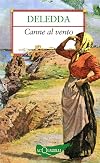
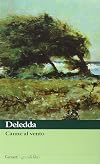
Reeds in the Wind
by Grazia Deledda
On This Page
Description
The rugged landscape of Baronia on Sardinia sets the scene for this novel of crime, guilt and retribution. This novel presents the story of the Pintor sisters - from a family of noble landowners now in decline - their nephew Giacinto, and their servant Efix, who is trying to make up for a mysterious sin committed many years before. Around, below, and inside them the raging Mediterranean storms, the jagged mountains, the murmuring forests, and the gushing springs form a Greek chorus of show more witness to the tragic drama of this unforgiving land. Deledda tells her story with her characteristic love of the natural landscape and fascination with the folk culture of the island, with details about the famous religious festivals held in mountain encampments and the lore of the "dark beings who populate the Sardinian night, the fairies who live in rocks and caves, and the sprites with seven red caps who bother sleep." Introduction by the Sardinian ethnographer, Dolores Turchi. show lessTags
Recommendations


























Member Reviews
Grande dia... para ler literatura sarda. Este mês estou fazendo um curso na USP sobre literatura na Sardenha e a Grazia Deledda foi a primeira autora sarda que enfrentei. Segunda ganhadora mulher na história do Nobel de Literatura, sua escrita pode muito bem entrar no quesito "estranho familiar" freudiano, há toda uma sorte de lendas e costumes sardos peculiares, das quais o que mais salta aos olhos é toda uma tensão incestuosa que só comunidades insulares como a Sardenha são capazes de produzir.
Seguimos a trajetória de Efix, praticamente um escravo moderno devido à dor na consciência dele, se autopune a vida toda por um erro do passado e vemos todas suas relações primárias se desenrolarem a partir de seus mandos como show more ventrílocuo social.
Enfim, Deledda é uma outora que deveria ser melhor conhecida fora do âmbito da literatura italiana, apesar de ser uma leitura de veia regionalista, tem um apelo universal. show less
Seguimos a trajetória de Efix, praticamente um escravo moderno devido à dor na consciência dele, se autopune a vida toda por um erro do passado e vemos todas suas relações primárias se desenrolarem a partir de seus mandos como show more ventrílocuo social.
Enfim, Deledda é uma outora que deveria ser melhor conhecida fora do âmbito da literatura italiana, apesar de ser uma leitura de veia regionalista, tem um apelo universal. show less
Credo che chiunque voglia scrivere bene dovrebbe leggere Grazia Deledda. La sua prosa è sontuosa senza essere opprimente; l'uso degli aggettivi nelle descrizioni, semplicemente magistrale. I personaggi e le situazioni vengono costruiti mediante un sapiente e paziente lavoro di sovrapposizione, cosicché alla fine il lettore se li vede davanti, perfettamente tridimensionali, e se ne sente nell'anima le emozioni e sulle spalle le vicende. Il fatto che la Deledda non venga proposta di più e meglio agli studenti, al posto del pesantissimo e prevaricante Verga, che, in quanto a statura letteraria, non le arriva nemmeno al ginocchio, temo sia dovuto al solito pregiudizio nei confronti delle autrici, ma vabbé. Prima o poi il vero lettore, e show more il vero scrittore, imparano da dove prendere i loro modelli.
Detto questo, Canne al vento è un capolavoro che lascia negli occhi paesaggi selvaggi e indimenticabili e nel cuore l'incredibile vicenda di Efix, servo umilissimo eppure padrone delle vicende delle tre dame Pintor, di cui governa le terre e le vite dal giorno in cui, per amore della quarta di loro, ne ha ucciso il padre per aiutare quest'ultima a fuggire dalla tirannia di una vita senza prospettive. La storia si snoda, tormentata e piena di passioni sotto il mantello dell'immobilità paesana, fino al giorno in cui le sorti delle dame, ormai rimaste in due, sono assicurate e l'anima del vecchio servo è finalmente libera di lasciarne il corpo. show less
Detto questo, Canne al vento è un capolavoro che lascia negli occhi paesaggi selvaggi e indimenticabili e nel cuore l'incredibile vicenda di Efix, servo umilissimo eppure padrone delle vicende delle tre dame Pintor, di cui governa le terre e le vite dal giorno in cui, per amore della quarta di loro, ne ha ucciso il padre per aiutare quest'ultima a fuggire dalla tirannia di una vita senza prospettive. La storia si snoda, tormentata e piena di passioni sotto il mantello dell'immobilità paesana, fino al giorno in cui le sorti delle dame, ormai rimaste in due, sono assicurate e l'anima del vecchio servo è finalmente libera di lasciarne il corpo. show less
Delle volte ho il sospetto che un autore, per meritare di essere un Premio Nobel, deve essere difficile da capire. Questo libro in un certo senso conferma questa mia ipotesi. Non che sia complicato, anzi, è molto semplice, ma si presta a tante di quelle interpretazioni, che alla fine non posso dire di averlo veramente capito. Tutto questo non è una nota negativa, anzi, tutt’altro: il libro mi è piaciuto!
http://www.naufragio.it/iltempodileggere/539
Merged review:
Sometimes I suspect that an author, to deserve to be a Nobel Prize winner, must be difficult to understand. This book in a some way confirms my hypothesis. It's not complicated, no, it's actually very simple, but it's open to so many interpretations, that in the end I can't show more say that I really understood it. To be clear: this is not a negative trait, quite the contrary: I liked the book!
The reeds in the wind in the title are Efix and his three mistresses, the last heirs of a fallen family, they are their neighbors and relatives, we all are, reeds beaten by the wind of fate.
Fascinating fresco of Sardinia from the beginning of the last century with fever, prejudice, honor, guilt, and superstition. A superstition so alive and present in everyone's life that it was fascinating even for someone like me that usually abhors this topic. Along with all this, a nature that is still powerful and alive and present and beautiful, that changes with the seasons and accompanies our Efix both in his pilgrimages and in its stops.
A pleasant and very satisfying reading.
Delle volte ho il sospetto che un autore, per meritare di essere un Premi Nobel, deve essere difficile da capire. Questo libro in un certo senso conferma questa mia ipotesi. Non che sia complicato, anzi, è molto semplice, ma si presta a tante di quelle interpretazioni, che alla fine non posso dire di averlo veramente capito. Tutto questo non è una nota negativa, anzi, tutt’altro: il libro mi è piaciuto!
http://www.naufragio.it/iltempodileggere/539 show less
http://www.naufragio.it/iltempodileggere/539
Merged review:
Sometimes I suspect that an author, to deserve to be a Nobel Prize winner, must be difficult to understand. This book in a some way confirms my hypothesis. It's not complicated, no, it's actually very simple, but it's open to so many interpretations, that in the end I can't show more say that I really understood it. To be clear: this is not a negative trait, quite the contrary: I liked the book!
The reeds in the wind in the title are Efix and his three mistresses, the last heirs of a fallen family, they are their neighbors and relatives, we all are, reeds beaten by the wind of fate.
Fascinating fresco of Sardinia from the beginning of the last century with fever, prejudice, honor, guilt, and superstition. A superstition so alive and present in everyone's life that it was fascinating even for someone like me that usually abhors this topic. Along with all this, a nature that is still powerful and alive and present and beautiful, that changes with the seasons and accompanies our Efix both in his pilgrimages and in its stops.
A pleasant and very satisfying reading.
Delle volte ho il sospetto che un autore, per meritare di essere un Premi Nobel, deve essere difficile da capire. Questo libro in un certo senso conferma questa mia ipotesi. Non che sia complicato, anzi, è molto semplice, ma si presta a tante di quelle interpretazioni, che alla fine non posso dire di averlo veramente capito. Tutto questo non è una nota negativa, anzi, tutt’altro: il libro mi è piaciuto!
http://www.naufragio.it/iltempodileggere/539 show less
http://wineandabook.com/2014/01/06/review-reeds-in-the-wind-by-grazia-deledda/
Being the OG lit snob that I am, I first stumbled upon Grazia Deledda while browsing a list of Nobel Prize winners. One of my 2014 reading resolutions is to read more widely, and what better way to discover said writers than by perusing said list. According to the Nobel website, Deledda was awarded the prize in 1926 “for her idealistically inspired writings which with plastic clarity picture the life on her native island and with depth and sympathy deal with human problems in general.”
True story about Deledda: when it comes to her literary education, she was mostly self-taught. At 13 (!!!), she had her first short story published in a fashion magazine, and show more her first novel was published in 1892 (when she was 21!!!). Makes a girl feel a bit unaccomplished…
Despite winning the Nobel, not a lot of her work has been translated into English. I purchased Reeds in the Wind (a novel influenced by the mythology/folklore of Sardinia) shortly after reading Karin Tidbeck’s Jagannath (a short story collection heavily influenced by Swedish mythology/folklore). I guess I was on a mythology/folklore kick (???). Regardless, other than that, the two works could not be more different.
Reeds in the Wind is set in rugged, small town Sardinia, and really explores the themes of fate and penance: how much control do we have over our own lives? (i.e. are we all just reeds in the wind of fate?) How much do we really need to repent for our mistakes? When have we shown we’re sorry enough? And who are we proving that to? The story follows the lives of the spinster Pintor sisters and their devoted servant, Efix. By this point in their lives, the sister are noble really in title only, and are constantly on the precipice of losing their estate. But, being women at this time in history, they are DOING SQUAT ABOUT IT. Then there’s Efix, who committed some egregious sin before the action of the story starts (you figure out what exactly he did about midway through the piece) and spends the majority of the novel atoning for it in one way or another.
You may have noticed that I’ve used the words “penance,” “repent,” “sin,” and “atoning,” so you may have already inferred that religion plays a substantial role in the text. It does, but not in the way I expected it to. The story isn’t necessarily about the characters’ relationships with God, but primarily about their relationships with themselves (specifically Efix), despite the fact that everyone seems to be constantly headed to one religious festival or another. At the core of the story is really Efix and his interior journey.
What really struck me about Deledda’s writing were her descriptions. She has that talent for creating the world in which her characters inhabit that is so wholly transportive that I could viscerally see and feel the setting, whether I wanted to be in the rugged hills of Sardinia or not. Kidding aside, some of her descriptions are simply beautiful. My only prickly point with this piece was the dialogue. Now, I’m no expert on how folks spoke in small-town Sardinia at the turn of the last century, but the dialogue felt a bit wonky to me, a bit like I imagine a 1900s version of a soap opera to read. Comme ça:
“‘But why, Efix, tell me, you’ve been around the world. Is it like this everywhere? Why does fate break us like this, like reeds?’
‘Yes,’ he then said, ‘we’re just like reeds in the wind, Donna Ester. That’s why! We are reeds, and fate is the wind.’”
(Perhaps Marie NDiaye took a page from Deledda’s school of blatant symbolism?)
Joking aside: I don’t know if I’ll actively seek out more by Deledda, but I really enjoyed this piece for the slice of Italian literary history it was.
Rubric rating: 6.5 show less
Being the OG lit snob that I am, I first stumbled upon Grazia Deledda while browsing a list of Nobel Prize winners. One of my 2014 reading resolutions is to read more widely, and what better way to discover said writers than by perusing said list. According to the Nobel website, Deledda was awarded the prize in 1926 “for her idealistically inspired writings which with plastic clarity picture the life on her native island and with depth and sympathy deal with human problems in general.”
True story about Deledda: when it comes to her literary education, she was mostly self-taught. At 13 (!!!), she had her first short story published in a fashion magazine, and show more her first novel was published in 1892 (when she was 21!!!). Makes a girl feel a bit unaccomplished…
Despite winning the Nobel, not a lot of her work has been translated into English. I purchased Reeds in the Wind (a novel influenced by the mythology/folklore of Sardinia) shortly after reading Karin Tidbeck’s Jagannath (a short story collection heavily influenced by Swedish mythology/folklore). I guess I was on a mythology/folklore kick (???). Regardless, other than that, the two works could not be more different.
Reeds in the Wind is set in rugged, small town Sardinia, and really explores the themes of fate and penance: how much control do we have over our own lives? (i.e. are we all just reeds in the wind of fate?) How much do we really need to repent for our mistakes? When have we shown we’re sorry enough? And who are we proving that to? The story follows the lives of the spinster Pintor sisters and their devoted servant, Efix. By this point in their lives, the sister are noble really in title only, and are constantly on the precipice of losing their estate. But, being women at this time in history, they are DOING SQUAT ABOUT IT. Then there’s Efix, who committed some egregious sin before the action of the story starts (you figure out what exactly he did about midway through the piece) and spends the majority of the novel atoning for it in one way or another.
You may have noticed that I’ve used the words “penance,” “repent,” “sin,” and “atoning,” so you may have already inferred that religion plays a substantial role in the text. It does, but not in the way I expected it to. The story isn’t necessarily about the characters’ relationships with God, but primarily about their relationships with themselves (specifically Efix), despite the fact that everyone seems to be constantly headed to one religious festival or another. At the core of the story is really Efix and his interior journey.
What really struck me about Deledda’s writing were her descriptions. She has that talent for creating the world in which her characters inhabit that is so wholly transportive that I could viscerally see and feel the setting, whether I wanted to be in the rugged hills of Sardinia or not. Kidding aside, some of her descriptions are simply beautiful. My only prickly point with this piece was the dialogue. Now, I’m no expert on how folks spoke in small-town Sardinia at the turn of the last century, but the dialogue felt a bit wonky to me, a bit like I imagine a 1900s version of a soap opera to read. Comme ça:
“‘But why, Efix, tell me, you’ve been around the world. Is it like this everywhere? Why does fate break us like this, like reeds?’
‘Yes,’ he then said, ‘we’re just like reeds in the wind, Donna Ester. That’s why! We are reeds, and fate is the wind.’”
(Perhaps Marie NDiaye took a page from Deledda’s school of blatant symbolism?)
Joking aside: I don’t know if I’ll actively seek out more by Deledda, but I really enjoyed this piece for the slice of Italian literary history it was.
Rubric rating: 6.5 show less
Grazia Deledda nasceu e viveu na Sardenha, Itália, nos primeiros anos de sua vida, fim do século 19. E é de lá, no momento em que essa ilha vivia um período decadente, que a autora traz a inspiração para sua principal obra, vencedora do Prêmio Nobel de 1926.
O romance gira em torno da vida de Efix, servo dedicado a uma família empobrecida, amargurado com dramas do passado. É fascinante o retrato que a autora faz de uma sociedade profundamente religiosa e ao mesmo tempo presa a antigas superstições. Camponeses, padres, benzedeiras, agiotas e mendigos convivem em uma trama com muito folclore e melancólica poesia. A narrativa é impregnada pelo relevo da Sardenha, imagens do Sol poente, o movimento dos juncos que dão título show more à obra.
Li o livro em edição da antiga Editora Opera Mundi, de 1971. A curiosidade é que "Canne al vento" foi traduzido para o português por Mario Mossa De Murtas, também nascido na Sardenha, e amigo de Grazia Delleda. Murtas, que viveu e morreu no Brasil, também escreveu a introdução e criou as belas ilustrações do livro.
A obra ganhou nova tradução para o Brasil feita por Maria Augusta Mattos para a Editora Carambaia, agora com o título de "Juncos ao vento". Caniços ou juncos, vale muito a leitura. show less
O romance gira em torno da vida de Efix, servo dedicado a uma família empobrecida, amargurado com dramas do passado. É fascinante o retrato que a autora faz de uma sociedade profundamente religiosa e ao mesmo tempo presa a antigas superstições. Camponeses, padres, benzedeiras, agiotas e mendigos convivem em uma trama com muito folclore e melancólica poesia. A narrativa é impregnada pelo relevo da Sardenha, imagens do Sol poente, o movimento dos juncos que dão título show more à obra.
Li o livro em edição da antiga Editora Opera Mundi, de 1971. A curiosidade é que "Canne al vento" foi traduzido para o português por Mario Mossa De Murtas, também nascido na Sardenha, e amigo de Grazia Delleda. Murtas, que viveu e morreu no Brasil, também escreveu a introdução e criou as belas ilustrações do livro.
A obra ganhou nova tradução para o Brasil feita por Maria Augusta Mattos para a Editora Carambaia, agora com o título de "Juncos ao vento". Caniços ou juncos, vale muito a leitura. show less
Deledda's book, publshed in 1913, has many aspects reminiscent of Verga and the Verismo movement. A story of family, curses, and the struggle to combat the futility of the world, the book was extremely important when discovered but I went through four years of graduate school in Italian literature before I came across it.
https://fromtheheartofeurope.eu/reeds-in-the-wind-by-grazia-deledda/
I have to say it’s not very cheerful. It’s about a declining noble family in Sardinia, and the tension between the two surviving sisters, the son of the sister who fled to the mainland years before, and the old retainer who is the guardian of the dark family secret that is eventually revealed.
It reminded me of The Leopard, but the Deledda’s Pintor family are more decayed and less up themselves than di Lampedusa’s Salina family. There are some nice landscape moments, but otherwise I was not overwhelmed by it.
I have to say it’s not very cheerful. It’s about a declining noble family in Sardinia, and the tension between the two surviving sisters, the son of the sister who fled to the mainland years before, and the old retainer who is the guardian of the dark family secret that is eventually revealed.
It reminded me of The Leopard, but the Deledda’s Pintor family are more decayed and less up themselves than di Lampedusa’s Salina family. There are some nice landscape moments, but otherwise I was not overwhelmed by it.
Members
- Recently Added By
Lists

Books Set in Italy
167 works; 19 members

Female Author
1,234 works; 66 members

Italian Literature
558 works; 40 members

1910s
90 works; 16 members

Nobel Price Winners
222 works; 19 members

Short and Sweet
246 works; 24 members

Books Set on Islands
190 works; 24 members

Letteratura Sardegna
18 works; 1 member
Lista dei 100 migliori libri italiani degli ultimi 200 anni
100 works; 1 member

Books Read in 2026
2,153 works; 70 members
Author Information

155+ Works 1,724 Members
Among the most honored women writers of modern Italy, Deledda wrote naturalistic or realistic novels, drawing upon her Sardinian background for material. Some critics hold, however, that in Deledda's formula often only the names of places and people serve to evoke a Sardinian atmosphere of strangeness. Her best works especially Elias Portolu show more (1903), Cenere (1904), and The Mother (1920) contain excellent portrayals of women. While her characters are complex, often dominated by an overwhelming sense of destiny and by nature's mythic powers, her narrative structures remain simple and classic. She was awarded the Nobel Prize for Literature in 1926. (Bowker Author Biography) show less
Some Editions
Awards and Honors
Awards
Notable Lists
Series
Belongs to Publisher Series
Work Relationships
Is contained in
Common Knowledge
- Canonical title
- Reeds in the Wind
- Original title
- Canne al vento
- Original publication date
- 1913
- People/Characters
- Efix; Lia Pintor; Ruth Pintor; Ester Pintor; Noemi Pintor; Don Zame (show all 9); Giacinto; Don Predu; Kallina
- Important places
- Sardinia, Italy
- Related movies*
- Canne al vento (1958 | IMDb)
- First words*
- Tutto il giorno Efix, il servo delle dame Pintor, aveva lavorato a rinforzare l'argine primitivo da lui stesso costruito un po' per volta a furia d'anni e di fatica, giù in fondo al poderetto lungo il fiume: e al cader della... (show all) sera contemplava la sua opera dall'alto, seduto davanti alla capanna sotto il ciglione glauco di canne a mezza costa sulla bianca Collina dei Colombi.
- Last words*
- (Click to show. Warning: May contain spoilers.)Ma il tappeto era corto, e i piedi rimasero scoperti, rivolti come d'uso alla porta; e pareva che il servo dormisse un'ultima volta nella nobile casa riposandosi prima d'intraprendere il viaggio verso l'eternità.
- Original language
- Italian
*Some information comes from Common Knowledge in other languages. Click "Edit" for more information.
Classifications
- Genres
- Fiction and Literature, General Fiction
- DDC/MDS
- 853.912 — Literature & rhetoric Italian, Romanian & related literatures Italian fiction 1900- 20th Century 1900-1945
- LCC
- PQ4811 .E6 .C213 — Language and Literature French, Italian, Spanish and Portuguese literatures Italian literature Individual authors, 1900-1960
- BISAC
Statistics
- Members
- 483
- Popularity
- 63,114
- Reviews
- 15
- Rating
- (3.78)
- Languages
- 8 — Dutch, English, French, German, Hungarian, Italian, Portuguese, Spanish
- Media
- Paper, Audiobook, Ebook
- ISBNs
- 61
- ASINs
- 28