On This Page
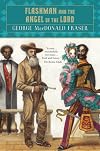
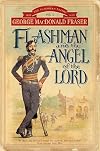
Description
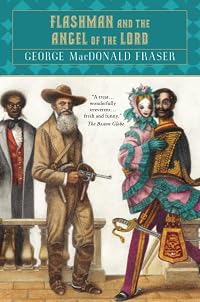
Captain Harry Flashman's covert missions for Her Majesty's Secret Service have taken him all over the globe--Afghanistan, Borneo, Madagascar, Indian and China--but never before has he encountered so formidable a challenge and attempted to rise to it with such hilarious ineptitude as in his latest adventure.Tags
Recommendations






Member Recommendations
Lirmac Another fictionalised account of John Brown and Harper's Ferry.
Member Reviews
Another in the series about Victorian cad, coward, liar and lecher Flashman, of Tom Brown's Schooldays fame (or infamy). In this one Flashy is tricked, lured and/or blackmailed into joining John Brown on his famous raid on Harper's Ferry, part of the run-up to the Civil War in that part of the world.
This book is as funny and cleverly put together as the others, with a lot of attention to historical detail and plausibility (and Flashman is nothing if not plausible - he spent his life practising it). However it differs from many of the others in that Flashy acts almost bravely at times, and seems to have developed a liking and respect for John Brown, whilst at the same time, of course, trying to cheat him.
This book is as funny and cleverly put together as the others, with a lot of attention to historical detail and plausibility (and Flashman is nothing if not plausible - he spent his life practising it). However it differs from many of the others in that Flashy acts almost bravely at times, and seems to have developed a liking and respect for John Brown, whilst at the same time, of course, trying to cheat him.
By the time of this, the tenth Flashman book, I'd have thought there'd be nothing further that this series could do to surprise me. And, in a way, I'd have been right: Flashman and the Angel of the Lord is a classic Flashman adventure. However, I still experienced surprise; not at the book, but at the apparent general consensus among reviewers on this and other websites that Angel of the Lord was a poor addition to the series.
I was a bit wary about this one, given all the naysaying about it, but it was bloody fantastic as usual. What do people want? Rip-roaring adventure? (Antebellum USA: check.) Fantastically-drawn characters? (Joe, Annette, the welcome return of John Charity Spring: check.) Well-realised real historical figures? show more (John Brown, Allan Pinkerton, even Abe Lincoln: check.) Luscious ladies and all sorts of bedroom-based depravities? (Miranda, Annette, Hannah: check.) Shameless poltroonery from our beloved Flashy? (On page 328, he reminds us he has no more of the milk of human kindness than you'd put in a cup of tea." So check.) Well-researched historical fiction (erm, antebellum USA again, and one of the most legendary raids in history: Harper's Ferry. That's a check.) A deliriously funny romp? (is there anything more humorous than Flashman indignantly squirming under the yoke of not one, not two, but three different factions?) You get the picture. It's not the best of the Flashman series, but then again, that is a very high bar. Damn your eyes, if you don't enjoy this then just what have you been doing for the last nine books?
(And I can't get the song 'Glory, Glory, Hallelujah' out of my head. It took me a moment to recall the tune from the basis of the lyrics given to us by Flashman (and his adorable great-grandchildren), and then all but smacked myself for not recognising it sooner. Not only did it later morph into 'The Battle Hymn of the Republic', but a rousing adaptation of it was given by the paratroopers in the best TV mini-series of all time, Band of Brothers ("Gory, gory, what a hell of a way to die/And he ain't gonna jump no more!"), and it is a well-known chant of my hometown football club, where it is known as 'Glory, Glory, Man United'.)
"What the deuce was I, Harry Flashman, V.C., and soon to be knighted by Her Majesty, en route from India to England, doing toting a tittering whore down a reeking lane in America's capital city? Well, the wind bloweth where it listeth, you see, and if it carries you up several flights of back stairs, along corridors where the air has been replaced by cigar smoke and the carpet fairly squelches with tobacco juice, and at last into a dimly lit salon whose ornate gilt-and-plush décor would do credit to a Damascus brothel, why, you must make the best of it and get her stripped and on the bed before your luck changes." (pp109-10)" show less
I was a bit wary about this one, given all the naysaying about it, but it was bloody fantastic as usual. What do people want? Rip-roaring adventure? (Antebellum USA: check.) Fantastically-drawn characters? (Joe, Annette, the welcome return of John Charity Spring: check.) Well-realised real historical figures? show more (John Brown, Allan Pinkerton, even Abe Lincoln: check.) Luscious ladies and all sorts of bedroom-based depravities? (Miranda, Annette, Hannah: check.) Shameless poltroonery from our beloved Flashy? (On page 328, he reminds us he has no more of the milk of human kindness than you'd put in a cup of tea." So check.) Well-researched historical fiction (erm, antebellum USA again, and one of the most legendary raids in history: Harper's Ferry. That's a check.) A deliriously funny romp? (is there anything more humorous than Flashman indignantly squirming under the yoke of not one, not two, but three different factions?) You get the picture. It's not the best of the Flashman series, but then again, that is a very high bar. Damn your eyes, if you don't enjoy this then just what have you been doing for the last nine books?
(And I can't get the song 'Glory, Glory, Hallelujah' out of my head. It took me a moment to recall the tune from the basis of the lyrics given to us by Flashman (and his adorable great-grandchildren), and then all but smacked myself for not recognising it sooner. Not only did it later morph into 'The Battle Hymn of the Republic', but a rousing adaptation of it was given by the paratroopers in the best TV mini-series of all time, Band of Brothers ("Gory, gory, what a hell of a way to die/And he ain't gonna jump no more!"), and it is a well-known chant of my hometown football club, where it is known as 'Glory, Glory, Man United'.)
"What the deuce was I, Harry Flashman, V.C., and soon to be knighted by Her Majesty, en route from India to England, doing toting a tittering whore down a reeking lane in America's capital city? Well, the wind bloweth where it listeth, you see, and if it carries you up several flights of back stairs, along corridors where the air has been replaced by cigar smoke and the carpet fairly squelches with tobacco juice, and at last into a dimly lit salon whose ornate gilt-and-plush décor would do credit to a Damascus brothel, why, you must make the best of it and get her stripped and on the bed before your luck changes." (pp109-10)" show less
The recent death of George McDonald Fraser has brought a close (maybe permanent, maybe not?) to this delightful series of books. I have had the pleasure of following this series every since the release of the first book back in the sixties. The Flashman novels combine history (including substantial endnotes) with sex, action, adventure and the secret pleasure of enjoying the exploits of one of the most notoriously popular non-politically correct characters of 20th Century literature. Flashman is a womanizer, a coward, a scoundrel and a cheat, but in the novels, which are all narrated by Flashman himself, he is utterly honest with his readers. He is a man not proud of his faults, but certainly unabashed about them.
The Flashman novels show more could be dismissed as sensationalized light reading , but Fraser cleverly tied his character into most of the major events of the last sixty years of the nineteenth century, a Victorian Zelig or Forrest Gump. Flashman casually mentions this minor detail or that simple observation, then Fraser in his assumed role as editor of the Flashman papers meticulously explains in the endnotes how these mentions by Flashman confirm the truth of his narrative, since only if Flashman was there could he have known about this fact or that. Fraser's endnotes also round out the historic details of the narrative, giving background and elaboration to the history-as-I-lived-it tales told by Flashman. It all works wonderfully, even if you somewhat suspect that some details are being outrageously fabricated.
I very strongly recommend these books to anyone who has an interest in history and is willing to keep an open mind towards the womanizing and the language (the n-word appears quite a bit, but completely in character for Flashman). I would suggest the best way to read them is in order of publication. This doesn't follow Flashman's own life chronology, but the books published later often make reference to previous editions of the "Flashman Papers" and so is more fun for the reader to follow. show less
The Flashman novels show more could be dismissed as sensationalized light reading , but Fraser cleverly tied his character into most of the major events of the last sixty years of the nineteenth century, a Victorian Zelig or Forrest Gump. Flashman casually mentions this minor detail or that simple observation, then Fraser in his assumed role as editor of the Flashman papers meticulously explains in the endnotes how these mentions by Flashman confirm the truth of his narrative, since only if Flashman was there could he have known about this fact or that. Fraser's endnotes also round out the historic details of the narrative, giving background and elaboration to the history-as-I-lived-it tales told by Flashman. It all works wonderfully, even if you somewhat suspect that some details are being outrageously fabricated.
I very strongly recommend these books to anyone who has an interest in history and is willing to keep an open mind towards the womanizing and the language (the n-word appears quite a bit, but completely in character for Flashman). I would suggest the best way to read them is in order of publication. This doesn't follow Flashman's own life chronology, but the books published later often make reference to previous editions of the "Flashman Papers" and so is more fun for the reader to follow. show less
Our intrepid hero, Harry Flashman, is back for volume ten of the Flashman Papers, a narrative of the life and times of one of the most ne’er-do-well wastrels to ever grace the pages of a published autobiography.
The first five Flashman novels were presented in chronological order. Several installments thereafter acted to fill in gaps in the story. From a chronological standpoint, the adventures of this novel immediately follow those contained in Flashman in the Great Game, wherein we left Flashman on the heels of his wholly unintentional heroics displayed in the great Indian Mutiny of 1857. Harry decamps to South Africa, on the way home to England, where he is hijacked and kidnapped by his old nemesis, Captain John Charity Spring. show more Spring arranges for Flashman’s transport to the United States, where he expects Flashman to be arrested and arraigned for his exploits which were covered in a previous installment, Flash For Freedom.
As in the previous Flashman novels, our Harry is revealed as the premier coward and opportunist of his era; faults which he quite willingly admits and even boasts of. Much as a prior day Forrest Gump, he has a way of finding himself among the most powerful and famous personages of his era, as he takes part in the great events of the period, in this case, John Brown’s raid on Harper’s Ferry.
Aside from uproarious fun and games, the Flashman series is set against historical events and actually serves as an educational experience. On to volume eleven of the Flashman Papers. show less
The first five Flashman novels were presented in chronological order. Several installments thereafter acted to fill in gaps in the story. From a chronological standpoint, the adventures of this novel immediately follow those contained in Flashman in the Great Game, wherein we left Flashman on the heels of his wholly unintentional heroics displayed in the great Indian Mutiny of 1857. Harry decamps to South Africa, on the way home to England, where he is hijacked and kidnapped by his old nemesis, Captain John Charity Spring. show more Spring arranges for Flashman’s transport to the United States, where he expects Flashman to be arrested and arraigned for his exploits which were covered in a previous installment, Flash For Freedom.
As in the previous Flashman novels, our Harry is revealed as the premier coward and opportunist of his era; faults which he quite willingly admits and even boasts of. Much as a prior day Forrest Gump, he has a way of finding himself among the most powerful and famous personages of his era, as he takes part in the great events of the period, in this case, John Brown’s raid on Harper’s Ferry.
Aside from uproarious fun and games, the Flashman series is set against historical events and actually serves as an educational experience. On to volume eleven of the Flashman Papers. show less
If you have been keeping track, the Flashman papers are now in the years 1858 to 1859. Flashman is thirty six years old and back in America where old enemies remember him and new enemies are out to blackmail him. He's not back by choice, though. Someone from his past had an old score to settle. So here's Harry, knee deep in the conflicts of slavery...again. This time he's working with "the angel of the Lord," John Brown of Harper's Ferry fame. Yes, THAT John Brown.
Interestingly enough, Fraser decided to scale back the sex scenes for this particular installment. In addition to not having many opportunities to shag the lady next door, Flashman appears to be growing up some. To some he doesn't appear to be as cowardly or as shallow...He show more still tries to get out of getting out of the October 1859 raid on Harper's Ferry but as usual, is unsuccessful. show less
Interestingly enough, Fraser decided to scale back the sex scenes for this particular installment. In addition to not having many opportunities to shag the lady next door, Flashman appears to be growing up some. To some he doesn't appear to be as cowardly or as shallow...He show more still tries to get out of getting out of the October 1859 raid on Harper's Ferry but as usual, is unsuccessful. show less
Discovering Flashman has been my highlight for 2010.
Fraser’s skills as a novelist and historian is such that he created a character who remains ultimately likeable, despite his treatment of women. There have been many such men in life – why not in art?
While Flashman’s professed neutrality on the slavery ‘question’ may be difficult to swallow (at least to this modern reader), his attitude to puritans and fanatics is refreshing. Long live Flashman!
Fraser’s skills as a novelist and historian is such that he created a character who remains ultimately likeable, despite his treatment of women. There have been many such men in life – why not in art?
While Flashman’s professed neutrality on the slavery ‘question’ may be difficult to swallow (at least to this modern reader), his attitude to puritans and fanatics is refreshing. Long live Flashman!
I've never brought this up before, but do you realize there's a similarity between Fraser's Flashman, and Terry Pratchett's Rincewind the Wizzard?
Well, maybe you have to be there, and maybe I've got to stop reviewing these two authors one after the other? Flashman comes face to face with the famous American Abolitionist, John Brown. I was surprised to discover that Brown was in reality a very conscious martyr for the Cause! Ah, the media were a poison even in the run-up to the Civil War. It's a good Flashman story.
Well, maybe you have to be there, and maybe I've got to stop reviewing these two authors one after the other? Flashman comes face to face with the famous American Abolitionist, John Brown. I was surprised to discover that Brown was in reality a very conscious martyr for the Cause! Ah, the media were a poison even in the run-up to the Civil War. It's a good Flashman story.
Members
- Recently Added By
Lists

Historical Fiction
889 works; 91 members

Best Satire
188 works; 29 members
Author Information

49+ Works 19,753 Members
Author George MacDonald Fraser was born April 2, 1925 in Carlisle. He was refused entrance to the medical faculty of Glasgow University, so he joined the army in 1943. He served as an infantryman with the 17th Indian Division of the XIVth Army in Burma, a lance corporal and was commissioned in the Gordon Highlanders. After the war, he became a show more sports reporter with the Carlisle Journal; and during this time, he met and married Kathleen Hetherington, a reporter from another paper. He worked as a reporter and sub-editor on the Cumberland News and then moved to Glasgow, in 1953, where he worked at the Glasgow Herald as a features editor and deputy editor. Fraser's first novel was "Flashman" (1969), which was followed by nine sequels, so far, that deal with different venues of the 19th century ranging from Russia, Borneo and China to the Great Plains of the America West. Some of the other titles in the Flashman Papers are "Royal Flash" (1970), "Flashman in the Great Game" (1975), "Flashman and the Redskins" (1982), and "Flashman and the Angel of the Lord" (1994). Some of his non-fiction work includes "The Steel Bonnets" (1971), which is a factual study of the Anglo-Scottish border thieves in the seventeenth century, and "Quartered Safe Out Here" (1992). Fraser has also written a number of screenplays that include "The Three Musketeers" (1973), "Royal Flash" (1975), "Octopussy" (1983), and "Return of the Musketeers" (1989). He has also written a series of short stories about Private McAuslan whose titles include "The General Danced at Dawn" (1970), "McAuslan in the Rough" (1974), and "The Sheik and the Dustbin and other McAuslan Stories" (1988). He died of cancer on January 2, 2008. (Bowker Author Biography) show less
Some Editions
Series

Work Relationships
Common Knowledge
- Canonical title
- Flashman and the Angel of the Lord
- Original publication date
- 1994
- People/Characters
- Harry Paget Flashman; John Brown, abolitionist; Julia Ward Howe; William Henry Seward; Captain John Charity Spring, M.A.; Sir George Grey (show all 7); Allan Pinkerton
- Important places
- USA; Harpers Ferry, West Virginia, USA; West Virginia, USA; Cape Town, Western Cape, South Africa; Baltimore, Maryland, USA; Washington, D.C., USA (show all 7); New York, New York, USA
- Important events
- John Brown's raid on Harpers Ferry (1859)
- Original language
- English UK
Classifications
Statistics
- Members
- 871
- Popularity
- 31,316
- Reviews
- 10
- Rating
- (3.82)
- Languages
- English, German, Spanish
- Media
- Paper, Audiobook, Ebook
- ISBNs
- 18
- ASINs
- 8