On This Page
Description
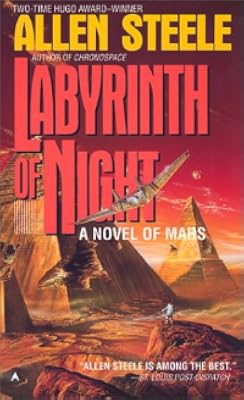
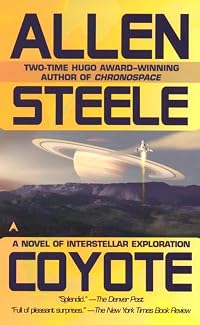
On Mars, a research team encounters an ancient puzzle that only a guitarist can solve In 2029, an American research team ventures to Mars to investigate an astounding find: a labyrinth older than humanity itself, whose maze of rooms conceals the deepest secrets of the red planet. In the final chamber, strange music plays, as chilling as it is beautiful. It will be the last thing the scientist who discovers it ever hears. As the music rises to a climax, the chamber door closes, leaving him to show more die in the pitch dark. Where one explorer has failed, Ben Cassidy must not. An internationally famous guitarist, his music is the closest thing on Earth to Mars's deadly hymn. The government sends him into space to solve a planetary mystery, but what Cassidy encounters is a team of researchers whose jealous competition is every bit as dangerous as the secrets of Mars.nbsp;nbsp; show lessTags
Recommendations
























Member Recommendations
theapparatus Next book in series
Member Reviews
My reactions to reading this book in 1993. Some spoilers follow.
There are a lot of annoying things wrong with this novel.
Steele’s characterization is minor at best and consists of assigning tag traits to his characters. Thus, Shin-ichi Kawakami’s makes a hobby of American slang. Waylon Jennings Boggs won’t stop spouting his rustic, Southern homilies or dirty jokes. Miho Sasaki goes around acting embarassed around men, a chip on her shoulder about rumors she’s slept around to get her job. And every single military character is thoroughly brutal, repulsive, disgusting, and unsympathetic. Steele seems to be a resolutely, judging from this book’s political attitudes, populist liberal. All government and military characters are show more portrayed unflatteringly. The President seems to be a saber rattling warmongerer just 'cause he’s a Republican.) Commander Terrance L’Enfant is the most trite cliché: an insane military leader, although, to Steele’s credit, it is shown that most of his actions (apart from his outbursts and final descent into madness) can be justified as a response to a possible alien threat. (Indeed, you could argue that the Cooties may have delibratley provoked such an action to get their claws on the nuke. As with most novels involving alien artifacts, you can postulate a variety of explanations for what is, after all, alien behavior.).
There are also several lapses in plot logic. Why do W.J. Boggs and August Nash let L’Enfant and Swiggart boss them around under gunpoint after they come in possession of the other Marines’ weapons and are unobserved for a while? Why do the aliens, sophisticated enough to develop nanotechnology and nuclear explosive driven starships, not have a science of planetology good enough to tell them that Mars’ water and atmosphere will bleed away or that the gravity may be too much for them? And how are they going to get anywhere with one nuclear bomb (a tactical nuke at that)?
Despite all that, I liked a lot about this novel. The Face on Mars, its reality, is a great jumping off point for a novel. Mars' alien and natural grandeur were well conveyed. I liked the hardware, particularly the Mars dirigibles and combat armor suits. I liked the references to Percival Lowell and H.G. Well’s War of the Worlds. And, of course, I’m always a sucker for the Dos Passos technique of document insertion. Here (aided by Steele’s stint as a journalist) we have lots of newspaper articles, book excerpts, and transcriptions of Senate hearings. Steele skillfully throws in quotes from things in the future of the story’s timeline. Some people in reviews complained of musician Ben Cassidy and the first part of the book with him (particularly that it was popular music that was used and not classical) convincing the aliens that humanity is creative. Why they need this convincing if they just want a nuke? Why not just send a pseudo-Cootie out to see if we have one?
Despite a lot of problems, this book kept me interested, and I’m not sorry I read it. show less
There are a lot of annoying things wrong with this novel.
Steele’s characterization is minor at best and consists of assigning tag traits to his characters. Thus, Shin-ichi Kawakami’s makes a hobby of American slang. Waylon Jennings Boggs won’t stop spouting his rustic, Southern homilies or dirty jokes. Miho Sasaki goes around acting embarassed around men, a chip on her shoulder about rumors she’s slept around to get her job. And every single military character is thoroughly brutal, repulsive, disgusting, and unsympathetic. Steele seems to be a resolutely, judging from this book’s political attitudes, populist liberal. All government and military characters are show more portrayed unflatteringly. The President seems to be a saber rattling warmongerer just 'cause he’s a Republican.) Commander Terrance L’Enfant is the most trite cliché: an insane military leader, although, to Steele’s credit, it is shown that most of his actions (apart from his outbursts and final descent into madness) can be justified as a response to a possible alien threat. (Indeed, you could argue that the Cooties may have delibratley provoked such an action to get their claws on the nuke. As with most novels involving alien artifacts, you can postulate a variety of explanations for what is, after all, alien behavior.).
There are also several lapses in plot logic. Why do W.J. Boggs and August Nash let L’Enfant and Swiggart boss them around under gunpoint after they come in possession of the other Marines’ weapons and are unobserved for a while? Why do the aliens, sophisticated enough to develop nanotechnology and nuclear explosive driven starships, not have a science of planetology good enough to tell them that Mars’ water and atmosphere will bleed away or that the gravity may be too much for them? And how are they going to get anywhere with one nuclear bomb (a tactical nuke at that)?
Despite all that, I liked a lot about this novel. The Face on Mars, its reality, is a great jumping off point for a novel. Mars' alien and natural grandeur were well conveyed. I liked the hardware, particularly the Mars dirigibles and combat armor suits. I liked the references to Percival Lowell and H.G. Well’s War of the Worlds. And, of course, I’m always a sucker for the Dos Passos technique of document insertion. Here (aided by Steele’s stint as a journalist) we have lots of newspaper articles, book excerpts, and transcriptions of Senate hearings. Steele skillfully throws in quotes from things in the future of the story’s timeline. Some people in reviews complained of musician Ben Cassidy and the first part of the book with him (particularly that it was popular music that was used and not classical) convincing the aliens that humanity is creative. Why they need this convincing if they just want a nuke? Why not just send a pseudo-Cootie out to see if we have one?
Despite a lot of problems, this book kept me interested, and I’m not sorry I read it. show less
Ratings
Members
- Recently Added By
Author Information

151+ Works 7,154 Members
Series

Common Knowledge
- Dedication
- This one's for Frank Jacobs ...
who wouldn't take no for an answer. - Blurbers
- Dozois, Gardner
Classifications
Statistics
- Members
- 306
- Popularity
- 105,070
- Reviews
- 2
- Rating
- (3.13)
- Languages
- Czech, English, German, Italian
- Media
- Paper, Ebook
- ISBNs
- 9
- ASINs
- 2