On This Page
Description
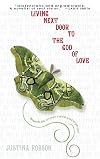
Where do you run when a world is out to get you? AIs, Forged beings, superheroes, angels, and worlds that change in the blink of an eye--here is a richly imagined tale of ordinary redemption in an extraordinary world from one of the most provocative writers working today. . . . Francine is a young runaway looking to find a definition of love she can trust. In Sankhara, she finds a palace where rooms are made of bone, flowers, and the hearts of heroes. She finds a scientist mapping the show more territory of the human mind. She finds a boyfriend. And she finds Eros itself--incarnated in the androgynously irresistible form of Jalaeka. But not everyone is in love with the god of love. Unity, for one, wants to assimilate Jalaeka along with every other soul in the universe. And contrary to what everyone always believes, love alone can't save the day. It will take something both more and less powerful than the human heart to save the worlds upon worlds at risk when gods collide. "For Robson, world-building is a literary device like any other, useful for exposing buried fears and desires to the light of day, no matter how strange the sun."--New York Times Book Review show lessTags
Recommendations




Member Recommendations
Member Reviews
http://www.strangehorizons.com/reviews/2007/04/the_2007_philip.shtml
I had high hopes of this book. In its favour, Robson explores the questions of individual identity in a world where artificial intelligences are in charge of both the ordinary world and of various pocket universes which can be easily accessed, very much in the tradition of Philip K. Dick. The plot concerns the struggle for dominance between two god-like entities, Theo and Jalaeka, but one that is brought down to the level of their human friends and lovers, particularly through researcher Greg Saxton and runaway schoolgirl Francine, in a pocket universe called Sankhara.
Unfortunately I really had to struggle to finish this. Robson's high-risk strategy of jumping between show more eight different first-person narrators does not really pay off; I often had to flick back to the start of each chapter to remind myself who was speaking. This lack of signposting in the narrative was matched by an equally frustrating lack of signposting for the context; it is all very well to start a book with little idea of how this world works, but it seemed to take a very long time before the picture of what was and was not possible in it emerged. I found this frustrating. Robson is a good writer, and there are lots of good ideas here, but they are not laid out clearly enough. For almost the first time I can remember, I found myself wishing that the book had been equipped with a glossary and dramatis personæ. show less
I had high hopes of this book. In its favour, Robson explores the questions of individual identity in a world where artificial intelligences are in charge of both the ordinary world and of various pocket universes which can be easily accessed, very much in the tradition of Philip K. Dick. The plot concerns the struggle for dominance between two god-like entities, Theo and Jalaeka, but one that is brought down to the level of their human friends and lovers, particularly through researcher Greg Saxton and runaway schoolgirl Francine, in a pocket universe called Sankhara.
Unfortunately I really had to struggle to finish this. Robson's high-risk strategy of jumping between show more eight different first-person narrators does not really pay off; I often had to flick back to the start of each chapter to remind myself who was speaking. This lack of signposting in the narrative was matched by an equally frustrating lack of signposting for the context; it is all very well to start a book with little idea of how this world works, but it seemed to take a very long time before the picture of what was and was not possible in it emerged. I found this frustrating. Robson is a good writer, and there are lots of good ideas here, but they are not laid out clearly enough. For almost the first time I can remember, I found myself wishing that the book had been equipped with a glossary and dramatis personæ. show less
In this interwoven story that follows on from Natural History it tells of what happens to unity when it starts to fully interact with humanity and humanity's liking for individuality.
Unity is a fact, it's spreading, consciously and unconsciously. Jalaeka is a consciousness that has hived itself off from the unity and is trying to stay independent. Unity wants it back, but does it really and is it prepared for what will happen when two powerful entities go head to head.
Surreal and mythic it's a little too scattered for my taste but an interesting read all the same.
Unity is a fact, it's spreading, consciously and unconsciously. Jalaeka is a consciousness that has hived itself off from the unity and is trying to stay independent. Unity wants it back, but does it really and is it prepared for what will happen when two powerful entities go head to head.
Surreal and mythic it's a little too scattered for my taste but an interesting read all the same.
My contact with string theory is tenuous at best, and I don't understand it in the slightest.
Nevertheless it would be easy to describe this as an omnisexual romance about string theory. You could also easily describe it as a fantastical, multiversal investigation into the nature of deity and the relationship between deity and worshipper. You could also describe it as a quixotic fantasy in hard SF clothes.
There are flaws - many of the characters are ciphers and it's not really clear why they're there, except the author seemed to think it would be cool, but for all that, a thoroughly enjoyable read.
Nevertheless it would be easy to describe this as an omnisexual romance about string theory. You could also easily describe it as a fantastical, multiversal investigation into the nature of deity and the relationship between deity and worshipper. You could also describe it as a quixotic fantasy in hard SF clothes.
There are flaws - many of the characters are ciphers and it's not really clear why they're there, except the author seemed to think it would be cool, but for all that, a thoroughly enjoyable read.
Lovely writing and inventive plot. I didn't like it as much as Natural History and found it confusing at times, but it was an enjoyable ride.
I think some people would consider this book genius. I am not one of them. I don't think it's bad either: Robson is a good, technical writer with some lovely poetry to her prose. But I really can't decide one way or the other how I feel about this book, and right now, I have more complaints than praises.
For a full review, which may or may not include spoilers, please click here: http://calico-reaction.livejournal.com/13106.html
For a full review, which may or may not include spoilers, please click here: http://calico-reaction.livejournal.com/13106.html
minus points for pronouns and underaged love interests
Members
- Recently Added By
Lists

Favorite Science Fiction by Women Authors
741 works; 203 members
Author Information

31+ Works 3,812 Members
Justina Robson was a teacher (2002,2006) at the Arvon Foundation in the UK.
Some Editions
Awards and Honors
Awards
Distinctions
Series

Common Knowledge
- People/Characters
- Jalaeka; Francine
- Dedication
- For Freda Warrington Now, or never
- First words
- There's a kind of hush all over the world tonight: the sound of lovers in love.
- Publisher's editor
- Ulman, Juliet
Classifications
Statistics
- Members
- 282
- Popularity
- 114,822
- Reviews
- 9
- Rating
- (3.44)
- Languages
- English
- Media
- Paper, Audiobook, Ebook
- ISBNs
- 4
- ASINs
- 2