On This Page
Description
Within the magical gears of Lord Kelvin's incredible machine lies the secret of time. The deadly Dr. Ignacio Narbondo would murder to possess it and scientist and explorer Professor Langdon St. Ives would do anything to use it. For the doctor it means mastery of the world and for the professor it means saving his beloved wife from death. A daring race against time begins...Tags
Recommendations































Member Reviews
My reactions to reading this novel in 2002. Spoilers follow.
I liked this sequel to Blaylock's Homunculus better than that novel. (The Lord Kelvin of the title is, in fact, the famous physicist Lord Kelvin who makes an appearance as a character.)
Villains Ignacio Narbondo and Willis Pule are back from the first novel. Pule is now insane and forms a grotesque pair with his mother. The novel has an interesting structure and gets better as it goes along.
The opening chapter sets up Langdon St. Ives' obsession with avenging himself on Narbondo for the death of St. Ives' wife and his quest to resurrect her via time travel. (The Holmesian flavor of this novel is even stronger than the one in Homunculus. Narbondo is sort of a Moriarty figure to show more St. Ives and Parsons, the rather stuffy, socially connected member of the Royal Academy of Sciences who always keeps St. Ives out of it, comes off rather like Holmes' Scotland Yard rival, LeStrande.) The opening third of the book involves St. Ives foiling a blackmail plot by Narbondo to pull a comet into the Earth via a powerful supermagnet. Blaylock provides an interesting story of how Narbondo is tracked down and how he ends up supposedly drowned in a frigid Nowegian lake. However, Blaylock never really explains why the opening chapter of Part I necessitates St. Ives being in Peru and how Narbondo's earthquake generating scheme worked. The story follows St. Ives and ever competent servant Hasbro.
However, the novel's story and humor really picks up with Part II which is narrated by a minor character from Homunculus, Jack Owlesby. Jack's a pretty normal guy who chides himself for his fondness for good food and drink and naps and his wife and knows he's not particulary courageous. However, he's compotent and courageous enough to foil a renegade icthylogist and his dangerous sidekick from Wyoming in their scheme to use the stolen supermagnet to down metal-bottomed ships and extort money from the Crown. He also has a run in with the weird Pules.
The third book is Blaylock's witty takes on time travel rather reminiscent, in the changed memory of time traveler St. Ives, of William Tenn's "The Brooklyn Project". As in Homunculus, St. Ives can't bring himself to cold-bloodedly kill Narbondo even though the later killed St. Ives' wife. So, he goes back in time to, first, kill the infant Narbondo and then try to change his personality by giving him antibiotics (obtained from a twentieth century Fleming) to prevent his hunchback deformity and deformed personality. The obsessed St. Ives wears himself pretty thin trying to bring his wife back. Eventually, he does, and he feels his memory of the old timetrack with his dead wife fade away. I liked how St. Ives, after wearing himself out physically and mentally to affect the past, steps aside after preventing the death of his beloved Alice and realizes she deserves the younger, more vital version of himself. At novel's end, the old timetracks have faded, and we see St. Ives enjoying domesticity with his wife and a child. I think the plot, finale, and humor of this novel worked better with the time travel plot more interesting than the reanimation plot of Homunculus. show less
I liked this sequel to Blaylock's Homunculus better than that novel. (The Lord Kelvin of the title is, in fact, the famous physicist Lord Kelvin who makes an appearance as a character.)
Villains Ignacio Narbondo and Willis Pule are back from the first novel. Pule is now insane and forms a grotesque pair with his mother. The novel has an interesting structure and gets better as it goes along.
The opening chapter sets up Langdon St. Ives' obsession with avenging himself on Narbondo for the death of St. Ives' wife and his quest to resurrect her via time travel. (The Holmesian flavor of this novel is even stronger than the one in Homunculus. Narbondo is sort of a Moriarty figure to show more St. Ives and Parsons, the rather stuffy, socially connected member of the Royal Academy of Sciences who always keeps St. Ives out of it, comes off rather like Holmes' Scotland Yard rival, LeStrande.) The opening third of the book involves St. Ives foiling a blackmail plot by Narbondo to pull a comet into the Earth via a powerful supermagnet. Blaylock provides an interesting story of how Narbondo is tracked down and how he ends up supposedly drowned in a frigid Nowegian lake. However, Blaylock never really explains why the opening chapter of Part I necessitates St. Ives being in Peru and how Narbondo's earthquake generating scheme worked. The story follows St. Ives and ever competent servant Hasbro.
However, the novel's story and humor really picks up with Part II which is narrated by a minor character from Homunculus, Jack Owlesby. Jack's a pretty normal guy who chides himself for his fondness for good food and drink and naps and his wife and knows he's not particulary courageous. However, he's compotent and courageous enough to foil a renegade icthylogist and his dangerous sidekick from Wyoming in their scheme to use the stolen supermagnet to down metal-bottomed ships and extort money from the Crown. He also has a run in with the weird Pules.
The third book is Blaylock's witty takes on time travel rather reminiscent, in the changed memory of time traveler St. Ives, of William Tenn's "The Brooklyn Project". As in Homunculus, St. Ives can't bring himself to cold-bloodedly kill Narbondo even though the later killed St. Ives' wife. So, he goes back in time to, first, kill the infant Narbondo and then try to change his personality by giving him antibiotics (obtained from a twentieth century Fleming) to prevent his hunchback deformity and deformed personality. The obsessed St. Ives wears himself pretty thin trying to bring his wife back. Eventually, he does, and he feels his memory of the old timetrack with his dead wife fade away. I liked how St. Ives, after wearing himself out physically and mentally to affect the past, steps aside after preventing the death of his beloved Alice and realizes she deserves the younger, more vital version of himself. At novel's end, the old timetracks have faded, and we see St. Ives enjoying domesticity with his wife and a child. I think the plot, finale, and humor of this novel worked better with the time travel plot more interesting than the reanimation plot of Homunculus. show less
A two-pronged story as Langdon St Ives tries to outwit the ferociously malevolent Narbondo's scheme threatening to move the planet into the path of a comet (fur fun and profit) while also fending off the bumbling effort of Lord Kelvin to neutralise the threat by switching off the Earth's magnetic field, then later tracking said machine down when it apparently starts sinking ships off the coast of England. A cracked steampunk romp, for fun and profit.
This book is divided into three separate stories with one theme running through all of them; Lord Kelvin’s machine. In the first story, Dr. Ignacio Narbondo is trying to shift the orbit of the Earth into the path of a passing comet. The Royal Academy wants to use Lord Kelvin’s machine to change the magnitude of the Earth’s poles to repel the comet but Professor Langdon St. Ives believes that using the device will harm, and not help, the planet. The second tale starts with a mysterious explosion at the Royal Academy where Lord Kelvin’s machine is being stored. A little while later there are reports of steel hulled ships going down off Dover. Then a creepy mother and son show up searching for an elixir that prolongs life. They show more think that the people who stole the apparatus also have the potion along with the cryogenically frozen Narbondo. In the third plot St. Ives is in possession of Lord Kelvin’s apparatus and has turned it into a time traveling device.
This is what I imagined steampunk to be; real scientists from history working on impossible technology during the Victorian era with plenty of action and adventure. There really was a scientist named Lord Kelvin who developed the absolute temperature scale called the ‘Kelvin scale,’ formulated the second law of thermodynamics, and worked to install telegraph cables under the Atlantic. Another real scientist mentioned the novel is Sir Alexander Fleming who discovered penicillin. These aren’t just science fiction stories they are also adventure stories. Professor St. Ives has a group of men, including his faithful valet Hasbro, who follow him as he tracks down the evil Narbondo and saves the day. I look forward to reading more books in this series. show less
This is what I imagined steampunk to be; real scientists from history working on impossible technology during the Victorian era with plenty of action and adventure. There really was a scientist named Lord Kelvin who developed the absolute temperature scale called the ‘Kelvin scale,’ formulated the second law of thermodynamics, and worked to install telegraph cables under the Atlantic. Another real scientist mentioned the novel is Sir Alexander Fleming who discovered penicillin. These aren’t just science fiction stories they are also adventure stories. Professor St. Ives has a group of men, including his faithful valet Hasbro, who follow him as he tracks down the evil Narbondo and saves the day. I look forward to reading more books in this series. show less
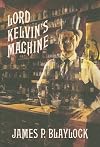
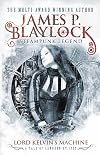
Lord Kelvin’s Machine by James P. Blaylock was originally published in 1992 and now republished by Titan Books, so let me just point out one thing… Look at that fantastic cover! Funny enough, even though it’s a modernised cover, it kind of fits the book perfectly. Okay, but enough about the look, let’s talk about the book. Once again we have Professor Langdon St. Ives battling against the bad doctor and this time there are a lot more at stake. Gripping, this book is a little different to Homunculus, but it still has its moments. Again, we are presented with the imaginative world of steampunk, but this time we have a little time travel included, which is kind of awesome if you think about it.
James P. Blaylock knows how to write show more and Lord Kelvin’s Machine is yet another testament to his capabilities as a writer. Well-crafted characters, intriguing sub-plots and characters that stay true to who they are, are all present in Lord Kelvin’s Machine and it will keep the reader intrigued in the series. Yes, you’ll be sitting on the edge of your seat more often than not. Yes, you’re going to enjoy the wonderful world that has been created and the adventure that Blaylock sends his hero on. Yes, you’ll definitely want more, even if you’re not keen on steampunk. However, if it’ll make you feel better, this particular book is slightly more sci-fi for me than steampunk (time travel falls into my sci-fi pile), so it’s a lot different to its predecessor.
All in all, I liked this book slightly less than Homunculus, but you can’t have one without the other… good thing they’re both awesome reads.
(Review originally posted on www.killeraphrodite.com ) show less
James P. Blaylock knows how to write show more and Lord Kelvin’s Machine is yet another testament to his capabilities as a writer. Well-crafted characters, intriguing sub-plots and characters that stay true to who they are, are all present in Lord Kelvin’s Machine and it will keep the reader intrigued in the series. Yes, you’ll be sitting on the edge of your seat more often than not. Yes, you’re going to enjoy the wonderful world that has been created and the adventure that Blaylock sends his hero on. Yes, you’ll definitely want more, even if you’re not keen on steampunk. However, if it’ll make you feel better, this particular book is slightly more sci-fi for me than steampunk (time travel falls into my sci-fi pile), so it’s a lot different to its predecessor.
All in all, I liked this book slightly less than Homunculus, but you can’t have one without the other… good thing they’re both awesome reads.
(Review originally posted on www.killeraphrodite.com ) show less
Boa leitura um pouco exagerada por vezes, sobre a busca incessante de um homem em descobrir o propósito de uma máquina e conseguir salvar a sua amada.
*note to self. Copy from A.
Ratings
Members
- Recently Added By
Lists

Favourite Steampunk Books
80 works; 16 members

Readers Guide to Steampunk
65 works; 1 member
Author Information

68+ Works 6,064 Members
Some Editions
Awards and Honors
Awards
Series


Work Relationships
Is contained in
Common Knowledge
- Canonical title
- Lord Kelvin's Machine
- Original title
- Lord Kelvin's Machine
- People/Characters
- Langdon St. Ives; Ignacio Narbondo
- Important places
- London, England, UK
- Epigraph
- ...And we cannot even regard ourselves as a constant;
in this flux of things, our identity itself seems
in a perpetual variation; and not infrequently we find
our own disguise the strangest in the masquerade.
&nbs... (show all)p; Robert Louis Stevensen
"Crabbed Age and Youth" - Dedication
- This book is for
Viki
And for
Mark Duncan, Dennis Meyer, and Bob Martin
The best is in the blood,
there's no coincidence about it. - First words
- Rain had been falling for hours, and the North Road was a muddy ribbon in the darkness.
- Last words
- (Click to show. Warning: May contain spoilers.)"I've changed my mind," he said, heading for the stairs. "I love eggplant." And he very nearly meant it, too.
Classifications
Statistics
- Members
- 363
- Popularity
- 87,254
- Reviews
- 6
- Rating
- (3.47)
- Languages
- English, French
- Media
- Paper, Audiobook, Ebook
- ISBNs
- 8
- ASINs
- 6