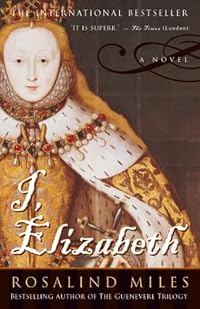
I, Elizabeth
by Rosalind Miles
On This Page
Description
A spellbinding novel about Elizabeth I from the internationally bestselling author of the Guenevere and Tristan and Isolde trilogies. Publicly declared a bastard at the age of three, daughter of a disgraced and executed mother, last in the line of succession to the throne of England, Elizabeth I inherited an England ravaged by bloody religious conflict, at war with Spain and France, and badly in debt. When she died in 1603, after a forty-five year reign, her empire spanned two continents and show more was united under one church, victorious in war, and blessed with an overflowing treasury. What's more, her favorites--William Shakespeare, Sir Francis Drake, and Sir Walter Raleigh--had made the Elizabethan era a cultural Golden Age still remembered today. But for Elizabeth the woman, tragedy went hand in hand with triumph. Politics and scandal forced the passionate queen to reject her true love, Robert Dudley, and to execute his stepson, her much-adored Lord Essex. Now in this spellbinding novel, Rosalind Miles brings to life the woman behind the myth. By turns imperious, brilliant, calculating, vain, and witty, this is the Elizabeth the world never knew. From the days of her brutal father, Henry VIII, to her final dying moments, Elizabeth tells her story in her own words. show lessTags
Recommendations



Member Reviews
This book is dire.
It suffers from the 'hey-nonny-no' school of historical novel which tries desperately to reproduce the spoken language of Tudor times. In this it is no worse than any other badly written historical novel.
However, it is full of anachronisms. The one that made me laugh out loud was the name of King Henry VIII's physician...Dr Wendy. The name Wendy was invented by J M Barrie when he created his novels and plays about Peter Pan. The name comes from 'frwendy' which is baby talk. It did not exist either as a first name or surname until Barrie invented it in the early years of the 20th century. So to name a character Wendy in a novel set in Tudor times is absolutely ludicrous. Any editor worth his or her salt should have show more been aware of this. Another howler is the use of the word 'dieting' - Tudor people would not have understood the term, it is again a 20thC concept.
It is anachronisms like these that give historical fiction a bad name. I have put this book in the recycling bin; I was going to take it to the charity shop but on second thoughts it's far too bad to inflict on other readers. show less
It suffers from the 'hey-nonny-no' school of historical novel which tries desperately to reproduce the spoken language of Tudor times. In this it is no worse than any other badly written historical novel.
However, it is full of anachronisms. The one that made me laugh out loud was the name of King Henry VIII's physician...Dr Wendy. The name Wendy was invented by J M Barrie when he created his novels and plays about Peter Pan. The name comes from 'frwendy' which is baby talk. It did not exist either as a first name or surname until Barrie invented it in the early years of the 20th century. So to name a character Wendy in a novel set in Tudor times is absolutely ludicrous. Any editor worth his or her salt should have show more been aware of this. Another howler is the use of the word 'dieting' - Tudor people would not have understood the term, it is again a 20thC concept.
It is anachronisms like these that give historical fiction a bad name. I have put this book in the recycling bin; I was going to take it to the charity shop but on second thoughts it's far too bad to inflict on other readers. show less
Rosalind Miles, oh Rosalind Miles...how happy I am to have found you! You have written a most excellent novel about my favorite monarch, Queen Elizabeth I, and gave me hours of reading ecstasy that I will never forget! I loved every minute of this book!!!!
I, Elizabeth is a fantastic read of the life, loves, trials and tribulations of Queen Elizabeth I, "The Virgin Queen". We follow Elizabeth from childhood, when she was labeled a "bastard" and her mother a "whore", to the treacherous times before her accession to the throne, through her 45 year reign as Queen of England, until her death at the age of 69. Miles does a great job at putting you right there with her through it all...the good, the bad and the ugly!
The novel is broken down show more into 5 parts...Bastard, Virgin, Queen, Bellona and Gloriana, the five phases in Elizabeth's life. At a little over 600 pages, this is no light reading...but, do not fret, the chapters are short and it goes by quickly. Elizabeth is portrayed just how I imagined her...spunky, fiesty, strong, vain, gutsy, ornery and a tad bitchy! And it's a good thing that she was all those things, or else she never would've lasted against her Parliament!
The question of Elizabeth's virginity was handled very well in my opinion...she was such a passionate woman (being the offspring of two very amorous people, poor girl didn't stand a chance) and always surrounded herself with adoring men, it's easy to see how the scandals and rumors started. The matter of marriage never ceased to be a nuisance to Elizabeth and I can certainly understand her reluctance to it...after seeing what all the men in her life did to their wives, who could blame her?
The dialect in this novel was superb, Elizabeth has some great quotes that would make me laugh out loud or give me fantastic insight into that complex brain of hers.
Bottom line: Yours truly most enthusiastically recommends this outstanding novel to anyone and everyone who will listen! show less
I, Elizabeth is a fantastic read of the life, loves, trials and tribulations of Queen Elizabeth I, "The Virgin Queen". We follow Elizabeth from childhood, when she was labeled a "bastard" and her mother a "whore", to the treacherous times before her accession to the throne, through her 45 year reign as Queen of England, until her death at the age of 69. Miles does a great job at putting you right there with her through it all...the good, the bad and the ugly!
The novel is broken down show more into 5 parts...Bastard, Virgin, Queen, Bellona and Gloriana, the five phases in Elizabeth's life. At a little over 600 pages, this is no light reading...but, do not fret, the chapters are short and it goes by quickly. Elizabeth is portrayed just how I imagined her...spunky, fiesty, strong, vain, gutsy, ornery and a tad bitchy! And it's a good thing that she was all those things, or else she never would've lasted against her Parliament!
The question of Elizabeth's virginity was handled very well in my opinion...she was such a passionate woman (being the offspring of two very amorous people, poor girl didn't stand a chance) and always surrounded herself with adoring men, it's easy to see how the scandals and rumors started. The matter of marriage never ceased to be a nuisance to Elizabeth and I can certainly understand her reluctance to it...after seeing what all the men in her life did to their wives, who could blame her?
The dialect in this novel was superb, Elizabeth has some great quotes that would make me laugh out loud or give me fantastic insight into that complex brain of hers.
Bottom line: Yours truly most enthusiastically recommends this outstanding novel to anyone and everyone who will listen! show less
Great fun - some fabulous descriptions in here: p.75 on Henry VIII: "On his hands, which could no longer meet across his bloated belly, his rings were lost, embedded in wreaths of fat as white and waxen as a stillborn child. From his protruding leg, padded like his chair, swathed and bound in damask linen and white velvet, jutting stiffly forth like a gross caricature of a human member, came the foul, sweet smell which had entered the chamber with him, even before him: the smell of death.
My father, the king."
...and that last line reminds me of all the brilliant little Shakespeare etc. quotes - even Wilde. Miles, very cheeky! Great, great fun- thank you!
My father, the king."
...and that last line reminds me of all the brilliant little Shakespeare etc. quotes - even Wilde. Miles, very cheeky! Great, great fun- thank you!
”The silence in the chamber grew until it echoed like thunder in the booklined space. In the tight circle of grave old faces, not a one flickered. At last the oldest and the gravest there laid down the document, shook his head, and spoke. 'You have her, madam - there can be no doubt.' I turned my head. Behind the ranks of gray-wigged, black-robed figures, beyond the little window of the Temple, fresh white clouds scudding like rabbits' bobtails chased each other across a shining sky. On such a day of any other summer, Robin and I would have been ahorse, afield, chasing and racing too. But he was far away, and here I sat, a prisoner like Mary, who at last had brought me here.”
Elizabeth Tudor, daughter of Henry VIII, lived through and show more ruled over one of the most interesting periods in England’s history. She lent her name to the era, the Elizabethan period and lived to see her country’s religion turned on its head for lust of her mother, the death of her father, his other four wives and her two siblings as well as birth of the English Renaissance and the Spanish Armada defeated. She had to defend herself not only from threats abroad from the Church of Rome and other foreign powers but from her own subjects and council who wished she were Catholic or a man or that she would marry and produce a male heir.
I’ve always been a fan of this period in history. It was the time of Shakespeare and global exploration. The monarch was almost absolute and the Tudor family are the closest you can get to a Renaissance soap opera. In fact, Elizabeth only exists due to a random set of circumstances where Prince Arthur died and his brother Henry married his widow Katherine of Aragon, became Henry VIII and turned out to be totally cuckoo-bananas. That’s why I was excited to see that this is a book written in the voice of Elizabeth. Of course, we can’t truly know what she thought about many things but Miles incorporates words from speeches and letters to inform us of her opinion about people and events, lending authenticity to the voice and diction of the story.
I enjoyed reading about her life from under her father to after the Spanish Armada. This long stretch of time allows readers to see her opinions as a person and monarch evolve over time, how she was always on guard against dangers to her person. Readers continuously see how her father, even long after his death influences her life and how political intrigue shaped her actions as queen.
The POV is interesting because the author writes as Elizabeth writing the story of her life and covers the various stages of her existence. My main problem with this POV is that Miles has Elizabeth interrupt her own story with input from the present. Her reflections are not only spoilery but they disrupt the flow of the book. As a reader familiar with Elizabeth’s story it wasn’t as bothersome as it could have been but what if I knew nothing about her? Foreshadowing can create suspense but the way it’s done here it undercuts the tension. I don’t want commentary from present Elizabeth commenting on past Elizabeth’s decisions and feelings about Robert Deveraux, Earl of Essex. It makes their relationship less interesting when I have an idea of what happens in the end. If anything I think the story might have been more effective to keep the POV as Elizabeth but keep it in present tense. Let the reader and Elizabeth experience events at the same time to create suspense and conflict. Let everything be a surprise, whether it be a delight or a terror.
If you're a fan of books about the Tudors and Elizabeth I I would recommend this book. show less
Elizabeth Tudor, daughter of Henry VIII, lived through and show more ruled over one of the most interesting periods in England’s history. She lent her name to the era, the Elizabethan period and lived to see her country’s religion turned on its head for lust of her mother, the death of her father, his other four wives and her two siblings as well as birth of the English Renaissance and the Spanish Armada defeated. She had to defend herself not only from threats abroad from the Church of Rome and other foreign powers but from her own subjects and council who wished she were Catholic or a man or that she would marry and produce a male heir.
I’ve always been a fan of this period in history. It was the time of Shakespeare and global exploration. The monarch was almost absolute and the Tudor family are the closest you can get to a Renaissance soap opera. In fact, Elizabeth only exists due to a random set of circumstances where Prince Arthur died and his brother Henry married his widow Katherine of Aragon, became Henry VIII and turned out to be totally cuckoo-bananas. That’s why I was excited to see that this is a book written in the voice of Elizabeth. Of course, we can’t truly know what she thought about many things but Miles incorporates words from speeches and letters to inform us of her opinion about people and events, lending authenticity to the voice and diction of the story.
I enjoyed reading about her life from under her father to after the Spanish Armada. This long stretch of time allows readers to see her opinions as a person and monarch evolve over time, how she was always on guard against dangers to her person. Readers continuously see how her father, even long after his death influences her life and how political intrigue shaped her actions as queen.
The POV is interesting because the author writes as Elizabeth writing the story of her life and covers the various stages of her existence. My main problem with this POV is that Miles has Elizabeth interrupt her own story with input from the present. Her reflections are not only spoilery but they disrupt the flow of the book. As a reader familiar with Elizabeth’s story it wasn’t as bothersome as it could have been but what if I knew nothing about her? Foreshadowing can create suspense but the way it’s done here it undercuts the tension. I don’t want commentary from present Elizabeth commenting on past Elizabeth’s decisions and feelings about Robert Deveraux, Earl of Essex. It makes their relationship less interesting when I have an idea of what happens in the end. If anything I think the story might have been more effective to keep the POV as Elizabeth but keep it in present tense. Let the reader and Elizabeth experience events at the same time to create suspense and conflict. Let everything be a surprise, whether it be a delight or a terror.
If you're a fan of books about the Tudors and Elizabeth I I would recommend this book. show less
With such a strong, well-written beginning to the story, I had hoped that the book would fly by for me as the first 150 pages did. I found that, instead of getting more and more interesting with the introduction of new faces and a more complex Elizabeth, the story stagnated. I found it incredibly difficult to finish reading because, by the end, when I should have been thoroughly attached to her, Elizabeth was aggravating.
It seems to focus entirely on the romances of Elizabeth and the other people at court, and the events which should play big roles in the story are afterthoughts almost. Having read some of the Q&A in the back of the book, it seems this was done intentionally, but I felt that it put an undue emphasis on the relatively show more minor parts and that detracted from the overall story. This supposedly self-strong woman seems to be useless if she has no puppy love to swoon and dote over.
I, Elizabeth thoroughly disappointed and it makes me question whether the style that Rosalind Miles employs is really for me. I couldn't recommend this book to anyone, even the most enthusiastic Elizabeth I scholar. show less
It seems to focus entirely on the romances of Elizabeth and the other people at court, and the events which should play big roles in the story are afterthoughts almost. Having read some of the Q&A in the back of the book, it seems this was done intentionally, but I felt that it put an undue emphasis on the relatively show more minor parts and that detracted from the overall story. This supposedly self-strong woman seems to be useless if she has no puppy love to swoon and dote over.
I, Elizabeth thoroughly disappointed and it makes me question whether the style that Rosalind Miles employs is really for me. I couldn't recommend this book to anyone, even the most enthusiastic Elizabeth I scholar. show less
Nicely done, mostly. I did like the part about how Elizabeth, at her coronation, remembered that her grandfather, Henry VII, left the country with money in the treasury and no problematical relatives to interfere with the succession because he had "kept his loins to himself."
Didn't much like the penultimate love scene where Elizabeth left her lover Robin at the very altar. Seemed out of character, although it did add to all the Drama.
Also didn't much care for all the screaming, shouting, shrieking, weeping, howling and !!!!! This version of Elizabeth seems a noisy bad-tempered ninny indeed.
Didn't much like the penultimate love scene where Elizabeth left her lover Robin at the very altar. Seemed out of character, although it did add to all the Drama.
Also didn't much care for all the screaming, shouting, shrieking, weeping, howling and !!!!! This version of Elizabeth seems a noisy bad-tempered ninny indeed.
I loved this book. The way it takes you through Elizabeth’s life as she saw it is amazing and this is one of my favourite books. You really do get close to Elizabeth in this book, seeing her as a girl and then a woman rather then just a queen. while reading i felt sorry for elizabeth, was happy for her, envied her, was scared for her, cried a little for her, laughed at her, felt like i was laughing with her and at times wanted to slap some sense into her head. And that is what for me made it such a gripping book. I was going to say you watch her grow up and old in this book, but it almost feels like you grow up and grow old with her. it is a bit of a long book i suppose and i did take a break in it to read something a little different show more but that is the beauty of this novel- with the different sections of the book (e.g. bastard, virgin, queen) all of which are different stages in her life, you can stop if you have had enough for a bit and then pick up where you left off just like if you were reading a carry-on book to a previous one you have read. I think it is very clever how Rosalind Miles has made "I, Elizabeth" like a cluster of books in one. There really is a lot of things happening in this book, not all at once but throughout the book, and as Elizabeth’s life changes so does the events surrounding her. It has a lot of romance, betrayal, sorrow and joy in this and you can see how Elizabeth’s character was formed. A brilliant book. I would recommend it to anyone. show less
Members
- Recently Added By
Lists

Historical Fiction
889 works; 91 members

KayStJ's to-read list
1,616 works; 11 members

Unmarried women
66 works; 6 members
Author Information

30+ Works 6,363 Members
Rosalind Miles, PhD, is a critically acclaimed English novelist, essayist, lecturer, and BBC broadcaster. Her novels-including Guenevere, Queen of the Summer Country and I, Elizabeth-have been international bestsellers. She lives in Hertfordshire, England.
Awards and Honors
Common Knowledge
- Canonical title
- I, Elizabeth
- Original publication date
- 1994
- People/Characters
- Elizabeth I, Queen of England; Katherine Ashley; Anne Boleyn; Henry Carey, 1st Baron Hunsdon; William Cecil, 1st Baron Burghley; Robert Devereux, 2nd Earl of Essex (show all 20); Lady Mary Dudley (Lady Mary Sidney, Lady Mary Sidney Dudley); Robert Dudley, 1st Earl of Leicester; Count de Feria (Spanish ambassador); Stephen Gardiner, Bishop of Winchester; Henry VIII, King of England; Sir Francis Knollys; Thomas Kyd; Mary I, Queen of England; Christopher Marlowe; Philip II, King of Spain; Sir Walter Raleigh (as Sir Walter Ralegh); William Shakespeare; Richard Topcliffe; Sir Francis Walsingham
- Important places
- London, England, UK; Whitehall Palace, London, England, UK; Hatfield House, Hatfield, Hertfordshire, England, UK
- Important events*
- Elisabethanisches Zeitalter
- First words
- PROLOGUE
The Palace of Whitehall February 24, 1601, Midnight: He will make a good death, they say.
Some are born bastards, some achieve bastardy, others have bastardy thrust upon them, as the fellow said in the play last Shrovetide --- or would have done if he had made his bow on this great stage of fools as I made mine. - Quotations
- I have no fear of spirits; they are no more than ourselves as we shall be.
- Last words
- (Click to show. Warning: May contain spoilers.)I am now and forever the soul of England -- I, Elizabeth, I, England, Elizabeth the Queen!
*Some information comes from Common Knowledge in other languages. Click "Edit" for more information.
Classifications
Statistics
- Members
- 1,401
- Popularity
- 16,801
- Reviews
- 26
- Rating
- (3.67)
- Languages
- Dutch, English, German, Swedish
- Media
- Paper, Ebook
- ISBNs
- 13
- ASINs
- 4