On This Page
Description
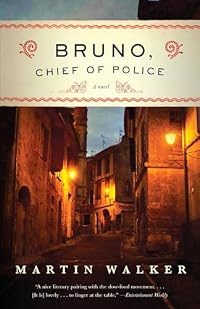
Meet Benoit Courréges, affectionately named Bruno, chief of police in a small village in the South of France where the rituals of the café still rule. A former soldier, Bruno has embraced the slow rhythms of country life. But the murder of an elderly North African who fought in the French army galvanizes his attention: the man had a swastika carved into his chest. When a visiting scholar helps untangle the dead man's past, Bruno's suspicions turn toward a motive more complex than hate, show more back to a tortured period of French history. show lessTags
Recommendations












































Member Reviews
A thoroughly enjoyable cozy set in the south of France. Think Agatha Christie x A Year in Provence, with some Foyle's War tossed in. The MC is a personable Sergeant who knows everyone in St. Denis and, despite some painful backstory, is a fundamentally trusting, generous man. The mystery has a dark edge, more intricate than most cozies, and thoroughly believable. And the food in this book! They're always dining on French baguettes and pate and flavorful cheese and truffles. I had to snack as I read. Will definitely read more in this series.
This is a cottagecore novel for straight men.
It's odd to say that a novel about investigating a racially motivated killing feels "cozy" but that is the energy I got while reading this book. The book happily depicts the life of Bruno, the only police officer in a provincial French commune and it is not shy about the ways in which life runs slower and more quietly in that setting. He's unable to participate in the high-level police investigation due to his position, so if you like police procedurals, you won't enjoy this book.
Instead, the book is happy to luxuriate in the little things that fill Bruno's life; there are tennis games and dinners with neighbors and a long, beautiful section describing how Bruno restored the house he lives show more in. I was happy to settle in and enjoy the stories of Bruno's life that were shared here, light as they were. This is the fantasy of any city-dweller who thinks they'll walk into a little rural town and just instantly be able to set up shop and hunt and fish and walk around pretty little walking routes. Even the non-murder mystery parts of Bruno's police work felt gentle; I defy you to find another novel where so much time is dedicated to warning your neighbors about food safety laws because you don't want to arrest anyone.
That racial tension does cause really terrible tonal shifts in the novel - it's strange to go from a a chapter about fighting skinheads during a riot to a chapter dedicated to nothing but a long description of what Bruno's neighbors cooked for him. It treats the racial tensions in the novel very flippantly, which admittedly also goes along with the "cottagecore for men" theme I mentioned earlier - it's a fantasy world where even racism isn't a weighty enough issue to take away from the joy of walking your dog. It certainly felt strange to read.
That aside, the energy of the novel won me over. It was a surprisingly soothing novel, with the bad guys being genuinely bad and the good guys being genuinely good and the "twist" giving me something to think about without leaving me unsettled. This would be good beach reading, where you read it in a few sittings on an afternoon where nothing else is going on. It certainly encouraged me to want to read the rest of this series! show less
It's odd to say that a novel about investigating a racially motivated killing feels "cozy" but that is the energy I got while reading this book. The book happily depicts the life of Bruno, the only police officer in a provincial French commune and it is not shy about the ways in which life runs slower and more quietly in that setting. He's unable to participate in the high-level police investigation due to his position, so if you like police procedurals, you won't enjoy this book.
Instead, the book is happy to luxuriate in the little things that fill Bruno's life; there are tennis games and dinners with neighbors and a long, beautiful section describing how Bruno restored the house he lives show more in. I was happy to settle in and enjoy the stories of Bruno's life that were shared here, light as they were. This is the fantasy of any city-dweller who thinks they'll walk into a little rural town and just instantly be able to set up shop and hunt and fish and walk around pretty little walking routes. Even the non-murder mystery parts of Bruno's police work felt gentle; I defy you to find another novel where so much time is dedicated to warning your neighbors about food safety laws because you don't want to arrest anyone.
That racial tension does cause really terrible tonal shifts in the novel - it's strange to go from a a chapter about fighting skinheads during a riot to a chapter dedicated to nothing but a long description of what Bruno's neighbors cooked for him. It treats the racial tensions in the novel very flippantly, which admittedly also goes along with the "cottagecore for men" theme I mentioned earlier - it's a fantasy world where even racism isn't a weighty enough issue to take away from the joy of walking your dog. It certainly felt strange to read.
That aside, the energy of the novel won me over. It was a surprisingly soothing novel, with the bad guys being genuinely bad and the good guys being genuinely good and the "twist" giving me something to think about without leaving me unsettled. This would be good beach reading, where you read it in a few sittings on an afternoon where nothing else is going on. It certainly encouraged me to want to read the rest of this series! show less
I really didn’t know what to expect from this novel, but as a lifelong Francophile, I was keen to experiment. It proved to be a good choice, and the novel is a well-constructed crime thriller, set in the glorious countryside of the Dordogne.
Bruno Courrëges is the head of the local police force in the little village of St Denis. Hitherto crime has not been a problem, and Bruno’s life is generally uncomplicated. He is a keen rugby and tennis player, and works in local clubs devoted to both sports, through which he is able to help keep the village’s youngsters on the right side of the tracks. The greatest risk to peace in the community is the presence of a team of officials sent from Paris to ensure that EU regulations about food show more safety are being observed. In countryside that had harboured such strong Resistance forces during the Second World War, people are well versed in the disruptive tactics calculated to send such interlopers packing. But things are about to change.
The whole community seems outraged following the discovery of the murder of one of its oldest members, an Algerian man who had lived in the village for decades, and whose son and grandson were prominent local characters. The murder prompts intervention from the local gendarmerie and also from regional police teams, all of which generates considerable tension between the various offices.
Martin Walker manages all the plot complications very deftly, and also manages to give an alluring description of the area, capturing its history, and its political context very clearly. I am looking forward to reading further books in this series. show less
Bruno Courrëges is the head of the local police force in the little village of St Denis. Hitherto crime has not been a problem, and Bruno’s life is generally uncomplicated. He is a keen rugby and tennis player, and works in local clubs devoted to both sports, through which he is able to help keep the village’s youngsters on the right side of the tracks. The greatest risk to peace in the community is the presence of a team of officials sent from Paris to ensure that EU regulations about food show more safety are being observed. In countryside that had harboured such strong Resistance forces during the Second World War, people are well versed in the disruptive tactics calculated to send such interlopers packing. But things are about to change.
The whole community seems outraged following the discovery of the murder of one of its oldest members, an Algerian man who had lived in the village for decades, and whose son and grandson were prominent local characters. The murder prompts intervention from the local gendarmerie and also from regional police teams, all of which generates considerable tension between the various offices.
Martin Walker manages all the plot complications very deftly, and also manages to give an alluring description of the area, capturing its history, and its political context very clearly. I am looking forward to reading further books in this series. show less
I received this book from my LibraryThing Secret Santa, who I would like to acknowledge. Thank you so much for introducing me to a delightful new series set in France's beautiful Dordogne region (which is located east of Bordeaux). The book is a police procedural mystery set in the present day that introduces us to Bruno the Chief of Police in St. Denis located in Dordogne. Mr. Walker allows us to make the acquaintance of a wonderful new protagonist, and he also introduced me to the beautiful region in France where this series is set. Bruno is one of the most sincere detectives you'll ever read about, and his knowledge of his area and of his people is what helps him the most when trying to solve complex cases. In this book an elderly show more man is found murdered in his remote cottage, and he has had a swastika cut into his chest. Bruno joins forces with a couple of national police forces to try to solve what looks like a racist crime. As a result of Bruno's investigation, we are taken back to the second world war and to the very active French Resistance movement in the Dordogne region during the latter part of the war. Bruno delves deeper and deeper into history to try to figure out what happened to this apparently harmless old Algerian man and as he digs, he finds that the crime is much more complicated than it appears. What a great atmospheric mystery, and I want to pursue this series now that I've been introduced to it. show less
This was the perfect little mystery novel, without much of a mystery. The murder, which occurs quite early in the novel, turns out to be more of a sub-plot: almost an incidental result of living in France, in a certain era. It is for this very reason that the novel works so well.
What is engaging about this book, it turns out, is Walker's obvious Ode to France: it is a love affair that encompasses people, food, culture, history with captivating charm. There is something very likable about everyone -- even the villains -- and it makes me want to renew my passport and take the first flight out of here.
Despite its charm and appeal, in the end it deals with very serious moral questions which do not resolve the mystery in full, leaving the show more reader to question one's own morality, ethics and sense of justice. A surprising little twist that gives the book much more weight than what one might imagine. show less
What is engaging about this book, it turns out, is Walker's obvious Ode to France: it is a love affair that encompasses people, food, culture, history with captivating charm. There is something very likable about everyone -- even the villains -- and it makes me want to renew my passport and take the first flight out of here.
Despite its charm and appeal, in the end it deals with very serious moral questions which do not resolve the mystery in full, leaving the show more reader to question one's own morality, ethics and sense of justice. A surprising little twist that gives the book much more weight than what one might imagine. show less
Rating: 3.75* of five
The Book Description: The first installment in a wonderful new series that follows the exploits of Benoît Courrèges, a policeman in a small French village where the rituals of the café still rule. Bruno—as he is affectionately nicknamed—may be the town’s only municipal policeman, but in the hearts and minds of its denizens, he is chief of police.
Bruno is a former soldier who has embraced the pleasures and slow rhythms of country life—living in his restored shepherd’s cottage; patronizing the weekly market; sparring with, and basically ignoring, the European Union bureaucrats from Brussels. He has a gun but never wears it; he has the power to arrest but never uses it. But then the murder of an elderly show more North African who fought in the French army changes everything and galvanizes Bruno’s attention: the man was found with a swastika carved into his chest.
Because of the case’s potential political ramifications, a young policewoman is sent from Paris to aid Bruno with his investigation. The two immediately suspect militants from the anti-immigrant National Front, but when a visiting scholar helps to untangle the dead man’s past, Bruno’s suspicions turn toward a more complex motive. His investigation draws him into one of the darkest chapters of French history—World War II, a time of terror and betrayal that set brother against brother. Bruno soon discovers that even his seemingly perfect corner of la belle France is not exempt from that period’s sinister legacy.
Bruno, Chief of Police is deftly dark, mesmerizing, and totally engaging.
My Review: First in a series! Words to gladden a satisfied mystery reader’s heart. First in a cozy series set in a French village. First in a series featuring a male lead who loves kids, works his land and his job, has lovers (women, boringly enough), and commands the respect of his entire territory by being unflashily committed to justice, even when the law is in conflict with it.
Bruno is a very good man, one who did everything he could to save the life of the woman he loved in the Bosnian war, and still failed; he’s a damaged man, and he would be the first to say so; but he never once puts a foot wrong in dealing with the souls in his care. We meet him, in fact, helping the local farmers evade the stifling EU bureaucrats bent on enforcing health codes that simply don’t apply to the ancient market town of St-Denis. Any wonder everyone loves him?
So a murder occurs, one that Bruno can’t hope to handle solo: An elderly Algerian immigrant, veteran of the French Army and holder of the Croix de Guerre, appears to be the victim of a far-right racist hate crime. Things don’t look good for the town’s small Algerian community’s peace of mind, but the trail of evidence developed by Bruno with his colleagues from the various and confusingly similar French policing agencies lead them to an unexpected resolution to the crime. What makes that so satisfying isn’t that it was a surprise, which it was not about halfway into the book, but that it was handled with the tact, grace, and dedication to justice that make cozy mysteries satisfying.
There is food, there is wine, there is a dog, there are no cats...it is as if Walker went over my personal checklist and gave me all but one thing on it (Bruno’s straight). I’m okay with that. But most of all, Walker gave Bruno wonderful people to work with, people whose deep and dense roots are charmingly intertwined and wonderfully deftly worked into the narrative. Infodumps are rarely this good. It is a major plus for the series, always assuming it continues.
I can’t quite get to four stars for the book, though, because it’s atmospheric and delightful, but not quite suspenseful enough. The author tips his hand more than forty pages before the end of the book. Okay, yes, it’s a first mystery, but I think a little more care could have gone into the Big Reveal. It’s only a quarter star knockdown because the Big Reveal is a very very surprising facet of French history I hadn’t so much as heard tell of before, and that’s worth a lot of pleasure points. The red herring wasn’t quite all I’d hoped for either, leading nowhere a lot sooner than I would have expected. Again it was interesting, and it cast a bit of light on my idea of the EU’s cultural landscape from a new angle. But it was just this side of perfunctory in its use.
All the cavils aside, the book is a pleasure to read, and the series will be one I follow for at least a few more outings, possibly much longer. show less
The Book Description: The first installment in a wonderful new series that follows the exploits of Benoît Courrèges, a policeman in a small French village where the rituals of the café still rule. Bruno—as he is affectionately nicknamed—may be the town’s only municipal policeman, but in the hearts and minds of its denizens, he is chief of police.
Bruno is a former soldier who has embraced the pleasures and slow rhythms of country life—living in his restored shepherd’s cottage; patronizing the weekly market; sparring with, and basically ignoring, the European Union bureaucrats from Brussels. He has a gun but never wears it; he has the power to arrest but never uses it. But then the murder of an elderly show more North African who fought in the French army changes everything and galvanizes Bruno’s attention: the man was found with a swastika carved into his chest.
Because of the case’s potential political ramifications, a young policewoman is sent from Paris to aid Bruno with his investigation. The two immediately suspect militants from the anti-immigrant National Front, but when a visiting scholar helps to untangle the dead man’s past, Bruno’s suspicions turn toward a more complex motive. His investigation draws him into one of the darkest chapters of French history—World War II, a time of terror and betrayal that set brother against brother. Bruno soon discovers that even his seemingly perfect corner of la belle France is not exempt from that period’s sinister legacy.
Bruno, Chief of Police is deftly dark, mesmerizing, and totally engaging.
My Review: First in a series! Words to gladden a satisfied mystery reader’s heart. First in a cozy series set in a French village. First in a series featuring a male lead who loves kids, works his land and his job, has lovers (women, boringly enough), and commands the respect of his entire territory by being unflashily committed to justice, even when the law is in conflict with it.
Bruno is a very good man, one who did everything he could to save the life of the woman he loved in the Bosnian war, and still failed; he’s a damaged man, and he would be the first to say so; but he never once puts a foot wrong in dealing with the souls in his care. We meet him, in fact, helping the local farmers evade the stifling EU bureaucrats bent on enforcing health codes that simply don’t apply to the ancient market town of St-Denis. Any wonder everyone loves him?
So a murder occurs, one that Bruno can’t hope to handle solo: An elderly Algerian immigrant, veteran of the French Army and holder of the Croix de Guerre, appears to be the victim of a far-right racist hate crime. Things don’t look good for the town’s small Algerian community’s peace of mind, but the trail of evidence developed by Bruno with his colleagues from the various and confusingly similar French policing agencies lead them to an unexpected resolution to the crime. What makes that so satisfying isn’t that it was a surprise, which it was not about halfway into the book, but that it was handled with the tact, grace, and dedication to justice that make cozy mysteries satisfying.
There is food, there is wine, there is a dog, there are no cats...it is as if Walker went over my personal checklist and gave me all but one thing on it (Bruno’s straight). I’m okay with that. But most of all, Walker gave Bruno wonderful people to work with, people whose deep and dense roots are charmingly intertwined and wonderfully deftly worked into the narrative. Infodumps are rarely this good. It is a major plus for the series, always assuming it continues.
I can’t quite get to four stars for the book, though, because it’s atmospheric and delightful, but not quite suspenseful enough. The author tips his hand more than forty pages before the end of the book. Okay, yes, it’s a first mystery, but I think a little more care could have gone into the Big Reveal. It’s only a quarter star knockdown because the Big Reveal is a very very surprising facet of French history I hadn’t so much as heard tell of before, and that’s worth a lot of pleasure points. The red herring wasn’t quite all I’d hoped for either, leading nowhere a lot sooner than I would have expected. Again it was interesting, and it cast a bit of light on my idea of the EU’s cultural landscape from a new angle. But it was just this side of perfunctory in its use.
All the cavils aside, the book is a pleasure to read, and the series will be one I follow for at least a few more outings, possibly much longer. show less
Since this is the first book in a series, it’s as much about introducing Bruno and the small Dordogne village of St. Denis as it is about solving a murder. Readers might be forgiven for thinking that policeman Benoit “Bruno” Courreges sounds a lot like sheriff Andy Taylor, and that the atmosphere of St. Denis seems a lot like Mayberry. Like Sheriff Taylor, Bruno doesn’t carry a gun. He doesn’t even have a deputy with a gun and a bullet. Bruno spends his time helping the village residents outwit EU inspectors from fining market vendors for selling the locally produced delicacies that don’t meet the EU regulations imposed by Brussels bureaucrats. However, Mayberry’s tranquility was never disturbed by a brutal murder, and show more Sheriff Taylor was never called upon to investigate his friends and neighbors for such a heinous crime. The idyllic setting, the luscious descriptions of food, and the warm community spirit may appeal to fans of Louise Penny’s Inspector Gamache series and the village of Three Pines. show less
Members
- Recently Added By
Lists

Books Read in 2016
4,666 works; 197 members

Fiction with Men's Given Names in the Title
302 works; 11 members

Spirit of Place
46 works; 1 member

Books Read in 2019
4,052 works; 110 members

Books Read in 2021
5,361 works; 114 members

A Smorgasbord of Culinary Fiction
221 works; 94 members

Books Set in Small Towns and Villages
278 works; 16 members

Book Worlds We'd Like To Visit
322 works; 158 members

Guilty Pleasures
223 works; 86 members

Kindle Mystery/Thriller
310 works; 2 members
Author Information

52+ Works 10,060 Members
Martin Walker is a senior fellow of the Global Business Policy Council, a private think tank for CEOs of major corporations, based in Washington, D.C. Walker is also editor in chief emeritus and international affairs columnist at United Press International and the author of the Bruno series. (Bowker Author Biography)
Some Editions
Awards and Honors
Awards
Distinctions
Series

Belongs to Publisher Series
Work Relationships
Common Knowledge
- Canonical title
- Bruno, Chief of Police
- Original title
- Bruno, Chief of Police
- Alternate titles
- Death in the Dordogne
- Original publication date
- 2008-07-30
- People/Characters
- Benoît "Bruno" Courrèges; Hamid al-Bakr; Isabelle Perrault - Police Nationale; JJ Jalipeau - Commissaire Police Nationale; Pamela Nelson; Gérard Mangin - Mayor of St. Denis (show all 7); Gitane "Gigi" - dog
- Important places
- Périgord, Nouvelle-Aquitaine, France
- Dedication
- For Pierrot
- First words
- On a bright May morning, so early that the last of the mist was still lingering low over a bend in the Vezere River, a white van drew to a halt on the ridge that overlooked the small French town.
- Quotations*
- Die Vergangenheit ist nie wirklich vergangen und vielleicht sogar heute noch tödlich.
- Last words*
- (Click to show. Warning: May contain spoilers.)"Vive la France", riefen beide unisono und marschierten mit ihren Fahnen los, um die Parade anzuführen, als die Blaskapelle die Marseillaise anstimmte.
- Blurbers
- Korda, Michael; Beevor, Antony; Pfaff, William; Ignatius, David
- Original language*
- Englisch
*Some information comes from Common Knowledge in other languages. Click "Edit" for more information.
Classifications
Statistics
- Members
- 1,648
- Popularity
- 13,501
- Reviews
- 104
- Rating
- (3.63)
- Languages
- 9 — Czech, Danish, Dutch, English, Finnish, French, German, Italian, Spanish
- Media
- Paper, Audiobook, Ebook
- ISBNs
- 52
- ASINs
- 20