On This Page
Description
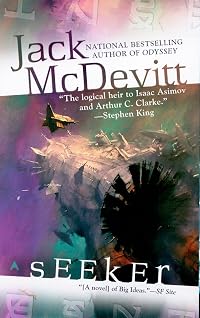
With Polaris, multiple Nebula Award-nominee Jack McDevitt reacquainted readers with Alex Benedict, his hero from A Talent for War. Alex and his assistant, Chase Kolpath, return to investigate the provenance of the cup. Alex and Chase follow a deadly trail to the Seeker - strangely adrift in a system barren of habitable worlds. But their discovery raises more questions than it answers, drawing Alex and Chase into the very heart of danger.Tags
Recommendations
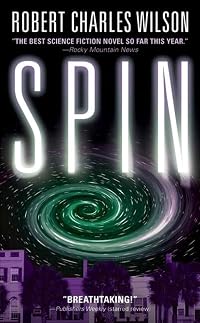
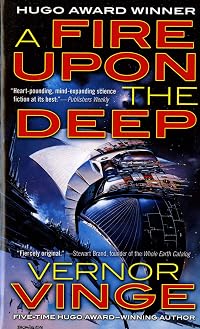
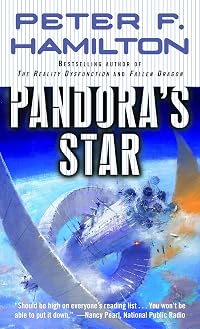
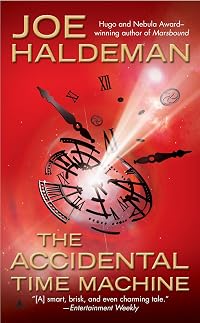

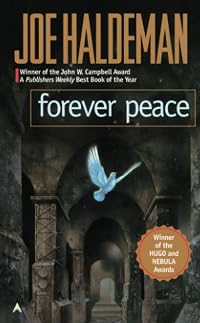
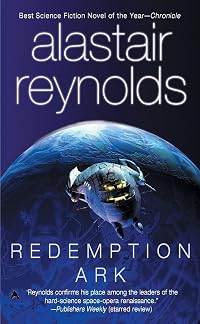
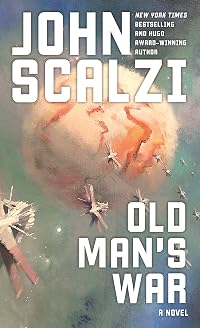
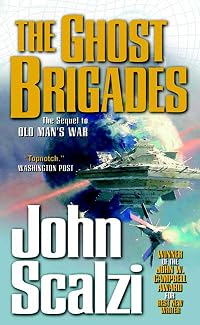
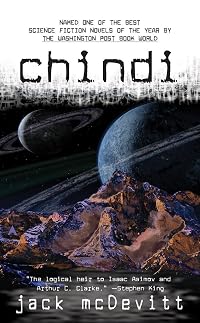
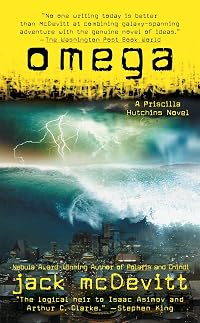
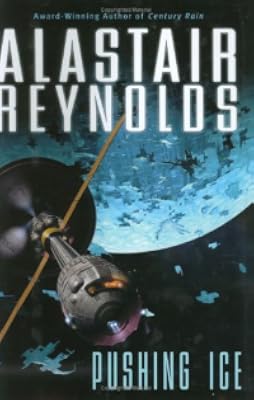
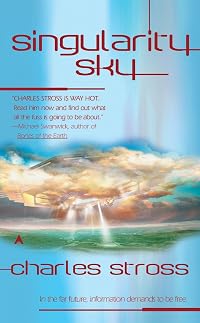
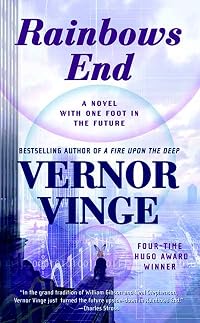

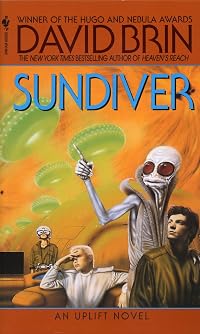
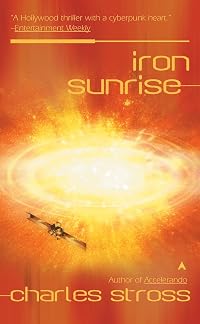
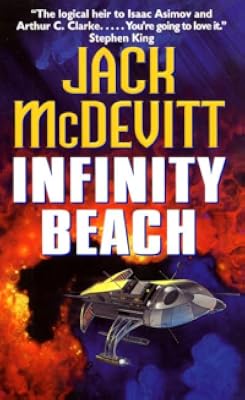

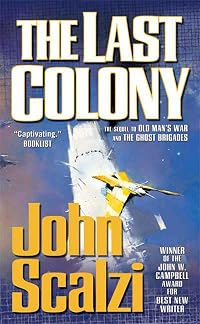
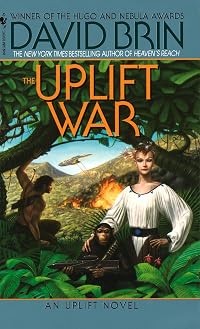
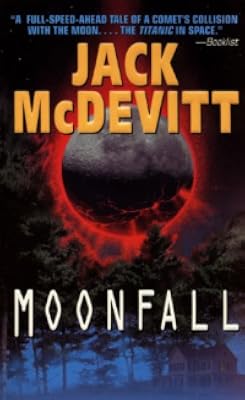
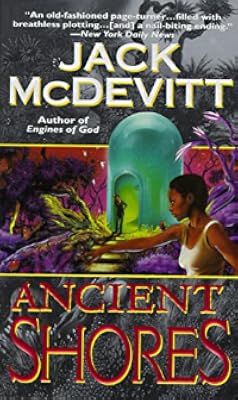
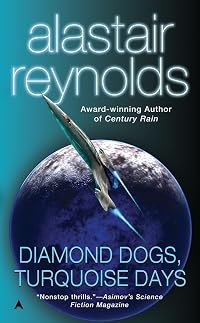
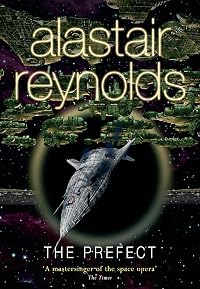
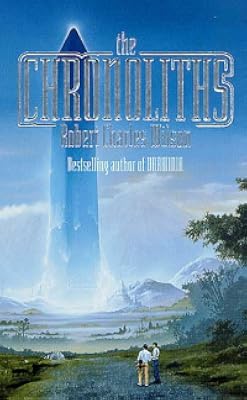
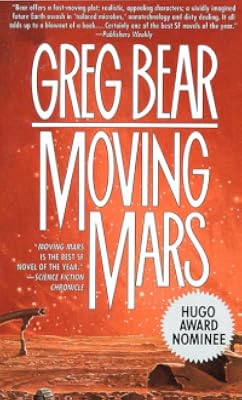
Member Recommendations
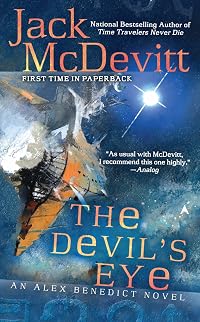
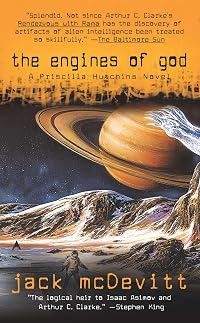
LamontCranston Alex Benedict stays at home handling sales and research while Chase Kolpath is the leg (wo)man in the field
Member Reviews
Alex Benedict and Chase Kolpath, antiquities dealers and sometimes amateur slueths of the distant future, are back, this time investigating the mysterious appearance of what seems to be a plastic cup from the ship that founded a legendary lost colony.
After being nominated for the Nebula many times, it's easy to see why McDevitt finally got his award with this book. This isn't a book that tackles profound, earth-shattering issues. But Seeker offers all of the strengths of a typical McDevitt novel (i.e., an unpretentious, nicely paced, and intruguing mystery set in a well defined future). To this formula it adds a brilliantly moving conclusion that brought tears to my eyes and one of the more intriguing lost colony concepts you'll ever show more run across.
Congratulations, Jack. show less
After being nominated for the Nebula many times, it's easy to see why McDevitt finally got his award with this book. This isn't a book that tackles profound, earth-shattering issues. But Seeker offers all of the strengths of a typical McDevitt novel (i.e., an unpretentious, nicely paced, and intruguing mystery set in a well defined future). To this formula it adds a brilliantly moving conclusion that brought tears to my eyes and one of the more intriguing lost colony concepts you'll ever show more run across.
Congratulations, Jack. show less
I'm reading McDevitt for the first time. The concept of archaeologists looking for artifacts—not just on the planet they were on, but also on other worlds—was what drew me to the novel. I truly like it, so after I finished reading it, I felt terrific. Space travel, journeys to different space stations or other planets for research that can mimic detective novels, and other elements are all present in this science fiction novel.
I enjoyed the progression of the entire narrative, which began with the sight of a straightforward cup of old coffee.
In addition, the main characters' curiosity led them to pursue certain threads that didn't seem to yield any results.
A novel worth pausing and reading for a while.
I enjoyed the progression of the entire narrative, which began with the sight of a straightforward cup of old coffee.
In addition, the main characters' curiosity led them to pursue certain threads that didn't seem to yield any results.
A novel worth pausing and reading for a while.
SEEKER, by Jack McDevitt, is a hard sci-fi story set in the very far future.
Chase Kolpath and Alex Benedict follow the trail of an ancient cup to try to find out what became of a colony that set out for new territory thousands of years ago, and was never heard from again.
I found the story predictable and some of the sentences unintentionally funny.
There are certainly plenty of sci-fi books that are written very poorly, and this one is better than most, but it just didn’t get me charged up enough to recommend it.
~Stephanie
Chase Kolpath and Alex Benedict follow the trail of an ancient cup to try to find out what became of a colony that set out for new territory thousands of years ago, and was never heard from again.
I found the story predictable and some of the sentences unintentionally funny.
There are certainly plenty of sci-fi books that are written very poorly, and this one is better than most, but it just didn’t get me charged up enough to recommend it.
~Stephanie
Now I'll have to read the other books in the series. I'm impressed by McDevitt..this book, and "Infinity Beach", demonstrate him as a first-rate detective writer. With an entire galaxy to frame his stories he has enough room for creating some decently complex and intriguing tales. It's also interesting that he tends to assign fairly unprepossessing women as protagonists. A throw-away character asks for an estimate on an old mug and sets in motion a quest for a 9,000 year old utopian settlement deemed to have been lost in space. To add to the tension there's a group of anti-souvenir fanatics that are willing to kill in order to stop the poaching of historical artifacts. Clues and some pretty impressive deductions, and a few lucky show more guesses, guide the heroes to find the end of this multi-millennial mystery. Every time they find enough to end the search, they find a reason to continue beyond the end such that the story continues after some brief respites in the action. show less
http://nhw.livejournal.com/885828.html
This year's Nebula winner, which I bought expecting not to enjoy much - the Nebulas have been as much miss as hit for me in recent years. I'm therefore a little surprised to report that I really enjoyed it. As a lapsed historian and even more lapsed archaeologist, I lapped up McDevitt's portrayal of a far-future quest for a lost human colony, driven by the discovery of a plastic cup with an inscription in the forgotten language of English, with an imaginative astronomical twist at the end of the story. Perhaps taken as a novel about the future it is a little unexciting, but I think it should be read also as a novel about the past, and how we will deal with the past in the future, and I found it show more pretty satisfying on that score. show less
This year's Nebula winner, which I bought expecting not to enjoy much - the Nebulas have been as much miss as hit for me in recent years. I'm therefore a little surprised to report that I really enjoyed it. As a lapsed historian and even more lapsed archaeologist, I lapped up McDevitt's portrayal of a far-future quest for a lost human colony, driven by the discovery of a plastic cup with an inscription in the forgotten language of English, with an imaginative astronomical twist at the end of the story. Perhaps taken as a novel about the future it is a little unexciting, but I think it should be read also as a novel about the past, and how we will deal with the past in the future, and I found it show more pretty satisfying on that score. show less
This is the third book in Jack McDevitt's Alex Benedict series, although it should probably be called the Chase Kolpath series, as the story is told from her point of view, like all but the first book. They are antiquities dealers, selling extremely rare and often old artifacts for small fortunes to rich collectors. They often travel to distant worlds to find these items. In this book, they meet a young woman who has a cup she'd like to sell and they figure out it's from the legendary space ship Seeker, a ship that left Earth 9,000 years ago with colonists bound for an unknown planet that was never seen again. They become interested in finding, first, the ship, and then later, the planet, and so the mystery begins.
Alex sends Chase, his show more assistant and pilot, everywhere, including to a museum on an alien world where they're telepaths and they can all read her mind, and then to old Earth. They do ultimately find Seeker and its hidden contents, but discover there was a second ship as well, and so the search continues. Meanwhile, someone isn't too happy with their efforts and tries to murder them. When the identity of the person behind the murder plot is revealed, I was shocked. Shocked! And Chase is amazing. She can do practically anything, while Alex gets all the credit.
I'm not sure if this is a five star book or not. It's not the best book I've read and it may not even be the best Alex Benedict book. But after thinking it over, I can't come up with a valid reason NOT to give it five stars. It's a great mystery. It's got action. It's got history. It's got space. It's got sci fi. What more could you want? Recommended. show less
Alex sends Chase, his show more assistant and pilot, everywhere, including to a museum on an alien world where they're telepaths and they can all read her mind, and then to old Earth. They do ultimately find Seeker and its hidden contents, but discover there was a second ship as well, and so the search continues. Meanwhile, someone isn't too happy with their efforts and tries to murder them. When the identity of the person behind the murder plot is revealed, I was shocked. Shocked! And Chase is amazing. She can do practically anything, while Alex gets all the credit.
I'm not sure if this is a five star book or not. It's not the best book I've read and it may not even be the best Alex Benedict book. But after thinking it over, I can't come up with a valid reason NOT to give it five stars. It's a great mystery. It's got action. It's got history. It's got space. It's got sci fi. What more could you want? Recommended. show less
Good Grief. I just lost my review.
Here's a summary, alas.
'06 Nebula winner, equal parts Space Opera and Noir Mystery, but that really translates mostly into Future History Archeology, with a treasure-hunting bent, twists and turns, lots of interesting characters, and lost spacecraft and lost colonies.
Was I really happy about the last twist and the epilogue? Hell yes.
All this takes place about 10k in the future, but there's a legend of a lost colony gone 9k ago before the advent of FTL travel or communications, and it's the subject of much attention and drama. Atlantis, anyone? Well what happens when weird things start showing up, crazy mysteries get unearthed, and our favorite team get involved in the hunt?
It's a mystery! Most of the show more fun is all in the reveals and the character interactions, and I'll be honest, I like Chase better as the narrator because she just might be smarter than the titular MC who's getting kinda pushed out of his own series. :) It's not a bad alteration. :) She's a tough Noir investigator.
I'm having a lot of fun with these novels! It's pretty much the most fun I've had with archeology novels I've had, but perhaps that's because I just haven't read the right ones. Still, I love the mix with Space Opera. :) show less
Here's a summary, alas.
'06 Nebula winner, equal parts Space Opera and Noir Mystery, but that really translates mostly into Future History Archeology, with a treasure-hunting bent, twists and turns, lots of interesting characters, and lost spacecraft and lost colonies.
Was I really happy about the last twist and the epilogue? Hell yes.
All this takes place about 10k in the future, but there's a legend of a lost colony gone 9k ago before the advent of FTL travel or communications, and it's the subject of much attention and drama. Atlantis, anyone? Well what happens when weird things start showing up, crazy mysteries get unearthed, and our favorite team get involved in the hunt?
It's a mystery! Most of the show more fun is all in the reveals and the character interactions, and I'll be honest, I like Chase better as the narrator because she just might be smarter than the titular MC who's getting kinda pushed out of his own series. :) It's not a bad alteration. :) She's a tough Noir investigator.
I'm having a lot of fun with these novels! It's pretty much the most fun I've had with archeology novels I've had, but perhaps that's because I just haven't read the right ones. Still, I love the mix with Space Opera. :) show less
Members
- Recently Added By
Lists

Science fiction novels with a female protagonist
105 works; 30 members

Space Colonization
100 works; 26 members

Nebula Award
111 works; 14 members

Literature About Women and Girls
394 works; 39 members

hypatian_kat to-read
429 works; 3 members

Paranormal investigators and space detectives
274 works; 9 members

Top Five Books of 2025
954 works; 303 members

Favorite Science Fiction
456 works; 218 members
Epic Science Fiction
15 works; 4 members
Author Information

124+ Works 20,916 Members
Jack McDevitt (born 1935) is an American science fiction author whose novels frequently deal with attempts to make contact with alien races, and with archaeology or xenoarchaeology. He attended La Salle University, where a short story of his won the annual Freshman Short Story Contest and was published in the school's literary magazine, Four show more Quarters. He received a Master's degree in literature from Wesleyan University in 1971. Before becoming a full-time author, he was an English teacher, naval officer, Philadelphia taxi driver, customs officer and motivational trainer. His first published story was The Emerson Effect in The Twilight Zone Magazine in 1981. Two years later, he published his first novel, The Hercules Text, which won the Philip K. Dick Special Award. He won the 2006 Nebula Award for Best Novel for Seeker, the UPC International Prize for his novella Ships in the Night in 1991, and the John W. Campbell Memorial Award for best SF novel for Omega in 2003. (Bowker Author Biography) show less
Some Editions
Awards and Honors
Series

Belongs to Publisher Series
Bastei Science Fiction-Special (24362)
Gallimard, Folio SF (467)
Work Relationships
Is contained in
Common Knowledge
- Original publication date
- 2005
- People/Characters
- Alex Benedict; Winetta Yashevik; Chase Kolpath
- Dedication
- For T.E.D. Klein and Terry Carr
with my appreciation - First words
- Wescott knew he was dead.
- Last words
- (Click to show. Warning: May contain spoilers.)Counting the Neandertal, that makes three of us.
- Publisher's editor
- Buchanan, Ginjer
- Blurbers
- King, Stephen; Ellison, Harlan
Classifications
Statistics
- Members
- 1,473
- Popularity
- 15,845
- Reviews
- 29
- Rating
- (3.76)
- Languages
- 8 — English, French, German, Hungarian, Lithuanian, Polish, Romanian, Spanish
- Media
- Paper, Audiobook, Ebook
- ISBNs
- 18
- ASINs
- 10