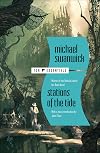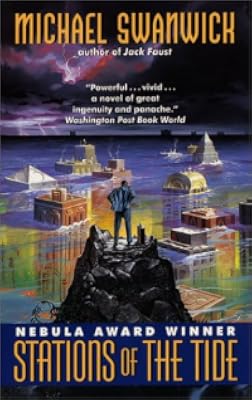
Stations of the Tide
by Michael Swanwick
On This Page
Description
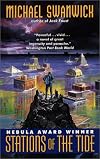
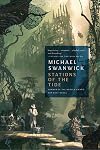
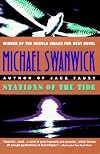
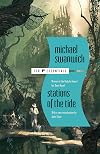
"Tor Essentials presents new editions of science fiction and fantasy titles of proven merit and lasting value, each volume introduced by an appropriate literary figure. From author Michael Swanwick-one of the most brilliantly assured and darkly inventive writers of contemporary fiction-comes the Nebula award-winning masterwork of radically altered realities and world-shattering seductions. The "Jubilee Tides" will drown the continents of the planet Miranda beneath the weight of her own show more oceans. But as the once-in-two-centuries cataclysm approaches, an even greater catastrophe threatens this dark and dangerous planet of tale-spinners, conjurers, and shapechangers. A man from the Bureau of Proscribed Technologies has been sent to investigate. For Gregorian has come, a genius renegade scientist and charismatic bush wizard. With magic and forbidden technology, he plans to remake the rotting dying world in his own evil image-and to force whom or whatever remains on its diminishing surface toward a terrifying, astonishing confrontation with death and transcendence. This novel of surreal hard SF was widely compared to the fiction of Gene Wolfe when it was first published, and Swanwick has gone on in the two decades since its first publication to become recognized as one of the finest living SF and fantasy writers. With a new introduction by John Clute, author of The Encyclopedia of Science Fiction and Fantasy"-- show lessTags
Recommendations


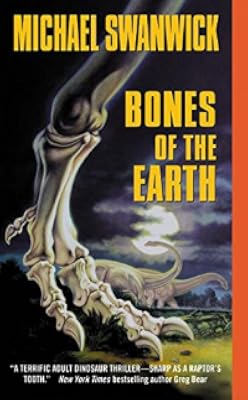
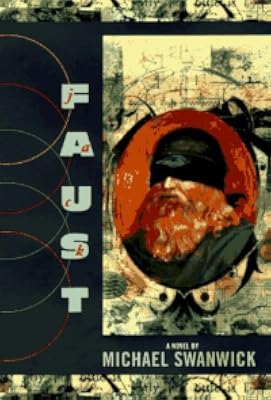

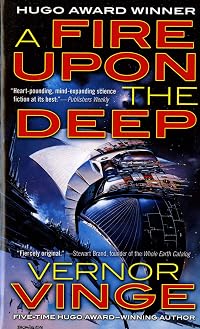

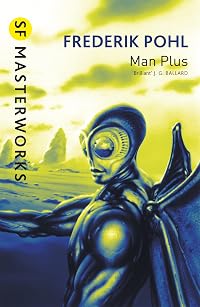









Member Recommendations
Member Reviews
The blurb at the back of the book describes this as "a tightly plotted futuristic detective novel, magical and fantastic, exotic and strange, yet thoroughly grounded in cutting edge science. Michael Swanwick's volatile cocktail of surrealist ideas and invention, high technology and basic humanity explodes with insight and wonder." This is, in fact, a spot-on description of this book. It won the Nedula Award back in 1991 and its easy to see why.
The setting is the world of Miranda - a planet which after many years is about to enter its winter season - which means the ocean levels will rise and inundate much of its land, necessitating mass evacuations of the settler colonies that are located below the high-tide level. Its flora and fauna show more have evolved and adapted to cycles of life on land and underwater. After technological experimentation wiped out the native sentient life years ago (called haunts), high-level technology was proscribed and is tightly controlled by the off-world Technology Transfer Division. When a self-proclaimed magician shows up advertising that he can help people alter their bodies to live in the water, the Division sends a bureaucrat down to investigate whether he has illegally smuggled high-level technology on to the planet, or he simply a fraud, or... something else.
The style of the writing is more remnescient of Gene Wolfe's Book of the New Sun than anything else, with its blend of science, myth and magic. the reference in the blurb to surrealist ideas is appropriate as is the reference to high technology. This is a book bursting at the seams with ideas and some spectacularly haunting scenes. For example, [very minor spoilers] offworlders can download their personalities into short lived agents and send them off to accomplish different tasks which may need to be accomplished simultaneously. At one point its mentioned that the reason why information and technology is so tightly controlled by the offworld bureacracy is because of a previous disaster on Earth where an independant AI effectively took over the entire planet by assimilating all life on it within itself. So the moment we encounter an Agent in the form of a giant earth-mother figure sent by the Earth/AI to the rest of humanity which is being held captive and interrogated is simply stunning in its power. There are so many moments and images and ideas replete with symbolism.
This is the third book I've read by Micharl Swanwick and he is fast becoming one of my favourite SF&F writers. Stations of the Tide is an outstanding novel and one to return to down the line I think. show less
The setting is the world of Miranda - a planet which after many years is about to enter its winter season - which means the ocean levels will rise and inundate much of its land, necessitating mass evacuations of the settler colonies that are located below the high-tide level. Its flora and fauna show more have evolved and adapted to cycles of life on land and underwater. After technological experimentation wiped out the native sentient life years ago (called haunts), high-level technology was proscribed and is tightly controlled by the off-world Technology Transfer Division. When a self-proclaimed magician shows up advertising that he can help people alter their bodies to live in the water, the Division sends a bureaucrat down to investigate whether he has illegally smuggled high-level technology on to the planet, or he simply a fraud, or... something else.
The style of the writing is more remnescient of Gene Wolfe's Book of the New Sun than anything else, with its blend of science, myth and magic. the reference in the blurb to surrealist ideas is appropriate as is the reference to high technology. This is a book bursting at the seams with ideas and some spectacularly haunting scenes. For example, [very minor spoilers] offworlders can download their personalities into short lived agents and send them off to accomplish different tasks which may need to be accomplished simultaneously. At one point its mentioned that the reason why information and technology is so tightly controlled by the offworld bureacracy is because of a previous disaster on Earth where an independant AI effectively took over the entire planet by assimilating all life on it within itself. So the moment we encounter an Agent in the form of a giant earth-mother figure sent by the Earth/AI to the rest of humanity which is being held captive and interrogated is simply stunning in its power. There are so many moments and images and ideas replete with symbolism.
This is the third book I've read by Micharl Swanwick and he is fast becoming one of my favourite SF&F writers. Stations of the Tide is an outstanding novel and one to return to down the line I think. show less
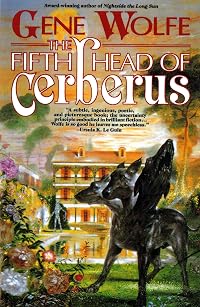
Features that seem to have put other readers off of Swanwick's Stations of the Tide were all to the good for me. The protagonist is nameless throughout, an interplanetary "bureaucrat" who reminded me more than a little of Michael Cisco's "divinity student," in that he is a cog in an opaque hierarchical machine, and his transformation--eventually quite radical--is the real aim of the narrative. Comparisons I've read to the work of Gene Wolfe also seem fair, although I was more reminded of The Fifth Head of Cerberus than I was of Wolfe's New Sun opus. Metafictional anchors include Shakespeare's Tempest.
Stations of the Tide juxtaposes sorcery (pharmaceutical, ritual, and meditative), high technology, and espionage/crime trickery, with lots show more of ambivalence about which is responsible at any given moment for the difficulties being presented. A key element of the high tech is "surrogacy" by which humans achieve telepresence through androids intended to simulate them as well as to sense the remote environments. This mechanism--which seems almost inevitable given the availability of the constituent technologies--tends to undermine characters' individuality in provocative ways throughout the book. Also important is the Puzzle Palace, a shared virtual environment where the bureaucrat's Division of Technology Transfer maintains its functional offices for interplanetary operations.
The setting is the planet Miranda orbiting the star Prospero, where humans have been resident for centuries in a settler-colonist capacity. Miranda undergoes catastrophic flooding of major land masses on a recurrent long-year period, and the story takes place just as such a "winter" is imminent, with whole continents being evacuated in anticipation of it. Much of the indigenous life has the ability to adapt to such changes, transforming with the great "tide."
This book is one that demands careful reading and active interpretation; it's not genre junk-food. It does repay the effort in vivid images and rich ideas. show less
Stations of the Tide juxtaposes sorcery (pharmaceutical, ritual, and meditative), high technology, and espionage/crime trickery, with lots show more of ambivalence about which is responsible at any given moment for the difficulties being presented. A key element of the high tech is "surrogacy" by which humans achieve telepresence through androids intended to simulate them as well as to sense the remote environments. This mechanism--which seems almost inevitable given the availability of the constituent technologies--tends to undermine characters' individuality in provocative ways throughout the book. Also important is the Puzzle Palace, a shared virtual environment where the bureaucrat's Division of Technology Transfer maintains its functional offices for interplanetary operations.
The setting is the planet Miranda orbiting the star Prospero, where humans have been resident for centuries in a settler-colonist capacity. Miranda undergoes catastrophic flooding of major land masses on a recurrent long-year period, and the story takes place just as such a "winter" is imminent, with whole continents being evacuated in anticipation of it. Much of the indigenous life has the ability to adapt to such changes, transforming with the great "tide."
This book is one that demands careful reading and active interpretation; it's not genre junk-food. It does repay the effort in vivid images and rich ideas. show less
An investigator from a super-advanced sci-fi civ takes a case on a lo-tech world where wizards and witches drug and prestidigitate their way to the appearance of magic. So it's sort of a fantasy novel. But then you get to the super-advanced sci-fi civ part, and the tech is so advanced it's indistinguishable from magic... so it _is_ a fantasy novel. And then the prose -- which is Good n' Literary -- is written in a vivid, abstract, exposition-free way that makes the Dyson sphere and the drug trip indistinguishable, giving the whole thing even more of fairy-tale feel. Add just a sprinkle of free will vs. determinism and secrecy vs. privacy and you've got quite a book. Well done, Michael Swanwick!
Superb. A shot of pure, concentrated science fiction.
It's real heavy on the sex and magic and lots of elements that are also horror, it's a ferment of ideas and concepts, sometimes full-on gothic, more than a touch of Southern Gothic, the whole thing is pretty wild and weird.
It's real heavy on the sex and magic and lots of elements that are also horror, it's a ferment of ideas and concepts, sometimes full-on gothic, more than a touch of Southern Gothic, the whole thing is pretty wild and weird.
This was some kind of amazing. The main character, who was never referred to as anything but Bureaucrat, was hardly my definition of a bureaucrat. He was part outcast, part superspy, part magician's apprentice, and part avenger. He wears so many hats during this superb little gem that I never slow down and even consider why. The plot is also so damn interesting and the pacing so fantastic that I almost miss exactly how wonderfully crafted the writing is.
Am I a fan of Swanwick? I have read a few of his short stories, years ago, and I loved them. I remembered them very fondly, but in passing, because I prefer novels over anything else. So why am I so damn late to the table, now? Hell if I know, and I'm ashamed because of it. I'm going to show more be going through his entire catalogue shortly.
So many wonderful sf ideas were crammed in here, and all of them were firmly in the service of the overarching story that happens to have an awful lot in common with The Tempest. The obvious bits were intended by the colonizers of Miranda, and the allegorical allusions were fully conscious and intended by the characters. It was delightful in that respect. The things that happen give the feel, but thankfully not the full substance of the play, so never worry, if you think you might be turned off by a shameless cribbing. This novel is truly a one-of-a-kind brilliant homage to all things SF and Fantasy. A lot of the time, it's impossible to separate the two, but what else can you do when you have awesome worldbuilding on colony worlds, cloning, terraforming, world-AIs, NSA game theory puzzle boxes the size of nations, AND indigenous aliens who shapeshift, who's biology is mostly incompatible with us except when triggered, turning us into wizards with grand powers, morphing into angels and demons, mind-control, as well as the summoning of immensely powerful archetypes? Is it SF or Fantasy? Clarke's razor applies.
But lo! This is no simple tale to mix elements and say, "Hey, look what I did!" No. The story here is king, from old world to new, disillusionment to renewing perception, retribution to revelation to understanding.
Of course, it also borrows concepts to sweep a wide circumference, even stooping to crib from some classics (Dune fans rejoice, pain by nerve induction). For this, I don't care too much. It serves a serious and pretty much identical purpose, but in the service of magic apprenticeship. There's other examples, too, but it slides by so fast and delicious and moves on to the next wonderful surrealism and solid chink of plot, that I'm left gasping with joy.
THIS IS A GRAND GEM, people. Fantastic writing, wonderful ideas, and nothing short of intensely memorable characters. It won the Nebula award in '91 and was nominated for Hugo, alas that it hadn't won.
I will probably read this one again, just to bathe in it. The tide is coming. Can YOU read between the lines of the tv station? show less
Am I a fan of Swanwick? I have read a few of his short stories, years ago, and I loved them. I remembered them very fondly, but in passing, because I prefer novels over anything else. So why am I so damn late to the table, now? Hell if I know, and I'm ashamed because of it. I'm going to show more be going through his entire catalogue shortly.
So many wonderful sf ideas were crammed in here, and all of them were firmly in the service of the overarching story that happens to have an awful lot in common with The Tempest. The obvious bits were intended by the colonizers of Miranda, and the allegorical allusions were fully conscious and intended by the characters. It was delightful in that respect. The things that happen give the feel, but thankfully not the full substance of the play, so never worry, if you think you might be turned off by a shameless cribbing. This novel is truly a one-of-a-kind brilliant homage to all things SF and Fantasy. A lot of the time, it's impossible to separate the two, but what else can you do when you have awesome worldbuilding on colony worlds, cloning, terraforming, world-AIs, NSA game theory puzzle boxes the size of nations, AND indigenous aliens who shapeshift, who's biology is mostly incompatible with us except when triggered, turning us into wizards with grand powers, morphing into angels and demons, mind-control, as well as the summoning of immensely powerful archetypes? Is it SF or Fantasy? Clarke's razor applies.
But lo! This is no simple tale to mix elements and say, "Hey, look what I did!" No. The story here is king, from old world to new, disillusionment to renewing perception, retribution to revelation to understanding.
Of course, it also borrows concepts to sweep a wide circumference, even stooping to crib from some classics (Dune fans rejoice, pain by nerve induction). For this, I don't care too much. It serves a serious and pretty much identical purpose, but in the service of magic apprenticeship. There's other examples, too, but it slides by so fast and delicious and moves on to the next wonderful surrealism and solid chink of plot, that I'm left gasping with joy.
THIS IS A GRAND GEM, people. Fantastic writing, wonderful ideas, and nothing short of intensely memorable characters. It won the Nebula award in '91 and was nominated for Hugo, alas that it hadn't won.
I will probably read this one again, just to bathe in it. The tide is coming. Can YOU read between the lines of the tv station? show less
A strangely impersonal novel that follows a character referred to only as "the bureaucrat", but which tells the story of the remarkable characters he interacts with in his effort to confirm reports about the illegal use of proscribed technology. Beautifully surreal, and sometimes funny.
I seldom give 5 stars to a book, but I feel this one deserves it. Complex and multi-layered, thought provoking, at times dreamy and other times nightmarish. Excellent writing, and a genuinely interesting plot. I admit there were times I didn't quite understand what was going on, but I blame myself for that. Perhaps another reading is warranted.
Members
- Recently Added By
Lists

Best Science Fiction Novels
816 works; 426 members

Broderick and Di Filippo's Science Fiction: The 101 Best Novels 1985-2010
103 works; 7 members

Nebula Award
111 works; 14 members

Arthur C. Clarke Award Winners and Shortlisted Books
219 works; 14 members

Books Read in 2016
4,666 works; 199 members

SomethingAwful TBB BOTM
66 works; 2 members

Simulated Reality in Fiction
124 works; 7 members
Author Information

455+ Works 8,495 Members
Michael Swanwick has received the Hugo, Nebula, Theodore Sturgeon, and World Fantasy Awards for his work
Some Editions
Awards and Honors
Awards
Series
Belongs to Publisher Series
Work Relationships
Common Knowledge
- Canonical title
- Stations of the Tide
- Original title
- Stations of the Tide
- Original publication date
- 1991-02
- People/Characters
- Gregorian; Chu; Undine
- Important places
- Miranda
- Dedication
- The author is indebted to David Hartwell for suggesting where to look, Stan Robinson for the gingerbread-mandrake trick, Tim Sullivan and Greg Frost for early comments and Greg Frost again for designing the briefcase's nanote... (show all)chnics, Gardner Dozois for chains of the sea and for treaching the bureaucrat how to survive, Marianne for insights into bureaucracy, Bob Walters for dino parts, Alice Guerrant fdor whale wallows and Tidewater features, Sean for the game of Suicide, Don Keller for nominal assistance, Jack and Jeanne Dann for the quote from Bruno, which I took from their hotel room when they weren't looking, and Giulio Camillo for his memory theater, here expanded to a palace; Camillo was one of the most famous men of his century, a thought which should give us all pause. Any book's influences are too numerous to mention, but riffs lifted from C.L. Moore, Dylan Thomas, Brian Aldiss, Tedd Hughes, and Jamaica Kincaid are too blatant to pass unacknowledged. This novel was written under a Challenge Grant from the M.C. Porter Endowment for the Arts.
For my mother, Mers John Francis Swanwick, with much love. - First words
- The bureaucrat fell from the sky.
- Last words
- (Click to show. Warning: May contain spoilers.)Changing, the bureaucrat fell to the sea.
- Blurbers
- Wolfe, Gene
Classifications
Statistics
- Members
- 937
- Popularity
- 28,569
- Reviews
- 29
- Rating
- (3.75)
- Languages
- 6 — English, French, German, Italian, Polish, Spanish
- Media
- Paper, Audiobook, Ebook
- ISBNs
- 17
- ASINs
- 11