On This Page
Description
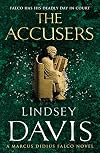
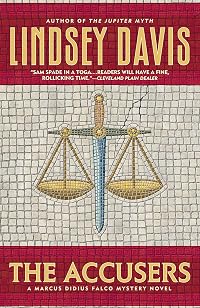
Fiction. Mystery. Historical Fiction. Fresh from his trip to Britain, Marcus Didius Falco needs to re-establish his presence in Rome. A minor role in the trial of a senator entangles him in the machinations of two real life lawyers at the top of their trade. The senator is convicted, but then dies, apparently by suicide. It may have been a legal move to protect his heirs, but Falco is hired to prove it was murder. As Falco shows off his talents in the role of advocate, he exposes himself to show more a tangle of upper-class secrets and powerful elements in Roman law that may have consequences he hadn't quite bargained for. show lessTags
Recommendations


















Member Recommendations
Member Reviews
A little drier than Falco's usual adventures, this was nonetheless well done as it focused on the machinations of the Roman legal system pertaining to crime and inheritance law. Falco has matured and he and Helena seem to have settled into their life as parents. Absent is the previous history of excessive snarkiness from his family and the barbs previously directed at each other. Helena has embraced her role as detective's wife and plunges in to help. Falco's clients are, as usual, not very pleasant or trustworthy people, nor are the lawyers, clerks, vigiles and informers who are his routine contacts. There are multiple people accused of murdering a high ranking man who was previously found guilty of fraud, or was it suicide. Hmmmm. show more Marcus manages to get thumped about by the usual uglies, but payback in true Subura style is always pleasing to our Marcus Didius Falco. In the mix there's complications based on class, marriage and divorce law, inheritance, illegitimacy and the balance of the scale of justice depending on who you know or who you can bribe. Alas, our hero will have to surrender his position as keeper of the sacred geese. This is a very good addition to the series. show less
Back in Rome, an aedile's father is convicted of influence peddling and commits suicide to avoid the fine and thus keep the family solvent. But was it suicide? And what other secrets are the family hiding? Falco gets involved in legal skullduggery at the highest and most ruthless levels.
After a bit of a slow start, this turns out to be one of the best Falco stories. As our hero faces disaster the tension mounts so that the reader can hardly bear to continue reading, but not to continue would be even worse. Wonderful.
After a bit of a slow start, this turns out to be one of the best Falco stories. As our hero faces disaster the tension mounts so that the reader can hardly bear to continue reading, but not to continue would be even worse. Wonderful.
My refuge when I need to move and want a mystery at the same time is Didius Falco read by Simon Prebble. In this episode, Falco is called upon to defend various members of a rich family from accusations of murder when the father dies of poison. Was he a suicide? It would fit, as by doing that he saved the family fortune from confiscation of a lawsuit. But all sorts of things seem to be wrong with that conclusion. We get a head-spinning look at Roman courts and law before the whole thing is sorted out, as Falco comes close to sacrificing his own financial wellbeing as he struggles to discover the truth.
Marcus Didius Falco finds himself both investigating and handling the prosecution of a client involved with a family murder. Lindsay Davis delivers another complicated detective story steeped in the lore of life in ancient Rome. Not life among the nobles, but life at the grassroots as seen through the eyes of private informer Falco. Falco observes what's going on around him and passes it along with great humor. It's always a fascinating ride. Here the reader gets a look at the Roman system of law in which two well-to-do informers specialize in accusing others of wrong-doing leading to a reward upon conviction. Great stuff. Read it.
Not nearly as harrowing as some earlier episodes as Falco only gets the crap beat out of him once. Apparently having minions is useful for avoiding such things. I'm not sure I like Falco all domesticated and cozy though. I prefer his bachelor days of getting by on the skin of his teeth and bluffing his way through everything. This Falco seems tamer, dimmer and much more in control.
The mystery was good and the characters well drawn as usual. The shenanigans were believable as I've read a good deal of Roman history from this era.
The mystery was good and the characters well drawn as usual. The shenanigans were believable as I've read a good deal of Roman history from this era.
I slogged my way through this. It's easy enough to read, and has plenty of wit in it, not to mention references to Roman practices that many of us may not know about. But I never got attached to any of the characters - they seemed wooden to me - or to the mystery. I just didn't care enough.
Marcus Didius Falco is an Informer. Today I suppose we'd call him an Informant, but apparently in those days this was an actual position. You did not hide what you were, even though it was a little shady, perhaps. Falco is presumably not too shady, but not above using an occasional incident to improve his situation. In this case he is asked to look into the apparent suicide of a disgraced senator. Little by little he starts to think maybe it isn't a show more suicide. But then who? The possible villains are legion, and one after another they are accused. There are a lot of accusations in here.
Just not my cup of tea. I think a classical scholar might enjoy this, as it brings to life the ancient Roman world. Sort of. show less
Marcus Didius Falco is an Informer. Today I suppose we'd call him an Informant, but apparently in those days this was an actual position. You did not hide what you were, even though it was a little shady, perhaps. Falco is presumably not too shady, but not above using an occasional incident to improve his situation. In this case he is asked to look into the apparent suicide of a disgraced senator. Little by little he starts to think maybe it isn't a show more suicide. But then who? The possible villains are legion, and one after another they are accused. There are a lot of accusations in here.
Just not my cup of tea. I think a classical scholar might enjoy this, as it brings to life the ancient Roman world. Sort of. show less
http://nhw.livejournal.com/161945.html
Hmm. I've very much enjoyed some of Davis' novels featuring Marcus Didius Falco, a detective of ancient Rome; this wasn't one of the best. The hero and his colleagues spend ages failing to interrogate the person who is fairly obviously the murderer, and by the end nothing really is resolved. I did wonder if the two chief villains, Paccius Africanus and Silius Italicus, might actually be real-life characters from our time-line who Davis was shoe-horning into a fictional plot; and alas, this indeed turns out to be the case (I even found an article where she brags about it). Oh well, as long as my mother-in-law keeps buying them I suspect I'll keep reading them, but this wasn't really as rewarding as I show more had hoped. show less
Hmm. I've very much enjoyed some of Davis' novels featuring Marcus Didius Falco, a detective of ancient Rome; this wasn't one of the best. The hero and his colleagues spend ages failing to interrogate the person who is fairly obviously the murderer, and by the end nothing really is resolved. I did wonder if the two chief villains, Paccius Africanus and Silius Italicus, might actually be real-life characters from our time-line who Davis was shoe-horning into a fictional plot; and alas, this indeed turns out to be the case (I even found an article where she brags about it). Oh well, as long as my mother-in-law keeps buying them I suspect I'll keep reading them, but this wasn't really as rewarding as I show more had hoped. show less
Members
- Recently Added By
Lists

Books Read in 2014
2,344 works; 89 members
Author Information

57+ Works 26,602 Members
Lindsey Davis lives in London, England. (Publisher Provided) Lindsey Davis was born in Birmingham, England in 1949. She earned her English degree at Oxford. Her published works include The Course of Honour and The Silver Pigs, the first in the Falco series which won the Authors' Club Best First Novel award in 1989. In 1999 she received the show more Sherlock Award for Best Comic Detective for her creation, Marcus Didius Falco. (Publisher Provided) show less
Some Editions
Series

Common Knowledge
- Canonical title*
- Los fiscales
- Original title
- The Accusers
- Original publication date
- 2003-06-05
- People/Characters
- Marcus Didius Falco; Helena Justina; Junia Junilla; Sosia Favonia; Albia; Julius Alexander (show all 47); Anacrites (spy); Aufustius (banker); Biltis (professional mourner); Bratta; Aulus Camillus Aelianus (Helena Justina's brother); Q. Camillus Justinus (Helena Justina's brother); Decimus Camillus Verus (Helena Justina's father); Julia Justa (Helena Justina's mother); Calpurnia Cara; Canidianus Rufus (husband of Rubiria Juliana); Celadus (steward); Euboule (wet nurse); Euphanes (herbalist); Glaucus (trainer); Honorius; Junilla Tacita (Falco's mother); L. Licinius Lutea (ex-husband of Saffia Donata); Ti Catius Silius Italicus; Marponius (judge); Gn. Metellus Negrinus; Nux (dog); Olympia (fortune-teller); C. Paccius Africanus; Perseus, door porter; L. Petronius Longus; Ursulina Prisca; Procreus; Rhoemetalces (apothecary); Rubiria Carina; Rubiria Juliana; Scorpus (Old Fungibles); Scythax (vigiles doctor); Spindex (funeral clown); Saffia Donata; Servilius Donatus (father of Saffia Donata); Claudius Tiasus (funeral director); Verginius Laco (husband of Rubiria Carina); Verontius (Falco's brother-in-law, husband of Allia); Zeuko; the Sacred Geese of Juno; the Augurs' Sacred Chickens
- Important places
- Rome, Italy
- Important events
- Reign of Vespasian (69 AD | 79 AD)
- Dedication
- For the Gang: Hannah, Lesley, Mary, Pamela, Pauline, Susan, and Sybil
In Friendship - First words
- I had been an informer for over a decade when I finally learned what the job entailed.
- Quotations
- When I hear the words "social order," I start looking around for somebody to pick a fight with.
To be born with nothing was grim. But to be born with everything, then to lose it, was far more cruel.
[O]n the battlefield a defeated general falls on his sword, usually needing help from a weeping subordinate because finding the space between two ribs and then summoning the strength to pull in a weapon upward is damned diffi... (show all)cult to fix for yourself. Nero cut his throat with a razor, but he was supposedly hiding in a garden trench at the time, where there may have been no elegant options; to be skewered on a dibber would have lacked the artistry he coveted. The traditional method in private life is to enter a warm bath and open your veins. This death is contained, relaxing, and reckoned to be more or less painless. (Mind you, it presupposes you live in a grand home with a bath.) - Last words
- (Click to show. Warning: May contain spoilers.)But that would be only greedy and corrupt proconsuls, of course.
- Original language
- English
*Some information comes from Common Knowledge in other languages. Click "Edit" for more information.
Classifications
Statistics
- Members
- 887
- Popularity
- 30,623
- Reviews
- 21
- Rating
- (3.81)
- Languages
- Czech, English, German, Spanish
- Media
- Paper, Audiobook, Ebook
- ISBNs
- 35
- ASINs
- 10