The Silence in the Garden
by William Trevor
On This Page
Description
As governess to her wealthy cousins, the Rollestons, on the eve of World War I, Sarah Pollefen is only vaguely aware of the dark rituals and painful secrets that haunt the seemingly tranquil garden.Tags
Recommendations






















Member Reviews
In The Silence in the Garden, William Trevor does what he does best - uses an economy of words to tell a rich and compelling story of Irish men and women entangled by their history and unable to escape the influence of the past. Here, it's an Anglo-Irish family in a once-great house on an island off the coast of Cork in the first half of the 20th century. To try to decribe the plot would be pointless, as there isn't much of one. It's more a meditation on the power of history and the search for redemption, and it is beautifully wrought.
The Silence in the Garden offers further proof that William Trevor never wrote a sentence undeserving of praise. This gently persuasive novel from 1988 chronicles the slow demise of the Rolleston clan of Carriglas, an estate situated on a small island off the coast of County Cork. The Rollestons have seen their ranks thinned by misfortune—Colonel Rolleston’s wife died giving birth—when poor relation Sarah Pollexfen arrives in 1908 to take up duties as unofficial governess and companion to the child Villana and her two older brothers, Lionel and John James. Sarah approaches Carriglas as the enchanted place of her childhood memories. However, nothing could be further from the truth: though the outward trappings of prosperity are show more visible, the property and family are already in decline. Years pass, the children grow up, and Sarah returns to England to tend to her father, a clergyman. Following the death of her father in 1931, Sarah returns to Carriglas at the behest of the Colonel’s now elderly mother. The intervening years have taken a toll. The Colonel was killed in the Great War. Ireland’s troubles are in full swing, and the family has suffered first-hand from the violence with the murder of their butler, Linchy. Each of the Rolleston children has followed a peculiar path: the pragmatic Lionel is a loner who devotes himself to farm work, John James has lost himself in an erotic liaison with an alcoholic boarding house proprietor, and Villana has raised eyebrows by agreeing to marry a fussy, etiolated accountant many years older than her. The story comes to us via numerous perspectives and narrative voices, each one sympathetic and drawn with uncanny precision. Chief among these is Tom, the illegitimate son of the kitchen maid (later Chief Cook) Brigid and the dead butler Linchy. Tom’s outsider perspective is crucial to our understanding of the Rollistons and their waning fortunes, and to life on the island and the nearby town. Many more years pass, the Rollistons have all left the scene—Villana, Lionel and John James have failed to produce a further generation—and the only people living in the house at Carriglas are Tom, the maid Patty, and Sarah, whose death in 1971 sets the story into motion with the discovery of her diaries. The novel has a melancholy, wistfully nostalgic atmosphere. The Rolliston’s story is primarily one of loss, lucklessness and poor choices made for obscure reasons. But there are also many instances of profoundly bittersweet human comedy. Trevor was never a flashy writer. But his ability to burrow under the skin of his characters and sketch their lives, loves and motivations in a few lines of elegant prose is nothing short of astounding. show less
”But, my dear girl, we can all do perfectly well without happiness,...The other side of the coin, my dear, is that no one can do without love. It is the greatest of all deprivations not to know love in some wise, either to give or to receive. It hardly matters which.”
Our story begins on an island in Ireland, with World War I dancing on the horizon, when Sarah Pollexfen, a distant relative of the Rollestons, comes to the estate of Carriglas to serve as governess to the youngest child. There is a magical summer and then she leaves to nurse her ailing father. The story continues some twelve to fifteen years later, when she returns to Carriglas after her father’s death.
Carriglas is decaying, even at the beginning of this story it is show more losing ground, figuratively and literally. The family who owns the estate is crumbling as well, but throughout the novella we never quite know why. What we do glean, almost immediately, is that it has something to do with the murder of their butler, who has left behind an illegitimate son. For me, it was this boy, Tom, who gave the story emotional pull.
This is Ireland, and there is the usual Irish question of Catholicism vs. Protestantism. The religious figures pictured here are sometimes unforgiving and malicious, and the mistreatment of the illegitimate boy tugged at my heart. In fairness there is also a priest who seems to me to be the picture of what a priest should be.
While this story and situation may be uniquely Irish, the tragedy at the heart of this book is completely universal. It is rooted in what it is to be a human being who has been denigrated and what it is to be a part of a class that stands apart, and purportedly above, another. Trevor writes with such preciseness and detail that he gives you a true sense of the people and the places, and the sadness that so often haunts a life. show less
Our story begins on an island in Ireland, with World War I dancing on the horizon, when Sarah Pollexfen, a distant relative of the Rollestons, comes to the estate of Carriglas to serve as governess to the youngest child. There is a magical summer and then she leaves to nurse her ailing father. The story continues some twelve to fifteen years later, when she returns to Carriglas after her father’s death.
Carriglas is decaying, even at the beginning of this story it is show more losing ground, figuratively and literally. The family who owns the estate is crumbling as well, but throughout the novella we never quite know why. What we do glean, almost immediately, is that it has something to do with the murder of their butler, who has left behind an illegitimate son. For me, it was this boy, Tom, who gave the story emotional pull.
This is Ireland, and there is the usual Irish question of Catholicism vs. Protestantism. The religious figures pictured here are sometimes unforgiving and malicious, and the mistreatment of the illegitimate boy tugged at my heart. In fairness there is also a priest who seems to me to be the picture of what a priest should be.
While this story and situation may be uniquely Irish, the tragedy at the heart of this book is completely universal. It is rooted in what it is to be a human being who has been denigrated and what it is to be a part of a class that stands apart, and purportedly above, another. Trevor writes with such preciseness and detail that he gives you a true sense of the people and the places, and the sadness that so often haunts a life. show less
The Carriglas estate on an island off the coast of County Cork, Ireland is in steady decline, reflecting the state of the Rolleson family, owners of Carriglas. In short, the estate eventually passes on to Tom, the illegitimate son of a kitchen worker. His father was a butler killed during the troubles.
William Trevor depicts the family members through the generations with just enough detail to establish their character as a person. There’s depth and layers of history to the story, with strong characters, intricate but clear plotting, and pitch-perfect dialogue. One of Trevor’s best novels.
William Trevor depicts the family members through the generations with just enough detail to establish their character as a person. There’s depth and layers of history to the story, with strong characters, intricate but clear plotting, and pitch-perfect dialogue. One of Trevor’s best novels.
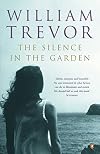
I have a passion for books and stories set in Irish Manor homes or as they are affectionly known in Ireland as The Big House. When I saw the cover of [b:The Silence in the Garden|1078837|The Silence in the Garden|William Trevor|https://images.gr-assets.com/books/1328002380s/1078837.jpg|1065561]I was drawn by the image and the premise of the story.
Family secrets take their toll on the children of an old Irish family
In the summer of 1904 Sarah Pollenfax, the daughter of an impecunious clergyman, arrives at Carriglas, an island off the coast of Cork, to act as governess for her distant cousins. It's a magical time in a magical place. But when she comes back almost thirty years later, after the First World War and the Irish Civil War have show more taken their toll, she discovers that there were things going on during that apparently idyllic summer which now horrify her and which cast a long shadow over the remnants of the family.
William Trevor's prose and attention to detail are always evident in his novels and I do love his ability to develop characters and his wonderful sense of time and place. However while I enjoyed the writing and the beautiful descriptions I came away from the novel with a feeling that I didn't quite understand what exactly had happened in the story and this was a little disappointing as I had read a previous novel by Trevor and was aware that I needed to pay close attention but still this one had me puzzled. I did a little research and confirmed what I had assumed took place in the story but the confusion spoiled the experience a little for me.
However I did enjoy the book and was glad I had the opportunity to read it and will certainly add another of Trevor Novels' to my reading list for reading in 2017. show less
Family secrets take their toll on the children of an old Irish family
In the summer of 1904 Sarah Pollenfax, the daughter of an impecunious clergyman, arrives at Carriglas, an island off the coast of Cork, to act as governess for her distant cousins. It's a magical time in a magical place. But when she comes back almost thirty years later, after the First World War and the Irish Civil War have show more taken their toll, she discovers that there were things going on during that apparently idyllic summer which now horrify her and which cast a long shadow over the remnants of the family.
William Trevor's prose and attention to detail are always evident in his novels and I do love his ability to develop characters and his wonderful sense of time and place. However while I enjoyed the writing and the beautiful descriptions I came away from the novel with a feeling that I didn't quite understand what exactly had happened in the story and this was a little disappointing as I had read a previous novel by Trevor and was aware that I needed to pay close attention but still this one had me puzzled. I did a little research and confirmed what I had assumed took place in the story but the confusion spoiled the experience a little for me.
However I did enjoy the book and was glad I had the opportunity to read it and will certainly add another of Trevor Novels' to my reading list for reading in 2017. show less
Set in Ireland, the Rolleston family’s large estate, Carriglas, is located on an island off the coast of county Cork. The characters are the Rolleston family members, their household staff, a few visitors, and several townspeople. It has a strong sense of place. There is a family secret, but I would not call it a typical mystery. The storyline is influenced by the Troubles in a variety of ways, including the past murder of the family’s butler. Decades later, a distant relative comes back to the now run-down estate and recalls memories of her childhood visit in 1904. I enjoyed the writing style and the characterization but there is not much resolution to be found. It is a little too nebulous for me (and I am pretty comfortable with show more ambiguity). show less
3809. The Silence in the Garden, by William Trevor (read 2 Oct 2003) I have often heard of Trevor (born in Ireland in 1928) as a master of prose so I thought I would read something by him. This title is a 1988 novel telling of a high society Irish Protestant family and of Tom, their butler's illegitimate son, an eminently likable character, seen mostly as a boy. The story is so subtle I am not sure I caught the great secret the author gradually unfolds, with touches of humor and smooth prose.
Members
- Recently Added By
Author Information

120+ Works 13,458 Members
William Trevor Cox was born in Mitchelstown, County Cork, Ireland on May 24, 1928. He received a degree in history from Trinity College in 1950. Before becoming a full-time author in 1965, he worked as a sculptor, a teacher, and a copywriter at an advertising agency. He exhibited his sculptures in Dublin and England and was joint winner of the show more International Year of the Political Prisoner art competition in 1952. His first novel, A Standard of Behaviour, was published in 1958. His other novels include Other People's Worlds, Nights at the Alexandra, The Silence in the Garden, The Story of Lucy Gault, My House in Umbria, and Love and Summer. He won the Hawthornden Prize in 1964 for The Old Boys, the Whitbread Award in 1976 for The Children of Dynmouth, the Whitbread Award in 1983 for Fools of Fortune, and the Whitbread Award in 1994 for Felicia's Journey. His short story collections include The Day We Got Drunk on Cake and Other Stories, The Ballroom of Romance and Other Stories, Beyond the Pale, A Bit on the Side, Cheating at Canasta, and The Mark-2 Wife. The Hill Bachelors received the 2001 Irish Times Irish Literature Prize for Fiction and the PEN/Macmillan Silver Pen Award for Short Stories. He received the Allied Irish Banks' Prize in 1976, The Sunday Times Award for Literary Excellence in 1992, the David Cohen British Literature Prize in 1999, and the Bob Hughes Lifetime Achievement Award in Irish Literature in 2008. In 1977, he was awarded an honorary CBE in recognition of his services to literature. He died on November 20, 2016 at the age of 88. (Bowker Author Biography) show less
Awards and Honors
Awards
Common Knowledge
- Original publication date
- 1988
- Dedication
- For J. C. and in memory of my mother
- First words
- It is 1971, and the home that has been provided for Sarah Pollexfen for so long is still a provision that is necessary.
- Last words
- (Click to show. Warning: May contain spoilers.)As he descends through the house those last words echo, lightening his bewilderment: their punishment of themselves seems terrible, yet a marvel also.
Classifications
Statistics
- Members
- 235
- Popularity
- 137,985
- Reviews
- 8
- Rating
- (3.87)
- Languages
- English
- Media
- Paper, Ebook
- ISBNs
- 10
- ASINs
- 4