On This Page
Description
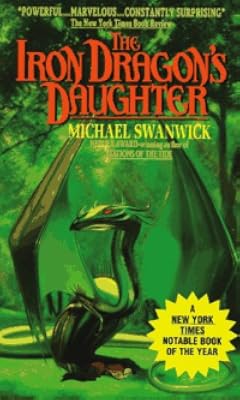
A New York Times Notable Book: "Examines the industrial revolution, the Vietnam War, racism and sexism, and the escapist dreams of genre fantasy. A truly great anti-fantasy." -China Miéville Jane is trapped as a changeling in an industrialized Faerie ruled by aristocratic high elves and populated by ogres, dwarves, night-gaunts, and hags. She is the only human in a factory where underage forced labor builds cybernetic, magical dragons that are weaponized and sent off to war. When the show more damaged dragon Melanchthon tempts Jane with promises of freedom, the stage is set for a daring escape that will shake the foundations of existence. Combining alchemy and technology, a coming-of-age story like no other, The Iron Dragon's Daughter takes place against a dystopic mindscape of dark challenges and class struggles that force Jane to make costly decisions at every turn. A finalist for the Arthur C. Clarke Award, the World Fantasy Award for Best Novel, and the 1994 Locus Award, The Iron Dragon's Daughter a is one-of-a-kind melding of grimdark fantasy and cyberpunk grit from the Nebula Award-winning author of Stations of the Tide. It engages the reader in a nihilistic world in which nothing is as it seems and everything comes at a steep and often horrific price. show lessTags
Recommendations


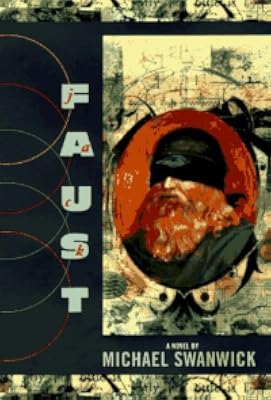
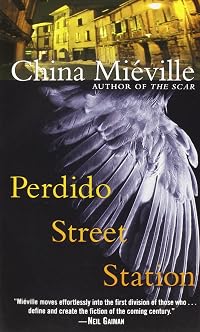
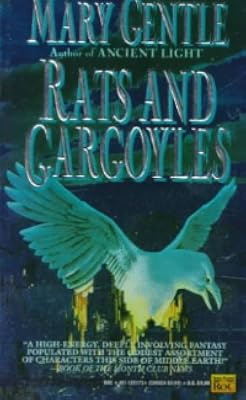
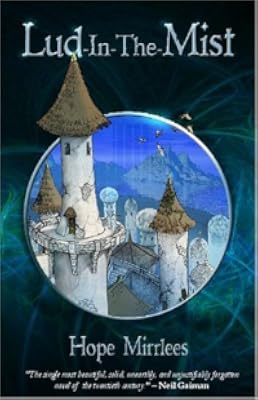





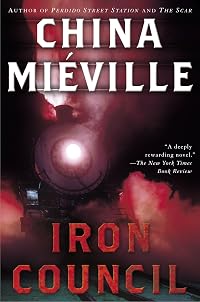
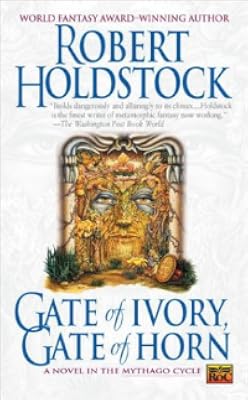
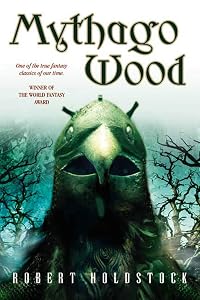
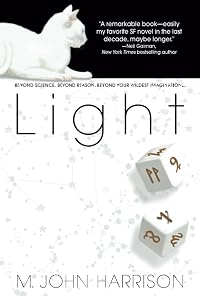


Member Recommendations
Member Reviews
This is another one that upset the balance. I tried to start it last year, but I found the opening scenes of child labour genuinely upsetting and had to put it aside. When I picked it up again they were still upsetting, and furthermore things didn’t necessarily get much better as it went along. Anyway, this is the book that tore fantasy out by the roots and shook off the dirt long before China Mieville or George RR Martin did their thing, and it makes them look like fluffy bunnys in comparison. However tough the action or radical the politics or cynical the power-struggles, they are still fundamentally entertainments. Swanwick’s book doesn’t subvert genre conventions; it looks them full in the face sees them for what they are and show more tells them to sod off. Not an easy read, but profoundly worthwhile. show less
If you like your fantasy gritty and noir with a soupcon of technology, Michael Swanwick’s Iron Dragon’s Daughter might be the book for you. It is a coming-of-age story set initially in a factory that uses and abuses orphaned children to get into tight places and amuse lecherous overseers. A cybernetic dragon wants to escape the factory yard but needs a pilot. Our heroine, a changeling girl named Jane, makes an ideal candidate. Swanwick’s characters are complex and morally ambiguous. Nothing in their world is warm and cuddly for long. 4 stars.
First, since I love to recommend books for young readers, I'd warn that the subject matter is quite intense. Strong themes of disturbing sex and violence are integral to the story.
Swanwick sets his tale in a fantastical realm adjacent to ours. All of the trappings of modern life exist. All the trappings of the traditional fantasy exist. Except dragons and warhorses are machines. Sexuality strengthens and enhances magic associated with the traditional fantasy realm, but wreaks havoc with the engineering and circuitry associated with the building and maintenance of dragons. A fantastical cosmology, restricting the travel between our world and this one to souls, and the constant need for bloody sacrifice flesh out Swanwick's fantastical show more realm. And that flesh is beautiful and grotesque.
Jane's life is hard. On many levels, she doesn't quite fit into the world around her. She keeps not quite learning the lessons life is trying to teach her and her close friends pay the bloody price and reincarnate into the sphere of characters that will drive the next stage of her life. This coming of age fugue teaches with repeated tragedy.
This book sat on my shelf for many years. I picked it up at various times, but I only ever made it through the first section. Swanwick brings a vivid life to the supporting cast of children and then slays many of our favorites suddently and brutally. This forces you to reconnect with the world anew, but if you do, you'll be better prepared for the pain and tragedy that comes again in waves. By forcing Jane to live through and overcome horrors in childhood, highschool and college Swanwick earns every ounce of character development.
I found the world vivid and darkly beautiful. Its acceptance of violence as a way of life speaks volumes about our own world. The narrative is linear, but time, both in the story and the setting itself is fluid and somewhat fractal and chaotic in turns. In spite of it's tone and weight, I found this book refreshing for it's drastically unique take on familiar tropes. The Iron Dragon's Daughter is anchored firmly in the genre of fantasy, but should prove to be a satisfying read for either the horror or SciFi fan as well.
This review originally appeared on my blog: http://mentatjack.com/2008/05/11/review-the-iron-dragons-daughter-by-michael-swa... show less
Swanwick sets his tale in a fantastical realm adjacent to ours. All of the trappings of modern life exist. All the trappings of the traditional fantasy exist. Except dragons and warhorses are machines. Sexuality strengthens and enhances magic associated with the traditional fantasy realm, but wreaks havoc with the engineering and circuitry associated with the building and maintenance of dragons. A fantastical cosmology, restricting the travel between our world and this one to souls, and the constant need for bloody sacrifice flesh out Swanwick's fantastical show more realm. And that flesh is beautiful and grotesque.
Jane's life is hard. On many levels, she doesn't quite fit into the world around her. She keeps not quite learning the lessons life is trying to teach her and her close friends pay the bloody price and reincarnate into the sphere of characters that will drive the next stage of her life. This coming of age fugue teaches with repeated tragedy.
This book sat on my shelf for many years. I picked it up at various times, but I only ever made it through the first section. Swanwick brings a vivid life to the supporting cast of children and then slays many of our favorites suddently and brutally. This forces you to reconnect with the world anew, but if you do, you'll be better prepared for the pain and tragedy that comes again in waves. By forcing Jane to live through and overcome horrors in childhood, highschool and college Swanwick earns every ounce of character development.
I found the world vivid and darkly beautiful. Its acceptance of violence as a way of life speaks volumes about our own world. The narrative is linear, but time, both in the story and the setting itself is fluid and somewhat fractal and chaotic in turns. In spite of it's tone and weight, I found this book refreshing for it's drastically unique take on familiar tropes. The Iron Dragon's Daughter is anchored firmly in the genre of fantasy, but should prove to be a satisfying read for either the horror or SciFi fan as well.
This review originally appeared on my blog: http://mentatjack.com/2008/05/11/review-the-iron-dragons-daughter-by-michael-swa... show less
Unintentionally, I read three fantasy books in a row, each a coming of age story, each playing with the nature of the genre in different ways. The first, and fluffiest, was Friesner's Majik by Accident. The second, mixing humor with much darkness, and starting with the premise of what happens after the quest is done, was Stewart's Nobody's Son. The third, most complex, most radical, and least straightline, was Swanwick's The Iron Dragon's Daughter. The book jacket refers to this as industrial magicks, and this is certainly one thread. This is not our world but much like it in many ways, but not, as in Friesner or Pratchett, as humorous analogs, but more as "if magic worked, the real work would still be done by the exploited." And people show more will still watch television, however it might work. The iron dragon is just that -- along with trolls, elves and dwarves, there are living, thinking, fire-breathing dragons, but they are mechanical -- just like giant malevolent airliners. The industrial thread drives just the first portion of the book, it changes as Jane, the main character, moves to magic school. Nothing like Hogwarts here. More like Berkeley. Her brand of magic is based on orgasmic release. Along the way, references from our world, such as advertising slogans, intrude constantly, a puzzle that is eventually explained. Jane is no heroic character. She is sympathetic but there is nothing she won't do, when she feels the need. Swanwick's novel is rich in invention. I was hoping for 4 or 5 stars here, but I was disappointed in the action-packed climactic events, and unsurprised by the anti-climactic wrapup. Still, recommended as long as you are OK with explicit sex and some pretty distasteful characters. show less
This book is one of those rarities that make my brain a little bit numb from emotion storm. There is nothing coherent, just a storm of love, hatred, questions, guesses, objections, suggestions, alterations, admiration, amusement, dissatisfaction... I want more, but I know that there is no more and there must be no more - for all good things must end by their own will or be twisted into the MacDonald's-like things by others. Such books and the worlds they create is more like a glimpse in the dark. They flash before your eyes, they leave you with images, with seeds of desire, and they gone... they don't need our imagination, they are free from us.
An excellent book that I found hard to read at times. The prose is crystalline throughout, something which is lacking in most fantasy novels. But I am somewhat wary of pigeonholing this book as a ‘fantasy’, despite its inclusion in the Fantasy Masterworks series, because that might lead to a wrong impression of the book. In many ways, although not as sui generis as Mervyn Peake’s Gormenghast novels, or David Lindsay’s A Voyage to Arcturus, this book resembles those works in being something that I cannot quite pinpoint. It is an anti-fantasy, in many ways, but that is also to limit the book’s scope. Because, in many ways, if Terry Pratchett’s Discworld novels are humorous anti-fantasies (and much more) then this book is a show more deadly serious commentary on the genre. It is postmodern in the best sense – not too pretentious, but willing to take risks that can seem pretentious.
As Swanwick has said, the book is both an homage to the genre, but also a response to the growing commercialism of the genre:
“… The recent slew of interchangeable Fantasy trilogies has hit me in much the same way that discovering that the woods I used to play in as a child have been cut down to make way for shoddy housing developments.”
If anything needed (and needs) a good kick up the wazoo, then it is commercial speculative fiction. There are few things that I personally despise as much as the carrion crows picking over Tolkien’s (and many, many others') legacy, although, to be honest, I have problems with most overly commercial writers. So I felt very happy with the premise of the novel.
As I said, I sometimes found the novel difficult to read. But that is not necessarily a bad sign. What made it difficult is Swanwick’s way of interpolating many different ideas into the smallest of narrative spaces. The text is full of references to Dickens, medieval Christian philosophy, fantasy tropes and more. Swanwick also has fondness for doppelgängers, which sometimes led to a temporary dissonance in reading the book, as I scratched my head wondering which character was actually being referred to. But this is definitely done on purpose – the main character, Jane, is a changeling, apparently abducted from our reality into a Dickensian nightmare of factory-enslavement, which also has fantasy elements. I advisedly say apparently because this novel is in the end concerned with interrogating appearances, and rejecting easy cop-outs. It deliberately subverts the easily digestible flow of commercial fantasy novels, and smashes one’s preconceptions of what a fantasy novel can, and should, do.
In many ways, it is a bleak book, harrowing and distressing. It has graphic depictions of sex and violence, but these never seem overly gratuitous. I was a little concerned when the narrative seemed to lose some steam during the middle parts (you know what Larkin says about a beginning, a muddle, and an end) but I think this was mostly due to my own preconceptions getting in the way. At the end, one can see that Swanwick had a clear idea of where he wanted to go with the narrative, and I feel that a reread is in order – sometime.
Oh, and don't be fooled by the Masterworks cover: this book is not like Hughes's The Iron Man, or the Brad Bird movie based on it. show less
As Swanwick has said, the book is both an homage to the genre, but also a response to the growing commercialism of the genre:
“… The recent slew of interchangeable Fantasy trilogies has hit me in much the same way that discovering that the woods I used to play in as a child have been cut down to make way for shoddy housing developments.”
If anything needed (and needs) a good kick up the wazoo, then it is commercial speculative fiction. There are few things that I personally despise as much as the carrion crows picking over Tolkien’s (and many, many others') legacy, although, to be honest, I have problems with most overly commercial writers. So I felt very happy with the premise of the novel.
As I said, I sometimes found the novel difficult to read. But that is not necessarily a bad sign. What made it difficult is Swanwick’s way of interpolating many different ideas into the smallest of narrative spaces. The text is full of references to Dickens, medieval Christian philosophy, fantasy tropes and more. Swanwick also has fondness for doppelgängers, which sometimes led to a temporary dissonance in reading the book, as I scratched my head wondering which character was actually being referred to. But this is definitely done on purpose – the main character, Jane, is a changeling, apparently abducted from our reality into a Dickensian nightmare of factory-enslavement, which also has fantasy elements. I advisedly say apparently because this novel is in the end concerned with interrogating appearances, and rejecting easy cop-outs. It deliberately subverts the easily digestible flow of commercial fantasy novels, and smashes one’s preconceptions of what a fantasy novel can, and should, do.
In many ways, it is a bleak book, harrowing and distressing. It has graphic depictions of sex and violence, but these never seem overly gratuitous. I was a little concerned when the narrative seemed to lose some steam during the middle parts (you know what Larkin says about a beginning, a muddle, and an end) but I think this was mostly due to my own preconceptions getting in the way. At the end, one can see that Swanwick had a clear idea of where he wanted to go with the narrative, and I feel that a reread is in order – sometime.
Oh, and don't be fooled by the Masterworks cover: this book is not like Hughes's The Iron Man, or the Brad Bird movie based on it. show less
Not so long ago, I was reading a forum discussion talking about how fantasy worlds never seem to progress past a medieval level of technology; and whether or not it's possible to write a technological fantasy world that is clearly not science fiction.
This book does it, with its plethora of faerie creatures - and our protagonist, a changeling - working in factories and dealing with magical/robotic creations.
The book is complex, with strikingly original ideas, and a carefully plotted structure that at first seems pointlessly rambling. As the spiraling theme of the story is revealed, the reader realizes that the plot has also been following that spiral theme.
It's well done; even impressive. The book probably deserved to win at least one show more of the several awards it was nominated for.
However, I didn't love it, emotionally. Even though it deftly slipped out of the 'it was all just a dream, or mental illness' thing that I had a suspicion it was sliding toward, for a while. I feel like I appreciated this book - it just didn't become one of my favorites. show less
This book does it, with its plethora of faerie creatures - and our protagonist, a changeling - working in factories and dealing with magical/robotic creations.
The book is complex, with strikingly original ideas, and a carefully plotted structure that at first seems pointlessly rambling. As the spiraling theme of the story is revealed, the reader realizes that the plot has also been following that spiral theme.
It's well done; even impressive. The book probably deserved to win at least one show more of the several awards it was nominated for.
However, I didn't love it, emotionally. Even though it deftly slipped out of the 'it was all just a dream, or mental illness' thing that I had a suspicion it was sliding toward, for a while. I feel like I appreciated this book - it just didn't become one of my favorites. show less
Members
- Recently Added By
Lists

Science fiction novels with a female protagonist
105 works; 30 members

Gaslamp Fantasy
87 works; 15 members

Faerie Mythology
87 works; 13 members

Best Science Fiction Novels
816 works; 430 members

New Weird Fiction
69 works; 12 members

KayStJ's to-read list
1,616 works; 11 members
Arthur C. Clarke Award Winners and Shortlisted Books
219 works; 14 members

Fantasy Masterworks
66 works; 5 members

mom
729 works; 1 member
Author Information

455+ Works 8,493 Members
Michael Swanwick has received the Hugo, Nebula, Theodore Sturgeon, and World Fantasy Awards for his work
Some Editions
Awards and Honors
Series

Belongs to Publisher Series
Work Relationships
Common Knowledge
- Canonical title
- The Iron Dragon's Daughter
- Original title
- The Iron Dragon's Daughter
- Original publication date
- 1994-01
- First words
- The changeling's decision to steal a dragon and escape was born, though she did not know it then, the night the children met to plot the death of their supervisor.
- Last words
- (Click to show. Warning: May contain spoilers.)"I've got to know his name."
- Blurbers
- Clute, John
- Original language
- English
Classifications
Statistics
- Members
- 1,448
- Popularity
- 16,241
- Reviews
- 43
- Rating
- (3.68)
- Languages
- 6 — English, Finnish, German, Italian, Lithuanian, Spanish
- Media
- Paper, Audiobook, Ebook
- ISBNs
- 16
- ASINs
- 12