On This Page
Description
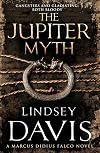
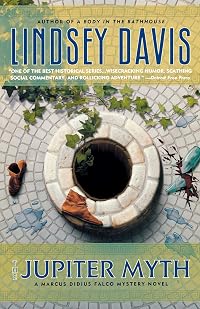
Davis' 14th novel in the Marcus Didius Falco series is a noir tale of gangsters, gladiators, and love. For Falco, a relaxed visit to Helena's relatives in Britain turns serious at the scene of a downtown murder.Tags
Recommendations











Member Reviews
Having solved a construction problem in Britain for the emperor Vespasian, Marcus Didius Falco is ready to take his family home to Rome. Before he can leave, he must solve a murder in Londinium to help his wife’s uncle, as well as help his best friend, Petronius Longus, out of a tight spot.
I enjoy reading about Roman Britain so I’m glad that Davis left Falco in Britain for another episode. I love that the secondary characters are prominent in this book, especially Falco’s wife, Helena, and his sister, Maia. Helena plays an active role in the investigation. I also like how this book explores the Roman conquest of Britain and interactions between British tribes and Romans, both military and civilian.
I enjoy reading about Roman Britain so I’m glad that Davis left Falco in Britain for another episode. I love that the secondary characters are prominent in this book, especially Falco’s wife, Helena, and his sister, Maia. Helena plays an active role in the investigation. I also like how this book explores the Roman conquest of Britain and interactions between British tribes and Romans, both military and civilian.
This one was decent, but Davis has written better installments. While The Jupiter Myth is a rather standard crime novel, Davis' Falco books in general stand out because of the background research that's gone into them, and how she blends modern sensitivities with an ancient worldview. That said, This Falco adventure specifically felt not independent enough for me: too many subplots and twists depend on characters brought back from earlier books.
Davis' depiction of late first-century Londinium is delightful, and had the book been carried more as a separate mystery rather than a sequel tying up old and loose ends I'd have enjoyed it more than I did.
Davis' depiction of late first-century Londinium is delightful, and had the book been carried more as a separate mystery rather than a sequel tying up old and loose ends I'd have enjoyed it more than I did.
A bit more harrowing and violent than some other Falco novels, especially at the end. Falco and retinue are in Britain again and hating it. We finally discover why Petronius Longus has joined them (it couldn’t have only been to bring Maya’s kids) and he immediately leaves on his undercover mission. Of course this and Falco’s assignment are connected and crash into each other resoundingly.
I was annoyed w/the adoption of the brat though. Jeez. Does every detective series have to include the rescue of some urchin or other? What is this, Dickens? It was unnecessary and did nothing to enhance the plot. I did like Amazonia though. She was hilarious in an annoying sort of way. And let’s not forget the on again/off again romance show more between Petro and Maya…I guess every long running series needs to have side-plots, but this is tiresome to me and I hope it’s not dwelled on much in future. show less
I was annoyed w/the adoption of the brat though. Jeez. Does every detective series have to include the rescue of some urchin or other? What is this, Dickens? It was unnecessary and did nothing to enhance the plot. I did like Amazonia though. She was hilarious in an annoying sort of way. And let’s not forget the on again/off again romance show more between Petro and Maya…I guess every long running series needs to have side-plots, but this is tiresome to me and I hope it’s not dwelled on much in future. show less
Marcus Didius Falco remains in Britain on what is supposed to be a vacation before returning home to Rome with his family. But something comes up...a British man of interest to an important ally is drowned in a well and Falco is detailed to find out who did it. Naturally, it turns out to be very complicated and exceedingly dangerous. Falco is a tough private eye in ancient Rome who lives and works among the seedy of the empire. Davis does her usual superlative job of presenting a believable view of street life, one that seems quite convincing, given the crazy antics of their rulers that did make it to the history books. This time, the focus is Londinium of the 1st Century, capitol of Roman Britain. Lots of fun and so much historical show more content, you'll look forward to rereading the book in a couple years. show less
Marcus Didius is still in Britannia with his family and entourage. He hates Britannia, that damp, fogbound outpost of Empire, and is looking forward to going home when a body is found stuffed in a well behind a sleazy tavern. Our hero is back on the job, in pursuit of a sophisticated protection racket and bringing him face to face with familiar faces from his past in unfamiliar roles. And what's Petronius Longus up to?
I may have forgotten something but I believe this is the first in the Falco series with no action at all in Rome. I have to confess that I prefer the Roman settings and I did wonder at first if Lindsey Davis was coming under pressure to have more British settings, especially Londinium. Especially as this is am much more show more sombre episode than most in the series. But no; just as the previous story drew inspiration from the excavations of Fishbourne Palace, this one is based on recent revelations about Roman London. This brought me an especial delight because when I worked in the City in the 1980s the excavation of the amphitheatre in Guildhall Yard was going own across the road from my place of work in Basinghall Street and I followed it with great interest. The actual scene in the amphitheatre is a bit silly and out of keeping with the general tone of the book but it's great fun.
Needless to say, the overarching family saga progresses, and it's good to see Petro get his moment in the spotlight; it's almost his book more than Marcus's. show less
I may have forgotten something but I believe this is the first in the Falco series with no action at all in Rome. I have to confess that I prefer the Roman settings and I did wonder at first if Lindsey Davis was coming under pressure to have more British settings, especially Londinium. Especially as this is am much more show more sombre episode than most in the series. But no; just as the previous story drew inspiration from the excavations of Fishbourne Palace, this one is based on recent revelations about Roman London. This brought me an especial delight because when I worked in the City in the 1980s the excavation of the amphitheatre in Guildhall Yard was going own across the road from my place of work in Basinghall Street and I followed it with great interest. The actual scene in the amphitheatre is a bit silly and out of keeping with the general tone of the book but it's great fun.
Needless to say, the overarching family saga progresses, and it's good to see Petro get his moment in the spotlight; it's almost his book more than Marcus's. show less
Marcus Didius Falco and his family are waiting to return to Rome after a successful investigation in Britain when a body is discovered in a bar well. Falco is an informant so he gets the job of investigating. Unfortunately, the dead man was one Falco knew - a criminal. And Falco soon learns that the death is associated with a criminal gang that seems to have virtually taken over Roman London. Falco's problems escalate when his wife adopts a teenaged runaway girl, and when Falco himself runs into Chloris, the lover he left behind - a beautiful acrobat who has become a female gladiator.
In the first century A.D., Roman Britain is still fresh, Rome is still an expanding power, and Britain is the ragged edge of Empire. Still, Roman customs show more are being introduced to Britain - baths, gladiators, olives, and wine. And the gods, of course. But it takes a while for Falco to determine that there is a connection between all of the wineshops, whorehouses, and theatres named after Jupiter. The connection is the gang - a gang that is another very Roman innovation in Britain. And it turns out that Falco and his best friend Petronius Longus had faced that gang before, back in Rome.
The description of ancient Romans living with ancient Britons is a vivid portrait of the age and the headaches of colonization. Marcus, formerly a man acquainted with the seamy side of life that old girlfriend Chloris represents, now finds himself going up against it again when he uncovers evidence that Verovolcus' death may be linked to organized crime through a wimp of a mob boss whom Tony Soprano would whack on the spot. Not only that, the wimp boss in question has a personal grudge against hero and Falco friend L. Petronius Longus, who in turn has a personal, intimate tension with Falco's widowed sister Maia, who, in true noir tradition, reportedly is kidnapped by the mob in the book's final third.
But all is not as it seems...and you'll have as much fun as I did deciphering the ending with Marcus and his cast of strong women. show less
In the first century A.D., Roman Britain is still fresh, Rome is still an expanding power, and Britain is the ragged edge of Empire. Still, Roman customs show more are being introduced to Britain - baths, gladiators, olives, and wine. And the gods, of course. But it takes a while for Falco to determine that there is a connection between all of the wineshops, whorehouses, and theatres named after Jupiter. The connection is the gang - a gang that is another very Roman innovation in Britain. And it turns out that Falco and his best friend Petronius Longus had faced that gang before, back in Rome.
The description of ancient Romans living with ancient Britons is a vivid portrait of the age and the headaches of colonization. Marcus, formerly a man acquainted with the seamy side of life that old girlfriend Chloris represents, now finds himself going up against it again when he uncovers evidence that Verovolcus' death may be linked to organized crime through a wimp of a mob boss whom Tony Soprano would whack on the spot. Not only that, the wimp boss in question has a personal grudge against hero and Falco friend L. Petronius Longus, who in turn has a personal, intimate tension with Falco's widowed sister Maia, who, in true noir tradition, reportedly is kidnapped by the mob in the book's final third.
But all is not as it seems...and you'll have as much fun as I did deciphering the ending with Marcus and his cast of strong women. show less
Didias Falco is still stuck in Britain, and before he can travel home with his family and Petro, he is presented by a murder a little too close to the local British king. So of course, he must trudge all over Londinium to find the killer. The story takes several eyebrow-raising turns, of course, and I guessed one of the villains immediately - no one could be that charming.
Simon Prebble narrates. I do love to listen to these books.
Simon Prebble narrates. I do love to listen to these books.
Members
- Recently Added By
Author Information

57+ Works 26,602 Members
Lindsey Davis lives in London, England. (Publisher Provided) Lindsey Davis was born in Birmingham, England in 1949. She earned her English degree at Oxford. Her published works include The Course of Honour and The Silver Pigs, the first in the Falco series which won the Authors' Club Best First Novel award in 1989. In 1999 she received the show more Sherlock Award for Best Comic Detective for her creation, Marcus Didius Falco. (Publisher Provided) show less
Some Editions
Awards and Honors
Series

Belongs to Publisher Series
Common Knowledge
- Canonical title
- The Jupiter Myth
- Original title
- The Jupiter Myth
- Original publication date
- 2002-06-06
- People/Characters
- Marcus Didius Falco; Helena Justina; Albia (orphan, scavenger); Amicus (official torturer); Maia Favonia (Falco's sister); L. Petronius Longus (show all 28); S. Julius Frontinus (governor of Britain); G. Flavius Hilaris (procurator of finance); Aelia Camilla (Helena Justina's aunt, Flavius Hilaris' wife); Crixus (centurion); Epaphroditus (baker); Firmus; Flavia Fronta (barmaid); Norbanus Murena (property developer); Popillius (lawyer); Pyro (arsonist); Silvanus (centurion); Splice; Togidubnus; Verovolcus; Chloris (Amazonia, gladiator); Ancus; Cloelia; Flavia; Julia Junilla Laeitana (Helena & Falco's toddler daughter); Marius; Rhea; Sosia Favonia (Helena & Falco's baby daughter)
- Important places
- London, England, UK (Londinium); Londinium
- Important events
- Roman occupation of Britain; Reign of Vespasian (69 AD | 79 AD)
- Dedication
- To Ginny, Who deserves it.
Now look here; you had better not expect half a page of sentimental guff. If you are a treasure and an inspiration and a dear friend who has suffered a year of stress, I shall certainly not say s... (show all)o. This is a British dedication, after all! - First words
- 'It depends what we mean by civilisation', the procurator mused.
- Quotations
- [part of a paragraph]
Even the impetuous Helena Justina was an advocate of traditional family councils. However, every Roman matron knows that domestic councils were devised by out foremothers purely so the views of... (show all) the matron of a household may prevail.
I just went along with it. I knew how to be a patriarchal Roman male. (chapter XLV) - Last words
- (Click to show. Warning: May contain spoilers.)Who could say that was uncivilised? It depends what you mean by civilisation, as the procurator said.
- Original language*
- Englisch
*Some information comes from Common Knowledge in other languages. Click "Edit" for more information.
Classifications
Statistics
- Members
- 965
- Popularity
- 27,513
- Reviews
- 25
- Rating
- (3.75)
- Languages
- 5 — Czech, English, German, Italian, Spanish
- Media
- Paper, Audiobook, Ebook
- ISBNs
- 33
- ASINs
- 14