On This Page
Description
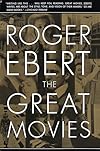
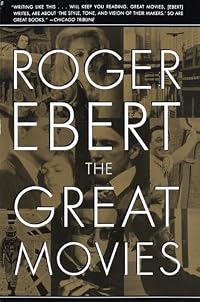
A collection of essays, drawn from film critic Roger Ebert's column "The Great Movies," in which he presents his critical appreciation for one hundred movies he judges to be among the best of all time.Tags
Recommendations
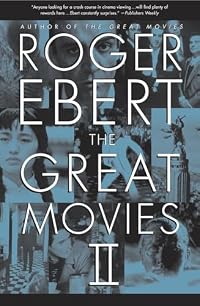
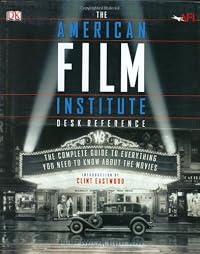
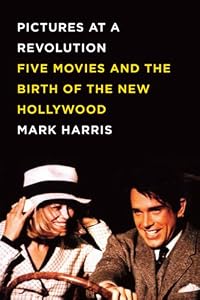


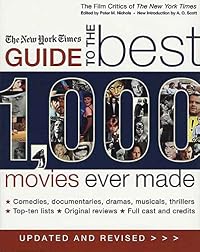

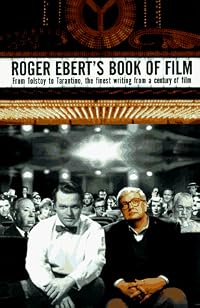






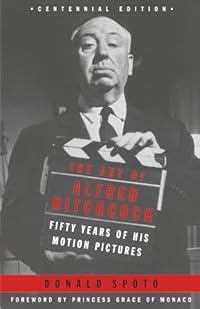


Member Recommendations
Wova4 Both offer interesting and entertaining essays on great works of film.
10
Member Reviews
I must admit, I've only read the reviews of films that I haven't seen in here, which probably amounts to a third of the book in total.
Ebert has really, really seen these films. Most of them, according to himself, several times, and an additional time in order to write this book. A lot of them are classics, and a few of them - e.g. "The Wizard of Oz" - aren't included in a lot of critics' tomes.
He opens the book with an introduction where three paragraphs stood out to me:
While he may seem grumpy, there are obvious points to be made. Yes, most modern Hollywood flicks are crap, yes, the attention span of anybody today is Twitter and Reddit long (by which I mean that "too long, didn't read" is more of an axiom to some than a joke), but then again - his claims would be nothing if he didn't fess up and review with gusto, intelligence and terrific insight.
And that, my friend, he delivers.
From "The Big Sleep":
On "Ikiru":
On "JFK", which indeed questions how films should be "truthful":
Reviewing a film that is old could pose several problems, but if it's been remade a million times since, is harder; Ebert pulls this off with "Nosferatu":
Check out the insight on "Raging Bull", one of the best films ever made according to myself:
All in all: very insightful, almost a little too much for me, who's not a film critic or someone who's that deep into film. Still, Ebert a perfect juxtaposition to Anthony Lane's brilliant collection of his own reviews, titled "Nobody's Perfect". show less
Ebert has really, really seen these films. Most of them, according to himself, several times, and an additional time in order to write this book. A lot of them are classics, and a few of them - e.g. "The Wizard of Oz" - aren't included in a lot of critics' tomes.
He opens the book with an introduction where three paragraphs stood out to me:
The ability of an audience to enter into the narrative arc of a movie is being lost; do today’s audiences have the patience to wait for Harry Lime in The Third Man?
At Boulder and on other campuses, talking with the students, I found that certain names were no longershow more
recognized. Even students majoring in film had never seen one by Buñuel, Bresson, or Ozu. They’d seen one or two titles by Ford and Wilder, knew a half-dozen Hitchcock classics, genuflected at Citizen Kane, knew the Star Wars pictures by heart, and sometimes uttered those words which marked them as irredeemably philistine: “I don’t like black and white.” Sixty of these films are in black and white, and three use b&w and color; you cannot know the history of the movies, or love them, unless you understand why b&w can give more, not less, than color.
Today even the most popular subtitled films are ignored by the national distribution oligarchy, mainstream movies are pitched at the teenage male demographic group, and the lines outside theaters are for Hollywood’s new specialty, B movies with A budgets.
While he may seem grumpy, there are obvious points to be made. Yes, most modern Hollywood flicks are crap, yes, the attention span of anybody today is Twitter and Reddit long (by which I mean that "too long, didn't read" is more of an axiom to some than a joke), but then again - his claims would be nothing if he didn't fess up and review with gusto, intelligence and terrific insight.
And that, my friend, he delivers.
From "The Big Sleep":
Working from Chandler’s original words and adding spins of their own, the writers (William Faulkner, Jules Furthman, and Leigh Brackett) wrote one of the most quotable of screenplays: It’s unusual to find yourself laughing in a movie not because something is funny, but because it’s so wickedly clever. (Marlowe on the “nymphy” kid sister: “She tried to sit in my lap while I was standing up.”) Unlike modern crime movies which are loaded with action, The Big Sleep is heavy with dialogue. The characters talk and talk, just like in the Chandler novels; it’s as if there’s a competition to see who has the most verbal style.
On "Ikiru":
It is not so bad that he must die. What is worse is that he has never lived. “I just can’t die—I don’t know what I’ve been living for all these years,” he says to the stranger in the bar. He never drinks, but now he is drinking: “This expensive saki is a protest against my life up to now.”
[...]
I saw Ikiru first in 1960 or 1961. I went to the movie because it was playing in a campus film series and cost only a quarter. I sat enveloped in the story of Watanabe for two and a half hours, and wrote about it in a class where the essay topic was Plato’s statement “the unexamined life is not worth living.”
On "JFK", which indeed questions how films should be "truthful":
Shortly after the film was released, I ran into Walter Cronkite and received a tongue-lashing, aimed at myself and my colleagues who had praised JFK. There was not, he said, a shred of truth in it. It was a mishmash of fabrications and paranoid fantasies. It did not reflect the most elementary principles of good journalism. We should all be ashamed of ourselves. I have no doubt Cronkite was correct, from his point of view. But I am a film critic and my assignment is different than his. He wants facts. I want moods, tones, fears, imaginings, whims, speculations, nightmares. As a general principle, I believe films are the wrong medium for fact. Fact belongs in print. Films are about emotions. My notion is that JFK is no more or less factual than Stone’s Nixon—or Gandhi, Lawrence of Arabia, Gladiator, Amistad, Out of Africa, My Dog Skip, or any other movie based on “real life.” All we can reasonably ask is that it be skillfully made, and seem to approach some kind of emotional truth.
Reviewing a film that is old could pose several problems, but if it's been remade a million times since, is harder; Ebert pulls this off with "Nosferatu":
To watch F. W. Murnau’s Nosferatu (1922) is to see the vampire movie before it had really seen itself. Here is the story of Dracula before it was buried alive in clichés, jokes, TV skits, cartoons, and more than thirty other films. The film is in awe of its material. It seems to really believe in vampires. Max Schreck, who plays the vampire, avoids most of the theatrical touches that would distract from all the later performances, from Bela Lugosi to Christopher Lee to Frank Langella to Gary Oldman. The vampire should come across not like a flamboyant actor, but like a man suffering from a dread curse. Schreck plays the count more like an animal than like a human being; the art direction by Murnau’s collaborator, Albin Grau, gives him bat ears, clawlike nails, and fangs that are in the middle of his mouth like a rodent’s, instead of on the sides like a Halloween mask.
Check out the insight on "Raging Bull", one of the best films ever made according to myself:
Raging Bull is not a film about boxing, but about a man with paralyzing jealousy and sexual insecurity, for whom being punished in the ring serves as confession, penance, and absolution. It is no accident that the screenplay never concerns itself with fight strategy. For Jake LaMotta, what happens during a fight is controlled not by tactics, but by his fears and drives.
Martin Scorsese’s 1980 film was voted in three polls as the greatest film of the decade, but when he was making it, he seriously wondered if it would ever be released: “We felt like we were making it for ourselves.” Scorsese and Robert De Niro had been reading the autobiography of Jake LaMotta, the middleweight champion whose duels with Sugar Ray Robinson were a legend in the 1940s. They asked Paul Schrader, who wrote Taxi Driver (1976), to do a screenplay. The project languished while Scorsese and De Niro made the ambitious but unfocused musical New York, New York (1977) and then languished some more as Scorsese’s drug use led to a crisis. De Niro visited his friend in the hospital, threw the book on his bed, and said, “I think we should make this.” And the making of Raging Bull, with a screenplay further sculpted by Mardik Martin (Mean Streets [1973]), became therapy and rebirth for the filmmaker.
Raging Bull is the most painful and heart-rending portrait of jealousy in the cinema—an Othello for our times. It’s the best film I’ve seen about the low self-esteem, sexual inadequacy, and fear that lead some men to abuse women. Boxing is the arena, not the subject. LaMotta was famous for never being knocked down in the ring. There are scenes where he stands passively, his hands at his side, allowing himself to be hammered. We sense why he didn’t go down. He hurt too much to allow the pain to stop.
All in all: very insightful, almost a little too much for me, who's not a film critic or someone who's that deep into film. Still, Ebert a perfect juxtaposition to Anthony Lane's brilliant collection of his own reviews, titled "Nobody's Perfect". show less
New hobby for us - we watch one of the films Ebert writes on in the evening, then read his essay aloud over coffee the next morning and discuss. It's a bit like attending a film seminar. First we form our own opinion, then we let Ebert tell us what he thinks made the movie under discussion great. Most of the time we would feel it was a great film without his input, a few times he was able to convince us. Once in a while, he doesn't convince us, but we can understand why he thinks so. In one case, Body Heat, we still felt this was not a good movie. But that's part of the fun of reading a book like this. Another bit of fun: in nearly every essay, there was a factual error as Ebert recounted the plot. Was this some form of hidden trivia show more contest? One last thing: Ebert knows how to construct an essay. He saves some valuable insight, or twist, or detail for the very end. Recommended. show less
One of the reasons Roger Ebert is such a beloved critic is that he so thoroughly loves movies -- and that love runs through this book. It is a genuine pleasure to revisit, or be introduced to, some of the greatest movies ever made in the company of someone who doesn't just comment on their technical or creative achievements, but evokes their emotional content and significance as well.
It is what it is. I don't always agree with Ebert's reviews or reasoning but I still respect him.
to review a book of film reviews is rather pointless, don't you think? I suppose I could list the films, but there's a lot of them. Those who like this sort of thing will like this very much.
Roger Ebert is zonder twijfel de bekendste filmcriticus ter wereld, en niet zonder reden. Hij was de eerste filmcriticus die een Pulitzerprijs heeft gewonnen voor zijn werk en de enige die een eigen ster op de Hollywood 'walk of fame' heeft. Hij schrijft vanaf 1967 tot op heden filmrecensies voor de Chicago Sun-Times en zijn eigen website, www.rogerebert.com.
In 'The Great Movies' zijn 100 essays samengebracht over 100 'Geweldige Films', vaak voortgekomen uit recensies die hij eerder schreef maar (meestal) uitgebreid en bijgewerkt. Hierbij is het interessant dat Ebert de leeftijd heeft waarop hij terug kan kijken naar hoe het was toen een film uitkwam (vaak was hij bij de premiere) en hoe hij deze door de jaren heen heeft beoordeeld. De show more manier waarop je naar een film kijkt is immers afhankelijk van een aantal zaken, onder andere van jou als kijker zelf. Ebert heeft overigens elke hier besproken film herkeken voor het schrijven van het bijbehorende essay, waardoor er altijd een modern kader aanwezig is. Hij heeft niet simpelweg zijn reviews uit de jaren '60 'opgeleukt'.
De meeste films krijgen 3 - 5 pagina's aandacht en Ebert slaagt er wonderbaarlijk goed in zijn enorme passie voor deze films onder woorden te brengen. In plaats van zijn 'kritische reviews' is het een lust om te lezen hoe hij oreert over de films die hij om verschillende redenen het predikaat 'Great' waardig vindt. Hoewel noodgedwongen veel films in dergelijke boeken al bij de echte liefhebbers bekend zijn, heeft Ebert juist ook een behoorlijke selectie minder bekende films in dit boek opgenomen. Gelukkig maakt het echter voor het leesplezier weinig uit of je de besproken film nu wel of niet kent. Ebert's kennis en analyse zijn diep genoeg om er bij elke film wat nieuws bij te leren of een nieuwe invalshoek of context te ontdekken. Ik betrapte me er zelfs op dat ik bij het stiekem vooruit bladeren zag dat zijn besprekingen van Sunset Blvd,Taxi Driver en Silence of the Lambs op stapel stonden (die ik alledrie erg goed ken) en bijna niet kon wachten om juist die te gaan lezen om te kijken wat hij erover zou schrijven.
Films die onder andere besproken worden zijn: All About Eve • Bonnie and Clyde • Casablanca • Citizen Kane • The Godfather • Jaws • La Dolce Vita • Metropolis • On the Waterfront • Psycho • The Seventh Seal • Sweet Smell of Success • Taxi Driver • The Third Man • The Wizard of Oz . In 2006 en 2011 volgden resp. The Great Movies II en The Great Movies III... Ik twijfel er niet aan dat deze binnen een jaar ook op mijn plank zullen staan. Voor de liefhebbers zijn ook zijn 'Haat-reviews' verzameld maar dat is een ander verhaal. Dat Ebert geen hoge pet op heeft van de huidige productiestandaarden in Hollywood valt overigens tussen de regels door duidelijk te lezen. Voorproefjes van zijn schrijfstijl zijn volop gratis op Roger Ebert's website te lezen, waar zijn reviews online zijn te raadplegen. Simpel gezegd bevat 'The Great Movies' 100 dieper uitgewerkte en mijns insziens beduidend betere en diepgaandere essays dan de (vaak) kortere reviews die gratis op de website staan. Hoewel van sommige films de versie op de website identiek is aan die in het boek, is het ook de selectie tezamen en de toevoeging van de 'stills' door Mary Corliss, film curator in het Museum of Modern Art die dit boek zijn meerwaarde boven de website geven. Ik ben er in een paar settings doorheen gegaan en wilde het liever niet wegleggen.
Het grote nadeel van dit boek is wèl dat Ebert soms zo enthousiasmeert dat je niet meer weet welke film je nu eerst moet gaan kijken :-)
Een 'should-have'/must-have voor de filmfanaten.... show less
In 'The Great Movies' zijn 100 essays samengebracht over 100 'Geweldige Films', vaak voortgekomen uit recensies die hij eerder schreef maar (meestal) uitgebreid en bijgewerkt. Hierbij is het interessant dat Ebert de leeftijd heeft waarop hij terug kan kijken naar hoe het was toen een film uitkwam (vaak was hij bij de premiere) en hoe hij deze door de jaren heen heeft beoordeeld. De show more manier waarop je naar een film kijkt is immers afhankelijk van een aantal zaken, onder andere van jou als kijker zelf. Ebert heeft overigens elke hier besproken film herkeken voor het schrijven van het bijbehorende essay, waardoor er altijd een modern kader aanwezig is. Hij heeft niet simpelweg zijn reviews uit de jaren '60 'opgeleukt'.
De meeste films krijgen 3 - 5 pagina's aandacht en Ebert slaagt er wonderbaarlijk goed in zijn enorme passie voor deze films onder woorden te brengen. In plaats van zijn 'kritische reviews' is het een lust om te lezen hoe hij oreert over de films die hij om verschillende redenen het predikaat 'Great' waardig vindt. Hoewel noodgedwongen veel films in dergelijke boeken al bij de echte liefhebbers bekend zijn, heeft Ebert juist ook een behoorlijke selectie minder bekende films in dit boek opgenomen. Gelukkig maakt het echter voor het leesplezier weinig uit of je de besproken film nu wel of niet kent. Ebert's kennis en analyse zijn diep genoeg om er bij elke film wat nieuws bij te leren of een nieuwe invalshoek of context te ontdekken. Ik betrapte me er zelfs op dat ik bij het stiekem vooruit bladeren zag dat zijn besprekingen van Sunset Blvd,Taxi Driver en Silence of the Lambs op stapel stonden (die ik alledrie erg goed ken) en bijna niet kon wachten om juist die te gaan lezen om te kijken wat hij erover zou schrijven.
Films die onder andere besproken worden zijn: All About Eve • Bonnie and Clyde • Casablanca • Citizen Kane • The Godfather • Jaws • La Dolce Vita • Metropolis • On the Waterfront • Psycho • The Seventh Seal • Sweet Smell of Success • Taxi Driver • The Third Man • The Wizard of Oz . In 2006 en 2011 volgden resp. The Great Movies II en The Great Movies III... Ik twijfel er niet aan dat deze binnen een jaar ook op mijn plank zullen staan. Voor de liefhebbers zijn ook zijn 'Haat-reviews' verzameld maar dat is een ander verhaal. Dat Ebert geen hoge pet op heeft van de huidige productiestandaarden in Hollywood valt overigens tussen de regels door duidelijk te lezen. Voorproefjes van zijn schrijfstijl zijn volop gratis op Roger Ebert's website te lezen, waar zijn reviews online zijn te raadplegen. Simpel gezegd bevat 'The Great Movies' 100 dieper uitgewerkte en mijns insziens beduidend betere en diepgaandere essays dan de (vaak) kortere reviews die gratis op de website staan. Hoewel van sommige films de versie op de website identiek is aan die in het boek, is het ook de selectie tezamen en de toevoeging van de 'stills' door Mary Corliss, film curator in het Museum of Modern Art die dit boek zijn meerwaarde boven de website geven. Ik ben er in een paar settings doorheen gegaan en wilde het liever niet wegleggen.
Het grote nadeel van dit boek is wèl dat Ebert soms zo enthousiasmeert dat je niet meer weet welke film je nu eerst moet gaan kijken :-)
Een 'should-have'/must-have voor de filmfanaten.... show less
May 28, 2012Dutch
1
Ratings
Members
- Recently Added By
Author Information

76+ Works 5,222 Members
Roger Joseph Ebert was born on June 18, 1942 in Urbana, Illinois, and died on April 4, 2013. He received his undergraduate degree from the University of Illinois at Urbana-Champaign, where he was editor of the Daily Illini. He is best known for his film review column in the Chicago Sun Times since 1967 and for the television programs Sneak show more Previews, At the Movies with Gene Siskel and Roger Ebert and Siskel and Ebert and The Movies. After Gene Siskel's death in 1999, Roger Ebert teamed up with Ruchard Roeper for the television series Ebert and Roeper and The Movies which began airing in 2000. Ebert's movie reviews were in more than 200 newspapers in the U.S. and worldwide by Universal Press Syndicate. He wrote more than 15 books, including his annual movie yearbook which was a collection of his reviews for that specific year. He became the first film critic to win a Pulitzer Prize. In June 2005, he was given a star on the Hollywood Walk of Fame; he was the first professional critic to receive this award. He received honorary degrees from the University of Colorado, the AFI Conservatory, and the School of Art Institute of Chicago. Ebert died on April 4, 2013 at age 70. He had lost his voice and much of his jaw after battling thyroid and salivary gland cancer. (Bowker Author Biography) show less
Series

Common Knowledge
- Canonical title
- The Great Movies
- First words
- The genius is not in how much Stanley Kubrick does in 2001: A Space Odyssey, but in how little.
- Last words
- (Click to show. Warning: May contain spoilers.)In countless ways visible and invisible, Sirk's sly subversion skewed American popular culture and helped launch a new age of irony.
Classifications
- Genres
- Nonfiction, General Nonfiction
- DDC/MDS
- 791.4375 — Arts & recreation Recreation, sports, and performing arts Movies, TV, Video Motion pictures, radio, television, podcasting Motion pictures Films; screenplays Two or more films
- LCC
- PN1994 .E23 — Language and Literature Literature (General) Literature (General) Drama Motion pictures
- BISAC
Statistics
- Members
- 856
- Popularity
- 31,736
- Reviews
- 6
- Rating
- (4.12)
- Languages
- English, Portuguese, Spanish
- Media
- Paper, Ebook
- ISBNs
- 8
- ASINs
- 2