On This Page
Description
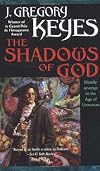
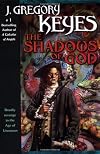
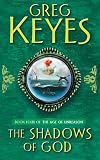
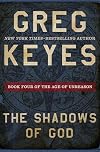
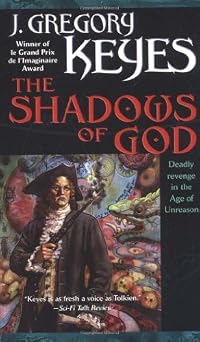
Angels and demons alike watch and wait as the last warriors of old Europe invade the New World in this magnificent conclusion to the Age of Unreason alternate history series The alchemical catastrophe that Sir Isaac Newton inadvertently unleashed late in the seventeenth century has transformed Europe into a cold, dead wasteland in the eighteenth--much to the delight of the otherworldly malakim, who have set humanity at war with itself for the sin of dabbling in the arcane. The last show more inhabitable territory, the New World, is now the coveted prize of the surviving European warlords. From the West, Russian forces led by the Sun Boy, child of the powerful French sorceress Adrienne de Mornay de Montchevreuil, move relentlessly onward, leaving a trail of devastation in their wake. British troops in the East are equally merciless in their conquests. All that stands against them is a motley alliance of colonists, Native Americans, scientists, philosophers, displaced Europeans, and others led by Ben Franklin, now an alchemist of great repute, and Red Shoes, a Choctaw shaman with questionable motivations. But no matter who wins or loses, the manipulating angels and demons are always watching, and the malakim are determined to be the ultimate victors. In The Shadows of God, the Age of Unreason, Greg Keyes's magnificent alternate history series, comes to a stunning and most satisfying conclusion. It is the final chapter in a colorful, exciting, richly detailed, and ingeniously imagined chronicle of life on a damaged Earth where magic and science are on equal planes and history's icons inhabit a past that never was. show lessTags
Recommendations
















Member Reviews
This is the 4th book in the Age of Unreason series. This could be called either fantasy or alternate history, as it is set in the early 1700's in Europe and North America. In this version of history, humans are given secrets of technology and 'magic' by angels and demons. Unfortunately some faction doesn't want the humans to gain such technology and wants to take it all back, even if it means killing all the humans. Ben Franklin and other historical figures desperately try to prevent humanity from being destroyed or enslaved.
I found this to be a very interesting series. As usual Keyes does an excellent job with his characters, as in this case he doesn't have to spend much time on the setting. A large and diverse cast makes it even show more more interesting. Good stuff. show less
I found this to be a very interesting series. As usual Keyes does an excellent job with his characters, as in this case he doesn't have to spend much time on the setting. A large and diverse cast makes it even show more more interesting. Good stuff. show less
For the most part, I thought this was a satisfying conclusion to the series, although I'm still not exactly sure what happened, especially to Red Shoes.
I have not read a lot of alternate history-type books and I kept trying to fit the alternate history with actual history--which obviously, doesn't work very well. No fault of the author or the story, just my perspective.
I kept thinking this series would make a good movie--then I could see all the inventions (and the malakim) that I sometimes had trouble imagining.
I'll be interested to read some of the fantasy books Keyes has written and see how they compare to this series.
I have not read a lot of alternate history-type books and I kept trying to fit the alternate history with actual history--which obviously, doesn't work very well. No fault of the author or the story, just my perspective.
I kept thinking this series would make a good movie--then I could see all the inventions (and the malakim) that I sometimes had trouble imagining.
I'll be interested to read some of the fantasy books Keyes has written and see how they compare to this series.
After a long delay, I decided to finish (J) Gregory Keyes' Age of Unreason Quartet, with The Shadows of God.
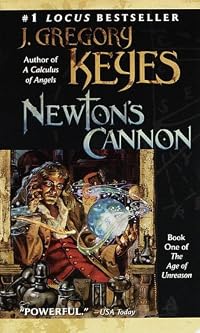
Starting with Newton's Cannon, The Age of Unreason Quartet has a brilliant idea at the center of its alternate history-fantasy. In our world, after discovering the laws of Gravity, Newton was sucked into a vortex of superstition, alchemy and biblical analysis. This, as well as other duties, carried him away from science in his later years of life.
What if those studies weren't a waste? What if there WERE alchemical discoveries to be made, and alchemy turned into a science? With Newton as its central figure, we get a 18th century industrial revolution of aetherscribers, kraftpistoles, airships and other wonders powered by alchemy. show more However, we also get the malakim, angels and creations of a gnostic like God, who don't appreciate humanity meddling with such powers.
Such is the universe of Newton's Cannon. With our main character, Benjamin Franklin, previous novels have carried us from America, to Europe, to a cometary impact against Europe, and back to America, with forces controlled by dark malachim intent on wiping out humanity. Plenty of other historical characters quarrel, struggle against each other and finally unite in the face of the common foe.
There's plenty of alchemical science, feats of derring do, noble sacrifices and an ending which changes the actual nature of the universe. Keyes answers some mysteries and reveals answers to questions which have been lurking since the first volume of the quartet. Although its been a while since I read the third book, I picked up on the characters, their foibles, personalities and voices immediately. And, perhaps best of all, Keyes has an economy of writing. Although this is the last book in the quartet, it clocks in at a slim 320 pages. Some things might be a little too rushed by the breakneck, pulp like pace, but on the other hand, Keyes knows to get us to "the good stuff".
I would hardly recommend readers new to this universe start here; it would be like looking at only the spire of a cathedral without having seen the rest of the edifice first. Those who have read previous volumes will not be disappointed by the denouement.
Now that I have finished this series, I am very tempted to see what Keyes has been doing with this "Briar King" series I hear about... show less
Starting with Newton's Cannon, The Age of Unreason Quartet has a brilliant idea at the center of its alternate history-fantasy. In our world, after discovering the laws of Gravity, Newton was sucked into a vortex of superstition, alchemy and biblical analysis. This, as well as other duties, carried him away from science in his later years of life.
What if those studies weren't a waste? What if there WERE alchemical discoveries to be made, and alchemy turned into a science? With Newton as its central figure, we get a 18th century industrial revolution of aetherscribers, kraftpistoles, airships and other wonders powered by alchemy. show more However, we also get the malakim, angels and creations of a gnostic like God, who don't appreciate humanity meddling with such powers.
Such is the universe of Newton's Cannon. With our main character, Benjamin Franklin, previous novels have carried us from America, to Europe, to a cometary impact against Europe, and back to America, with forces controlled by dark malachim intent on wiping out humanity. Plenty of other historical characters quarrel, struggle against each other and finally unite in the face of the common foe.
There's plenty of alchemical science, feats of derring do, noble sacrifices and an ending which changes the actual nature of the universe. Keyes answers some mysteries and reveals answers to questions which have been lurking since the first volume of the quartet. Although its been a while since I read the third book, I picked up on the characters, their foibles, personalities and voices immediately. And, perhaps best of all, Keyes has an economy of writing. Although this is the last book in the quartet, it clocks in at a slim 320 pages. Some things might be a little too rushed by the breakneck, pulp like pace, but on the other hand, Keyes knows to get us to "the good stuff".
I would hardly recommend readers new to this universe start here; it would be like looking at only the spire of a cathedral without having seen the rest of the edifice first. Those who have read previous volumes will not be disappointed by the denouement.
Now that I have finished this series, I am very tempted to see what Keyes has been doing with this "Briar King" series I hear about... show less
Mar12:
Characters: Just not as good as the first two. Still, a couple redeeming characters (Crecy) stayed true to their roots.
Plot: Actually a very solid wrap-up. It's so easy to screw that up.
Style: Managed to bring in a bit of an epic feel. Very nice.
Characters: Just not as good as the first two. Still, a couple redeeming characters (Crecy) stayed true to their roots.
Plot: Actually a very solid wrap-up. It's so easy to screw that up.
Style: Managed to bring in a bit of an epic feel. Very nice.
Ratings
Members
- Recently Added By
Author Information

Greg Keyes is the New York Times best-selling author of
the novels The Waterborn, The Blackgod, plus The Age of
Unreason tetralogy. He has also written the Star Wars:
New Jedi Order novels Edge of Victory I: Conquest, Edge
of Victory II: Rebirth, and The Final Prophecy, as well as
tie-ins to the popular Elder Scrolls video game franchise.
He lives show more in Savannah, Georgia. show less
Some Editions
Awards and Honors
Awards
Distinctions
Series

Work Relationships
Is contained in
Common Knowledge
- Canonical title
- The Shadows of God
- Original title
- The Shadows of God
- Original publication date
- 2001
- Dedication
- For
Steve Saffel,
Del Rey Books - First words
- Dimitry Golitsyn watched the eye of hell slowly shut.
- Last words
- (Click to show. Warning: May contain spoilers.)It most likely would be the best, and it would not be forgotten.
- Original language
- English
Classifications
Statistics
- Members
- 398
- Popularity
- 77,913
- Reviews
- 5
- Rating
- (3.58)
- Languages
- English, French, German
- Media
- Paper, Ebook
- ISBNs
- 11
- ASINs
- 3