
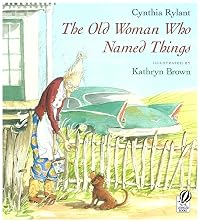
The Old Woman Who Named Things
by Cynthia Rylant
On This Page
Description
An old woman who has outlived all her friends is reluctant to become too attached to the stray dog that visits her each day.Tags
Recommendations






Member Recommendations

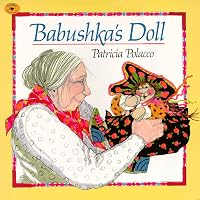
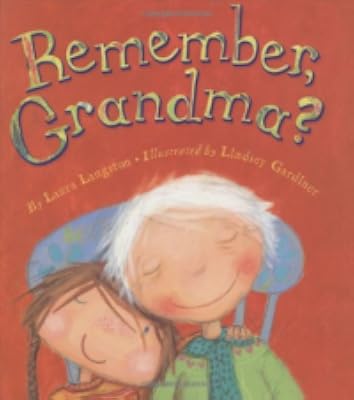
TendingEmbers Stories of lonely, elderly people who find unexpected friends in stray dogs.
Member Reviews
An old woman has outlived her special friends. Alone and lonely, she does not want to invest emotions in anything that will once again be lost to her through death.
She names the objects in her house because they will be there after she is gone. With a house named Franklin, a bed named Roxanne and a chair with the name of Fred, she whittles away the day looking out of the window and visiting the post office hoping for mail other than bills.
When a puppy visits her gate, he looks thin and hungry and while she happily feeds him, she directs him to go home!
Each day the puppy arrives hungry, she feeds him and sends him on his way. Becoming attached to the little puppy, she believes that as long as she doesn't name him, her emotions can remain show more guarded.
When the puppy becomes a young dog and still visits, she enjoys him. One day he doesn't come and thus she cannot send him home.
Fearful that something happened to him, and knowing he doesn't have a collar or a name, she drives her car (named Betsy) throughout the neighborhood searching for the lonely brown dog.
Choosing love and risking that she will have pain if the dog dies before she does, she calls the dog catcher. When she arrives at the pound and is asked the name of her dog, she calls for "lucky."
Realizing that indeed she is very lucky in life to have loved and been loved by so many, she remembered the smiling faces of those who passed before her, looked in the face of lucky and felt hope.
This is a poignant tale of loss, fear and fortitude.
Rylant is one of my favorite Newbery award winning authors and she never disappoints in her beautiful writing style, packed with emotion, but never melodramatic!
Recommended. show less
She names the objects in her house because they will be there after she is gone. With a house named Franklin, a bed named Roxanne and a chair with the name of Fred, she whittles away the day looking out of the window and visiting the post office hoping for mail other than bills.
When a puppy visits her gate, he looks thin and hungry and while she happily feeds him, she directs him to go home!
Each day the puppy arrives hungry, she feeds him and sends him on his way. Becoming attached to the little puppy, she believes that as long as she doesn't name him, her emotions can remain show more guarded.
When the puppy becomes a young dog and still visits, she enjoys him. One day he doesn't come and thus she cannot send him home.
Fearful that something happened to him, and knowing he doesn't have a collar or a name, she drives her car (named Betsy) throughout the neighborhood searching for the lonely brown dog.
Choosing love and risking that she will have pain if the dog dies before she does, she calls the dog catcher. When she arrives at the pound and is asked the name of her dog, she calls for "lucky."
Realizing that indeed she is very lucky in life to have loved and been loved by so many, she remembered the smiling faces of those who passed before her, looked in the face of lucky and felt hope.
This is a poignant tale of loss, fear and fortitude.
Rylant is one of my favorite Newbery award winning authors and she never disappoints in her beautiful writing style, packed with emotion, but never melodramatic!
Recommended. show less
A lonely old woman, having outlived all of her friends, and being reluctant to allow new ones into her life, for fear that she might lose them as well, takes to naming her inanimate possessions in this sweet picture-book about taking a chance on love and companionship. When a shy brown puppy pokes his head into her yard, she feeds him and sends him on his way. After all, Franklin (her house) doesn't need any dog hair, Roxanne (her bed) isn't wide enough for a canine companion, Fred (her chair) doesn't permit puppies to sit upon him, and Betsy (her car) makes animals sick. Despite her discouragement, the puppy comes back every day, eventually growing into a dog. And then one day, he doesn't show up...
A heartwarming tale of loneliness and show more fear, and how they are conquered by love, The Old Woman Who Named Things has a most satisfactory conclusion: something that is never really in much doubt (at least in my mind, anyway), but that is still very enjoyable to see. The watercolor artwork by Kathryn Brown is immensely appealing, with a quirky sensibility (I love the old lady's hairdo!) that amuses, and some moments of real pathos (the sweet little puppy!). All in all, an engaging book, one I recommend to young animal lovers, to children who long for a pet, or to children who are afraid of opening up and making friends. show less
A heartwarming tale of loneliness and show more fear, and how they are conquered by love, The Old Woman Who Named Things has a most satisfactory conclusion: something that is never really in much doubt (at least in my mind, anyway), but that is still very enjoyable to see. The watercolor artwork by Kathryn Brown is immensely appealing, with a quirky sensibility (I love the old lady's hairdo!) that amuses, and some moments of real pathos (the sweet little puppy!). All in all, an engaging book, one I recommend to young animal lovers, to children who long for a pet, or to children who are afraid of opening up and making friends. show less
An old woman who has outlived all her friends keeps from being lonely by naming the things in her life she'll never outlive like her house and her bed. When she meets a puppy the woman refuses to name it, afraid it won't outlive her. The woman doesn't realize she is lonely until she finally meets the puppy who needs someone to love. The story and it's ending is so sweet - showing students the importance of love and companionship. In the classroom it could be used to discuss anticipation throughout books and how it impacts the power of the ending.
An old woman whose friends have all died decides to name only things that she won’t outlive, such as her bed (Roxanne) and her chair (Fred). A hungry puppy who comes to the gate is fed, but then sent away…day after day, until one day when he doesn’t come, and the old woman goes in search of her dog. One of the very best picture books ever.
PERSONAL CONNECTION: This book is simply one of my very favorites. I would recommend it to anyone at any age. It is a book that will make you laugh and cry, and consider what is truly valuable in life.
Curriculum: this book can help children examine fears and choices. The woman does not want a dog because she does not want to outlive anything else. She comes to realize that the joy the dog brings show more to her life is worth any potential pain down the road. Do you have any similar fears? Any experiences you're afraid to try that you think you might enjoy? What could help you try something new?
Rylant, C. & Brown, K. (1996). The old woman who named things. San Diego: Harcourt, Inc. show less
PERSONAL CONNECTION: This book is simply one of my very favorites. I would recommend it to anyone at any age. It is a book that will make you laugh and cry, and consider what is truly valuable in life.
Curriculum: this book can help children examine fears and choices. The woman does not want a dog because she does not want to outlive anything else. She comes to realize that the joy the dog brings show more to her life is worth any potential pain down the road. Do you have any similar fears? Any experiences you're afraid to try that you think you might enjoy? What could help you try something new?
Rylant, C. & Brown, K. (1996). The old woman who named things. San Diego: Harcourt, Inc. show less
Just about perfect for littles and their great-grands. And for me. I love the lively drawings, the tension as the woman tries not to fall under the puppy's spell, and of course her strategy to avoid outliving any more friends.
I hope she takes those cowboy boots exploring next time she goes to town and makes new friends at the library or as a tutor at the school.
I hope she takes those cowboy boots exploring next time she goes to town and makes new friends at the library or as a tutor at the school.
This is a rather strange subject to introduce to children in a picture book: old age, loneliness and having outlived all the friends. Yet this book grew on me, with its gentle, matter of fact story line. I'm still not sure however what business it has with kids, but it's a lovely book, and I was very sympathetic to the old woman, who with her cowboy boots, the tall bun on top of her head, and a unique, eccentric sense of fashion, must have something of an interesting character. And I liked the faces on her car, her chair, her bed and her house, just like I always imagined those objects having faces when I was a kid. The story didn't entirely make sense to me, like how was it that she didn't know anyone by name anymore? Now, she was show more living all by herself, but she clearly got out of the house and went for supplies, groceries, the mail on a near daily basis. And she didn't make any friends like that? The old woman really reminded me of my mother, who also lives alone and has outlived many of her friends, yet keeps making new ones all the time. Anyway, I liked the end where she considers how lucky she's been and I loved all the human expressions the illustrator put on the old woman's face. Not a perfect book, put pretty darn memorable ...
I think it would pair nicely with [b:John Brown, Rose and the Midnight Cat|301460|John Brown, Rose and the Midnight Cat (Picture Puffin)|Jenny Wagner|https://d202m5krfqbpi5.cloudfront.net/books/1387663108s/301460.jpg|292524], another story of learning to accept new friends in your life. show less
I think it would pair nicely with [b:John Brown, Rose and the Midnight Cat|301460|John Brown, Rose and the Midnight Cat (Picture Puffin)|Jenny Wagner|https://d202m5krfqbpi5.cloudfront.net/books/1387663108s/301460.jpg|292524], another story of learning to accept new friends in your life. show less
This is a beautifully poignant story about an old woman who has outlived all her friends and so to avoid the pain of loss but still feel that she is surrounded by friends she has named all her inanimate belongings. Then one day a small brown puppy enters her life and she begins to realise that the happiness and companionship of friendship is worth the possible emotional pain of loss. Review by Fiona
Members
- Recently Added By
Lists

Five in a Row
144 works; 8 members

Under The Chinaberry Tree
194 works; 1 member

Five in a Row
174 works; 2 members

Picture Books for the Library
72 works; 1 member
Author Information

287+ Works 113,713 Members
Cynthia Rylant was born on June 6, 1954 in Hopewell, Virginia. She attended and received degrees at Morris Harvey College, Marshall University, and Kent State University. Rylant worked as an English professor and at the children's department of a public library, where she first discovered her love of children's literature. She has written more show more than 100 children's books in English and Spanish, including works of fiction, nonfiction, and poetry. Her novel Missing May won the 1993 Newbery Medal and A Fine White Dust was a 1987 Newbery Honor book. Rylant wrote A Kindness, Soda Jerk, and A Couple of Kooks and Other Stories, which were named as Best Book for Young Adults. When I was Young in the Mountains and The Relatives Came won the Caldecott Award. She has many popular picture books series, including Henry and Mudge, Mr. Putter and Tabby and High-Rise Private Eyes. (Bowker Author Biography) show less
All Editions
Awards and Honors
Common Knowledge
- Original publication date
- 1996
Classifications
Statistics
- Members
- 1,094
- Popularity
- 23,275
- Reviews
- 34
- Rating
- (4.14)
- Languages
- English, Portuguese
- Media
- Paper, Ebook
- ISBNs
- 10
- ASINs
- 2