On This Page
Description
Sir John Fielding, the blind magistrate of Bow Street, has married the widow Katherine Durham. Some years ago he had persuaded the authorities to allow her son, Tom, to be conscripted into the Navy rather than be imprisoned for a youthful escapade. Now he is due to return to England after three years at sea, but his homecoming is marred by the death of an officer being deemed murder, not accident. As Tom is now part of his 'eyes' Jeremy Proctor - and uncovers a web of conspiracy designed to show more make a scapegoat of an innocent man and allow a killer to get away with more than one murder. show lessTags
Recommendations

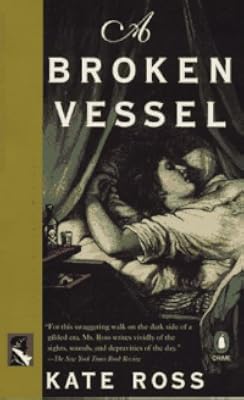
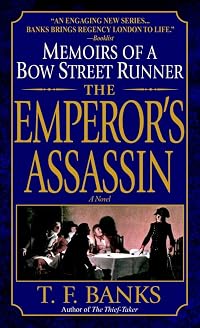
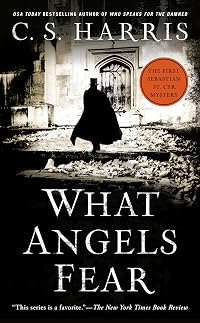



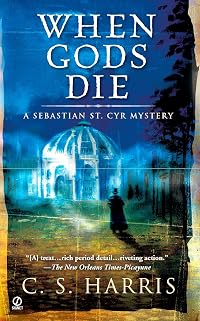













Member Recommendations

Member Reviews
This third entry into the Sir John Fielding series was thoroughly satisfying, nicely continuing the character development, plot lines and story arcs Bruce Alexander artfully laid in the first two installments.
Family ties and old friendships are tested, young boys become men on the high seas while fighting pirates, characters are forced to examine their faith in and fidelity to their country and ultimately justice itself is threatened by the inherent fallibility of man and flawed loyalty to the institutions that often become one's identity.
You know, all the stuff that makes you delve into a book like it's piece of warm bread fresh from the oven with a melting pad of butter on it.
However, the book was also a bit light on the law, so fans show more of Alexander's immensely entertaining way of educating the readers about British law in the late 18th century will find themselves a bit wanting in that regard. The reader unfortunately doesn't get to watch the cases that come before the blind magistrate as much as in the previous books.
The excuse for that, however, is more than adequate: much of the action centers around a Royal Navy court martial wherein a man is accused of pushing the captain overboard during a gale and Sir John Fielding is merely consulting on the case.
But of course, it's never that simple, and Alexander has cleverly enfolded a not-entirely-new plot line, or issue, into the Bow Street world he created.
Though the principles remain on land and the HMS Adventure remains docked in the Thames, there is plenty of page-turning nautical action.
It is not the most complex mystery, and most arm chair sleuths will likely have figured out what the courts do not before the ending. Still, Alexander steers clear of cliches, shows his usual talent for historical detail and research the reader doesn't even notice (the best kind, in historical fiction) and gives an ending that is satisfying and not too pat.
Devotees of the series will enjoy how Jeremy Proctor's journey into manhood is honestly, but respectfully, chronicled. Jimmie Bunkins still uses flash without hitting you over the head with it and Black Jack Bilbo makes another welcome appearance.
Best of all, however, we learn more about Sir John Fielding the man, including how he lost his sight, and find him less two-dimensional than his role as Jeremy Proctor's employer and magistrate has allowed him to be in the first two novels. show less
Family ties and old friendships are tested, young boys become men on the high seas while fighting pirates, characters are forced to examine their faith in and fidelity to their country and ultimately justice itself is threatened by the inherent fallibility of man and flawed loyalty to the institutions that often become one's identity.
You know, all the stuff that makes you delve into a book like it's piece of warm bread fresh from the oven with a melting pad of butter on it.
However, the book was also a bit light on the law, so fans show more of Alexander's immensely entertaining way of educating the readers about British law in the late 18th century will find themselves a bit wanting in that regard. The reader unfortunately doesn't get to watch the cases that come before the blind magistrate as much as in the previous books.
The excuse for that, however, is more than adequate: much of the action centers around a Royal Navy court martial wherein a man is accused of pushing the captain overboard during a gale and Sir John Fielding is merely consulting on the case.
But of course, it's never that simple, and Alexander has cleverly enfolded a not-entirely-new plot line, or issue, into the Bow Street world he created.
Though the principles remain on land and the HMS Adventure remains docked in the Thames, there is plenty of page-turning nautical action.
It is not the most complex mystery, and most arm chair sleuths will likely have figured out what the courts do not before the ending. Still, Alexander steers clear of cliches, shows his usual talent for historical detail and research the reader doesn't even notice (the best kind, in historical fiction) and gives an ending that is satisfying and not too pat.
Devotees of the series will enjoy how Jeremy Proctor's journey into manhood is honestly, but respectfully, chronicled. Jimmie Bunkins still uses flash without hitting you over the head with it and Black Jack Bilbo makes another welcome appearance.
Best of all, however, we learn more about Sir John Fielding the man, including how he lost his sight, and find him less two-dimensional than his role as Jeremy Proctor's employer and magistrate has allowed him to be in the first two novels. show less
This is one of my favorite historical mystery series! Sir John Fielding, the blind cofounder of London's first police force, is also a magistrate in a London court. I am not a person who will write about the details of the story. What I love about this series is it's depiction of the time of the events in the story. It is a joy to watch the characters evolve as the series goes on. This particular book deals with how the British Navy functions with putting a man on trial. Is this the actual way their Navy Law works? I have no idea - but the Magistrates Court does it's usual good job. The ongoing characters from book to book are people that I enjoy and love to learn about. Give this book and series a try.
One of my favorite historical mystery series! Sir John Fielding, the cofounder of London's first police force, is also a magistrate in a London court. One of his former Navy friends, now an Admiral, asks him to help with an investigation into a death on the ship Adventure. As it happens, Sir John's stepson has been aboard that very ship, recently returned from two years at sea. Soon Sir John and the Admiral are at odds, the Admiral wanting to ignore the clues pointing to murder. A good, solid mystery that is particularly intriguing because it was the ship's captain that was lost at sea during one of the most dangerous storms seasoned sailors had ever seen. Alexander also reveals how Sir John lost his sight.
When an an admiral is assigned to convene the court martial of a young lieutenant on the recently returned frigate, the Adventure, he calls on his old friend, Sir John Fielding, the blind magistrate of London's Bow Street court, for assistance. The admiral believes the lieutenant to be innocent of the murder for which he is charged. Sir John has no standing in a naval court, but his friend believes he can benefit from Sir John's investigative experience and gain some helpful advice for conducting his own inquiry into the crime allegedly committed on the Adventure. Sir John's questioning soon elicits evidence that should help the lieutenant's defense. Instead of being pleased, however, the admiral seems to do everything in his power to show more prevent the revelation of further evidence that could prove the lieutenant's innocence. What secrets does the Adventure hold that the admiral is trying to protect?
This book takes place several months after the end of the previous book in the series. Sir John's assistant, young Jeremy Proctor, is another year older and is growing in confidence in his role as sir John's assistant. Since he narrates the events from thirty years later, we know that he will eventually enter the legal profession. At fourteen he already shows promise for this career in his conversations with his elders. It is amusing to see him get the best of some of the naval officers by either answering questions with as few words as possible to avoid revealing information he thinks Sir John wouldn't want revealed, or by providing just enough of the truth to ensure that the hearer reaches the wrong conclusion.
This book is an illustration of moral dilemmas created by competing loyalties – friendship, duty, family, truth, and justice. There is no doubt that Sir John is on the side of justice, but where do his friend's loyalties lie? You'll have to read the book to find out! show less
This book takes place several months after the end of the previous book in the series. Sir John's assistant, young Jeremy Proctor, is another year older and is growing in confidence in his role as sir John's assistant. Since he narrates the events from thirty years later, we know that he will eventually enter the legal profession. At fourteen he already shows promise for this career in his conversations with his elders. It is amusing to see him get the best of some of the naval officers by either answering questions with as few words as possible to avoid revealing information he thinks Sir John wouldn't want revealed, or by providing just enough of the truth to ensure that the hearer reaches the wrong conclusion.
This book is an illustration of moral dilemmas created by competing loyalties – friendship, duty, family, truth, and justice. There is no doubt that Sir John is on the side of justice, but where do his friend's loyalties lie? You'll have to read the book to find out! show less
These English mysteries just get better and better. I really like the characters. This one involves a naval lieutenant facing court martial accused of murdering the ship's captain during a storm at sea. Sir John and Jeremy undertake to help in his defense, but are stymied by the Royal Navy itself that will allow an officer to hang to avoid the scandal that will become public if he is allowed to prove his innocence. Characters introduced in the previous two novels make appearances, and new characters emerge, causing one to look forward to the next book in the series.
Always good to have my horror of press gangs reaffirmed. I do think that there should have been another discussion in editing of what language to include; historical accuracy can be a consideration but you should also consider modern readers.
January 2021 reread:
I was a tad taken aback by a relatively minor aspect of this book (which was mentioned in passing more than once) - the events in this 3rd book of the series take place about one year after the events of the first book. Yet so much has changed in the household during that time & during this book!
I had a pretty clear recollection of the plot which involves Sir John in a investigation for the Royal Navy. Each time I read this book, it reminds me of how the practices of the Royal Navy in the mid-eighteenth century formed part of the reason for the American Revolution...
The ending is one which leaves Sir John & the reader with mixed emotions and thus is not quite as satisfying to me as the previous books. However, it is show more interesting to see the jurisdicational questions (particularly at this moment in American history) along with the brief glimpse of how differently justice is dispensed at Mr. Welch's court from that at Bow Street. show less
I was a tad taken aback by a relatively minor aspect of this book (which was mentioned in passing more than once) - the events in this 3rd book of the series take place about one year after the events of the first book. Yet so much has changed in the household during that time & during this book!
I had a pretty clear recollection of the plot which involves Sir John in a investigation for the Royal Navy. Each time I read this book, it reminds me of how the practices of the Royal Navy in the mid-eighteenth century formed part of the reason for the American Revolution...
The ending is one which leaves Sir John & the reader with mixed emotions and thus is not quite as satisfying to me as the previous books. However, it is show more interesting to see the jurisdicational questions (particularly at this moment in American history) along with the brief glimpse of how differently justice is dispensed at Mr. Welch's court from that at Bow Street. show less
Members
- Recently Added By
Author Information

12 Works 4,212 Members
Some Editions
Series

Work Relationships
Common Knowledge
- Canonical title
- Watery Grave
- Original publication date
- 1996-01-01
- People/Characters
- Sir John Fielding; Jeremy Proctor; Elizabeth, Lady Fielding; Mrs. Gredge; Benjamin Bailey; Jimmie Bunkins
- Important places
- London, England, UK; Portsmouth, Hampshire, England, UK; Number 4 Bow Street
- Important events
- Georgian Era (1714 | 1837)
- Dedication
- For Tony and Susan Luraschi
- First words
- If you would be so good as to put your mind to it, you might try to imagine a storm at sea.
Chapter Heading: In which witnesses interpret an action most different. - Last words
- (Click to show. Warning: May contain spoilers.)He died, they say, like a true Christian gentleman.
Classifications
Statistics
- Members
- 403
- Popularity
- 77,527
- Reviews
- 15
- Rating
- (3.84)
- Languages
- 5 — Dutch, English, French, German, Spanish
- Media
- Paper, Audiobook
- ISBNs
- 15
- ASINs
- 3