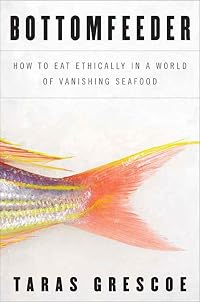
Bottomfeeder: How to Eat Ethically in a World of Vanishing Seafood
by Taras Grescoe
On This Page
Description
Dividing his sensibilities between Epicureanism and ethics, Taras Grescoe set out on a nine-month, worldwide search for a delicious--and humane--plate of seafood. What he discovered shocked him. From North American Red Lobsters to fish farms and research centers in China, Bottomfeeder takes readers on an illuminating tour through the $55-billion-dollar-a-year seafood industry. Grescoe examines how out-of-control pollution, unregulated fishing practices, and climate change affect what ends up show more on our plate. More than a screed against a multibillion-dollar industry, however, this is also a balanced and practical guide to eating, as Grescoe explains to readers which fish are best for our environment, our seas, and our bodies. show lessTags
Recommendations













Member Recommendations
Member Reviews
Name a few looming environmental disasters off the top of your head. Be they global warming, terrestrial habitat destruction, industrial pollution, or declining fossil fuels, the worldwide collapse of wild fisheries isn't likely to be among them. Hopefully, however, Taras Grescoe's Bottomfeeder will change all that.
Grescoe sets out to argue several points in this book: that seafood is an intelligent and healthy source of protein, that the seafood industry's rapacious demand for fish as food and industrial input, primed as it is to wipe aquatic biodiversity off the face of the earth, is perhaps the most pressingly underacknowledged environmental issue of our time; and that intelligent consumers can continue to enjoy seafood provided they show more get informed and eat ethically. It's certainly an ambitious agenda; surprisingly, he roundly succeeds in making each of these cases, and in an engaging (and engagingly unpolemic) way.
Bottomfeeder is first and foremost an examination of the ecological roles played by some of mankind's favorite varieties of seafood: their habitats, roles in the food chain, and the big industries and artisanal fishermen who harvest them, and the effects that harvesting has on the environment. Grescoe is adept at turning what by all rights should be an exceedingly dull litany of scientific fact into highly entertaining reading, all without simplifying or dumbing down the science and its implications--a skill possessed by far too few authors in the genre of popular science. Furthermore, he lets the facts speak for themselves, conveying the gravity of the situation regarding declining fish stocks without whitewashing or mincing words, but without frothing at the mouth either (and thus losing skeptical readers). Finally, although Grescoe is certainly an advocate of ethical eating and sustainable seafood, he remains conscious of the plight of people who make their livings from the seas as well as the ethical dilemma in which lovers of seafood often find themselves.
The bottom line is that Bottomfeeder will not only make you smarter, but will keep you well entertained as it does so. I will definitely be keeping this volume close to hand for rereads. show less
Grescoe sets out to argue several points in this book: that seafood is an intelligent and healthy source of protein, that the seafood industry's rapacious demand for fish as food and industrial input, primed as it is to wipe aquatic biodiversity off the face of the earth, is perhaps the most pressingly underacknowledged environmental issue of our time; and that intelligent consumers can continue to enjoy seafood provided they show more get informed and eat ethically. It's certainly an ambitious agenda; surprisingly, he roundly succeeds in making each of these cases, and in an engaging (and engagingly unpolemic) way.
Bottomfeeder is first and foremost an examination of the ecological roles played by some of mankind's favorite varieties of seafood: their habitats, roles in the food chain, and the big industries and artisanal fishermen who harvest them, and the effects that harvesting has on the environment. Grescoe is adept at turning what by all rights should be an exceedingly dull litany of scientific fact into highly entertaining reading, all without simplifying or dumbing down the science and its implications--a skill possessed by far too few authors in the genre of popular science. Furthermore, he lets the facts speak for themselves, conveying the gravity of the situation regarding declining fish stocks without whitewashing or mincing words, but without frothing at the mouth either (and thus losing skeptical readers). Finally, although Grescoe is certainly an advocate of ethical eating and sustainable seafood, he remains conscious of the plight of people who make their livings from the seas as well as the ethical dilemma in which lovers of seafood often find themselves.
The bottom line is that Bottomfeeder will not only make you smarter, but will keep you well entertained as it does so. I will definitely be keeping this volume close to hand for rereads. show less
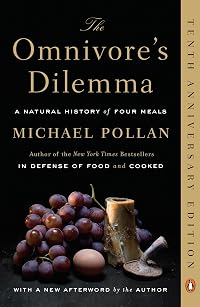
Bottomfeeder is the seafood equivalent of Michael Pollan’s The Omnivore’s Dilemma. Its main premise: as the purchase price of a seafood decreases, humane practices and sustainability also plummet ... and environmental and health costs skyrocket.
Densely written, it's as much travelogue/foodie memoir as science; it’s also a primer on global culture, politics, and business. Each chapter explores the history and current state of one type of fish or seafood (e.g. bluefin tuna, cod, lobster, oyster, salmon, shrimp) ... and most chapters build to Grescoe’s despairing lament: “Cheap [name any seafood], I now knew, was a meal I could no longer afford.”
But so as not to give up entirely, the concluding section lists resources for show more making good-for-you, good-for-the-planet seafood choices -- including pocket reference guides and even websites that are searchable by cell phone while you peruse the menu at your favorite restaurant. show less
Densely written, it's as much travelogue/foodie memoir as science; it’s also a primer on global culture, politics, and business. Each chapter explores the history and current state of one type of fish or seafood (e.g. bluefin tuna, cod, lobster, oyster, salmon, shrimp) ... and most chapters build to Grescoe’s despairing lament: “Cheap [name any seafood], I now knew, was a meal I could no longer afford.”
But so as not to give up entirely, the concluding section lists resources for show more making good-for-you, good-for-the-planet seafood choices -- including pocket reference guides and even websites that are searchable by cell phone while you peruse the menu at your favorite restaurant. show less
LOVE THIS BOOK!!
seriously. it's fantastic. it should be required reading for everyone.
here's the thing - i don't eat fish or other seafood. ever. i have an anaphylactic allergy to shellfish and bivalves. as well, most other fish and seafood triggers some fairly bad reactions in my system. BUT...my husband could live on a mediterranean or portuguese diet and be happy, happy, happy. i am also a very curious person and i want to know what's going on in this world. i have a particular interest in eating in a socially and ethically responsible manner. for those reasons, this book was a must for me. i am just bummed it took me 5 years to get to it.
some of the information is not new. i have been making informed purchases of fish and seafood show more for many years. but a lot of the information was new. and fascinating. grescoe has a wonderful ability of delivering the facts and science in a very engaging and approachable way. the structure of the boo is fantastic. each chapter is like a little case study. a species is examined - the supply, the demand, the problems and the science - and explained. grescoe has travelled the world in researching this book and is clearly very passionate about the seafood industry and about the choices he makes for his diet.
yes -- it's a fairly doomed situation. but the book is also hopeful. grescoe included helpful resources and recommendations for how you can become a 'bottomfeeder'. it's better than it sounds. i swear!
my only wish (and it's my own damn fault!!) is that the book i just read was filled with 2012 information rather than 2007 stats. i don't know what's better or worse since then, but i am betting things have changed. show less
seriously. it's fantastic. it should be required reading for everyone.
here's the thing - i don't eat fish or other seafood. ever. i have an anaphylactic allergy to shellfish and bivalves. as well, most other fish and seafood triggers some fairly bad reactions in my system. BUT...my husband could live on a mediterranean or portuguese diet and be happy, happy, happy. i am also a very curious person and i want to know what's going on in this world. i have a particular interest in eating in a socially and ethically responsible manner. for those reasons, this book was a must for me. i am just bummed it took me 5 years to get to it.
some of the information is not new. i have been making informed purchases of fish and seafood show more for many years. but a lot of the information was new. and fascinating. grescoe has a wonderful ability of delivering the facts and science in a very engaging and approachable way. the structure of the boo is fantastic. each chapter is like a little case study. a species is examined - the supply, the demand, the problems and the science - and explained. grescoe has travelled the world in researching this book and is clearly very passionate about the seafood industry and about the choices he makes for his diet.
yes -- it's a fairly doomed situation. but the book is also hopeful. grescoe included helpful resources and recommendations for how you can become a 'bottomfeeder'. it's better than it sounds. i swear!
my only wish (and it's my own damn fault!!) is that the book i just read was filled with 2012 information rather than 2007 stats. i don't know what's better or worse since then, but i am betting things have changed. show less
Taras Grescoe is a seafood lover. He is a piscatarian - he has eliminated meat an poultry from his diet, which means he pretty much eats seafood every day. He has also become increasingly concerned about the increasing reports that some seafood can be dangerous to your health, and the methods of harvesting seafood can be extremely dangerous to the global enviroment. So, Grescoe decides to find out for himself - he embarks on a world tour, talking to fish catchers, fish farmers, fish sellers, fish cookers, fish eaters, fish suppliers, and fish lovers from all points of the globe. He eats some pretty amazing meals, and comes away with a different perspective on eating seafood.
This book was fascinating. I live in Iowa, where we don't have show more a huge variety of native seafood, so much of the information in the book was completely new to me. Grescoe explains some of the reasons many fisheries are nearing collapse - overfishing, bad methods of fishing, and fish farming have resulted in a large number of fish that are on the verge of being commercially extinct. He also explains that many famous chefs, by continuing to insist on offering these nearly extinct fish on their menus, are contributing to the demand for them worldwide, leading to more bad fishing methods and overfishing.
He explains the concept of trophic levels, which is the number assigned to every living thing on earth based on what they consume. Phytoplankton are given a 1, and a human is given a 5. He then shows that fish at the highest trophic levels - tuna, cod, Chilean sea bass, shark - are the ones that are most often overfished, and often contain the most contaminants. He then presents the concept of bottomfeeding - eating the fish at lower trophic levels, such as halibut, mackerel, oysters, and trout. These fish have fewer contaminants, making them healthier for us, and are generally harvested in sustainable ways, making them healthier for the environment as well. At the end of the book, he offers several pages of resources designed to assist consumers in making more ethical seafood choices.
Grescoe's book is not only interesting, but incredibly entertaining. He does a great job of bringing the many characters he meets on his travels to life. His ability to capture the flavor of the meal he is eating made it easy to put myself in his place. I also appreciated his honesty about many of the internal struggles he experienced - wanting to eat something delicious, but knowing the dangerous or unethical way it was harvested. It is rare to enjoy reading a book that teaches me so much, but this book offered both entertainment and enlightenment, and I am very glad I was able to read it. show less
This book was fascinating. I live in Iowa, where we don't have show more a huge variety of native seafood, so much of the information in the book was completely new to me. Grescoe explains some of the reasons many fisheries are nearing collapse - overfishing, bad methods of fishing, and fish farming have resulted in a large number of fish that are on the verge of being commercially extinct. He also explains that many famous chefs, by continuing to insist on offering these nearly extinct fish on their menus, are contributing to the demand for them worldwide, leading to more bad fishing methods and overfishing.
He explains the concept of trophic levels, which is the number assigned to every living thing on earth based on what they consume. Phytoplankton are given a 1, and a human is given a 5. He then shows that fish at the highest trophic levels - tuna, cod, Chilean sea bass, shark - are the ones that are most often overfished, and often contain the most contaminants. He then presents the concept of bottomfeeding - eating the fish at lower trophic levels, such as halibut, mackerel, oysters, and trout. These fish have fewer contaminants, making them healthier for us, and are generally harvested in sustainable ways, making them healthier for the environment as well. At the end of the book, he offers several pages of resources designed to assist consumers in making more ethical seafood choices.
Grescoe's book is not only interesting, but incredibly entertaining. He does a great job of bringing the many characters he meets on his travels to life. His ability to capture the flavor of the meal he is eating made it easy to put myself in his place. I also appreciated his honesty about many of the internal struggles he experienced - wanting to eat something delicious, but knowing the dangerous or unethical way it was harvested. It is rare to enjoy reading a book that teaches me so much, but this book offered both entertainment and enlightenment, and I am very glad I was able to read it. show less
This is a real eye-opener about where our seafood comes from and how its future is in jeopardy. Ever wonder how Red Lobster gets sooooo many shrimp to feed soooo many people all over the country? And ever wonder why those shriimp all exactly (pretty much) the same size?
Surely you've heard that salmon is plentiful because there are salmon farms. Want to learn how gross those farms are? Read this book.
Luckily, as a seafood lover, Grescoe writes about sustainable fish populations and does give very good, clear direction about what sorts of fish -- what species, and how and where they are fished or produced -- one can eat without feeling like one is contributing to the eventual demise of species, and isn't harming one's health with too show more much mercury, antibiotics or other nasty chemicals.
I loved reading about Grescoe's adventures in eating seafood around the world. Descriptions of sardines made my mouth water, descriptions of pufferfish made me recoil. This is an adventure in eating good food, and an education in how (as the subtitle says) to eat ethically in a world of vanishing seafood. I hope everyone who eats a lot of seafood will read it. show less
Surely you've heard that salmon is plentiful because there are salmon farms. Want to learn how gross those farms are? Read this book.
Luckily, as a seafood lover, Grescoe writes about sustainable fish populations and does give very good, clear direction about what sorts of fish -- what species, and how and where they are fished or produced -- one can eat without feeling like one is contributing to the eventual demise of species, and isn't harming one's health with too show more much mercury, antibiotics or other nasty chemicals.
I loved reading about Grescoe's adventures in eating seafood around the world. Descriptions of sardines made my mouth water, descriptions of pufferfish made me recoil. This is an adventure in eating good food, and an education in how (as the subtitle says) to eat ethically in a world of vanishing seafood. I hope everyone who eats a lot of seafood will read it. show less
Searing indictment of the seafood industry. Well-written, informative but not without hope. There are also fascinating descriptions of strange and wonderful foods the author has eaten- including the pellets fed to farmed salmon (not very tasty, believe it or not).
I found that much of what I thought I knew about seafood was wrong, especially farmed fish.
If you eat any sort of fish at all, you really ought to read this book.
I found that much of what I thought I knew about seafood was wrong, especially farmed fish.
If you eat any sort of fish at all, you really ought to read this book.
Amazing, if discouraging. A tour of fishing around the world, with each chapter focusing on a specific food and location. So: sardines in the Mediterranean, shrimp in India, salmon in BC, bluefin tuna in Japan, etc. He treats his subjects, both fish and human, with sensitivity. Great descriptive language of both the horrible and the sublime.
There's a useful appendix about fishing methods (good, bad, ugly), and specific fish (never, sometimes, always) -- shrimp and tuna in particular come off very poorly.
Very highly recommended!
There's a useful appendix about fishing methods (good, bad, ugly), and specific fish (never, sometimes, always) -- shrimp and tuna in particular come off very poorly.
Very highly recommended!
Members
- Recently Added By
Author Information

9 Works 1,034 Members
Taras Grescoe is the author of Sacre Blues: An Unsentimental Journey Through Quebec, which won the Mavis Gallant Prize for Non-Fiction and was a national bestseller in Canada
Awards and Honors
Awards
Common Knowledge
- Original publication date
- 2008
- Dedication
- To Erin
- First words
- For those who like to believe some things will never change, it must be good to know that places like Hubbards still exist.
- Last words
- (Click to show. Warning: May contain spoilers.)But there is more pleasure - which is why I am proud to call myself a bottomfeeder.
Classifications
- Genres
- Nonfiction, Science & Nature, General Nonfiction, Food & Cooking, Hunting and Fishing
- DDC/MDS
- 641.692 — Applied science & technology Home economics & family management Food, Cooking & Recipes / Meals, Picnics Cooking specific materials Cooking game, seafood, miscellaneous foods Fish
- LCC
- TX385 .G68 — Technology Home economics Home economics Nutrition. Foods and food supply
- BISAC
Statistics
- Members
- 231
- Popularity
- 141,529
- Reviews
- 10
- Rating
- (4.23)
- Languages
- English, French, German
- Media
- Paper, Ebook
- ISBNs
- 9
- ASINs
- 3