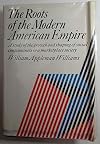
The Roots of the Modern American Empire: A Study of the Growth and Shaping of Social Consciousness in a Marketplace Society
by William Appleman Williams
39 Members (3.75)
On This Page
Tags
Recommendations






































Member Recommendations

Member Reviews
Members
- Recently Added By
Author Information
23+ Works 812 Members
The leading "revisionist" historian during the years of the cold war, William Appleman Williams played a major role in shaping the perceptions of a generation of young historians. His best-known book, The Tragedy of American Diplomacy (1959), established themes he would pursue throughout his career as a writer and a teacher---the contradictions show more between ideals and "practicality" in the conduct of U.S. foreign policy and the centrality of economic factors in the nation's world outlook. Product of a solidly rural Iowa background and a graduate of the U.S. Naval Academy at Annapolis, Williams nonetheless became a figure of controversy because of his unconventional, often iconoclastic, observations about the American experience and his subjection of capitalism to a searching criticism that borrowed freely from Karl Marx, even as it rejected doctrinaire Marxism. At a time when most historians subscribed to a generally benevolent view of the nation's past and of its role in world affairs, Williams's freewheeling critiques often irritated the older generation of scholars. Yet they also opened the way for younger historians to break from the "consensus" school of history and enter into previously unexplored pathways to the American past. (Bowker Author Biography) show less
Common Knowledge
- Canonical title
- The Roots of the Modern American Empire: A Study of the Growth and Shaping of Social Consciousness in a Marketplace Society
Classifications
Statistics
- Members
- 39
- Popularity
- 748,591
- Rating
- (3.75)
- Languages
- English
- Media
- Paper
- ISBNs
- 1
- ASINs
- 2