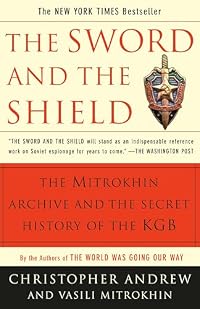
The Sword and the Shield: The Mitrokhin Archive and the Secret History of the KGB
by Christopher Andrew, Vasili Mitrokhin
Mitrokhin Archive (1)
On This Page
Description
Christopher Andrew's new book is based on one of the most extraordinary intelligence coups of recent times: the discovery of a treasure-trove of highly classified documents which the FBI has described, after close examination, as the "most complete and extensive intelligence ever received from any source." Though there is top-secret material on almost every country in the world, the United States is at the top of the list. The contents of the book remain embargoed until publication. As well show more as containing many fascinating revelations, this is a major contribution to the secret history of t show lessTags
Recommendations




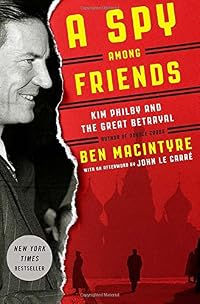









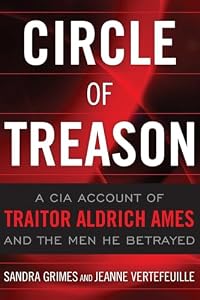
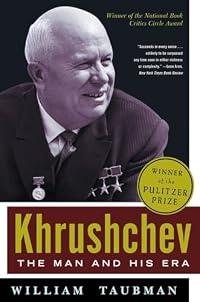

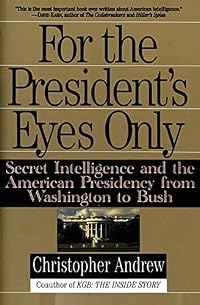
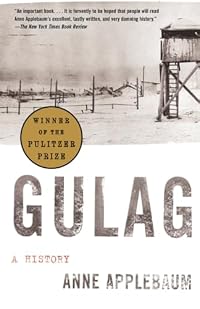
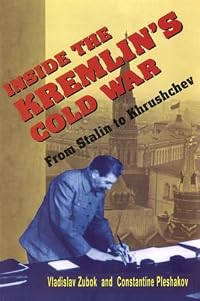
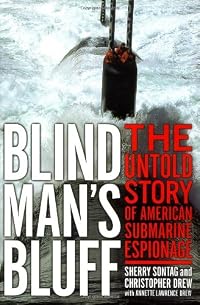

Member Recommendations

Member Reviews
Vasili Mitrokhin took a lot of work home with him--and not just his--took notes, sometimes verbatim, and then smuggled the notes out with him when he defected.
Ranging from bone-chilling and frightening to ridiculous and laughable, this book may not have all the KGB's secrets, but it has a lot of them. The KGB could be brutally efficient, but at times its efforts were wildly out of proportion with any sort of rational estimation of the level of threat something presented. Paranoia and conspiracy theories will do that to you, and the KGB was nothing if not prone to both.
The only caution I would give is not to dive into this without some background in the Cold War (which I had from various other readings) and some knowledge of the KGB's show more history (which I did not have). This is a down in the bushes and weeds book, not a holistic history. If you're like me you'd appreciate a bit of framework to hang all the events and names and places on to.
The writing is good. The tone of Andrew's writing tracks well the seriousness and absurdity of the events. If you've had a taste of the Cold War and/or Russian/Soviet history and want something juicier (in more ways than one), definitely pick this up. show less
Ranging from bone-chilling and frightening to ridiculous and laughable, this book may not have all the KGB's secrets, but it has a lot of them. The KGB could be brutally efficient, but at times its efforts were wildly out of proportion with any sort of rational estimation of the level of threat something presented. Paranoia and conspiracy theories will do that to you, and the KGB was nothing if not prone to both.
The only caution I would give is not to dive into this without some background in the Cold War (which I had from various other readings) and some knowledge of the KGB's show more history (which I did not have). This is a down in the bushes and weeds book, not a holistic history. If you're like me you'd appreciate a bit of framework to hang all the events and names and places on to.
The writing is good. The tone of Andrew's writing tracks well the seriousness and absurdity of the events. If you've had a taste of the Cold War and/or Russian/Soviet history and want something juicier (in more ways than one), definitely pick this up. show less
For 12 years, Vasili Mitrokhin worked for the KGB in their archives. He made notes about all the classified files he had access to, snuck them out after work, and hid them under his house. In 1992 he defected to the UK and brought all his notes with him, which he gave to the SIS. A few years later, Christopher Andrew was offered access to these notes in order to write a history of the KGB using this information. That's the story of the book.
The story of the KGB in all its forms spanned 3/4 of a century, starting off strong, reaching a peak in the WWII era, followed by a steady decline as the Cold War increasingly tightened up the previously lax security procedures in the USA (AKA "Main Adversary") and other NATO allies. As someone whose show more knowledge about the KGB comes primarily from movies, I was struck by how many failures were a regular part of the real spy business in comparison to the supermen of spy fiction (example: an assassination is planned, a target chosen, an assassin selected; much time and effort is spent studying the target and training the assassin; then the assassin is sent to complete the mission, only to have him walk into the CIA office with an offer to defect--this scenario happened more than once).
Another theme from the book is the amount of resources the KGB spent on what any objective observer would consider relatively harmless opponents of the Soviet regime, especially religious minorities and Trotskyists. The author notes that at the beginning of World War II, Stalin felt that intelligence on Trotsky (an old, ineffectual man with few followers and no influence inside the USSR) was more important than intelligence on Hitler.
This is a long book, full of operational details. Other reviewers found this level of detail mind numbing, and felt that the book may be more useful as a reference work that a narrative history, but I was not bored. The organisation is roughly chronological, with chapters based around discrete topics. This organisation leads to a fair amount of repetition, which I think is unavoidable (and probably even undesirable) in a book of this length.
There is one big caveat to my generally positive feelings towards this book: The author does not devote nearly enough towards establishing the credibility of Mitrokhin's archive. It seems almost incredible that any single person would a) be given that much access to classified files for so long, b) especially after he had been demoted to his archival job with all this access because he "became too outspoken for his own good", and then c) been able to smuggle this information out of the archives and keep it hidden for so long. It strains credibility--but the alternative, that he (or British intelligence) created this "classified" information is even less believable. I want to believe, but I wish the author made it easier for me to believe. show less
The story of the KGB in all its forms spanned 3/4 of a century, starting off strong, reaching a peak in the WWII era, followed by a steady decline as the Cold War increasingly tightened up the previously lax security procedures in the USA (AKA "Main Adversary") and other NATO allies. As someone whose show more knowledge about the KGB comes primarily from movies, I was struck by how many failures were a regular part of the real spy business in comparison to the supermen of spy fiction (example: an assassination is planned, a target chosen, an assassin selected; much time and effort is spent studying the target and training the assassin; then the assassin is sent to complete the mission, only to have him walk into the CIA office with an offer to defect--this scenario happened more than once).
Another theme from the book is the amount of resources the KGB spent on what any objective observer would consider relatively harmless opponents of the Soviet regime, especially religious minorities and Trotskyists. The author notes that at the beginning of World War II, Stalin felt that intelligence on Trotsky (an old, ineffectual man with few followers and no influence inside the USSR) was more important than intelligence on Hitler.
This is a long book, full of operational details. Other reviewers found this level of detail mind numbing, and felt that the book may be more useful as a reference work that a narrative history, but I was not bored. The organisation is roughly chronological, with chapters based around discrete topics. This organisation leads to a fair amount of repetition, which I think is unavoidable (and probably even undesirable) in a book of this length.
There is one big caveat to my generally positive feelings towards this book: The author does not devote nearly enough towards establishing the credibility of Mitrokhin's archive. It seems almost incredible that any single person would a) be given that much access to classified files for so long, b) especially after he had been demoted to his archival job with all this access because he "became too outspoken for his own good", and then c) been able to smuggle this information out of the archives and keep it hidden for so long. It strains credibility--but the alternative, that he (or British intelligence) created this "classified" information is even less believable. I want to believe, but I wish the author made it easier for me to believe. show less
In almost mind-numbing detail Andrew documents the existence of a vast KGB apparatus that penetrated the West and oppressed its own Soviet citizens. It is remarkable that an archive this exhaustive, and secret, ever reached the light of day. Mitrokhin is an archivist's dream as he systematically raided the KGB's files to copy or extract numerous records of KGB activities. Comparable CIA histories are nowhere near as detailed; we know more about the operations of the KGB than we do of our own covert operations.
Ez a monumentális mű a valaha volt egyik legjelentősebb hírszerzési kiszivárogtatáson alapul: Vaszilij Mitrohin, a KGB levéltárosa évtizedeken át titokban másolta ki a szervezet legrejtettebb aktáit, majd azokat Nyugatra juttatta. A könyv feltárja a szovjet titkosszolgálat kiterjedt nyugat-európai és amerikai kémhálózatát, a dezinformációs kampányokat és a politikai gyilkosságok hátterét. Christopher Andrew történész szakértő elemzése teszi a nyers adatokat összefüggő, lenyűgöző történeti narratívává.
The book I read was 1864 pages, free on archiv.org. It is well organized.
Christopher M. Andrew has done an excellent job of assembling into a readable account the smuggled voluminous notes made by former KGB archivist Vasili Mitrokhin from official top secret KGB files at the risk of his life. They pertain to the period from about 1918 to 1992. The KGB changed names several times. Mitrokhin did not have direct access to GRU (military intelligence) files.
Any professional intelligence hand who fails to read this is derelict. It should interest any alert United States citizen.
Russia today is employing active techniques proven successful over many decades in order to disrupt any comity in the world that might constrain the increase of its show more (and its potentates') power and influence. They are very good at it despite limitations arising from the institutional paranoia and top-down doctrinaire bureaucracy that have historically plagued their intelligence services. Credit them with maintaining a doomed and brutal government in power for 70 years.
Andrew supplies parenthetically the KGB code names of many of its assets and agents for convenient cross reference to those decrypted in the Venona project, a U.S. counterintelligence program of the Army Signal Intelligence Service and then the National Security Agency from 1943 until 1980 which covertly intercepted over 3,000 NKVD, KGB, and GRU coded messages wherein true names were further encoded and then to some extent identified from context and other sources. Many Venona texts remain undeciphered today, and many true names are not yet worked out. We await the next momentous defection.
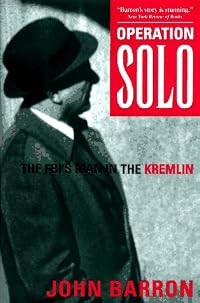
The Mitrokhin files largely confirm some accounts, previously of disputed accuracy, of defecting U.S. Communist party spies such as Elizabeth T Bentley and Whittaker Chambers in their books "Out of Bondage" and "Witness". Mention should be made of John D. Barron's account of the remarkable U.S. double agent Morris H. Childs in "Operation Solo: The FBI's Man in the Kremlin". "Witness" is deservedly on many Top Books lists.
Histories of the 20th century, and even of the cold war, generally have not addressed the magnitude of influence of Soviet intelligence activity as proved by these archives, resulting in some lamentable perspective these days (2019). show less
Christopher M. Andrew has done an excellent job of assembling into a readable account the smuggled voluminous notes made by former KGB archivist Vasili Mitrokhin from official top secret KGB files at the risk of his life. They pertain to the period from about 1918 to 1992. The KGB changed names several times. Mitrokhin did not have direct access to GRU (military intelligence) files.
Any professional intelligence hand who fails to read this is derelict. It should interest any alert United States citizen.
Russia today is employing active techniques proven successful over many decades in order to disrupt any comity in the world that might constrain the increase of its show more (and its potentates') power and influence. They are very good at it despite limitations arising from the institutional paranoia and top-down doctrinaire bureaucracy that have historically plagued their intelligence services. Credit them with maintaining a doomed and brutal government in power for 70 years.
Andrew supplies parenthetically the KGB code names of many of its assets and agents for convenient cross reference to those decrypted in the Venona project, a U.S. counterintelligence program of the Army Signal Intelligence Service and then the National Security Agency from 1943 until 1980 which covertly intercepted over 3,000 NKVD, KGB, and GRU coded messages wherein true names were further encoded and then to some extent identified from context and other sources. Many Venona texts remain undeciphered today, and many true names are not yet worked out. We await the next momentous defection.
The Mitrokhin files largely confirm some accounts, previously of disputed accuracy, of defecting U.S. Communist party spies such as Elizabeth T Bentley and Whittaker Chambers in their books "Out of Bondage" and "Witness". Mention should be made of John D. Barron's account of the remarkable U.S. double agent Morris H. Childs in "Operation Solo: The FBI's Man in the Kremlin". "Witness" is deservedly on many Top Books lists.
Histories of the 20th century, and even of the cold war, generally have not addressed the magnitude of influence of Soviet intelligence activity as proved by these archives, resulting in some lamentable perspective these days (2019). show less
A massive infodump. Unfortunately, unless you already have expert knowledge of European history the random barrage of facts and snippets without much context or explanation might prove hard to place in any meaningful whole. There is very little comment or analysis, mostly dry facts. I do not have enough historical knowledge and the book doesn't help with this (rather strangely it starts doing this near the end when explaining the fall of USSR, though again, some previous knowledge still required). There is some analysis and comment in the summary in the last chapter but that should in every chapter to be of any use. Maybe I'll come back to this book when I'm more well read in history.
This is a dense review of Soviet espionage taken from the detailed archive of a defector. The details from Cambridge Five to the (also British started) atomic spies top a bewildering beyond shows the USSR thoroughly penetrated Western organizations while at the same time failing to gain real understanding due to the conspiracy minded Stalin and his own adherents. The information and details is post-Stalin to include Aldrich Ames and many other less well-known spies.
Members
- Recently Added By
Lists

All Things Russia
459 works; 11 members
Author Information

19 Works 3,904 Members
5 Works 1,661 Members
Awards and Honors
Distinctions
Series

Common Knowledge
- Original title
- The Sword and the Shield: The Mitrokhin Archive and the Secret History of the KGB
- Original publication date
- 1999
- People/Characters
- Yuri Andropov; Anthony Blunt; Leonid Brezhnev; Mikhail Bulgakov; Guy Burgess; John Cairncross (show all 19); Jimmy Carter; Winston Churchill; Mikhail Gorbachev; Alger Hiss; Adolf Hitler; John F. Kennedy; Martin Luther King, Jr.; Nikita Khrushchev; Donald Maclean; Richard M. Nixon; Lee Harvey Oswald; Kim Philby; Ronald Reagan
- Important places
- USSR
- Important events
- Cold War; Assassination of John F. Kennedy (1963-11-22)
- Dedication
- Посвящаетса всем кто хотел сказать правду, но не сумел - Митрохин
- Original language
- English
- Canonical DDC/MDS
- 327.1247
Classifications
- Genres
- History, Nonfiction, General Nonfiction, Politics and Government
- DDC/MDS
- 327.1247 — Social sciences Political science International Relations Foreign policy and specific topics in international relations Espionage and subversion Intelligence Gathering - Europe
- LCC
- HV8224 .A68 — Social sciences Social pathology. Social and public welfare. Criminology Social pathology. Social and public welfare. Criminal justice administration Police. Detectves. Constabulary By region or country
- BISAC
Statistics
- Members
- 910
- Popularity
- 29,309
- Reviews
- 12
- Rating
- (3.79)
- Languages
- English
- Media
- Paper, Audiobook, Ebook
- ISBNs
- 18
- UPCs
- 2
- ASINs
- 10