
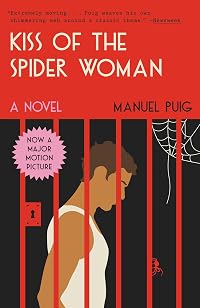
Kiss of the Spider Woman
by Manuel Puig
On This Page
Description
Sometimes they talk all night long. In the still darkness of their cell, Molina re-weaves the glittering and fragile stories of the film he loves, and the cynical Valentin listens. Valentin believes in the just cause which makes all suffering bearable; Molina believes in the magic of love which makes all else endurable. Each has always been alone, and always - especially now - in danger of betrayal. But in cell, each surrenders to the other something of himself that he has never surrendered show more before. show lessTags
Recommendations







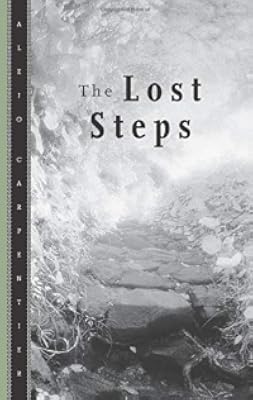
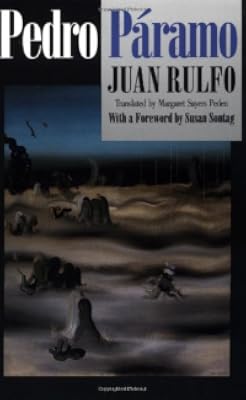

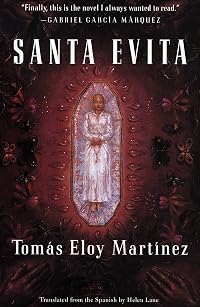

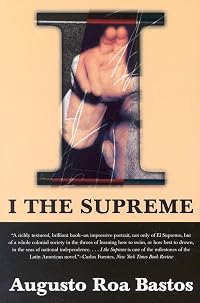

















Member Recommendations


aulsmith Both nicely balanced books about the personal and the political.
by anonymous user
Member Reviews
Two men share a prison cell, the homosexual Molina imprisoned for "corruption of minors", and the revolutionary Valentin. They appear as polar opposites--Molina is ultra-effeminate and completely given to the typically "female" concerns with love and romance, while Valentin suppresses his emotions because only the combat for society matters, not the private life. Neither understands the other and yet gradually they become closer, so much so that each one ends up doing something "outside" his own character, for the sake of the other.
This is very much a study of homosexuality and gender where the political moment, Argentina's leaden, fascist seventies, only serves as a pretext to bring together in extended intimate dialogue people who show more would never be capable of it otherwise. Valentin seems to get the most out of the exchange, to have been nothing less than enlightened. One would like to think that Molina, in turn, was strengthened by Valentin's acceptance but this is less clear to me.
Puig's voluminous footnotes on the psychoanalitical and philosophical studies of homosexuality and gender are a pointer but also an obstacle. What is happening to the two men is outside "theory", which is dismally dated anyway.
Molina understands himself as a woman and refers to himself often in the female gender. He does not fall in love with homosexuals, only "real" men. It's interesting how at different times both characters express the more open, progressive view of the genders--for instance, Molina retorting that there is nothing wrong with being sensitive and gentle "like a woman" and that the world would be a better place if men were more "like women"; but later, it's Valentin who protests against Molina's notion that it's right, "womanly", to suffer in a relationship (including intercourse), that being humiliated is natural. Molina's influence makes Valentin gentler, and Valentin's makes Molina fight.
A beautiful book show less
This is very much a study of homosexuality and gender where the political moment, Argentina's leaden, fascist seventies, only serves as a pretext to bring together in extended intimate dialogue people who show more would never be capable of it otherwise. Valentin seems to get the most out of the exchange, to have been nothing less than enlightened. One would like to think that Molina, in turn, was strengthened by Valentin's acceptance but this is less clear to me.
Puig's voluminous footnotes on the psychoanalitical and philosophical studies of homosexuality and gender are a pointer but also an obstacle. What is happening to the two men is outside "theory", which is dismally dated anyway.
Molina understands himself as a woman and refers to himself often in the female gender. He does not fall in love with homosexuals, only "real" men. It's interesting how at different times both characters express the more open, progressive view of the genders--for instance, Molina retorting that there is nothing wrong with being sensitive and gentle "like a woman" and that the world would be a better place if men were more "like women"; but later, it's Valentin who protests against Molina's notion that it's right, "womanly", to suffer in a relationship (including intercourse), that being humiliated is natural. Molina's influence makes Valentin gentler, and Valentin's makes Molina fight.
A beautiful book show less
[b:Kiss of the Spider Woman|588242|Kiss of the Spider Woman|Manuel Puig|https://i.gr-assets.com/images/S/compressed.photo.goodreads.com/books/1403179094l/588242._SY75_.jpg|765288] is told almost entirely in dialogue between two cellmates in an Argentinian jail, with reports and academic footnotes on the history of research into sexuality as occasional interjections. Although I'd heard of the title, I didn't know what to expect and was totally blown away. I read the whole novel in an afternoon and found it beautifully written, moving, and utterly compelling. Molina, jailed for gay sex, and Valentin, jailed for resisting the government, try to escape the claustrophobia of their cell by discussing cinema. Molina has an extraordinary memory show more for his favourite films and recounts them in spellbinding detail. As the cinematic narratives unfold, the reader slowly realises their subtextual significances.
I am honestly in awe of how instantly and effectively Puig immerses the reader using only dialogue. He demonstrates how two the very different men end up bonded by imprisonment. The novel doesn't lend itself to short quotes as the narrative flows like a genuine conversation, so you'll just have to take my word for it. I haven't read anything else quite like it, that so effortlessly spans the visceral and the existential within such a confined context. Molina and Valentin's discussions range across politics, gender, sexuality, love, and finding meaning in life. From within their cell, the reader gains a sense of their lives, the prison system they are trapped in, and how they've ended up there. Both characters are fascinating and sympathetic, trying to be kind and true to themselves amid inhumane conditions.
[b:Kiss of the Spider Woman|588242|Kiss of the Spider Woman|Manuel Puig|https://i.gr-assets.com/images/S/compressed.photo.goodreads.com/books/1403179094l/588242._SY75_.jpg|765288] is a beautiful, brutal, and brilliant novel, one of the best I've read so far this year. The ending is inevitable and heart-breaking. As with [b:Child of Fortune|1536879|Child of Fortune|Yūko Tsushima|https://i.gr-assets.com/images/S/compressed.photo.goodreads.com/books/1184880371l/1536879._SY75_.jpg|1529013], though, I would have appreciated the inclusion of an afterword or translator's note in this new Penguin edition to provide some context. show less
I am honestly in awe of how instantly and effectively Puig immerses the reader using only dialogue. He demonstrates how two the very different men end up bonded by imprisonment. The novel doesn't lend itself to short quotes as the narrative flows like a genuine conversation, so you'll just have to take my word for it. I haven't read anything else quite like it, that so effortlessly spans the visceral and the existential within such a confined context. Molina and Valentin's discussions range across politics, gender, sexuality, love, and finding meaning in life. From within their cell, the reader gains a sense of their lives, the prison system they are trapped in, and how they've ended up there. Both characters are fascinating and sympathetic, trying to be kind and true to themselves amid inhumane conditions.
[b:Kiss of the Spider Woman|588242|Kiss of the Spider Woman|Manuel Puig|https://i.gr-assets.com/images/S/compressed.photo.goodreads.com/books/1403179094l/588242._SY75_.jpg|765288] is a beautiful, brutal, and brilliant novel, one of the best I've read so far this year. The ending is inevitable and heart-breaking. As with [b:Child of Fortune|1536879|Child of Fortune|Yūko Tsushima|https://i.gr-assets.com/images/S/compressed.photo.goodreads.com/books/1184880371l/1536879._SY75_.jpg|1529013], though, I would have appreciated the inclusion of an afterword or translator's note in this new Penguin edition to provide some context. show less
4.5
Libro complejo y revulsivo en el mejor sentido de la palabra que, además de tocar temas como la solidaridad, la amistad, el amor, los deseos e ideales, la soledad y la socialización aun en situaciones extremadamente acotadas, etc. detiene su mirada especialmente en los estereotipos de género y desarma clichés aceptados transversalmente dejando tras de sí, además de tristeza, la propuesta de mirar y construir la identidad desde otro lado.
Libro complejo y revulsivo en el mejor sentido de la palabra que, además de tocar temas como la solidaridad, la amistad, el amor, los deseos e ideales, la soledad y la socialización aun en situaciones extremadamente acotadas, etc. detiene su mirada especialmente en los estereotipos de género y desarma clichés aceptados transversalmente dejando tras de sí, además de tristeza, la propuesta de mirar y construir la identidad desde otro lado.
The structure of this book is fascinating: long passages of dialogue interspersed with retellings of movie plots, along with stream of consciousness jags and footnotes detailing modern psychological views on gender and homosexuality. It is a novel that tries to encompass multiple modes of telling. It is interesting that the details of the two main characters' crimes never really come to light - we don't understand much about the political situation or Molina's crime. It is almost as if the two men are on an island where their respective pasts are seen from a blurry distance, and that all that matters is love and forgiveness.
Valentin says something simple and profound towards the end of the story:
"It's a question of learning to accept show more things as they come, and to appreciate the good that happens to you, even if it doesn't last. Because nothing is forever." show less
Valentin says something simple and profound towards the end of the story:
"It's a question of learning to accept show more things as they come, and to appreciate the good that happens to you, even if it doesn't last. Because nothing is forever." show less
I really don't know what to make of this. I particularly don't know what to make of the extensive footnotes describing the basis of homosexuality.
The two protagonists seem to have been brought together by random chance, but we discover that's not the case. Molina, it turns out, is a grass, tasked with finding out information about Valentin in exchange for parole. But is it that simple? I'm not sure. Especially with what happens at the end, I'm not sure who is using who, who is trapped in who's web.
The two protagonists seem to have been brought together by random chance, but we discover that's not the case. Molina, it turns out, is a grass, tasked with finding out information about Valentin in exchange for parole. But is it that simple? I'm not sure. Especially with what happens at the end, I'm not sure who is using who, who is trapped in who's web.
Molina is in jail for lewd conduct with a minor. Valentín is a political prisoner. To pass the time, the former tells the latter a series of plots from movies. In between movie sessions they discuss their lives on the outside, take care of each other when they're sick, and slowly become friends.
It's a rather simple story: easy to follow, fun to read and very exciting. The pace varies between the (comparatively) dense movie synopses and the page-turning back-and-forth conversations between the young radical and the older gay man. Around halfway through the novel you start to get some information about how the two men came to cohabitate the jail cell, and the things you learn add a great deal of tension to the whole situation. Puig show more makes the conversations feel like real conversations between two regular people, using ellipses to represent silences, constant voseo (vos sos instead of tú eres, typical of Argentine Spanish) and colloquial language that doesn't stray too far into vulgarities; something like what you might expect of a conversation between two people from different walks of life who are in prison together. The movies Molina tells Valentín are nicely related to the story. It's not too obvious, it's not like they simply retell or predict what's happening in the jail cell, but they do relate to what's happening between the two men. This technique of cinema exegesis was fun. I enjoyed reading movies as told by one man to another as they passed the time. They'd take breaks and Valentín would interject here and there, and they'd also talk about how they were going to divide the movies up so that they'd best occupy their time in the cell.
I once started reading this book and couldn't get through the first movie summary about a woman who feels a strange attraction to a panther in the zoo. I think I was just busy and had something else I really wanted to read. Looking back on it, it's hard to believe that I put this book down. Once you get going it's a hard book to set aside. It's both a page-turner and a serious, thoughtful book. Some might say it's an especially compelling mix of elements of high, literary culture on the one hand, and low, popular/Hollywood culture on the other. I know this book is quite famous and was made into a critically-acclaimed movie (coming full circle, I suppose, since so much of the book is about movies); I certainly think it deserves it. One other thing that I found particularly interesting about it was its depiction of life in Argentine prisons. I'd read in other books about prisoners receiving supplies from the outside, but it was interesting to see just how important that that stuff (food, mostly) is to people in jail. Molina receives care packages from his mother when she comes to visit him, and he then takes them back to the cell and shares his bounty with Valentín. That food from the outside is so delicious, and makes such a big difference in their life in jail. They reminded me of how I used to feel when I got care packages in the mail when I was in the Peace Corps. The mail comes, you open up the package, and you've suddenly got a bounty of beef jerky, American candy, fruit leather and other delicious specialty snack foods! It wasn't like my everyday food was horrible or anything, and it was certainly incomparably better than the slop Molina and Valentín eat in this book. Still, though, that opportunity to taste the foods you can't access on an everyday basis is really exciting, and I thought the author did a good job of representing it. show less
It's a rather simple story: easy to follow, fun to read and very exciting. The pace varies between the (comparatively) dense movie synopses and the page-turning back-and-forth conversations between the young radical and the older gay man. Around halfway through the novel you start to get some information about how the two men came to cohabitate the jail cell, and the things you learn add a great deal of tension to the whole situation. Puig show more makes the conversations feel like real conversations between two regular people, using ellipses to represent silences, constant voseo (vos sos instead of tú eres, typical of Argentine Spanish) and colloquial language that doesn't stray too far into vulgarities; something like what you might expect of a conversation between two people from different walks of life who are in prison together. The movies Molina tells Valentín are nicely related to the story. It's not too obvious, it's not like they simply retell or predict what's happening in the jail cell, but they do relate to what's happening between the two men. This technique of cinema exegesis was fun. I enjoyed reading movies as told by one man to another as they passed the time. They'd take breaks and Valentín would interject here and there, and they'd also talk about how they were going to divide the movies up so that they'd best occupy their time in the cell.
I once started reading this book and couldn't get through the first movie summary about a woman who feels a strange attraction to a panther in the zoo. I think I was just busy and had something else I really wanted to read. Looking back on it, it's hard to believe that I put this book down. Once you get going it's a hard book to set aside. It's both a page-turner and a serious, thoughtful book. Some might say it's an especially compelling mix of elements of high, literary culture on the one hand, and low, popular/Hollywood culture on the other. I know this book is quite famous and was made into a critically-acclaimed movie (coming full circle, I suppose, since so much of the book is about movies); I certainly think it deserves it. One other thing that I found particularly interesting about it was its depiction of life in Argentine prisons. I'd read in other books about prisoners receiving supplies from the outside, but it was interesting to see just how important that that stuff (food, mostly) is to people in jail. Molina receives care packages from his mother when she comes to visit him, and he then takes them back to the cell and shares his bounty with Valentín. That food from the outside is so delicious, and makes such a big difference in their life in jail. They reminded me of how I used to feel when I got care packages in the mail when I was in the Peace Corps. The mail comes, you open up the package, and you've suddenly got a bounty of beef jerky, American candy, fruit leather and other delicious specialty snack foods! It wasn't like my everyday food was horrible or anything, and it was certainly incomparably better than the slop Molina and Valentín eat in this book. Still, though, that opportunity to taste the foods you can't access on an everyday basis is really exciting, and I thought the author did a good job of representing it. show less
Every time I see this cover, I am brought back to that time when I read and was completely moved by the writing and the tales of the book. Masterfully weaving in magical realism and tales-within-tales, Puig shows several sides of humanity in a way that moves the reader and remains. The movie was nowhere near as impressive and couldn't even come close to presenting the magic that was accomplished in this book. Highly recommend.
Members
- Recently Added By
Lists

1001 Books You Must Read Before You Die
1,448 works; 1,132 members

Fiction Set Primarily in a Prison
52 works; 24 members

Best of World Literature
432 works; 51 members

Read the book and saw the movie
1,170 works; 195 members

Global Reads: Books Set South and Central America
40 works; 7 members

1970s
657 works; 23 members
Las 100 Mejores Novelas en Castellano del Siglo XX
105 works; 13 members

Blue Pyramid 1,276 Best Books of All Time
1,248 works; 32 members

Latin American Literature
50 works; 11 members

Best LGBT Fiction
144 works; 25 members

Publishing Triangle 100 Best Lesbian and Gay Novels
97 works; 6 members
Latin America
26 works; 9 members

Watched the Movie, Probably Won't Read the Book
185 works; 34 members

Experimental Literature
141 works; 18 members

Books Read in 2014
2,343 works; 89 members

Five star books
1,755 works; 108 members

A Novel Cure
742 works; 23 members

Good LGBT fiction for LGBT folk and friends
545 works; 54 members

Animals in the Title
498 works; 11 members

DELETE
48 works; 2 members

Books I Own But Haven't Read
144 works; 2 members

Reading Globally
136 works; 16 members

To Read
37 works; 1 member

Alphabetical Books
211 works; 3 members

Jones & Newman: Best Horror Books Further Recommended Reading
577 works; 4 members

Books Bought & Received as Gifts in 2014
81 works; 1 member
Books in Riverdale
123 works; 3 members
Author Information

29+ Works 5,029 Members
Author Manuel Puig was born in General Villegas, Argentina on December 28, 1932. Betrayed by Rita Hayworth (1968) is an innovative novel narrating through a variety of techniques the story of a young Argentine boy who lives vicariously through the movies. Puig uses the phenomenon of compulsive movie-going as a symbol for alienation and escape from show more reality. Heartbreak Tango (1969) evokes the spiritual emptiness of the Argentine provincial life in the 1930s and the vulgarity of popular music and the soap opera. His best known work, Kiss of the Spider Woman (1979), was adapted as a film in 1985 and as a Broadway musical in 1993. He died of a heart attack on July 22, 1990. (Bowker Author Biography) show less
Some Editions
Awards and Honors
Distinctions
Notable Lists
Series
Belongs to Publisher Series
Work Relationships
Is contained in
Has the adaptation
Has as a student's study guide
Common Knowledge
- Canonical title*
- De kus van de spinnevrouw
- Original title
- El beso de la mujer araña
- Alternate titles*
- Поцелуй женщины-паука
- Original publication date
- 1976
- People/Characters
- Molina; Valentin
- Important places
- Argentina; Latin America; South America
- Related movies
- Kiss of the Spider Woman (1985 | IMDb); Kiss of the Spider Woman (2025 | IMDb)
- First words
- – Something's a little strange, that's what you notice, that she's not a woman like all the others.
- Last words
- (Click to show. Warning: May contain spoilers.)No, Valentin, beloved, that will never take place, because this dream is short but his dream is happy.
- Original language
- Spanish
- Disambiguation notice
- This is the book. Do not combine with the 1985 film, stage play, or musical lyrics. See also the ... (show all)ki/Kiss_of_the_Spider_Woman_(novel)" rel="nofollow" target="_new">Wikipedia article.
*Some information comes from Common Knowledge in other languages. Click "Edit" for more information.
Classifications
Statistics
- Members
- 2,526
- Popularity
- 7,580
- Reviews
- 45
- Rating
- (3.90)
- Languages
- 14 — Danish, Dutch, English, Finnish, French, German, Italian, Lithuanian, Norwegian (Bokmål), Polish, Portuguese, Spanish, Swedish, Turkish
- Media
- Paper, Audiobook, Ebook
- ISBNs
- 84
- ASINs
- 15