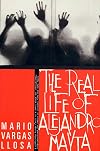
The Real Life of Alejandro Mayta
by Mario Vargas Llosa
On This Page
Description
"The Real Life of Alejandro Mayta" is an astute psychological portrait of a modern revolutionary and a searching account of an old friend's struggle to understand him. First published in English in 1986, the novel probes the long and checkered history of radical politics in Latin America.Tags
Recommendations




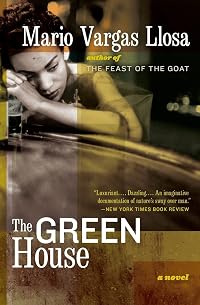
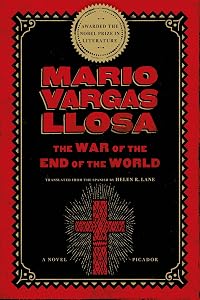
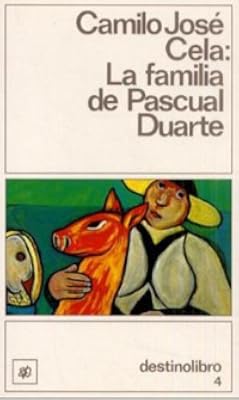


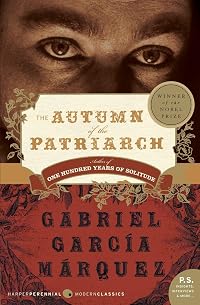

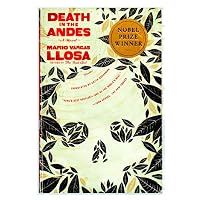
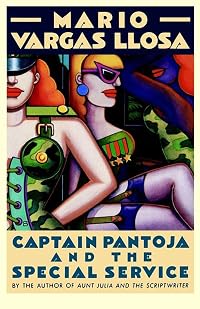

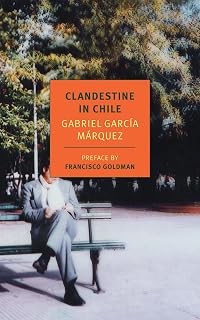

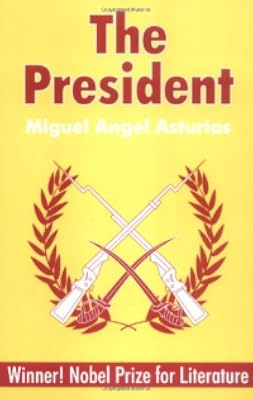







Member Recommendations

Member Reviews
This story of a failed 1950's revolutionary epitomizes the way Vargas Llosa constructs a story. It is told as the story of an author investigating the life of Alejandro Mayta, an idealistic revolutionary from a small left wing party who is involved in a very small coup attempt in the mountains of Peru. Sometimes it is 1958 and the story is being told as it happens; sometimes it is 25 years later and the "author" is interviewing people who knew Mayta as he does research for his novel. Peru in the 80's is shown as a violent, dangerous place. The way the two time periods are run together without any break speaks of the timelessness of certain issues and the difficulty of determining "truth" either as it happens or as it is remembered. show more Altogether a wonderful book. show less
One would guess that Llosa must have read Solzhenitsyn's Lenin in Zurich published in 1976 because he writes his novel with strikingly similar themes in 1986. You have an isolating, can't get along with anybody, communist stridently obsessed with starting a revolution. An action that seems impossible to those around him with almost no following or resources or with no connection and only a vague understanding of those he wants to lead. Llosa gives us a grim but caring look at Peru. He shows more sympathy, although there is still plenty of harshness and mocking, for his main character Mayta who, by the way is fictional, than Solzhenitsyn does for Lenin. With deft touches Llosa gets you deeply interested in Mayta and Peru and the workings show more of failure. This is a major piece of writing.
Quotes: (page 5) “Even before the hunger strike, lots of us in the class thought he would become a priest. In those days, to care about the poor was something we thought only a future priest would do, not something a revolutionary would do. Back then, we knew a lot about religion, very little about politics, and absolutely nothing about revolution. Mayta was a cury-headed, pudgy kid with flat feet and wide spaces between his teeth.”
(page 64) “'The revolution and the Catholic religion are incompatible,' asserts Mayta softly. 'Don't fool yourself, Mother.'
'You're the one who's fouled up. You're also way behind the times,' Juanita jokes. 'Do you think I'm put out when I hear religion called the opiate of the people? It may have been, probably was, in any case. But that's all finished. Everything is changing. We're going to bring about the revolution, too. Don't laugh.'”
(pages 128-129) “In the Paris bistros under the whispering chestnut trees, we deduced, on the basis of four lines in Le Monde, that those seizures were the work of revolutionaries, new narodniks, who had gone out to the country to persuade the Indians to carry out the agrarian reform that for years the government had promised and none had implemented. Later we found out that the takeovers were not the work of agitators sent by the Communist Party or the Trotskyist groups that their origin was not even political. They sprang up spontaneously from the peasant masses, who, spurred on by the immemorial abuse under which they lived, by their hunger for land, and, to some degree, by the heated up atmosphere of slogans and proclamations in favor of social justice that prevailed in Peru then---after the collapse of the Odria dictatorship---decided to take action.”
(page 246) “I'm not surprised that reality contradicts these rumors. Information in this country has ceased to be objective and has become pure fantasy---in newspapers, radio, television, and ordinary conversation. 'To report' among us now means either to interpret reality according to our desires or fears, or to say simply what is convenient. It's an attempt to make up for our ignorance of what's going on---which in our heart of hearts we understand is irremediable and definitive. Since it's impossible to know what's really happening, we Peruvians lie, invent, dream, and take refuge in illusion. Beause of these strange circumstances, Peruvian life, a life in which so few actually do read, has become literary.” show less
Quotes: (page 5) “Even before the hunger strike, lots of us in the class thought he would become a priest. In those days, to care about the poor was something we thought only a future priest would do, not something a revolutionary would do. Back then, we knew a lot about religion, very little about politics, and absolutely nothing about revolution. Mayta was a cury-headed, pudgy kid with flat feet and wide spaces between his teeth.”
(page 64) “'The revolution and the Catholic religion are incompatible,' asserts Mayta softly. 'Don't fool yourself, Mother.'
'You're the one who's fouled up. You're also way behind the times,' Juanita jokes. 'Do you think I'm put out when I hear religion called the opiate of the people? It may have been, probably was, in any case. But that's all finished. Everything is changing. We're going to bring about the revolution, too. Don't laugh.'”
(pages 128-129) “In the Paris bistros under the whispering chestnut trees, we deduced, on the basis of four lines in Le Monde, that those seizures were the work of revolutionaries, new narodniks, who had gone out to the country to persuade the Indians to carry out the agrarian reform that for years the government had promised and none had implemented. Later we found out that the takeovers were not the work of agitators sent by the Communist Party or the Trotskyist groups that their origin was not even political. They sprang up spontaneously from the peasant masses, who, spurred on by the immemorial abuse under which they lived, by their hunger for land, and, to some degree, by the heated up atmosphere of slogans and proclamations in favor of social justice that prevailed in Peru then---after the collapse of the Odria dictatorship---decided to take action.”
(page 246) “I'm not surprised that reality contradicts these rumors. Information in this country has ceased to be objective and has become pure fantasy---in newspapers, radio, television, and ordinary conversation. 'To report' among us now means either to interpret reality according to our desires or fears, or to say simply what is convenient. It's an attempt to make up for our ignorance of what's going on---which in our heart of hearts we understand is irremediable and definitive. Since it's impossible to know what's really happening, we Peruvians lie, invent, dream, and take refuge in illusion. Beause of these strange circumstances, Peruvian life, a life in which so few actually do read, has become literary.” show less
This is not the easiest book to read. It takes a while to pick up on the author's mixing of the present with events of twenty five years ago, even in a single paragraph. Where are we is often in doubt, especially timewise.. The story involves a narrator who is writing a book about someone who was involved in something in the past. He meets with many people who had first hand knowledge of his subject, Alejandro Mayta. But the stories seem conflicting and hard to resolve. Are they are all talking about the same person? Was he a revolutionary, or just a thief? Was he a homosexual? The story gets pieced together but there are always questions. What happened? Why? These are eventually resolved but we keep questioning, is that the final show more answer? Do we really have the life story, or are we dealing with lies, projections, misremembering, or just plain fiction?
Eventually a paragraph late in the book (p246) brings everything into focus -
"…Information in this country has ceased to be objective and has become pure fantasy -- in newspapers, radio, television, and ordinary conversation. 'To report' among us now means either to interpret reality according to our desires or fears, or to say what is simply convenient. It's an attempt to make up for our ignorance of what's going on -- which in our heart of hearts we understand is irremediable and definitive. Since it is important to know what's really happening, we Peruvians lie, invent, dream, and take refuge in illusion. Because of these strange circumstances, Peruvian life, a life in which so few actually do read, has become literary.
That's it in a nutshell. The story is a story. Eventually it's easy to go with the flow and not be concerned knowing whether we in the past of the present. I liked it. show less
Eventually a paragraph late in the book (p246) brings everything into focus -
"…Information in this country has ceased to be objective and has become pure fantasy -- in newspapers, radio, television, and ordinary conversation. 'To report' among us now means either to interpret reality according to our desires or fears, or to say what is simply convenient. It's an attempt to make up for our ignorance of what's going on -- which in our heart of hearts we understand is irremediable and definitive. Since it is important to know what's really happening, we Peruvians lie, invent, dream, and take refuge in illusion. Because of these strange circumstances, Peruvian life, a life in which so few actually do read, has become literary.
That's it in a nutshell. The story is a story. Eventually it's easy to go with the flow and not be concerned knowing whether we in the past of the present. I liked it. show less
This is a complex book, as much about storytelling as it is about the ostensible subject, the unsuccessful revolutionary Alejandro Mayta. Each chapter starts with a writer, who says he went to Catholic school with Mayta and has been interested in him ever since, interviewing someone who knew Mayta, but then switching, in typical Vargas Llosa style, back and forth without attribution between Mayta's life and the interviews. (The main action of the novel took place in the late 50s, the interviews 25 years later.) The writer assures everyone he talks to that he is making up the life of Mayta, that it will be fiction, and that he won't use their names. (Of course he does.)
It turns out that Mayta, as described by the writer, started caring show more about the poor early on and even limited his food so he could experience what they experienced. He later joined a very small offshoot of a very small communist party -- the Revolutionary Worker's Party (Trotskyist), or RWP(T) -- which only seems to have seven members. At a birthday party for a relative, he meets a lieutenant, Vallejos, who appears to be involved in a revolutionary plot in the Andes where he works running a jail in the town of Jauja. Mayta is entranced by the possibility of action, rather than talk, but fails to convince the other members of his party; in fact, they suggest that Vallejos might be an informer. And, it turns out, Mayta is gay, and that ultimately gets him kicked out of the RWP(T), although they state it is for more high-minded revolutionary reasons. Inevitably, Mayta goes to Jauja, the plot of course fails (but why?), and it is a mystery what happened to both Vallejos and Mayta until the very end of the novel. Through this plot, Vargas Llosa satirizes much "revolutionary" activity.
But this plot summary is infinitely more straightforward than the novel. Not only is it occasionally hard to figure out who is talking and what is happening, but part of the novel is about how the writer does his interviewing and what he makes up and what is real. At the end, the "truth" about Mayta is revealed. But is it true? The reader doesn't know.
I am a Vargas Llosa fan, but this wasn't one of my favorites of his. show less
It turns out that Mayta, as described by the writer, started caring show more about the poor early on and even limited his food so he could experience what they experienced. He later joined a very small offshoot of a very small communist party -- the Revolutionary Worker's Party (Trotskyist), or RWP(T) -- which only seems to have seven members. At a birthday party for a relative, he meets a lieutenant, Vallejos, who appears to be involved in a revolutionary plot in the Andes where he works running a jail in the town of Jauja. Mayta is entranced by the possibility of action, rather than talk, but fails to convince the other members of his party; in fact, they suggest that Vallejos might be an informer. And, it turns out, Mayta is gay, and that ultimately gets him kicked out of the RWP(T), although they state it is for more high-minded revolutionary reasons. Inevitably, Mayta goes to Jauja, the plot of course fails (but why?), and it is a mystery what happened to both Vallejos and Mayta until the very end of the novel. Through this plot, Vargas Llosa satirizes much "revolutionary" activity.
But this plot summary is infinitely more straightforward than the novel. Not only is it occasionally hard to figure out who is talking and what is happening, but part of the novel is about how the writer does his interviewing and what he makes up and what is real. At the end, the "truth" about Mayta is revealed. But is it true? The reader doesn't know.
I am a Vargas Llosa fan, but this wasn't one of my favorites of his. show less
A brilliant historical and political novel in which a famous writer chooses to write a book about Alejandro Mayta, a former schoolmate and Trotskyite and who participated in a leftist insurrection in Peru in 1962, which also served as a sharp critique of different political factions and governments within the country and the devastating effect it had on the poor in Lima and elsewhere. Highly recommended!
I couldn't decide whether to like or dislike this book at times. The narration constantly shifts between people talking and reminiscing to the writer about THE event in Alejandro's life and the actual action. But wait, not the actual action because that is buried in the mythical past of the revolution, but the writer's fictionalization of his life in order to protect the sources and to make a good story.
This was not my favorite book by Vargas Llosa but intriguing enough to make me want to seek out some of his more well known books.
This was not my favorite book by Vargas Llosa but intriguing enough to make me want to seek out some of his more well known books.
A classic of its type. he story ranges in a time space continuum ranging back and forth without seeming rhyme or reason which can lead to confusion and abstraction for the chronologically inclined. The story is a political satire on revolution thought and action. Others have reviewed it far better tan I since I write this review with a long hindsight. I am adding this to me reread shelf...Once is never enough for some things and MVL, is one of those authors worth revisiting like an old freind
Members
- Recently Added By
Lists

Favorite Books in Translation
320 works; 133 members

Lo mejor leído en 2025 - Leídos por primera vez: Magistrales (R. D.)
28 works; 1 member

Fiction with Men's Given Names in the Title
302 works; 11 members
Author Information

386+ Works 34,502 Members
Mario Vargas Llosa was born in Arequipa, Peru on March 28, 1936. He studied literature and law at the National University of San Marcos and received a Ph.D from the University of Madrid in 1959. He is a writer, politician, and journalist. His works vary in genre from literary criticism and journalism to comedies, murder mysteries, historical show more novels, and political thrillers. His books include The Time of the Hero, The Green House, Conversation in the Cathedral, Aunt Julia and the Scriptwriter, The Feast of the Goat, and The War of the End of the World. He has received numerous awards including the Rómulo Gallegos International Novel Prize, the Premio Leopoldo Alas in 1959, the Premio Biblioteca Breve in 1962, the Premio Planeta in 1993, the Miguel de Cervantes Prize in 1994, the Jerusalem Prize in 1995, and the Nobel Prize in Literature in 2010. (Bowker Author Biography) show less
300+ Works 31,299 Members
Some Editions
Awards and Honors
Notable Lists
Series
Belongs to Publisher Series
Work Relationships
Common Knowledge
- Canonical title
- The Real Life of Alejandro Mayta
- Original title
- Historia de Mayta
- Alternate titles*
- De geschiedenis van Alejandro Mayta
- Original publication date
- 1984 (original Spanish) (original Spanish); 1985 (English: Mac Adam) (English: Mac Adam)
- People/Characters*
- Lituma
- First words
- Correr en las mañanas por el malecón de Barranco...
- Last words
- (Click to show. Warning: May contain spoilers.)...las basuras que van invadiendo los barrios de la capital del Perú.
- Original language
- Spanish
*Some information comes from Common Knowledge in other languages. Click "Edit" for more information.
Classifications
Statistics
- Members
- 771
- Popularity
- 36,269
- Reviews
- 12
- Rating
- (3.72)
- Languages
- 23 — Arabic, Chinese, simplified, Danish, Dutch, English, Finnish, French, German, Greek, Hungarian, Italian, Norwegian (Bokmål), Farsi/Persian, Polish, Portuguese (Brazil), Portuguese (Portugal), Romanian, Serbian, Sinhalese, Slovenian, Spanish, Swedish, Turkish
- Media
- Paper, Audiobook, Ebook
- ISBNs
- 54
- ASINs
- 9