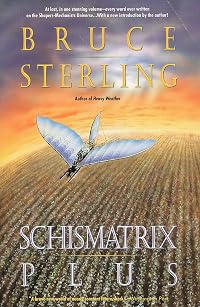
Schismatrix Plus
by Bruce Sterling
Shaper/Mechanist Universe (Collections and Selections — Set Novel & Short Stories)
On This Page
Description
A breathtaking journey through a far-future universe in which the adherents of technological bodily enhancements violently clash with believers in genetic manipulation, from one of the godfathers of cyberpunk In the generations since humanity first began to spread itself throughout the universe, schisms have torn the race asunder. In the future, as in the past, extreme ideological differences have set man against man, causing serious tensions and violence, particularly between the Mechanist show more and Shaper sects. For the Mechanists, who believe in high-tech prosthetics as the only means of advancing human development, the Shaper belief in the use of genetic improvement is anathema and therefore must be eradicated, while the rebel Shapers likewise strive for the ultimate destruction of their cybernetic rivals. Between the two camps travels Abelard Lindsay-a betrayed and exiled Shaper diplomat, well trained in the art of lies and subterfuge-who, over the course of a lifetime of centuries, comes to embrace piracy and revolution en route to quite possibly ushering a shattered humankind toward its bold new destiny. Considered by many, including the author himself, to be his most powerful work, Schismatrix offers a brilliant, bold, gritty, and startlingly original look into humanity's future possibilities. In Schismatrix Plus, Sterling also includes every subsequent excursion into the Shaper/Mechanist universe, complementing his acclaimed novel with the complete collection of mind-boggling Schismatrix short fiction. show lessTags
Recommendations


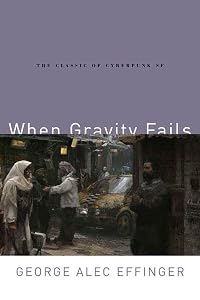

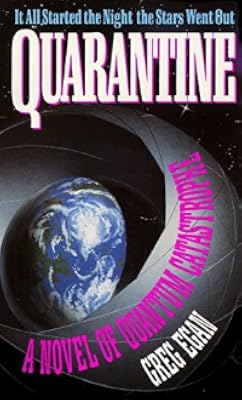
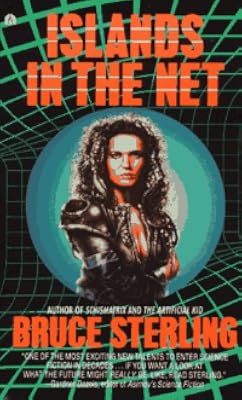

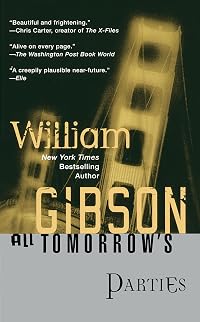






Member Recommendations
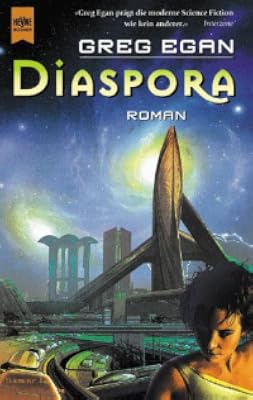
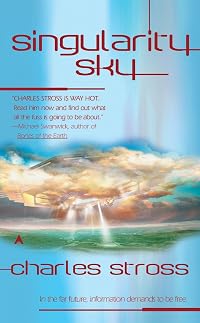
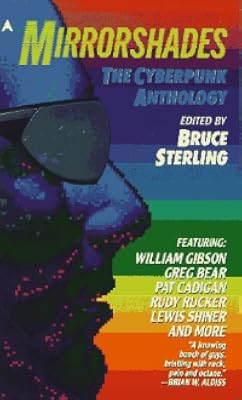
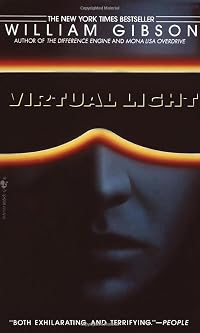
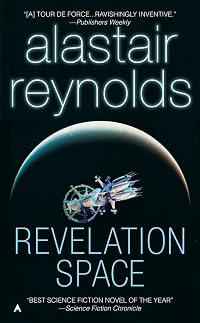
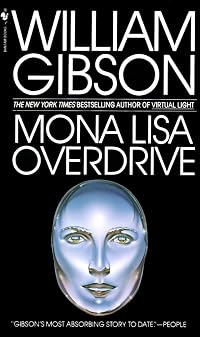
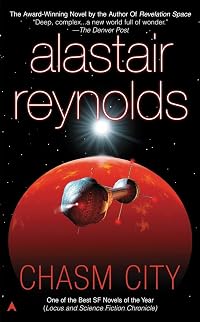
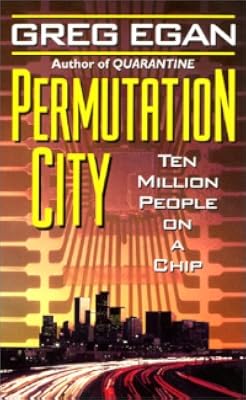
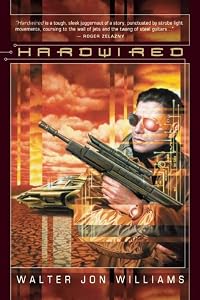
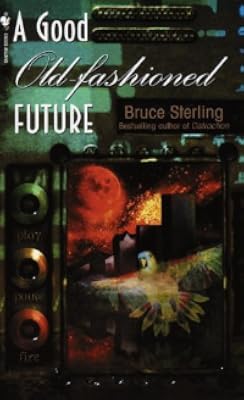
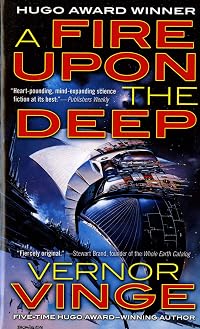
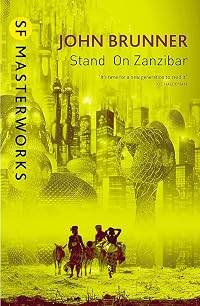
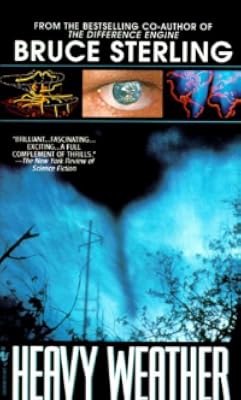
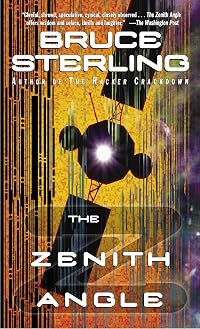
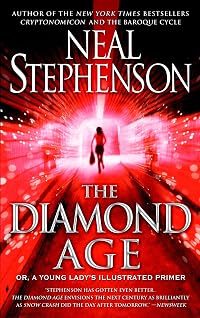
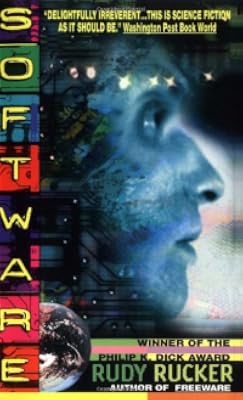
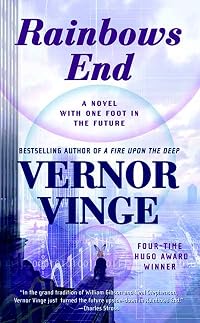
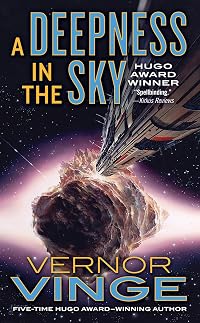
szarka Seveneves and Sterling's Shapers-Mechanists stories are both concerned with what happens to humanity over long spans of time.
Member Reviews
This is it. This is my very favorite book, one of the immortal classics of 20th century science fiction, and a work that is as live and thrilling as the first time I read it.
Sterling captures the epic of sweep of posthuman history, following Abelard Lindsay, diplomat, playwright, scholar, defector, through centuries of adventures across the vast expanse of the solar system. Space-faring humanity has been blown apart by their technology, drifting into the major camps of the cybernetically enhanced Mechanists and the genetically altered Shapers. The two sides engage in constant covert war, pushing at the very limits of what it means to be a cohesive human community, and evolving towards something as far beyond humanity as life is beyond show more dead matter.
Against this incredibly imaginative cosmological speculation, Sterling tackles very grounded questions. How do much do we love? How much do we hate? Can we be freely redefined, or are some things (ideals, scars, destinies) fixed? How can we measure ambition, power, accomplishment, the value of a life? This book, with the novel and handful of Shaper/Mechanist short stories included, is Sterling's masterpiece-the high voltage work of an author at the top of his game. Read it.
***
Updated for Jan 8, 2017: Still perfect. show less
Sterling captures the epic of sweep of posthuman history, following Abelard Lindsay, diplomat, playwright, scholar, defector, through centuries of adventures across the vast expanse of the solar system. Space-faring humanity has been blown apart by their technology, drifting into the major camps of the cybernetically enhanced Mechanists and the genetically altered Shapers. The two sides engage in constant covert war, pushing at the very limits of what it means to be a cohesive human community, and evolving towards something as far beyond humanity as life is beyond show more dead matter.
Against this incredibly imaginative cosmological speculation, Sterling tackles very grounded questions. How do much do we love? How much do we hate? Can we be freely redefined, or are some things (ideals, scars, destinies) fixed? How can we measure ambition, power, accomplishment, the value of a life? This book, with the novel and handful of Shaper/Mechanist short stories included, is Sterling's masterpiece-the high voltage work of an author at the top of his game. Read it.
***
Updated for Jan 8, 2017: Still perfect. show less
What a good time. I'd never read any Sterling before this; he's often lumped in with the cyberpunk crowd even though there's nothing particularly cyberpunk about this work, which is more of a trans/post-humanist take on space opera. It's 5 short stories and the lone novel that comprise everything Sterling wrote for the Shaper/Mechanist universe, which is a lot of fun to read about.
It's set a few hundred years in the future and reminds me a lot of the setting of Greg Egan's Diaspora without AIs - Earth has been abandoned to the dregs of humanity who live in the past, while everyone else has moved out to the solar system, where the real action is the competition between the two factions of Shapers, who practice extreme genetic engineering show more and mental modification, and Mechanists, who rely more on technology and hardware to do their thing. While it's not very clear exactly why there's such a big schism between the two groups, they hate each other to the extent that the protagonist Abelard Lindsay spends the whole book mediating between them as well as the various alien races who show up. In tone the novel reminded me a lot of Ken MacLeod's The Stone Canal, in that it's funny, action-heavy, and very political - there's lots of clever satire of capitalism in particular and human peculiarities more generally. However, it also pays a lot of attention to Lindsay's journeys around the solar system and what it does to his sense of romance, family, and self - he definitely ends the book a very different person than when the book begins almost 200 years prior. Lindsay begins the book watching his first love die in an act of political protest, and throughout all his adventures with pirates, prostitutes, assassins, rogue agents, aliens, dissident political factions, and more, he grows and changes in an interesting way. The novel ends with an odd apotheosis, but overall it was highly enjoyable.
The short stories explore various other aspects of the same setting and are good too. The Schismatrix universe is large enough that it's surprising Sterling decided to stop writing about it, but I guess he had better things to do. show less
It's set a few hundred years in the future and reminds me a lot of the setting of Greg Egan's Diaspora without AIs - Earth has been abandoned to the dregs of humanity who live in the past, while everyone else has moved out to the solar system, where the real action is the competition between the two factions of Shapers, who practice extreme genetic engineering show more and mental modification, and Mechanists, who rely more on technology and hardware to do their thing. While it's not very clear exactly why there's such a big schism between the two groups, they hate each other to the extent that the protagonist Abelard Lindsay spends the whole book mediating between them as well as the various alien races who show up. In tone the novel reminded me a lot of Ken MacLeod's The Stone Canal, in that it's funny, action-heavy, and very political - there's lots of clever satire of capitalism in particular and human peculiarities more generally. However, it also pays a lot of attention to Lindsay's journeys around the solar system and what it does to his sense of romance, family, and self - he definitely ends the book a very different person than when the book begins almost 200 years prior. Lindsay begins the book watching his first love die in an act of political protest, and throughout all his adventures with pirates, prostitutes, assassins, rogue agents, aliens, dissident political factions, and more, he grows and changes in an interesting way. The novel ends with an odd apotheosis, but overall it was highly enjoyable.
The short stories explore various other aspects of the same setting and are good too. The Schismatrix universe is large enough that it's surprising Sterling decided to stop writing about it, but I guess he had better things to do. show less
A trip round the solar system in Bruce Sterling's Shaper/Mechanist future, as humanity leaves the Earth behind, spreading in independent autonomus groups in habitats and enclaves, breeding strange technologies and philosophies and ideologies, with sharply divided rivalries and violent conflicts in a future that refuses to be coherent or singular. It'd be easy to say this is dated now, but it's a wilder, more diverse and strange future than the vision of, say, The Expanse, which has a sort of sturdier throwback simplicity - this is far more daring and ambitious in terms of throwing people out into space to see what happens then racing around to see as much of it as possible in its short, tight word-count.
This Plus edition includes the show more four Shaper/Mechanist stories from Crytal Express, the complete Shaper/Mechanist texts. Is it ironic that one of the foundational texts of the cyberpunk movement is space opera? I always thought the sense that there was a split between the subgenres was artificial, if not illusory. Maybe I imagined it? show less
This Plus edition includes the show more four Shaper/Mechanist stories from Crytal Express, the complete Shaper/Mechanist texts. Is it ironic that one of the foundational texts of the cyberpunk movement is space opera? I always thought the sense that there was a split between the subgenres was artificial, if not illusory. Maybe I imagined it? show less
I’m pretty sure I read Schismatrix back in the very early 1990s… but I also have a vague memory of borrowing the novel when staying with a friend on a trip to the UK a couple of years after I’d moved to the Middle East in the mid-1990s. Schismatrix Plus, published a decade after the original novel, includes it and five short stories set in the same universe. I suspect I’d read a couple of the short stories first, and then read the novel when staying with that friend. Whatever the truth of the matter, I’d pretty much no memory of the novel’s actual story when coming to this recent reread. Certainly, the one big thing I’d forgotten about Schismatrix was that it featured aliens. In the future of the novel, a couple of show more centuries hence, humanity has colonised the Solar system and those based off Earth have split into two factions - the Shapers, who improve themselves through genetic engineering, and the Mechanists, who use technology and cybernetics. The two factions are in an almost constant state of political and commercial rivalry slash war. Lindsay is born in an O’Neill cylinder orbiting the moon. Despite being a Mechanist, he’s sent to the Shapers for diplomatic training (and some genetic engineering). Later, he’s exiled from his cislunar republic, and embarks on a career bouncing around the outer Solar system, growing more and more politically powerful, although typically as an eminence grise. He has a rival, Constantine, and the two are at constant, if often hidden, loggerheads. Aliens, the Investors, large dinosaur-like interstellar merchants, arrive, and there is a peace of sorts between Shapers and Mechanists. But it doesn’t last. Sterling’s future solar system is pretty neat, if a little dated in places, such as the frequent mentions of “tape”, but Lindsay’s and Constantine’s political genius, even the reasons they’re so admired, is never explained and never really convinces. They are what they are because Sterling tells us so. The most interesting character in the book, Kitsune, who later becomes an actual space station, doesn’t appear often enough. The aliens are dull, and not very original. Although the Swarm in the story titled, er, ‘Swarm’, is based around a neat idea, later used by Paul McAuley in his 1989 novel, Secret Harmonies. Sterling went on to write much better novels than Schismatrix, although it remains popular to this day. It was ahead of its time back in 1985, but sf has moved on a great deal since then. Schismatrix Plus is worth a read, the original novel on its own not so much. show less
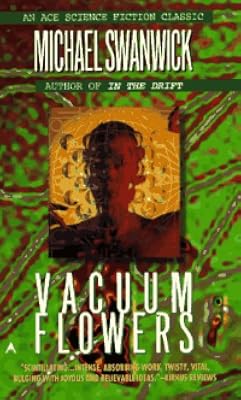
What a great read this was. I've never been much of a fan of cyberpunk and I'm not particularly a fan of the authors generally noted to be founders of the genre (William Gibson, Neal Stephenson, etc.), but I really loved this book and it has put Bruce Sterling near the top of my list for sci-fi writers. Sterling does an excellent job of melding his cyberpunk ethos with a space opera-ish background that is combined with the 'Grand Tour' of the solar system structure (cp. [b:The Ophiuchi Hotline|64931|The Ophiuchi Hotline|John Varley|http://photo.goodreads.com/books/1170625147s/64931.jpg|63020] by John Varley or [b:Vacuum Flowers|243854|Vacuum Flowers|Michael Swanwick|http://photo.goodreads.com/books/1173069625s/243854.jpg|236252] by show more Michael Swanwick) to create a really delectable sci-fi romp. (Though perhaps "romp" isn't quite the right word.)
_Schismatrix Plus_ is composed of the novel _Schismatrix_ along with all of the published short stories in the same Shaper/Mechanist universe (I wish there were more). The Shapers and Mechanists are the two major offshoots of humanity who have colonised the solar system in a slower-than-light-speed cosmos. The Shapers are a faction devoted to the improvement of the human form and mind through genetic engineering and are known for their somewhat aristocratic and elitist bearing, while the Mechanists are those who instead chose the path of merging the human form with machine technology in the quest for immortality and transcendance. The Earth kicked both factions out at some point in the past and is now considered interdicted by both.
In _Schismatrix_ itself we follow Abelard Lindsay, an aristocrat from one of the earliest space habitats orbiting the moon, who was sent to be trained as a Shaper 'diplomat' in his youth and who is ultimately betrayed by his childhood friend and colleague Philip Constantine as they try to overthrow the gerontocracy of their republic (not really a spoiler as this happens early in the book and is the main impetus for the plot). Lindsay is sent into exile and thus begins his great tour of the solar system where he comes across many of the human factions and organizations vying for power.
The solar system that Sterling creates is a colourful one and is filled with interesting characters and groups, some aligned with one or the other of the Shapers and Mechanists, and some looking out only for themselves. These include a prostitute/banker who becomes an ecosystem in herself, a playwright-Mechanist, a group of space pirates who are also their own nation-state, and a clan of Shaper terraformers. Throughout his adventures Lindsay is both shaped by, and shapes, the human ecumene around him, at first simply trying to survive and later working towards fulfilling his great dreams for a post-human future for humanity. Added into this heady mix is a first contact with aliens that throws off the detente of the Shaper-Mechanist war. The story really is a tour de force as we follow Lindsay's rising and falling fortunes and get a glimpse of wide swathes of the fascinating human solar system created by Sterling.
Sterling's world is further fleshed out by the short stories included here: "Swarm" - a chilling tale of Shaper meddling in things best left alone, "Spider Rose" - the tale of a Mechanist loner who gets more than she bargains for when she trades with aliens, "Cicada Queen" - the story of an innovative Shaper that ties in with some of the events of _Schismatrix_, "Sunken Gardens" - a tale of competition and terraforming to achieve a new post-human dream, and "Twenty Evocations" - a somewhat experimental story detailing snapshots of the life of the Shaper Nikolai Leng.
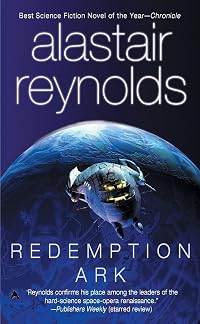
Alastair Reynolds has acknowledged his debt to Sterling in the creation of his own "Revelation Space" universe and I'm a little surprised that there aren't more sci-fi writers mining the myriad of ideas that Sterling throws off with seeming effortlessness in these stories. This really is a great ride and is highly recommended for lovers of sci-fi. show less
_Schismatrix Plus_ is composed of the novel _Schismatrix_ along with all of the published short stories in the same Shaper/Mechanist universe (I wish there were more). The Shapers and Mechanists are the two major offshoots of humanity who have colonised the solar system in a slower-than-light-speed cosmos. The Shapers are a faction devoted to the improvement of the human form and mind through genetic engineering and are known for their somewhat aristocratic and elitist bearing, while the Mechanists are those who instead chose the path of merging the human form with machine technology in the quest for immortality and transcendance. The Earth kicked both factions out at some point in the past and is now considered interdicted by both.
In _Schismatrix_ itself we follow Abelard Lindsay, an aristocrat from one of the earliest space habitats orbiting the moon, who was sent to be trained as a Shaper 'diplomat' in his youth and who is ultimately betrayed by his childhood friend and colleague Philip Constantine as they try to overthrow the gerontocracy of their republic (not really a spoiler as this happens early in the book and is the main impetus for the plot). Lindsay is sent into exile and thus begins his great tour of the solar system where he comes across many of the human factions and organizations vying for power.
The solar system that Sterling creates is a colourful one and is filled with interesting characters and groups, some aligned with one or the other of the Shapers and Mechanists, and some looking out only for themselves. These include a prostitute/banker who becomes an ecosystem in herself, a playwright-Mechanist, a group of space pirates who are also their own nation-state, and a clan of Shaper terraformers. Throughout his adventures Lindsay is both shaped by, and shapes, the human ecumene around him, at first simply trying to survive and later working towards fulfilling his great dreams for a post-human future for humanity. Added into this heady mix is a first contact with aliens that throws off the detente of the Shaper-Mechanist war. The story really is a tour de force as we follow Lindsay's rising and falling fortunes and get a glimpse of wide swathes of the fascinating human solar system created by Sterling.
Sterling's world is further fleshed out by the short stories included here: "Swarm" - a chilling tale of Shaper meddling in things best left alone, "Spider Rose" - the tale of a Mechanist loner who gets more than she bargains for when she trades with aliens, "Cicada Queen" - the story of an innovative Shaper that ties in with some of the events of _Schismatrix_, "Sunken Gardens" - a tale of competition and terraforming to achieve a new post-human dream, and "Twenty Evocations" - a somewhat experimental story detailing snapshots of the life of the Shaper Nikolai Leng.
Alastair Reynolds has acknowledged his debt to Sterling in the creation of his own "Revelation Space" universe and I'm a little surprised that there aren't more sci-fi writers mining the myriad of ideas that Sterling throws off with seeming effortlessness in these stories. This really is a great ride and is highly recommended for lovers of sci-fi. show less
Science fiction is often called the fiction of ideas. In a way, this is insulting. Yes, in the past, it was the ideas that drove the stories - not the people, not the story, just a litany of ideas looking for a story. (In fact, when you look back at some of the very early famous stories – I’m thinking in particular of Stanley Weinbaum’s “A Martian Odyssey” – they still “wow”, but are primarily ideas and strange images hung together with a thin plot that exists simply to showcase the ideas.) Science fiction has come a very long way and it is a fiction that, at its best, is a successful amalgam of all the necessities of good story telling.
I bring this up because Schismatrix, the novel that is at the heart of this show more collection of Bruce Sterling stories about the Shaper/Mechanist universe he developed, strikes me as idea after idea after idea desperately searching for something to make the reader care. And, as evidenced by this comment, I couldn’t seem to care. The novel, wrapped around the long (extremely long, absurdly long, gimmicky long) life of the primary antagonist Linsday, spans most of the history of this universe Sterling has created. While telling the epic story of a universe’s transformation, this has the effect of making the humans less real. And, that means there wasn’t really anyone to care about.
The remaining stories are better, but that may just be in comparison with the novel itself because I know I have read these before and, while somewhat enjoyable, have never really been impressed.
I keep trying to give Sterling a try, but I am consistently underwhelmed. I am sure there are others who fall in love with the universe and the detail. But it is not for me, and I would never give this to someone and say “This is how cyberpunk got started” as it might drive them away from ever trying more. show less
I bring this up because Schismatrix, the novel that is at the heart of this show more collection of Bruce Sterling stories about the Shaper/Mechanist universe he developed, strikes me as idea after idea after idea desperately searching for something to make the reader care. And, as evidenced by this comment, I couldn’t seem to care. The novel, wrapped around the long (extremely long, absurdly long, gimmicky long) life of the primary antagonist Linsday, spans most of the history of this universe Sterling has created. While telling the epic story of a universe’s transformation, this has the effect of making the humans less real. And, that means there wasn’t really anyone to care about.
The remaining stories are better, but that may just be in comparison with the novel itself because I know I have read these before and, while somewhat enjoyable, have never really been impressed.
I keep trying to give Sterling a try, but I am consistently underwhelmed. I am sure there are others who fall in love with the universe and the detail. But it is not for me, and I would never give this to someone and say “This is how cyberpunk got started” as it might drive them away from ever trying more. show less
Schismatrix is a meditation on what it means to grow older, both individually and as a species. Unlike most of Sterling's later work, it's set in the distant future; and, stylistically, it reminds me of Roger Zelazny's work in a way that Sterling's other novels don't. But the themes of this book will be familiar to Sterling's fans and, if the writing isn't up to the standards of his best work, the ideas certainly are. Although I'd probably recommend Holy Fire as a better starting point for new readers, I'm impressed that someone so young could wrote such a good book about characters so old. The additional stories collected here aren't outstanding, and they're available elsewhere, but they gain from being read alongside the novel. show more [2008-08-07] show less
Members
- Recently Added By
Author Information

131+ Works 20,984 Members
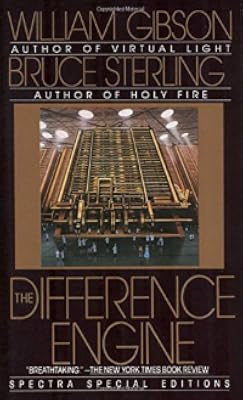
Bruce Sterling is a recent winner of the Nebula Award and the author of the nonfiction book "The Hacker Crackdown" as well as novels and short story collections. He co-authored, with William Gibson, the critically acclaimed novel "The Difference Engine." He lives in Austin, Texas, with his wife and daughter. (Publisher Provided)
Some Editions
Series

Belongs to Publisher Series
Work Relationships
Is contained in
Common Knowledge
- Canonical title
- Schismatrix Plus
- Original publication date
- collection (1996) (1996); 1983 (Cicada Queen) (Cicada Queen); 1985 (Schismatrix) (Schismatrix); 1982 (Spider Rose) (Spider Rose); 1984 (Sunken Gardens) (Sunken Gardens); 1982 (Swarm) (Swarm) (show all 7); 1984 (Twenty Evocations) (Twenty Evocations)
Classifications
Statistics
- Members
- 1,122
- Popularity
- 22,596
- Reviews
- 17
- Rating
- (3.93)
- Languages
- Czech, English, French, Portuguese
- Media
- Paper, Audiobook, Ebook
- ISBNs
- 10
- UPCs
- 2
- ASINs
- 5