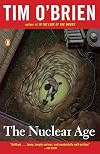
The Nuclear Age
by Tim O'Brien
On This Page
Description
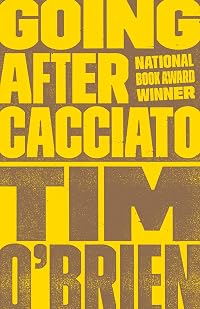
Going After Cacciato (winner of the National Book Award in 1979) was widely acclaimed as one of the most powerful and emotionally vivid novels about Vietnam. Now, writing with the same sharp, richly expressive language, the same edgy dark humor and complete honesty, and the same rawness of nerve and energy, Tim O’Brien gives us an equally powerful novel about growing up as a child of anxiety—the big anxiety, the one that’s been with us since the fifties, when we finally realized that show more Einstein’s theories translated into Russian.It’s 1995 and William Cowling is digging a hole in his backyard. He is forty-nine, and after years and years of pent-up terror he has finally found the courage of a fighting man. And so a hole. A hold that he hopes will one day be large enough to swallow up his almost fifty years’ worth of fear. A hole that causes his twelve-year-old daughter to call him a “nutto,” and his wife to stop speaking to him. A hole that William will not stop digging and out of which rise scenes of his past to play themselves out in his memory.
The scenes take him back to his quietly peculiar adolescence (No. 2 pencils had a surprising significance), to his college days, down into the underground, and up through several stabs at “normal” adulthood . . . they take him from Montana to Florida, from Cuba to California, from Kansas to New York to Germany and back to Montana as he makes him way through an often mystifying—but just as often hilarious —labyrinth of fears and desires, obsessions and obligations, blessed madness and less-than-blessed sobriety . . . they take him into the lives of a shrink who’s a whiz a role reversal and of a dizzying eccentric cheerleader; of radical misfits and misfit radicals; of an ethereal stewardess (the traveling man’s dream); and two guerilla commandos who mix shtick and nightmare in their tactical brew. And each scene is a reminder of the unbargained-for-terror that has guided him to the bottom of his hole. For this digging is his final act of “prudence and sanity”—he’s taking control, getting there first, robbing his fears of their power to destroy . . . or so he believes. But is this act really sane? Is his daughter’s estimation of his emotional well-being (“pretty buggo, too”) the only truly sane statement being made? Is sanity even the issue? In the dazzling final scenes, William turns from the hole—from his past and from his future 0 to himself, digging deeper and deeper to find his answers.
The Nuclear Age is pyrotechnically funny and moving, courageous and irreverent. It takes on our supreme unacknowledged terror (whose reality we both refuse to accept and all too easily accommodate ourselves to), finds it lunatic core, and shapes it into a story that speaks of, and to, an entire age: our own, our nuclear age. It is an extraordinary novel. show less
Tags
Recommendations










Member Reviews
This is a fun story from O'Brien, but it runs long also. It seems that if he's not writing about Vietnam, his stories get lost along the way and seem to wander, to the extent you feel he could have trimmed off fifty pages or so. Still, it moves quickly, and is engaging along the way. It's one of those novels that allows for escape, but doesn't leave you with much to think about either, so just don't come into it with the expectations you've gained from reading his Vietnam-related work.
I could not finish this book and I normally love Tim O'Brien's writing. I think another reviewer said it best: "ceaseless." This story just hammers away at you ceaselessly. The dialog doesn't work. The effort to establish the narrator as crazy goes overboard. It's just too much. I think this is one of O'Brien's first and I can say with certainty that he improved in later books. O'Brien tries too hard to deal with too many subjects at once, here.
This book was droll and beats you over the head with the author's muddled point. Was the protagonist upset about nuclear annihilation or the Vietnam War? O'Brien aims for the fences with his plot setup, but then pulls back when he actually has to swing the bat. Very disappointing story.
Not his best, in my opinion, but I still love his style of writing.
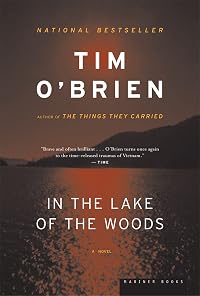
I bought and read this book after reading O'Brien's novel "In the Lake of the Woods", which I been impressed by. "The Nuclear Age" is extremely lame by comparison and it's a wonder I even bothered finishing the novel.
Brilliant nuclear detonations and rising silver Titans have plagued William's dreams since his childhood during the Cuban missile crisis, when he fashioned a fallout shelter from the family ping-pong table. Thirty years later his fear has mushroomed into blinding paranoia, and when his wife announces she is leaving, he laces a hole in the backyard with dynamite, places her in it, and prepares to blow her up. Understand, however, that he is a good pacifist. The impending murder is really the Bomb's fault. ``If you're sane, you see the Bomb's madness. If you see madness, you freak.'' Such is O'Brien's ceaseless harangue in The Nuclear Age , an awkward polemic sure to disappoint readers of Going After Cacciato . Sadly, The Nuclear Age is show more not in that league, with orchestrated excitement here replaced by a didactic monotone. Paul E. Hutchison, English Dept., Pennsylvania State Univ., University Park
Copyright 1985 Reed Business Information, Inc. (Library Journal) show less
Copyright 1985 Reed Business Information, Inc. (Library Journal) show less
First edition
Members
- Recently Added By
Author Information

21+ Works 26,173 Members
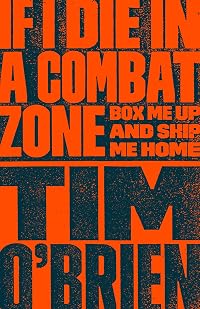
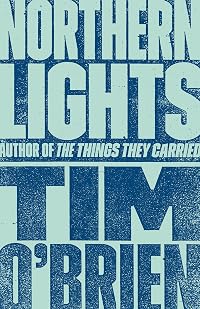
Tim O'Brien was born on October 1, 1946 in Austin, Minnesota. He graduated from Macalester College in 1968 and was immediately drafted into the U. S. Army, serving from 1969 to 1970 and receiving a Purple Heart. Three years later, his memoirs of the Vietnam War were published as If I Die in a Combat Zone, Box Me Up and Ship Me Home. Later works show more include Northern Lights (1975), Going After Cacciato (1978, winner of the National Book Award), and The Things They Carried (1990, winner of the Melcher Book Award and finalist for the Pulitzer Prize and the National Book Critics Circle Award). (Bowker Author Biography) show less
Classifications
Statistics
- Members
- 398
- Popularity
- 78,482
- Reviews
- 9
- Rating
- (3.33)
- Languages
- Dutch, English, French
- Media
- Paper, Ebook
- ISBNs
- 11
- ASINs
- 7