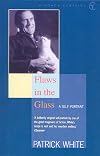
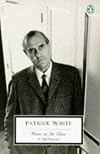
Flaws in the Glass
by Patrick White
On This Page
Description
A self-portrait that is as brilliant original as White's fiction and drama. In this remarkable self-portrait Patrick White explains how on the very rare occasions when he re-reads a passage from one of his books, he recognises very little of the self he knows. This 'unknown' is the man interviewers and visiting students expect to find, but 'unable to produce him', he prefers to remain private, or as private as anyone who has been awarded the Nobel Prize for Literature can ever be. In this show more book is the self Patrick White does recognise, the one he sees reflected in the glass. show lessTags
Recommendations



















Member Reviews
[Flaws in the Glass] or as one critic labelled it Claws in the Ass. Patrick White subtitled his autobiography “A Self Portrait” in which he publicly acknowledged his homosexuality and took time out to take a couple of vitriolic swipes at Australian public figures, hence the critical epithet. White makes no secret of his character flaws and what emerges is an honest account of a man’s struggle to live in a world whose people he did not care for over much. He saw himself as a writer first and foremost and railed against the low esteem that artists had to suffer in his native Australia.
The book is in three sections, as are most of his novels. Part one is the story of his life up until the time of his writing in his late 60’s. It show more concentrates on his childhood and his war years. It is a series of impressions which have a vague chronology about them that enables the reader to follow the story. Mostly it is written in short sections and as one would expect it is beautifully written; he is at pains to give some idea of how his life has influenced his writing and there is some background to his novels, but only really snippets. The second part is entitled "Journeys" and describes his travels with Manoly his life long partner through Greece. There are some wonderful descriptions of landscape and the people that he observed in them, but as this is Patrick White there is much to complain about as well; so much so that at the end of this section I wondered why he bothered to travel at all. The answer of course is that he was gaining material for his books. The final section is a series of essays on important events in his life; including his winning of the Nobel Prize, his “shocking career” as a political activist, those infamous putdowns and his acceptance by a younger generation of artists.
Why would Patrick White want to write an autobiography? One of the reasons must have been to answer his critics. He clearly and concisely answers them on his supposed intellectual aloofness and misogyny in his novels, both charges that anyone who takes the time to read him would find unjust in the extreme. He explains his position on his homosexuality and the criticism he has received from the homosexual community for not “coming out” publicly. He even takes time to answer those who complain of too much farting in his novels:
“Some critics complain that my characters are always farting. Well, we do, don’t we? Fart. Nuns fart according to tradition and patisserie. I have actually heard one.”
Another reason for writing his autobiography must have been his love of writing and what better subject than himself. He readily admits to being vain, he does not attempt to gloss over his foul temper, his impatience and irritability. He says “I have to admit to a bitter nature, the only sweetness in it comes from Manoly”. He can also give vent to his feelings about the world around him and his views on his fellow human beings and whereas White himself may be found wanting, that is nothing compared to most other people:
“I tell myself I must not hate other human beings. I try to conjure up my vision of an actual landscape and the inhabitants to whom it belongs. But it is hard for visions to survive in the plastic present, as mascara trickles from smeared eyes and blown-up lips gorge themselves on mass-produced food. There comes a time when a stream of semi-digested eggplant, mincemeat and tomato is vomited across the screen of memory in a sour splurge”
White in later life became incensed by the corruption and dishonesty of the ruling classes in Australia and campaigned against many local injustices. He found himself moving further and further to the left, hating the money get-rich culture and championing the rights of the working classes.
Anybody interested in Patrick White would probably want to read these words from the man himself, however much of this material has been re-cycled in David Marr’s excellent biography [Patrick White; a life]. A generous three stars from me because I enjoyed what Patrick had to say and there is some fine wring here. show less
The book is in three sections, as are most of his novels. Part one is the story of his life up until the time of his writing in his late 60’s. It show more concentrates on his childhood and his war years. It is a series of impressions which have a vague chronology about them that enables the reader to follow the story. Mostly it is written in short sections and as one would expect it is beautifully written; he is at pains to give some idea of how his life has influenced his writing and there is some background to his novels, but only really snippets. The second part is entitled "Journeys" and describes his travels with Manoly his life long partner through Greece. There are some wonderful descriptions of landscape and the people that he observed in them, but as this is Patrick White there is much to complain about as well; so much so that at the end of this section I wondered why he bothered to travel at all. The answer of course is that he was gaining material for his books. The final section is a series of essays on important events in his life; including his winning of the Nobel Prize, his “shocking career” as a political activist, those infamous putdowns and his acceptance by a younger generation of artists.
Why would Patrick White want to write an autobiography? One of the reasons must have been to answer his critics. He clearly and concisely answers them on his supposed intellectual aloofness and misogyny in his novels, both charges that anyone who takes the time to read him would find unjust in the extreme. He explains his position on his homosexuality and the criticism he has received from the homosexual community for not “coming out” publicly. He even takes time to answer those who complain of too much farting in his novels:
“Some critics complain that my characters are always farting. Well, we do, don’t we? Fart. Nuns fart according to tradition and patisserie. I have actually heard one.”
Another reason for writing his autobiography must have been his love of writing and what better subject than himself. He readily admits to being vain, he does not attempt to gloss over his foul temper, his impatience and irritability. He says “I have to admit to a bitter nature, the only sweetness in it comes from Manoly”. He can also give vent to his feelings about the world around him and his views on his fellow human beings and whereas White himself may be found wanting, that is nothing compared to most other people:
“I tell myself I must not hate other human beings. I try to conjure up my vision of an actual landscape and the inhabitants to whom it belongs. But it is hard for visions to survive in the plastic present, as mascara trickles from smeared eyes and blown-up lips gorge themselves on mass-produced food. There comes a time when a stream of semi-digested eggplant, mincemeat and tomato is vomited across the screen of memory in a sour splurge”
White in later life became incensed by the corruption and dishonesty of the ruling classes in Australia and campaigned against many local injustices. He found himself moving further and further to the left, hating the money get-rich culture and championing the rights of the working classes.
Anybody interested in Patrick White would probably want to read these words from the man himself, however much of this material has been re-cycled in David Marr’s excellent biography [Patrick White; a life]. A generous three stars from me because I enjoyed what Patrick had to say and there is some fine wring here. show less
At times remorselessly dishing himself, White makes us read some of his sentences several times for all the nuance. I wish I"d read some of his work recently so I could catch the allusions. Quite bitter at times, but also very funny.
I recently discovered Patrick White and The Aunt's Story through an article in The Times (London) Literary Supplement. I loved the novel and wanted more. Before reading the rest of his novels, I decided to read his autobiography. I also have his letters which I will read during the reading frenzy I am currently in, now that I am finished the Spring semester.
This episodic and charming autobiography reveals a lot about White's life, and loves, and relationships. I have a much better understanding of Aunt's Story.
White's novels are quirky, and so is this biography.
He reveals a lot of extremely sensitive information about his family and especially his relationship with his parents. I imagine the letters will be equally revealing.
Stay tuned show more for more on this wonderful novelist.
--Jim, 5/5/07 show less
This episodic and charming autobiography reveals a lot about White's life, and loves, and relationships. I have a much better understanding of Aunt's Story.
White's novels are quirky, and so is this biography.
He reveals a lot of extremely sensitive information about his family and especially his relationship with his parents. I imagine the letters will be equally revealing.
Stay tuned show more for more on this wonderful novelist.
--Jim, 5/5/07 show less
Ratings
Members
- Recently Added By
Author Information

42+ Works 7,682 Members
Patrick White was born on May 28, 1912 in Knightsbridge, London, to Australian parents. He studied modern languages at King's College, Cambridge. During World War II, he served in the Royal Air Force. His first novel, Happy Valley, was published in 1939. His other works include The Tree of Man, Voss, Riders in the Chariot, The Solid Mandala, The show more Twyborn Affair, and The Hanging Garden. He also wrote several plays including The Season at Sarsaparilla, Night on Bald Mountain, and Signal Driver. They never met with the success his fiction had and have not been produced outside Australia. He won the Nobel Prize for Literature in 1973. He died on September 30, 1990. (Bowker Author Biography) show less
Common Knowledge
- Original publication date
- 1981
- People/Characters
- Patrick White
- Important places
- Sydney, New South Wales, Australia; New South Wales, Australia; Australia
Classifications
Statistics
- Members
- 245
- Popularity
- 132,959
- Reviews
- 4
- Rating
- (3.70)
- Languages
- English, Swedish
- Media
- Paper, Audiobook, Ebook
- ISBNs
- 10
- ASINs
- 2