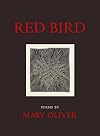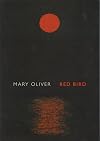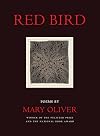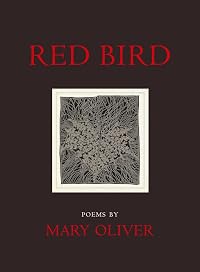
Red Bird: Poems
by Mary Oliver
On This Page
Description
A collection of poems celebrates the many forms that love can take and bemoans the fate of the natural world.Tags
Recommendations




Member Reviews
These poems were a calm relief at the end of the day. Whether it is the truth that comes from contemplating Nature or the emotion of a broken heart, Oliver's voice always sounds so true. There are so many classic poems here and as in all of her books (so far) each poem blends seamlessly into the next poem. I wanted to share the prose poem, Of the Empire.
Of the Empire
"We will be known as a culture that feared death and adored power, that tried to vanquish insecurity for the few and cared little for the penury of the many. We will be known as a culture that taught and rewarded the amassing of things, that spoke little if at all about the quality of life for people (other people), for dogs, for rivers. All the world, in our eyes, they show more will say, was a commodity. And they will say that this structure was held together politically, which it was, and they will say also that our politics was no more than an apparatus to accommodate the feelings of the heart, and that the heart, in those days, was small, and hard, and full of meanness." show less
Of the Empire
"We will be known as a culture that feared death and adored power, that tried to vanquish insecurity for the few and cared little for the penury of the many. We will be known as a culture that taught and rewarded the amassing of things, that spoke little if at all about the quality of life for people (other people), for dogs, for rivers. All the world, in our eyes, they show more will say, was a commodity. And they will say that this structure was held together politically, which it was, and they will say also that our politics was no more than an apparatus to accommodate the feelings of the heart, and that the heart, in those days, was small, and hard, and full of meanness." show less
I enjoy Mary Oliver's ability to draw a quick picture and make a point about nature or something deep in the human soul. Some poems were absolutely beautiful and I enjoyed reading them over and over. Others left me cold. But it's a short collection and worth dipping into. My favorites were "Another Everyday Poem" and "Summer Morning." I wrote both in my commonplace book, as well as this snippet from "Sometimes":
"Instructions for living a life:
Pay attention.
Be astonished.
Tell about it."
That, I think, describes her poetry perfectly.
"Instructions for living a life:
Pay attention.
Be astonished.
Tell about it."
That, I think, describes her poetry perfectly.
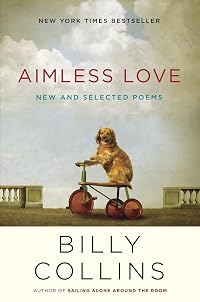
This slim book of poetry – recommended by a good friend – contains 61 poems. Until this recommendation, I had never heard of this poet, but I really do appreciate finding another poet who reminds me of my favorite, Billy Collins. Mary Oliver’s Red Bird contains poems with simple language, clear imagery, with profound insights into the human condition.
The best thing I can do is to quote a few of the many favorites I found in the collection, most of which focuses on nature. “Of the Empire” has a timely theme:
We will be known as a culture that feared death
and adored power, that tried to vanquish insecurity
for the few and cared little for the penury of the
many. We will be known as a culture that taught
and rewarded the amassing of show more things, that spoke
little if at all about the quality of life for
people (other people), for dogs, for rivers. All
the world in our eyes, they will say, was a
commodity. And they will say that this structure
was held together politically, which it was, and
they will say also that our politics was no more
than an apparatus to accommodate the feelings of
the heart, and that the heart, in those days,
was small, and hard, and full of meanness. (46).
Some poems have a Zen-like quality. In “Both Worlds,” for instance, Oliver writes,
“I rise from the chair,
I put on my jacket
and leave the house
for that other world –
the first one
the holy one –
where the trees say
nothing the toad says
nothing the dirt
says nothing and yet
what has always happened
keeps happening:
the trees flourish
the toad leaps
and out of the silent dirt
the blood-red roses rise.” (51-52)
Many others have a philosophical bent. This short poem hacks a lot into six lines. “I Ask Percy How I Should Life My Life (Ten) sums up many of Oliver’s sentiments.
“Love, love, love, says Percy.
And run as fast as you can
along the shining beach, or the rubble, or the dust.
Then, go to sleep.
Give up your body heat, your beating heart.
Then trust.” (55)
In the waning days of 2012, this poem takes me back to Christmas weekend, and the honeymoon we never had. Port Aransas, Mustang Island, Padre Island, the gulf, the hotel pool, walks at night, in the morning, and in the afternoon with quiet dinners alone. How closer can I connect to a poem than that? As I near the thoughts of retirement, Oliver and Percy have found the truth: “Love, love, love.”
Mary Oliver’s collection, Red Bird, deserves a read, and a second closer read, and a third, even closer, and a fourth… 5 stars.
--Jim, 12/30/12 show less
The best thing I can do is to quote a few of the many favorites I found in the collection, most of which focuses on nature. “Of the Empire” has a timely theme:
We will be known as a culture that feared death
and adored power, that tried to vanquish insecurity
for the few and cared little for the penury of the
many. We will be known as a culture that taught
and rewarded the amassing of show more things, that spoke
little if at all about the quality of life for
people (other people), for dogs, for rivers. All
the world in our eyes, they will say, was a
commodity. And they will say that this structure
was held together politically, which it was, and
they will say also that our politics was no more
than an apparatus to accommodate the feelings of
the heart, and that the heart, in those days,
was small, and hard, and full of meanness. (46).
Some poems have a Zen-like quality. In “Both Worlds,” for instance, Oliver writes,
“I rise from the chair,
I put on my jacket
and leave the house
for that other world –
the first one
the holy one –
where the trees say
nothing the toad says
nothing the dirt
says nothing and yet
what has always happened
keeps happening:
the trees flourish
the toad leaps
and out of the silent dirt
the blood-red roses rise.” (51-52)
Many others have a philosophical bent. This short poem hacks a lot into six lines. “I Ask Percy How I Should Life My Life (Ten) sums up many of Oliver’s sentiments.
“Love, love, love, says Percy.
And run as fast as you can
along the shining beach, or the rubble, or the dust.
Then, go to sleep.
Give up your body heat, your beating heart.
Then trust.” (55)
In the waning days of 2012, this poem takes me back to Christmas weekend, and the honeymoon we never had. Port Aransas, Mustang Island, Padre Island, the gulf, the hotel pool, walks at night, in the morning, and in the afternoon with quiet dinners alone. How closer can I connect to a poem than that? As I near the thoughts of retirement, Oliver and Percy have found the truth: “Love, love, love.”
Mary Oliver’s collection, Red Bird, deserves a read, and a second closer read, and a third, even closer, and a fourth… 5 stars.
--Jim, 12/30/12 show less
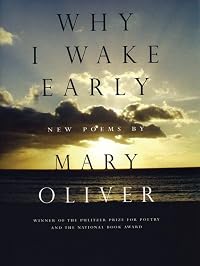
This latest volume of Mary Oliver’s poetry, published in 2008, contains many pieces in which she uses her clarity of vision to help us see what she sees and feel what she feels about it, which I consider is a hallmark of her work of the last ten or so years, the poetry of hers with which I’m familiar. In addition to giving us glimpses and insights into nature, I have many times felt I discerned “life lessons” very subtly hinted at although perhaps sometimes this is something I bring to the poem rather than anything Mary Oliver intended. However, in this volume, the “life lessons” in these poems seem to be more overt as if she is now using these observations to help her cope with life as in other volumes she has been helping show more me cope with mine. She also deals with a wider range of topics in these selections than I have noticed before in her books, including poems that verge on the political and others that are more religious than she has been in the past. In the earlier volumes I have read, especially in Why I Wake Early, she has given me the feeling that she goes to nature for gaining strength and peace in her life and also for her spirituality. In Red Bird, especially, and less intensely in What Do We Know, I feel that in some way life has overwhelmed her and she is struggling to regain that peace from nature she used to have but she is also looking to God now as a source of either strength or comfort and is also being forced to confront what is happening in the world—no longer able to separate it from her poetry. One possible cause of this change that she acknowledges is she is getting older—reaching seventy and feeling that her time is getting shorter. I suspect from some of the poems in this volume that she is also dealing with a tremendous loss—probably of a loved one either through death or separation. This is a powerful book and more personal than the previous work of hers that I’ve read, even than What Do We Know, published in 2002 in which she gives us some personal glimpses of grief over the death of a beloved dog and also some looking beyond nature for spirituality. show less
The subjects of the Oliver poems are of a naturalistic bent. The collection itself is bracketed by the motif of the red bird which flits throughout the works as a beacon. The poems themselves are rather dark--speaking of night and winter. Even when the setting is spring or summer, it's in the early morning when the darkness is still clinging with tenterhooks. It's the inexorable river images of passing time, the mentions of civilization's disastrous byproducts in the more political pieces, and the dark edges of self-contemplation in the cycle "Eleven Versions of the Same Poem" that emphasizes life as depressing and unpleasant. The only thing that saves life from being truly depressing and unpleasant is the "red bird". Sometimes, this show more symbol doesn't appear as a red bird at all. It could be aspects of the red bird--like flute players, roses, the coming dawn, the tongue of a panther, apples, berries--which are all vibrant and energetic and as indicated in the collection's final poem, "Red Bird Explains Himself," the soul. (more) show less
This collection made me want to live inside a windblown leaf. Absolutely stunning.
Z really liked this first foray into Mary Oliver. She's a great bridge for non-kid-targeted contemporary poetry for wordnerds, especially nature-loving ones.
Members
- Recently Added By
Lists

Tonikat reading completed on Librarything journals
329 works; 2 members
Author Information

54+ Works 21,173 Members
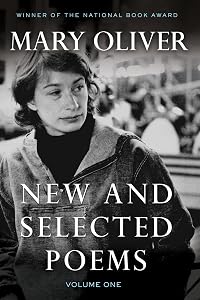
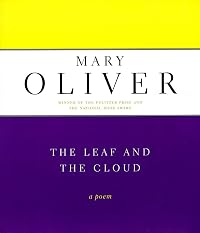
Mary Oliver was born in Cleveland, Ohio on September 10, 1935. She attended Ohio State University and Vassar College, but did not receive a degree. Her first collection of poems, No Voyage and Other Poems, was published in 1963. She wrote more than 20 volumes of poetry including The River Styx, Ohio; The Leaf and the Cloud; Evidence; Blue Horses; show more and Felicity. She received several awards including the Pulitzer Prize for American Primitive, the Christopher Award and the L. L. Winship/PEN New England Award for House of Light, and the National Book Award for New and Selected Poems. Her books of prose include A Poetry Handbook, Rules for the Dance: A Handbook for Writing and Reading Metrical Verse, and Long Life: Essays and Other Writings. She held the Catharine Osgood Foster Chair for Distinguished Teaching at Bennington College from 1995 to 2001. She died on January 17, 2019 at the age of 83. (Bowker Author Biography) show less
Common Knowledge
- People/Characters
- Percy; Red Bird
- Epigraph
- But I always think that the best way to know God is to love many things. --Vincent van Gogh
- First words
- Red bird came all winter / firing up the landscape / as nothing else could.
- Last words
- (Click to show. Warning: May contain spoilers.)"And no less, to make this work, / the soul has need of a body, / and I am both of the earth and I am of the inexplicable / beauty of heaven / where I fly so easily, so welcome, yes, / and this is why I have been sent, to teach this to your heart."
Classifications
Statistics
- Members
- 452
- Popularity
- 67,660
- Reviews
- 8
- Rating
- (4.26)
- Languages
- English
- Media
- Paper, Ebook
- ISBNs
- 4
- ASINs
- 2