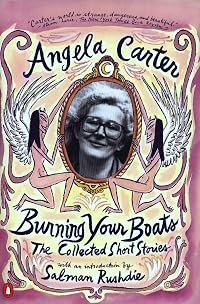
Burning Your Boats: The Collected Short Stories
by Angela Carter
On This Page
Description
Forty-two stories. In The Bloody Chamber, a bride discovers she married a sadist, The Quilt Maker is on aging, and Our Lady of the Massacres is on the destruction of Indians.Tags
Recommendations

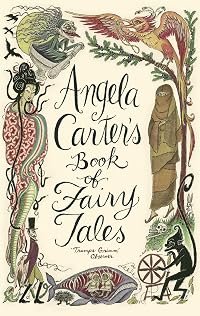
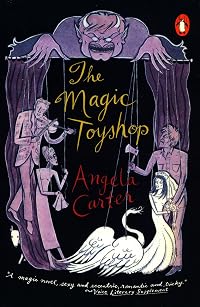

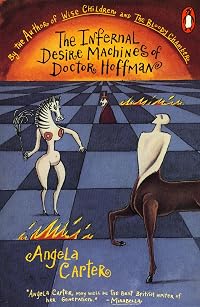








Member Recommendations
Member Reviews
If I had only one word to describe Angela Carter, I think I might go with "audacious". One lonely adjective, however, never satisfied Carter or me.
Carter's imagination is dark, elemental and disturbing, and it wends its way through a rich intellectual landscape. I happen to share Carter's interests in certain motifs, themes and tropes -- fairy tales, folklore, the ocean and forest in myth, and others -- and the rich variety of topics, settings and structures in the collection was engaging.
Carter's prose does tend towards the purple, and while on the one hand it is an essential part of her charming audacity, on the other hand it can be excessive. It can even tire the eye so that it may miss or fail to appreciate inspired images like a show more tumbledown house "with a look of oracular blindness", a child with "a whim of iron", or Autumn giving the forest "a sickroom hush". Sometimes, Carter indulges her purple tendencies under the auspices of a believably pompous or flowery narrator, but different readers may find that mechanism more or less effective. Some stories are not so hothouse lush in their verbiage, so I'd encourage a first-time Carter reader to flip past any stories that bother them, rather than putting the book down.
Some of her revised fairy tales from The Bloody Chamber, as has been noted elsewhere, are more amusing than insightful in the light of further developments in the genre. At their best, however, her work, mythic and everyday alike, exposes and owns human ugliness and opens the door briefly to primal beauties. My favorite is "Ashputtle, or the Mother's Ghost: three versions of one story", which first analyzes, then strips and distills the Cinderella myth to its haunting bones.
Nota bene: Carter's stories are sometimes gory, and several include scenes of sexual violence. show less
Carter's imagination is dark, elemental and disturbing, and it wends its way through a rich intellectual landscape. I happen to share Carter's interests in certain motifs, themes and tropes -- fairy tales, folklore, the ocean and forest in myth, and others -- and the rich variety of topics, settings and structures in the collection was engaging.
Carter's prose does tend towards the purple, and while on the one hand it is an essential part of her charming audacity, on the other hand it can be excessive. It can even tire the eye so that it may miss or fail to appreciate inspired images like a show more tumbledown house "with a look of oracular blindness", a child with "a whim of iron", or Autumn giving the forest "a sickroom hush". Sometimes, Carter indulges her purple tendencies under the auspices of a believably pompous or flowery narrator, but different readers may find that mechanism more or less effective. Some stories are not so hothouse lush in their verbiage, so I'd encourage a first-time Carter reader to flip past any stories that bother them, rather than putting the book down.
Some of her revised fairy tales from The Bloody Chamber, as has been noted elsewhere, are more amusing than insightful in the light of further developments in the genre. At their best, however, her work, mythic and everyday alike, exposes and owns human ugliness and opens the door briefly to primal beauties. My favorite is "Ashputtle, or the Mother's Ghost: three versions of one story", which first analyzes, then strips and distills the Cinderella myth to its haunting bones.
Nota bene: Carter's stories are sometimes gory, and several include scenes of sexual violence. show less
I love these stories. She writes like, I dunno, a raunchy and giddy Robert Aickman? I want to be friends with her as teenagers and wear capes to school. But more, her stories feel genuinely dangerous.
With a lifelong fascination with and love for fairy tales, I kept reading mentions of Angela Carter as a prime modern practitioner of the art, so I figured it was time I gave her a look. Lush, ornamental, even purple prose - which is fine with me - but it was a bit like having double chocolate raspberry cheesecake three times a day for a week. After a while... you need to cleanse your palate. Some smooth, sly retellings of classic fairy tales; some try too hard and lose the suspension of belief. I confess I didn't finish - a little Carter goes a long way. Once you see what she's up to, that's about all you need.
Not much plot among a great bouquet of atmosphere. Plot is taken up if it lying around handy and not even much turned about and only upended for Little Red in her forest. It is decorated with old seaweed and menstrual rags, dusted with spangles and faux pearls.
Tired of the usual pomo bad boys? Read Angela Carter. Now. Carolyn See said in the Washington Post that it is "a treasure chest of literary and aesthetic experience . . . mysterious, glamorous, beautiful." One of my professors described the quality of her prose by likening it to eating frosting right out of a can. Carter's imaginative powers are fully her own; her work is unlike anything else you'll encounter. Her novels are dense, rich, hugely inventive and unconventional. The stories are too, but you can take them in smaller doses, which can be a big advantage. Some of the most popular are reworkings of folklore or fairy tales, recast with uncanny magic. Carter's work is deeply feminist, but in a way that goes beyond the usual show more boundaries of empowerment and liberation. If I had to make comparisons, I might describe it as a cocktail of Kathy Acker, Italo Calvino and Roald Dahl.
If you need linear plots and are bothered by ornate or baroque use of language, this may not work for you. But if you're willing to go wherever Carter takes you, you won't be let down. I've had this book since it came out and still haven't finished with it. show less
If you need linear plots and are bothered by ornate or baroque use of language, this may not work for you. But if you're willing to go wherever Carter takes you, you won't be let down. I've had this book since it came out and still haven't finished with it. show less
I sometimes have trouble unravelling exactly how I feel about a short story collection: individual stories in isolation are one thing, but a story that might normally knock my socks off doesn't always strike me as so impressive when I'm reading it after having read thirty other stories by the same author immediately prior. I tend to think that the short stories of most authors simply don't work well in large collections, since most authors don't have the range in writing style to keep such collections interesting for me (Alice Munro), and even those that do write in a variety of styles oftentimes focus on the same themes or ideas repeatedly (Borges [who I love in a moderate length collection like Ficciones, but who I don't think comes show more off nearly as well if you try to read his complete collected fictions straight through]).
Carter belongs to the group that writes in varying styles, but who tends to explore the same themes and topics over and over again. The large majority of Carter's stories feature taboo or strange sexual escapades, many of them tell the tale of a transformation or descent into savagery, and Carter often likes to reimagine fairy tales or other communal stories in a darker and more sexualized way. Credit where credit is due, Burning Your Boats shows that Carter wasn't merely writing about taboo sex for its shock value, but was genuinely fascinated by the topic, as she tried to explore the subject from multiple angles. Unfortunately it's a topic that loses its emotional impact when it is brought up over and over again, and Carter has some instance of it in almost every story in this collection.
The fact that Carter writes in a variety of styles helps make the collection more readable despite the frequently reoccurring themes and topics, since it made each story different through unique stylistic choices. That said, some of the experiments with format, concept, writing style, etc. worked better than others. The snarky tone of Puss-in-Boots works, as does the idea of writing a prequel of sorts to set the stage for A Midsummer Night's Dream, but the overly surreal Reflections and the disjointed and unexplained nature of The Merchant of Shadows left me unengaged, not intrigued. Carter does some very interesting things in her early writing, like using the entire first three pages of a six page story just to establish the setting, but later in her career her narrative technique moved toward writing about some relatively obscure topic without giving the reader any frame of reference. I'm not a fan of this technique, at least not how Carter uses it here. Overall, therefore, I'd say that the literary experimentation that worked balanced out the experimentation that doesn't, plus at least Carter was trying new things instead of writing the exact same story in the exact same style every time.
Despite the themes and topics of Carter's story being repetitive and her literary experimentation being hit-or-miss, there are certainly some first-class stories here. I loved The Executioner's Beautiful Daughter and the desolate setting Carter painted. I also very much liked The Bloody Chamber, which in my opinion is Carter's best reimagining of a fairy tale. Finally, The Ghost Ships was a lot of fun to read and its subject matter isn't too obscure. Unfortunately, besides the occasional standout, most of the stories in this collection didn't strike home for me. All of them, however, were interesting in at least some way. I'd definitely recommend checking out a couple of her stories so that you can tell if she's your kind of author, but I'd only recommend reading the entirety of Burning Your Boats straight through if you are interested in observing her progression as an author (not in skill, but in the topics she continuously explores). At the end of the day, my opinion is that Angela Carter is a talented short story writer that wrote some very good stories, but that as a collection Burning Your Boats doesn't work very well. show less
Carter belongs to the group that writes in varying styles, but who tends to explore the same themes and topics over and over again. The large majority of Carter's stories feature taboo or strange sexual escapades, many of them tell the tale of a transformation or descent into savagery, and Carter often likes to reimagine fairy tales or other communal stories in a darker and more sexualized way. Credit where credit is due, Burning Your Boats shows that Carter wasn't merely writing about taboo sex for its shock value, but was genuinely fascinated by the topic, as she tried to explore the subject from multiple angles. Unfortunately it's a topic that loses its emotional impact when it is brought up over and over again, and Carter has some instance of it in almost every story in this collection.
The fact that Carter writes in a variety of styles helps make the collection more readable despite the frequently reoccurring themes and topics, since it made each story different through unique stylistic choices. That said, some of the experiments with format, concept, writing style, etc. worked better than others. The snarky tone of Puss-in-Boots works, as does the idea of writing a prequel of sorts to set the stage for A Midsummer Night's Dream, but the overly surreal Reflections and the disjointed and unexplained nature of The Merchant of Shadows left me unengaged, not intrigued. Carter does some very interesting things in her early writing, like using the entire first three pages of a six page story just to establish the setting, but later in her career her narrative technique moved toward writing about some relatively obscure topic without giving the reader any frame of reference. I'm not a fan of this technique, at least not how Carter uses it here. Overall, therefore, I'd say that the literary experimentation that worked balanced out the experimentation that doesn't, plus at least Carter was trying new things instead of writing the exact same story in the exact same style every time.
Despite the themes and topics of Carter's story being repetitive and her literary experimentation being hit-or-miss, there are certainly some first-class stories here. I loved The Executioner's Beautiful Daughter and the desolate setting Carter painted. I also very much liked The Bloody Chamber, which in my opinion is Carter's best reimagining of a fairy tale. Finally, The Ghost Ships was a lot of fun to read and its subject matter isn't too obscure. Unfortunately, besides the occasional standout, most of the stories in this collection didn't strike home for me. All of them, however, were interesting in at least some way. I'd definitely recommend checking out a couple of her stories so that you can tell if she's your kind of author, but I'd only recommend reading the entirety of Burning Your Boats straight through if you are interested in observing her progression as an author (not in skill, but in the topics she continuously explores). At the end of the day, my opinion is that Angela Carter is a talented short story writer that wrote some very good stories, but that as a collection Burning Your Boats doesn't work very well. show less
If she were alive today, they would say, "Bad woman! Bad!" because of her lack of compromise on textual aesthetics. When she was alive, they said, "Bad woman! Bad!" because aesthetics of her characters. You can't just like Angela Carter. You can't say, "Oh! this was a good book..." You have say, "Even though I oppose the idea of marriage, I would wed this collection."
Members
- Recently Added By
Lists

Magic Realism
371 works; 52 members

Jones & Newman: Best Horror Books Further Recommended Reading
577 works; 4 members
Author Information

100+ Works 25,422 Members
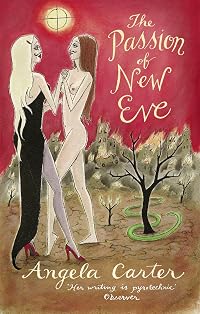
A powerful and disturbing writer, Angela Carter created haunting fiction about travelers surviving their passage through a disintegrating universe. Often based on myth or fairy tale-borrowed or invented for the occasion-her work evokes the most powerful aspects of sexuality and selfhood, of life and death, of apocalypse. Carter's most successful show more novels include The Magic Toyshop (1967), which received the John Llewellyn Rhys Prize and Several Perceptions (1968), winner of the Somerset Maugham Award. The Passion of New Eve (1977), a story of the end of the world and its possible new beginning with failed mankind replaced by a self-generating womankind. She translated many fairy tales and wrote several collections of short stories, including The Bloody Chamber (1979) which won the Cheltenham Festival of Literature Award and was the basis for the powerful movie A Company of Wolves. She worked as a journalist and as a professor at Brown and the University of Texas. She published two nonfiction books of interest: Nothing Sacred, selected writings, and The Sadeian Woman (1979). (Bowker Author Biography) show less
Some Editions
Work Relationships
Is contained in
Contains
Common Knowledge
- Canonical title*
- Nell'antro dell'alchimista. Tutti i racconti
- Original title
- Burning Your Boats: The Collected Short Stories
- Original publication date
- 1995
- First words
- All artists, they say, are a little mad.
- Quotations
- He said, "Mirrors make a room uncosy." I am sure there is more to it than that although they love to be cosy. One must love cosiness if one is to live so close together. ["A Souvenir of Japan", p 32 in Burning Your Boats... (show all)i>]
Had the marionette all the time parodied the living or was she, now living, to parody her own performance as a marionette? ["The Loves of Lady Purple", p 51 in Burning Your Boats]
The topmost branches twined so thickly that only a subdued viridian dazzle of light could filter through and the children felt against their ears a palpable fur of intense silence. ["Penetrating to the Heart of the Forest", p... (show all) 61 in Burning Your Boats] - Last words
- (Click to show. Warning: May contain spoilers.)Who now recedes into the deceptive privacy of a genre picture, a needlewoman, a quiltmaker, a middle-aged woman sewing patchwork in a city garden, turning her face vigorously against the rocks and trees of the patient wilderness waiting round us.
- Blurbers
- See, Carolyn; Warner, Marina; Atwood, Margaret; Moody, Rick
*Some information comes from Common Knowledge in other languages. Click "Edit" for more information.
Classifications
Statistics
- Members
- 1,367
- Popularity
- 17,477
- Reviews
- 17
- Rating
- (4.23)
- Languages
- 5 — Chinese, English, French, Italian, Spanish
- Media
- Paper, Ebook
- ISBNs
- 11
- ASINs
- 11