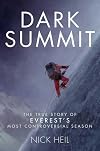
Dark Summit: The True Story of Everest's Most Controversial Season
by Nick Heil
On This Page
Description
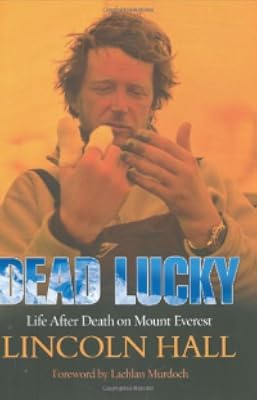
In early May 2006, a young British climber named David Sharp lay dying near the top of Mount Everest while forty other climbers walked past him on their way to the summit. A week later, Lincoln Hall, a seasoned Australian climber, was left for dead near the same spot. Hall's death was reported around the world, but the next day he was found alive after spending the night on the upper mountain with no food and no shelter. If David Sharp's death was shocking, it was not singular: despite show more unusually good weather, ten others died attempting to reach the summit that year. In this meticulous inquiry into what went wrong, Nick Heil tells the full story of the deadliest year on Everest since the infamous season of 1996. He introduces Russell Brice, the outfitter who has done more than anyone to provide access to the summit via the mountain's north side-and who some believe was partially responsible for Sharp's death. As more climbers attempt the summit each year, Heil shows how increasingly risky expeditions and unscrupulous outfitters threaten to turn Everest into a deadly circus. Written by an experienced climber and outdoor writer, Dark Summit is both a riveting account of a notorious climbing season and a troubling investigation into whether the pursuit of the ultimate mountaineering prize has spiralled out of control. show lessTags
Recommendations













Member Reviews
There are three kinds of books about climbing expeditions; those written by serious climbers - these are usually not particularly well-written, but are gripping because of their passion and the drama of their lived experience; Into Thin Air by Jon Krakauer; and books written by non-climbers or amateur climbers who are hoping to write a successful book just like Into Thin Air. Dark Summit: The True Story of Everest's Most Controversial Season by Nick Heil falls firmly into that third category.
In 2006, a decade after Into Thin Air was written, Everest was even more crowded with more climbers who required greater comfort and more help to reach the summit and return safely. On the north (Tibetan) side of Everest, the biggest and most show more luxurious outfitter is run by Russell Brice, who throws the best parties and is the one responsible for stringing the lines that allow all those climbers to reach the summit. Heil is fascinated by Brice and most of the book is told from the points of view of members of his team of guides and climbers.
That season saw several deaths, but the controversy referred to in the subtitle is the death of one man and the survival of another. David Sharp was climbing alone, using a climbing outfit solely as a way of getting access to the mountain. He climbed without sherpas and without anyone knowing his plans. He ended up stranded above a tricky bit of climbing (the Second Step) and while he was noticed by several climbers and passed by at least forty, no one helped him in any substantial way, despite his obvious peril. Another climber, who had been left for dead, was found by climbers heading up to the summit early the next day. He was rescued, in an effort that involved several teams.
Afterwards, questions were raised about why one man was rescued and the other abandoned. These are not unfamiliar issues and while the question of who gets rescued and who is not, and when is abandoning an attempt to reach the summit the right decision and when is the summit (given the time and money required to even make the attempt) more important than another adventurer's life. Ultimately, Heil's book is a disappointment. While his account of what happened over those few days is gripping, he fudges the serious questions he raises and is far too infatuated with Brice and his impressive business to pay serious attention to the issues of the ethical considerations of climbing a mountain that is a capitalist free-for-all, with the wealthiest climbers being able to purchase the certainty of a rescue being attempted if they run into problems, as well as the many unprepared climbers seeking to be the first of a category to summit (in this season, the first double amputee and the youngest teenager, for example) or simply gain the bragging rights, without the needed experience on other difficult peaks. show less
In 2006, a decade after Into Thin Air was written, Everest was even more crowded with more climbers who required greater comfort and more help to reach the summit and return safely. On the north (Tibetan) side of Everest, the biggest and most show more luxurious outfitter is run by Russell Brice, who throws the best parties and is the one responsible for stringing the lines that allow all those climbers to reach the summit. Heil is fascinated by Brice and most of the book is told from the points of view of members of his team of guides and climbers.
That season saw several deaths, but the controversy referred to in the subtitle is the death of one man and the survival of another. David Sharp was climbing alone, using a climbing outfit solely as a way of getting access to the mountain. He climbed without sherpas and without anyone knowing his plans. He ended up stranded above a tricky bit of climbing (the Second Step) and while he was noticed by several climbers and passed by at least forty, no one helped him in any substantial way, despite his obvious peril. Another climber, who had been left for dead, was found by climbers heading up to the summit early the next day. He was rescued, in an effort that involved several teams.
Afterwards, questions were raised about why one man was rescued and the other abandoned. These are not unfamiliar issues and while the question of who gets rescued and who is not, and when is abandoning an attempt to reach the summit the right decision and when is the summit (given the time and money required to even make the attempt) more important than another adventurer's life. Ultimately, Heil's book is a disappointment. While his account of what happened over those few days is gripping, he fudges the serious questions he raises and is far too infatuated with Brice and his impressive business to pay serious attention to the issues of the ethical considerations of climbing a mountain that is a capitalist free-for-all, with the wealthiest climbers being able to purchase the certainty of a rescue being attempted if they run into problems, as well as the many unprepared climbers seeking to be the first of a category to summit (in this season, the first double amputee and the youngest teenager, for example) or simply gain the bragging rights, without the needed experience on other difficult peaks. show less
Why do people endeavor to climb a mountain as dangerous as Everest? To what extent are people responsible for one another in a dangerous situation? What is the moral imperative when survival is inherently threatened?
This book attempts to address some of these issues primarily by reporting on the events of the 2006, one of the deadliest seasons on the mountain. David Sharp, an individual climber, ended up incapacitated (but still alive) on the mountain, and numerous other climbers passed him on the way to the summit, but did not offer aid. Heil does a nice job of neutrally uncovering why that happened, the media storm that followed, and the people who were impacted. As part of his investigation, he also relates the story of Lincoln Hall, show more an experienced climber who experienced cerebral edema on his way down. These stories tie together in interesting ways.
The initial half of the book introduces the major characters and relates some of the history of climbing Mt. Everest, but it is really the second half of the book that is more gripping and that has more to say about the human condition. show less
This book attempts to address some of these issues primarily by reporting on the events of the 2006, one of the deadliest seasons on the mountain. David Sharp, an individual climber, ended up incapacitated (but still alive) on the mountain, and numerous other climbers passed him on the way to the summit, but did not offer aid. Heil does a nice job of neutrally uncovering why that happened, the media storm that followed, and the people who were impacted. As part of his investigation, he also relates the story of Lincoln Hall, show more an experienced climber who experienced cerebral edema on his way down. These stories tie together in interesting ways.
The initial half of the book introduces the major characters and relates some of the history of climbing Mt. Everest, but it is really the second half of the book that is more gripping and that has more to say about the human condition. show less
"But what tended to prompt the most intense discussion, beyond the course of action, beyond even the lurid spectacle of men and women suffering slow deaths at high altitude, was the suggestion that the modern circus on Everest had exposed something essential about who we are as human beings - an insight that reverberated among climbers and non-climbers alike. More specifically, the cavalcade of deaths during 2006 raised the highly uncomfortable possibility that, in fact, we are not all in this together - that we are simply the latest edition of a complex species tenuously drawn together into social systems that mask our genetic predilection towards selfishness and competition. The argument, followed to its logical conclusion, had less show more and less to do with climbing mountains and more to do with the foundations of human sociology, and it challenged some of our most cherished assumptions about the roots of compassion and altruism."
I am an armchair climber. I love mountaineering books. There seem to be so many of them now, as everyone wants to tell their side of what happened on Everest in the deadly 1996 and 2006 seasons. And this book doesn't shy away from the hard questions. Why do people climb Everest and other mountains at such great cost - not only monetarily but also in lives? Why do people fail to help their fellow man when mortal peril is so obvious?
I enjoyed it and if you're in to Everest literature, or curious about it, I would recommend it. show less
I am an armchair climber. I love mountaineering books. There seem to be so many of them now, as everyone wants to tell their side of what happened on Everest in the deadly 1996 and 2006 seasons. And this book doesn't shy away from the hard questions. Why do people climb Everest and other mountains at such great cost - not only monetarily but also in lives? Why do people fail to help their fellow man when mortal peril is so obvious?
I enjoyed it and if you're in to Everest literature, or curious about it, I would recommend it. show less
I'm not sure how I stumbled upon this book - I'm not into mountain climbing or Everest and really don't know much of anything about it other than it is a thing that people sometimes do. Yet this book was fascinating and I devoured it. The writing style was very engaging and managed to not be dry at all, even with all the history and backstory included. The timeline wasn't completely straightforward and there were a LOT of people introduced so it was a bit difficult to keep everyone straight (which was really the only drawback to this book) but the pacing and style made it very easy to keep going. Perhaps someone that has more of a background in mountaineering books might feel that the first chapters spend too much time on the history of show more summiting on Everest but it I appreciated it. I did have to look up a number of mountaineering words (that I'm sure I will forget rapidly). Really fascinating. show less
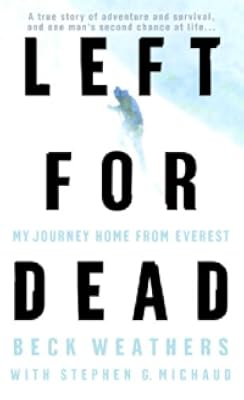
In 2006, Mount Everest saw it's deadliest season since 1996 (the year Jon Krakauer wrote about in Into Thin Air). But this time around, weather was not the cause. One man died after being passed by numerous climbers while he was still alive; another was left behind when they thought he was a lost cause (he was “left for dead”, similar to Beck Weathers in 1996); miraculously, he lived.
Another really good mountaineering book. The beginning, while looking back at history and – at the same time – introducing us to the “players” in 2006, I had a bit of hard time following, with so many people, years, stories. But, once we got going and focused on 2006, the story was riveting. I don't remember crying while reading Into Thin Air show more (but I'd be surprised if I didn't; I likely just don't remember), but I cried at a couple of places reading this one. show less
Another really good mountaineering book. The beginning, while looking back at history and – at the same time – introducing us to the “players” in 2006, I had a bit of hard time following, with so many people, years, stories. But, once we got going and focused on 2006, the story was riveting. I don't remember crying while reading Into Thin Air show more (but I'd be surprised if I didn't; I likely just don't remember), but I cried at a couple of places reading this one. show less
"The more I learned about the particulars surrounding Sharp's death, the less controversial it seemed to be."
This is the best summary I can find of this book, something that I very much agree with after reading. Before I had only briefly read about his death on Wikipedia which sort of just summed it up with "forty people walked by as he lay dying", and that ... might be true but it's also very much a simplification. There were people there trying to help, but it was too late, and it's not a place where it's easy to help.
The book in itself doesn't deal just with the Sharp case, and it gives backgrounds on lots of different climbers, which I really enjoyed. When you read about lots of mountaineering accidents or mountaineering in general, show more it's nice to get even just a little bit of insight as to what drives people to doing something they know could very well kill them.
It did not deal as much with David Sharp as I thought it would, but that was somewhat explained by the end, after mentioning how Sharp's parents did not want people to talk too much about him. This book seems like a good compromise, dealing with the circumstances around his death, but not getting too deep into his personal life. show less
This is the best summary I can find of this book, something that I very much agree with after reading. Before I had only briefly read about his death on Wikipedia which sort of just summed it up with "forty people walked by as he lay dying", and that ... might be true but it's also very much a simplification. There were people there trying to help, but it was too late, and it's not a place where it's easy to help.
The book in itself doesn't deal just with the Sharp case, and it gives backgrounds on lots of different climbers, which I really enjoyed. When you read about lots of mountaineering accidents or mountaineering in general, show more it's nice to get even just a little bit of insight as to what drives people to doing something they know could very well kill them.
It did not deal as much with David Sharp as I thought it would, but that was somewhat explained by the end, after mentioning how Sharp's parents did not want people to talk too much about him. This book seems like a good compromise, dealing with the circumstances around his death, but not getting too deep into his personal life. show less
Nick Heil has worked hard to try and write a balanced account of the events during Everest's 2006 season and to try and explain just why so many experienced and inexperienced climbers make the attempt to climb to the top of the world. This is not a romanticised account and, unlike so many, Heil does not point fingers or try and sensationalise events. Heil effectively conveys just how hard life it is to rescue anyone at altitude where everyone's brain is oxygen deprived and perception is at best foggy.
Members
- Recently Added By
Author Information
2 Works 357 Members
Some Editions
Awards and Honors
Awards
Common Knowledge
- Original publication date
- 2008
- People/Characters
- David Sharp; Lincoln Hall
- Important places
- Mount Everest / Sagarmatha; Himalayas
- Important events
- 1996 Everest Disaster
- Epigraph
- "A certain Samaritan, who was on a journey came upon him; and when he saw him, he felt compassion, and came to him, and bandaged up his wounds, pouring oil and wine on them; and he put him on his own beast, and bought him to ... (show all)an inn, and took care of him." - Luke 10:33-34
- Dedication
- For Mom, Dad, Kayte, Jon, Taylor, Tannis, Ginny, and Minnie. My family.
- First words
- Late on the night of May 10, 1996, a twenty-eight-year-old Ladakhi named Tsewang Paljor struggled slowly down Everest's Northeast Ridge.
- Last words
- (Click to show. Warning: May contain spoilers.)He had turned up in his own tent, hung-over, mildly perturbed, eager to go home.
Classifications
- Genres
- Sports and Leisure, Nonfiction, General Nonfiction, Travel, History, Biography & Memoir
- DDC/MDS
- 796.522095496 — Arts & recreation Recreation, sports, and performing arts Athletic and outdoor sports and games Outdoor leisure Walking and exploring by kind of terrain Mountains, hills and rocks standard subdivisions History, geographic treatment, biography Nepal, Himalayas
- LCC
- GV199.44 .E85 .H43 — Geography, Anthropology and Recreation Recreation. Leisure Recreation. Leisure Outdoor life. Outdoor recreation Hiking. Pedestrian tours
- BISAC
Statistics
- Members
- 355
- Popularity
- 89,269
- Reviews
- 23
- Rating
- (3.76)
- Languages
- English, German, Portuguese
- Media
- Paper, Audiobook, Ebook
- ISBNs
- 18
- ASINs
- 7