On This Page
Description
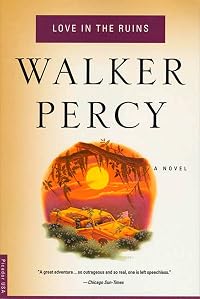
The auto age is defunct. Buicks, Chryslers, and Pontiacs disfigure the landscape. Vines sprout in Manhattan. Wolves are seen in downtown Cleveland. And psychiatrist, mental hospital outpatient, and inventor Dr. Tom More has created a miraculous instrument: the ontological lapsometer, a kind of stethoscope of the human spirit. With it, he plans to cure mankind's spiritual flu. But first he must survive Moira, Lola, and Ellen-and discover why so many living people are actually dead. Attempting show more to save the world from completely destroying itself, Tom ultimately begins to understand the quality and caprices of life and the uncontrollable vagaries of time and chance. show lessTags
Recommendations

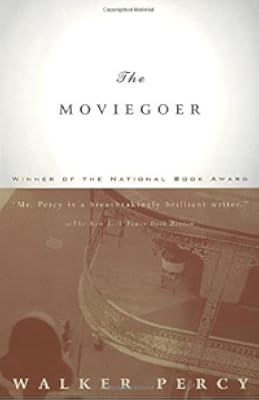
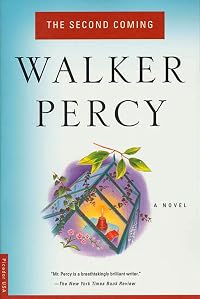
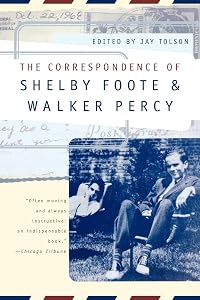
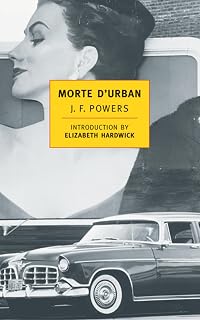
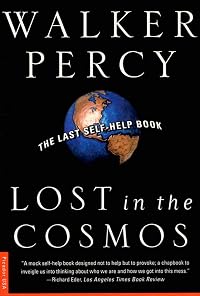
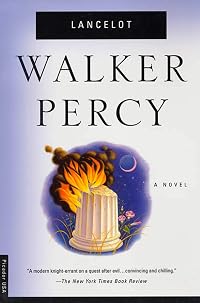
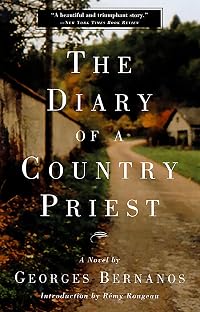
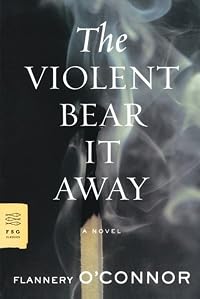


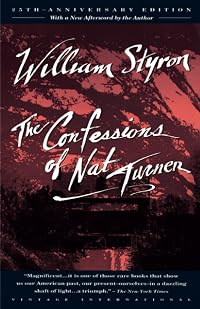
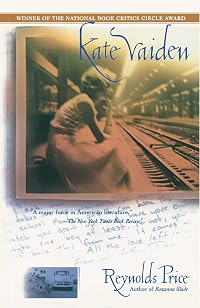
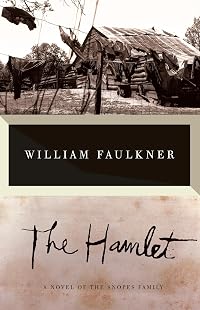
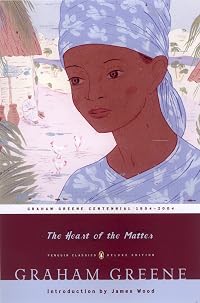
Member Recommendations
Member Reviews
Since the only Walker Percy novel I'd read previous to this one was "The Moviegoer," this came as sort of a surprise. "Love in the Ruins" is a political and religious satire set in the near future that focuses on Tom More, a doctor, inventor, bad Catholic, rum toddy enthusiast, and all-around sybarite. Tom himself is a likable character, and his efforts at navigating the shoals of the extreme political movements that have overcome the United States as he deals with personal tragedy will likely make him a sympathetic figure to many readers. But the real attraction of the book is its setting, which reflects both the natural beauty of the American South -- it's described as a lush, fertile barely controlled jungle -- and its take on our show more political future, which is both very much of its time (1971) and eerily prescient. While some of the aspects of the political scene that Percy presents here proved pretty transitory (love children! an armed, militant, separatist Black Power movement!) his description of partisans separated by culture and politics living side by side seems a lot like the modern United States. Either things haven't changed all that much from the early seventies or Percy was an unusually acute political and cultural oracle.
But considering that "The Moviegoer" was a pretty clear descendant of European existentialist novels, what really surprised me about "Love in the Ruins" was its unbridled sensuality: Dr. Tom More loves good-looking women with all his being, and Percy writes them very skillfully. Meanwhile, the forest runs wild: vines burst through the concrete as guerrillas and hippies take over the nearby swamp. This might be a Southern Catholic's response to the more ascetic aspects American Protestantism, though the conflation of consumer culture, nationalism, and religion also comes in for some criticism, too. But the book's also more playful and more lively than "The Moviegoer" was: there are times when you might be forgiven for thinking that you were reading a thriller of some sort.
I'm a bit less attuned to Percy's religious themes than I probably should be: I'm an even worse Catholic than Dr. More. But I think there's also, via a technological metaphor, an attempt here to reconcile humankind's base and lofty desires, as the main character fairly bursts with both. And maybe a plea, of some sort, for forgiveness -- from God, for each other, and for ourselves. Surprisingly enjoyable and recommended. show less
But considering that "The Moviegoer" was a pretty clear descendant of European existentialist novels, what really surprised me about "Love in the Ruins" was its unbridled sensuality: Dr. Tom More loves good-looking women with all his being, and Percy writes them very skillfully. Meanwhile, the forest runs wild: vines burst through the concrete as guerrillas and hippies take over the nearby swamp. This might be a Southern Catholic's response to the more ascetic aspects American Protestantism, though the conflation of consumer culture, nationalism, and religion also comes in for some criticism, too. But the book's also more playful and more lively than "The Moviegoer" was: there are times when you might be forgiven for thinking that you were reading a thriller of some sort.
I'm a bit less attuned to Percy's religious themes than I probably should be: I'm an even worse Catholic than Dr. More. But I think there's also, via a technological metaphor, an attempt here to reconcile humankind's base and lofty desires, as the main character fairly bursts with both. And maybe a plea, of some sort, for forgiveness -- from God, for each other, and for ourselves. Surprisingly enjoyable and recommended. show less
With an opening paragraph that explodes on the page with references to Christendom, Western civilization, and Dante, I immediately knew that this book was going to be good if not great. However I was thrown off a bit by the structure in which the first part was set on July Fourth and then went back to July 1st in the second part, but I got my bearings and began to enjoy the satire and the chaos of the world of the mid-80s in the United States where everything was falling apart around Paradise Estates, "an oasis of concord in a troubled land."
The protagonist is Dr. Thomas More (yes, namesake of the famous St. Thomas More) a heavy-drinking psychiatrist who has had his share of personal tragedy. He comments, "It is my misfortune---and show more blessing---that I suffer from both liberal and conservative complaints, e.g., both morning terror and large-bowel disorders, excessive abstraction and unseasonable rages, alternating impotence and satyriasis. So that at one and the same time I have great sympathy for my patients and lead a fairly miserable life."(p 20)
Tom hopes to turn his fortunes around with his invention, the lapsometer, with which he "can measure the index of life, life in death and death in life" --- This being a very scientific way to measure a sort of relative spirituality. The plot centers around his attempts to make progress with his invention while maintaining a semblance of normality, a vigorous love life, and interactions with a variety of interesting characters that include a Jewish atheist and a mephistopheles-like character who manages to persuade Tom to sign away his invention (i.e. his soul).
Through it all he maintains his own Catholic faith, while at the same time claiming, somewhat reasonably, to be a "bad" Catholic. At the same time he serves his fellow man in his role as a doctor while dealing with attacks from "Bantu" warriors and the impending collapse of society. The delight of the book comes from the savage satire and the potential for change in the life of Dr. Tom.
Seldom have I read a book that brings to mind my personal history; Love in the Ruins is one of those books. Written in the early 1970s, but set in a not too distant future of the mid 80s it is filled with references that in lesser books would merely seem out of date and discourage the reader. Yet Percy has captured the time and place with specific cultural entities like Howard Johnson's and others. I found this intriguing and fitting in a way that made the deterioration of society in the story more believable. He succeeds (certainly not intentionally) in mirroring the ongoing chaos in our own contemporary world. Ultimately, this is a novel, as the title suggests, about ruin, but also love, and perhaps therein a glimmer of hope---read it and find out. show less
The protagonist is Dr. Thomas More (yes, namesake of the famous St. Thomas More) a heavy-drinking psychiatrist who has had his share of personal tragedy. He comments, "It is my misfortune---and show more blessing---that I suffer from both liberal and conservative complaints, e.g., both morning terror and large-bowel disorders, excessive abstraction and unseasonable rages, alternating impotence and satyriasis. So that at one and the same time I have great sympathy for my patients and lead a fairly miserable life."(p 20)
Tom hopes to turn his fortunes around with his invention, the lapsometer, with which he "can measure the index of life, life in death and death in life" --- This being a very scientific way to measure a sort of relative spirituality. The plot centers around his attempts to make progress with his invention while maintaining a semblance of normality, a vigorous love life, and interactions with a variety of interesting characters that include a Jewish atheist and a mephistopheles-like character who manages to persuade Tom to sign away his invention (i.e. his soul).
Through it all he maintains his own Catholic faith, while at the same time claiming, somewhat reasonably, to be a "bad" Catholic. At the same time he serves his fellow man in his role as a doctor while dealing with attacks from "Bantu" warriors and the impending collapse of society. The delight of the book comes from the savage satire and the potential for change in the life of Dr. Tom.
Seldom have I read a book that brings to mind my personal history; Love in the Ruins is one of those books. Written in the early 1970s, but set in a not too distant future of the mid 80s it is filled with references that in lesser books would merely seem out of date and discourage the reader. Yet Percy has captured the time and place with specific cultural entities like Howard Johnson's and others. I found this intriguing and fitting in a way that made the deterioration of society in the story more believable. He succeeds (certainly not intentionally) in mirroring the ongoing chaos in our own contemporary world. Ultimately, this is a novel, as the title suggests, about ruin, but also love, and perhaps therein a glimmer of hope---read it and find out. show less
Love in the Ruins. Walker Percy. 1971. Walker’s futuristic satire of the state of his contemporary world and the people in it is not at all dated. He paints a bleak picture of a society in freefall full of self-important academics, weird hippies, country clubbers, physicians and psychologists, angry red necks and Black people who are all godless and miserable. Thomas More, a physician named after his ancestor who was beheaded for his beliefs, relates the story through a haze of booze and the emotions generated by the three women he plans to bed. He has invented a machine that can locate the soul and cure its sickness. Tom’s adventures eventually lead him to examine his own soul, to return to the Catholic Church and to lean to live a show more simple life. This is not an easy read, Percy’s insights into human nature are masterful and his descriptions of the South and Southerners, our decadent society, and our loss of faith as a people is spot on show less
I got through chapter three before I had to bail on this novel. (Audiobook narrated by Grover Gardener, who, I've had the pleasure of listening to, before). It's not the narrator's barely inflective voice that's making me bored as hell, as it's more than this. I don't think Gardener was enjoying himself at all, somehow. Also, some reviewers will find his writing and the plot clever and brilliantly written. I found both very tedious. I also didn't find a single thing about this novel funny.
And what's with the way the lead character keeps calling people "fags" and "negroes"...? I understand this novel got published quite a while ago, but this wasn't very fun for me, regardless of the novel supposedly being farcical. It was very show more cringe-worthy.
See these reviews for a more comprehensive view of how I feel:
https://www.goodreads.com/review/show/23459084?book_show_action=true&from_re...
https://www.goodreads.com/review/show/351629380?book_show_action=true&from_r...
2 stars, and not recommended. show less
And what's with the way the lead character keeps calling people "fags" and "negroes"...? I understand this novel got published quite a while ago, but this wasn't very fun for me, regardless of the novel supposedly being farcical. It was very show more cringe-worthy.
See these reviews for a more comprehensive view of how I feel:
https://www.goodreads.com/review/show/23459084?book_show_action=true&from_re...
https://www.goodreads.com/review/show/351629380?book_show_action=true&from_r...
2 stars, and not recommended. show less
My second most favorite Walker Percy novel. The protagonist is a bad Catholic, a ne'er do well who survives the apocalyptic setting, comforted by search for love and redemption. Or, at least our hero possesses sex and a warm toddy.
Percy is a master of writing. The novel concerns Dr. Thomas More, a bad Catholic, at a time near the end of the world. Not sure I understood everything, but it was fascinating to read.
A little slow and nothing spectacular in style that I’d expect from Percy. Good satire however.
Members
- Recently Added By
Lists

Catalog
41 works; 2 members

National Book Award Finalists - Fiction
377 works; 12 members
Author Information

35+ Works 13,724 Members
Walker Percy, May 28, 1916 - May 10, 1990 Walker Percy, born in Alabama, raised in Mississippi, and a former resident of Louisiana, was a member of a prominent Southern family who lost his parents at an early age and grew up as the foster son of his father's cousin. Percy graduated from the University of North Carolina and received his M.D. from show more Columbia, but was a nonpracticing physician who devoted much of his life to his writing. Percy's first novel, The Moviegoer (1961), won the 1962 National Book Award, but Charles Poore considers The Last Gentleman (1966) "an even better book." Love in the Ruins (1971) marks a sharp change in method and subject from the first two novels. A doomsday story set "at the end of the Auto Age," it exposes many foibles and abuses in contemporary life through sharp satire and extravagant fantasy. Whereas Love in the Ruins is funny, Percy's next novel, Lancelot (1977) is the rather bleak and pessimistic story of a deranged man who blows up his home when he finds proof of his wife's infidelities and then tells his story in an asylum for the mentally disturbed. Its apocalyptic vision is expressed in a more positive and affirmative way in The Second Coming (1980), which takes its title from the fact that it resurrects the character of Will Barret from The Last Gentleman and locates him, a quarter-century older, finding love and meaning in a cave. (Bowker Author Biography) show less

Walker Percy has a Legacy Library. Legacy libraries are the personal libraries of famous readers, entered by LibraryThing members from the Legacy Libraries group.
Some Editions
Awards and Honors
Awards
Distinctions
Series

Belongs to Publisher Series
suhrkamp taschenbuch (0614)
Work Relationships
Is contained in
Common Knowledge
- Canonical title*
- Liebe in Ruinen
- Original title
- Love in the Ruins: The Adventures of a Bad Catholic at a Time Near the End of the World
- Original publication date
- 1971
- People/Characters
- Dr. Thomas More; Ellen Oglethorpe
- Dedication
- For
Shelby Foote - First words
- Now in these dread latter days of the old violent beloved USA and of the Christ-forgetting Christ-haunted death-dealing Western world I came to myself in a grove of young pines and the question came to me: has it happened a... (show all)t last?
- Last words
- (Click to show. Warning: May contain spoilers.)To bed we go for a long winter's nap, twined about each other as the ivy twineth, not under a bush or a car or on the floor or any such humbug as marked the past peculiar years of Christendom, but at home in bed where all good folk belong.
*Some information comes from Common Knowledge in other languages. Click "Edit" for more information.
Classifications
Statistics
- Members
- 1,415
- Popularity
- 16,669
- Reviews
- 8
- Rating
- (3.83)
- Languages
- English, French, German, Spanish
- Media
- Paper, Audiobook, Ebook
- ISBNs
- 22
- ASINs
- 17