On This Page
Description
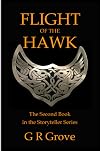
Britain in the summer of 551 AD: The North is a tinderbox about to burst into flame, the Saxons are stirring again in the East, and Cynan Garwyn, Prince of Powys, is doing his best to foment war in the South. In the midst of this simmering chaos, two young bards - Gwernin Storyteller and his friend Neirin mab Dwywei, the Poet-Prince that some call "Taliesin's Hawk" - are sent to the North by their master to investigate the rumors and do what they can to prevent a war. At least, that was show more their mission - but the two young men find plenty of other adventures along the way. Girls and beer, bloodshed and magic - will they survive the summer and make it home alive? This is the second book in the Storyteller series - the third book, titled The Ash Spear, is scheduled for publication in 2009. show lessTags
Recommendations



















Member Recommendations
gwernin Another version of Aneirin.

Member Reviews
The plot takes center stage in Flight of the Hawk, the second title in the Young Gwernin Trilogy, with Gwernin accompanying his friend and fellow apprentice, Neirin, to the Pictish kingdoms of future Scotland. This time the trip is part of a larger effort to shore up a weakening peace between the Picts and Saxons, and so is a weightier undertaking than was the case in Storyteller. Gwernin remains the focal point, however, so while the story follows him on his journeys, as it did in the first book, and while vignettes punctuate their travels as in that volume, the more purposeful trip makes for a stronger narrative arc and widens the scope of the tale to include forces at a political and cultural level.
There is a looming sense of the show more Roman occupiers, gone almost a century, and for me even more palpable than the presence of the Old Ones for Gwernin, Neirin, and those they meet. Coupled with the growing influence of Saxons and Picts, as well as Christians, it makes for a real bordertown / frontier scenario. The sense of place continues to be a strong suit of Grove’s writing. I’m left wondering about parallel situations in which a pervasive sense of the past shapes the abiding sense of place: perhaps for those in the former East Bloc, or for those steeped in the triple culture of the American Southwest. If it is present in the American Midwest, today, I am largely unaffected by it, and the comparison shows how my experience of society is defined by contemporary forces from the past 20 or 30 years, rather than 200 or 300 years.
Grove devotes more space to the esoteric tradition in Hawk. Characters other than Gwernin have encounters with the supernatural, and these episodes seem to occur more frequently. For now, the increased attention to esotericism takes the form of description of subjective events. Neither Gwernin nor other characters really discuss or analyse the encounters from an esoteric perspective, though it is implied that Neirin could at least begin such a discussion. Neirin instead bides his time perhaps out of deference to his own relative inexperience, or perhaps thinking it is not his place to discuss these matters with Gwernin. A conversation with a King under a hill, based upon Lindow Man; encounters with Standing Stones; and a visit from Gwydion at a Roman Tower on the Three Hills are key examples, though the introduction of a Pictish druid suggests yet more is in the offing. Gwernin seems to have a talent or mystical outlook, given his channeling of Gwydion, but as yet he has not tried to learn more or tap into it except once when in danger, in an effort to save his life.
Hawk is much more plot-driven than Storyteller, and it casts into high relief the pleasure I took from the episodic nature of the first book. Yet I very much appreciate that so far, each book has its own feel in terms of storytelling, and establishes these separate styles while keeping intact the established characters and the minor key approach I've come to associate with the series. It will be interesting to discover whether the third book has yet another shape. Deliberate or not, the change in style strikes me as mimetic, in parallel with changes evidenced in Gwernin’s character. show less
There is a looming sense of the show more Roman occupiers, gone almost a century, and for me even more palpable than the presence of the Old Ones for Gwernin, Neirin, and those they meet. Coupled with the growing influence of Saxons and Picts, as well as Christians, it makes for a real bordertown / frontier scenario. The sense of place continues to be a strong suit of Grove’s writing. I’m left wondering about parallel situations in which a pervasive sense of the past shapes the abiding sense of place: perhaps for those in the former East Bloc, or for those steeped in the triple culture of the American Southwest. If it is present in the American Midwest, today, I am largely unaffected by it, and the comparison shows how my experience of society is defined by contemporary forces from the past 20 or 30 years, rather than 200 or 300 years.
Grove devotes more space to the esoteric tradition in Hawk. Characters other than Gwernin have encounters with the supernatural, and these episodes seem to occur more frequently. For now, the increased attention to esotericism takes the form of description of subjective events. Neither Gwernin nor other characters really discuss or analyse the encounters from an esoteric perspective, though it is implied that Neirin could at least begin such a discussion. Neirin instead bides his time perhaps out of deference to his own relative inexperience, or perhaps thinking it is not his place to discuss these matters with Gwernin. A conversation with a King under a hill, based upon Lindow Man; encounters with Standing Stones; and a visit from Gwydion at a Roman Tower on the Three Hills are key examples, though the introduction of a Pictish druid suggests yet more is in the offing. Gwernin seems to have a talent or mystical outlook, given his channeling of Gwydion, but as yet he has not tried to learn more or tap into it except once when in danger, in an effort to save his life.
Hawk is much more plot-driven than Storyteller, and it casts into high relief the pleasure I took from the episodic nature of the first book. Yet I very much appreciate that so far, each book has its own feel in terms of storytelling, and establishes these separate styles while keeping intact the established characters and the minor key approach I've come to associate with the series. It will be interesting to discover whether the third book has yet another shape. Deliberate or not, the change in style strikes me as mimetic, in parallel with changes evidenced in Gwernin’s character. show less
Second in the Storyteller series. Britain in the 6th century AD and once again Gwernin is travelling, this time with Taliesin's apprentice Neirin, heading towards the Pictish kingdoms in Scotland. Tensions are rising between the many petty kingdoms of the time and the Saxon invaders are also a threat. The loss of the Druidic culture and the rise of Christianity also has a part to play in this story.
What felt like fewer stories and more about the journey and encounters that Gwernin has makes this a more cohesive, less episodic book. For a picture of Dark Age Britain G.R Grove has written a wonderfully descriptive book. The land; customs and people feel as though they really existed.
What felt like fewer stories and more about the journey and encounters that Gwernin has makes this a more cohesive, less episodic book. For a picture of Dark Age Britain G.R Grove has written a wonderfully descriptive book. The land; customs and people feel as though they really existed.
This was a pleasure to read; a recreation of a fascinating time through the traveling stories of a storyteller. G. R. Grove uses 17-yr-old Gwernin, our storyteller and an apprentice bard, to recreate 6th century Britain, "in some ways the darkest part of the European Dark Ages." She stays true to the facts, honoring the sparse surviving historical details and archeology, even keeping perfectly to the landscapes throughout England/Scotland/Wales.
We follow Gwernin, and his partner Neirin (a real historical figure and bard) as they wander across the small Briton and Pict kingdoms based in Roman constructions that are in various states of ruin and reincarnation. We pass through early manifestations of modern cities like Chester, Manchester show more and Edinburgh. The Briton kingdoms are all on brink of falling to Anglo-Saxon raiders and invaders, while as the same time the Druid knowledge base is fading away, and being replaced by the relentless expansion of Christianity. Gwernin introduces us to a whole spectrum of the time period as he deals with different dangers from the weather to manipulative kings to the Saxon raiders.
The stories are simple and straightforward. There isn't a great deal of gore and Arthurian dramatic romance, although all that is there. Each chapter is a different story and each is drawn along by a mostly subtle tension. And each is a wonderful recreation of the era. These stories are just really nice to wonder through. Their factual base is part of the charm, inspiring me to pick up an atlas and follow along. If nothing else this a cure for a reading funk, easy to get into, and rewarding.
This is book two of the Storyteller trilogy. In some ways book one was a better book, but this story fills out a more complex and interesting world. Book three can go any of several directions and I look forward to reading it.
Note: On her profile Grove advertises that she is willing to provide a PDF copy of a book for a review. I took her up on the offer.
2009
http://www.librarything.com/topic/68641#1400772 show less
We follow Gwernin, and his partner Neirin (a real historical figure and bard) as they wander across the small Briton and Pict kingdoms based in Roman constructions that are in various states of ruin and reincarnation. We pass through early manifestations of modern cities like Chester, Manchester show more and Edinburgh. The Briton kingdoms are all on brink of falling to Anglo-Saxon raiders and invaders, while as the same time the Druid knowledge base is fading away, and being replaced by the relentless expansion of Christianity. Gwernin introduces us to a whole spectrum of the time period as he deals with different dangers from the weather to manipulative kings to the Saxon raiders.
The stories are simple and straightforward. There isn't a great deal of gore and Arthurian dramatic romance, although all that is there. Each chapter is a different story and each is drawn along by a mostly subtle tension. And each is a wonderful recreation of the era. These stories are just really nice to wonder through. Their factual base is part of the charm, inspiring me to pick up an atlas and follow along. If nothing else this a cure for a reading funk, easy to get into, and rewarding.
This is book two of the Storyteller trilogy. In some ways book one was a better book, but this story fills out a more complex and interesting world. Book three can go any of several directions and I look forward to reading it.
Note: On her profile Grove advertises that she is willing to provide a PDF copy of a book for a review. I took her up on the offer.
2009
http://www.librarything.com/topic/68641#1400772 show less
We join Gwernin and Neirin, travelling throughout the north on a quest for Taliesin, and I found my interesting peaking up and down through the story. In the beginning (the first chapter being an exact duplicate from "Storyteller") of their adventures I was interested in following the two young men and seeing the new lands they were headed to. I felt there was a big slump in the middle, where they were doing a lot of more relaxed visiting. However, towards the end of the story, the plot picked up again, and I could hardly put the book down.
There was a lot more hard travel, as some other reviewers mentioned, and it made the adventure seem more real to me, especially when the pair encountered several serious problems along the way. I show more thought the repetition of the last chapter of "Storyteller" was unecessary for me, simply because I'd finished "Storyteller" only a short while ago, though I can see why it would be beneficial for other readers. Gwernin's signature tagline about a story for another day, is something I found even more unnatural this time around, and it felt forced in some chapters. Gwernin has matured since the first book however, and it's interesting to see how his adventures are shaping him as a man. His bond with Neirin is very touching as well.
The only thing that really bothered me was the very abrupt ending. The last chapter seemed more like a review of what happened, in place of actual events, and was very glossed over compared to the rest of the detail in the book. I was actually surprised that it was the end and wanted more (which is a good thing!) I'm looking forward to what happens in the next book! show less
There was a lot more hard travel, as some other reviewers mentioned, and it made the adventure seem more real to me, especially when the pair encountered several serious problems along the way. I show more thought the repetition of the last chapter of "Storyteller" was unecessary for me, simply because I'd finished "Storyteller" only a short while ago, though I can see why it would be beneficial for other readers. Gwernin's signature tagline about a story for another day, is something I found even more unnatural this time around, and it felt forced in some chapters. Gwernin has matured since the first book however, and it's interesting to see how his adventures are shaping him as a man. His bond with Neirin is very touching as well.
The only thing that really bothered me was the very abrupt ending. The last chapter seemed more like a review of what happened, in place of actual events, and was very glossed over compared to the rest of the detail in the book. I was actually surprised that it was the end and wanted more (which is a good thing!) I'm looking forward to what happens in the next book! show less
The second volume of Gwernin’s adventures on the road to becoming a storyteller and a bard. The same fine-cut sentences, the same genuineness of the characters.
This time, it is set as a novel (despite the break with the ritual final line at the end of each chapter) and I missed the ‘vignette’ format of the first volume. I had to imagine this book as old Gwernin (who is the narrator) wintering in a llys (a province king’s court in Welsh) and using the captive audience to tell a long story, one episode every evening.
The novel recalls the travel Gwernin and his friend Neirin undertake from Wales to the Northern parts of the Saxon territory. There is no real plot and despite the purpose of the journey (to learn more on the political show more situation and alliances in those unstable areas and times), the reader does not learn a lot on that matter. The enjoyment of the book comes from the description of landscapes and from the crafting of the sentences, with Welsh words sprinkled here and there and the exotic structure of sentences following the Welsh grammar.
The book should be read not as a novel, but as the rambling of a friend who has just come back from a one-in-a-lifetime travel and can’t help but share all of it with you! But take this as a pinch of salt. It is indeed a very nice and well written rambling, where the use of words and the description of landscapes are worth the trip! show less
This time, it is set as a novel (despite the break with the ritual final line at the end of each chapter) and I missed the ‘vignette’ format of the first volume. I had to imagine this book as old Gwernin (who is the narrator) wintering in a llys (a province king’s court in Welsh) and using the captive audience to tell a long story, one episode every evening.
The novel recalls the travel Gwernin and his friend Neirin undertake from Wales to the Northern parts of the Saxon territory. There is no real plot and despite the purpose of the journey (to learn more on the political show more situation and alliances in those unstable areas and times), the reader does not learn a lot on that matter. The enjoyment of the book comes from the description of landscapes and from the crafting of the sentences, with Welsh words sprinkled here and there and the exotic structure of sentences following the Welsh grammar.
The book should be read not as a novel, but as the rambling of a friend who has just come back from a one-in-a-lifetime travel and can’t help but share all of it with you! But take this as a pinch of salt. It is indeed a very nice and well written rambling, where the use of words and the description of landscapes are worth the trip! show less
This review was written for LibraryThing Member Giveaways.
The second volume of the tale of Gwerin begins with the last chapter of the previous book, in place of the recap prologue many authors use to remind readers of previous events. Though not necessary for enjoyment of this volume, I would highly recommend beginning the tale with the first volume “Storyteller.”
Travelling with Neirin at the behest of Taliesin, this book follows a journey from Wales to the courts of the Men of the North and into the Pictish lands.
G R Groves weaves a believable tale, steeped in history with a strong sense of place. There are more mystical elements within this book, but again each is treated as a part of life. Gwerin is not the typical hero figure, he’s involved in or a bystander to some of the great show more events of his time and continues growing as a bard and a person, but remains a bit player. Groves casts a light into the darkest era of the Dark Ages – Post Roman Britain, keeping Gwerin’s feet firmly grounded in a possible reality.
Storyteller was a fine introduction to Gwerin’s world, The Flight of the Hawk surpasses it in so many ways. show less
Travelling with Neirin at the behest of Taliesin, this book follows a journey from Wales to the courts of the Men of the North and into the Pictish lands.
G R Groves weaves a believable tale, steeped in history with a strong sense of place. There are more mystical elements within this book, but again each is treated as a part of life. Gwerin is not the typical hero figure, he’s involved in or a bystander to some of the great show more events of his time and continues growing as a bard and a person, but remains a bit player. Groves casts a light into the darkest era of the Dark Ages – Post Roman Britain, keeping Gwerin’s feet firmly grounded in a possible reality.
Storyteller was a fine introduction to Gwerin’s world, The Flight of the Hawk surpasses it in so many ways. show less
In this sequel to Storyteller, we read of the continuing journies of Gwernin, who now travels much further to Britain's far north - what would become Scotland, but here is still the land of the picts. the travels also pass naturally through Rheged (modern day Cumbria and southern Scotland).
The author taps a rich well of early Welsh writings to flesh out the world she constructs. She draws on the sources we have from Rheged, as well as from the writings of Aneurin in Y Gododdin. As such, the 6th century British landscape is drawn vividly, with feeling and with attention to detail. She even works hard on her Old English to give the sense of Saxon otherness. You come away from this book with the strong sense you have visited the period in show more question.
My principle problem with the first book was the the lack of an abiding tension. This book deals with that - maybe not from page one, but read in a little way and the tension mounts to set up a delicious encounter with a nasty antagonist called Bleiddig (a Welsh/Brythonic name roughly translated as "Wolf" or "Wolfy"). The story was much better for this, and the writing remains consistently of a high standard. This book is definitely worth a read - especially for lovers of Welsh stories, stories of ancient Britain, historical fiction or fantasy. show less
The author taps a rich well of early Welsh writings to flesh out the world she constructs. She draws on the sources we have from Rheged, as well as from the writings of Aneurin in Y Gododdin. As such, the 6th century British landscape is drawn vividly, with feeling and with attention to detail. She even works hard on her Old English to give the sense of Saxon otherness. You come away from this book with the strong sense you have visited the period in show more question.
My principle problem with the first book was the the lack of an abiding tension. This book deals with that - maybe not from page one, but read in a little way and the tension mounts to set up a delicious encounter with a nasty antagonist called Bleiddig (a Welsh/Brythonic name roughly translated as "Wolf" or "Wolfy"). The story was much better for this, and the writing remains consistently of a high standard. This book is definitely worth a read - especially for lovers of Welsh stories, stories of ancient Britain, historical fiction or fantasy. show less
Members
- Recently Added By
Lists

Celtic Fiction
26 works; 10 members
Talk Discussions
Past Discussions
Storyteller Series: General chat thread #2 in Hobnob with Authors (November 2011)
Storyteller Series: General chat thread in Hobnob with Authors (November 2010)
Author Information

17 Works 323 Members

G. R. Grove is a LibraryThing Author, an author who lists their personal library on LibraryThing.
Series


Common Knowledge
- Canonical title
- Flight of the Hawk
- Original publication date
- 2007-10-13
- People/Characters
- Aneirin (as Neirin mab Dwywei); Gwernin Kyuarwyd (Gwernin Storyteller); Taliesin (Gwion); Talhaearn (Talhaearn Tad Awen); Urien Rheged; Gwydion (Gwydion mab Don) (show all 46); Broichan the Druid; Cadell mab Urien; Cenau mab Llywarch Hên (Cenau); Clydno Eidyn; Cyndrwyn (Cyndrwyn mab Ermid); Gwallawg (Gwallawg mab Lleenawg); Inoide daughter of Bridei; Mailchon son of Bridei; Rhiannedd (Rhiannedd ferch Gwawr); Ugnach (Ugnach mab Mydno); Aneirin (Neirin mab Dwywei); Gwion (Taliesin); Rhydderch Hael; Claddedig (the King in the Ground); Bluchbardd; Denw ferch Cyndeyrn; Bleiddig (Bleiddig mab Eulad Hir); Dunod mab Pabo Post Prydein; Elidyr Mwynfawr; Finaet Du; Gwenddolau; Modron ferch Afallach; Nechtan son of Drustan; Rhydderch Hael; Talorc son of Uoret; Pedr mab Rhys; Wulfstan son of Aethelstan; Tristfardd; Owain mab Urien Rheged; Morfudd ferch Urien Rheged; Aitan Mor; Kentigern; Llaloiken; Erp; Anile son of Talorc; Eithne daughter of Inoide; Greta daughter of Ædric; Orkney; Ælfred (Ælfred the trader); Cenau (Cenau mab Llywarch Hên )
- Important places
- England, UK (northern); Scotland, UK (as Scotland); Wales, UK (as Wales); Kingdom of Powys (medieval kingdom); Elmet (medieval kingdom); Rheged (medieval kingdom) (show all 15); Gododdin (medieval kingdom); Pictland; Dùn Èideann (Edinburgh, Scotland, UK); Catraeth (perhaps Catterick, North Yorkshire, England, UK); Deira (medieval kingdom); Aquae Arnemetiae (Buxton, Derbyshire, England, UK); Buxton, Derbyshire, England, UK (Aquae Arnemetiae); Powys, Wales, UK; Edinburgh, Scotland, UK (Dùn Èideann)
- Dedication
- This time, for Rowen
- First words
- Another Samhain night, another audience. (Prologue)
Blood and fire, gold and steel and poetry, a river’s voice in the silence of the night, and the shining strings of a harp—all these and more I have known in my time. - Quotations
- It began on a bright spring evening two days before Beltane. The birds were singing passionately in the new-leafed trees; the cattle were lowing in the green fields outside the court; and I and my girl Rhiannedd were seated o... (show all)n a rough wooden bench close by Cyndrwyn’s mead-hall, passing some moments pleasantly enough until it was time to go inside for dinner. I had my arm around her slender waist, and was just about to kiss her, when we were interrupted by the sound of approaching horses.
“Who is that?” I asked Neirin, pointing. “The man in the red and green tunic beside Elidyr?”
Neirin looked, and for a moment his eyes narrowed and his mobile mouth set hard. “That is Clydno Eidyn,” he said ... (show all)levelly. “King of the Gododdin lands.”
“You must know him, then,” I said. “He looks no older than Rhydderch; he cannot have been king for long.”
“Na, na,” said Neirin, still in that oddly level voice. “He was crowned five years ago, when his father died: I mind it well.” And then, almost as an afterthought, “He is my half-brother.” And he drank off his wine, and stood up, and walked away from the table like one who goes to seek the fresh air, leaving me staring after him.
The honor-price of the King of Gwynedd (or so say the judges) is one hundred white cows and a red-eared bull for every cantref that he rules, and a rod of gold as tall as the King himself and as thick as his little finger, an... (show all)d a plate of gold as broad as the King’s face; and the price of the King’s son and heir is a third that of the King himself, but without the gold. The Picts, however, though fond of cows, were even more fond of silver, and so their valuation was different—though not as different as all that, as I found to my dismay. Even three hundred cows take a lot of driving, and leave a lot of cow-dung behind them, not to mention the trouble that may be caused by the bulls. And then there was the metal… - Last words
- (Click to show. Warning: May contain spoilers.)But that, O my children, is a story for another day—or another Samhain night!
Classifications
Statistics
- Members
- 60
- Popularity
- 514,850
- Reviews
- 26
- Rating
- (4.33)
- Languages
- English
- Media
- Paper
- ISBNs
- 1