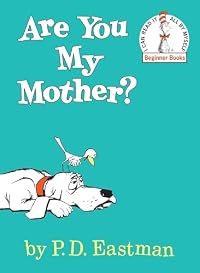
Are You My Mother?
by P. D. Eastman
On This Page
Description
A little bird asks animals, planes, and boats, "Are you my mother?" until he finds his own mother.Tags
Recommendations




Member Reviews
The central idea for the book Are You My Mother by P.D. Eastman is finding security and a sense of belonging. The little bird’s journey represents the universal need for connection and the reassurance that comes from knowing where we belong. Eastman explains these themes through the bird’s repetitive questioning and encounters with various animals and objects. Each refusal deepens the bird’s anxiety, but the eventual reunion with his mother provides a comforting resolution. The baby bird begins the story vulnerable and uncertain, freshly hatched and left alone while his mother searches for food. His determination to find her shows early independence, even as he struggles to define what a “mother” is. Although he faces show more confusion and discouragement throughout his journey, his perseverance reflects growth.
Eastman uses characterization, repetition, and humor to engage young readers. The bird’s simple dialogue asking every creature and object “Are you my mother?” This reflects the innocents of childhood. The cumulative structure builds anticipation, while the absurd encounters with animals and adds humor. The illustrations are simple yet effective, using clean lines and muted colors to highlight the bird’s smallness in contrast to the larger world. The exaggerated size of the “Snort” compared to the bird underlines his vulnerability but also his bravery. Visual repetition mirrors the textual repetition, reinforcing the rhythm of the story and helping early readers anticipate what comes next.
The story resonates with children because it mirrors their own feelings of separation anxiety, curiosity, and the need for reassurance. Many young readers can relate to the fear of being lost or alone, and the story provides comfort by showing that persistence leads back to safety and love. show less
Eastman uses characterization, repetition, and humor to engage young readers. The bird’s simple dialogue asking every creature and object “Are you my mother?” This reflects the innocents of childhood. The cumulative structure builds anticipation, while the absurd encounters with animals and adds humor. The illustrations are simple yet effective, using clean lines and muted colors to highlight the bird’s smallness in contrast to the larger world. The exaggerated size of the “Snort” compared to the bird underlines his vulnerability but also his bravery. Visual repetition mirrors the textual repetition, reinforcing the rhythm of the story and helping early readers anticipate what comes next.
The story resonates with children because it mirrors their own feelings of separation anxiety, curiosity, and the need for reassurance. Many young readers can relate to the fear of being lost or alone, and the story provides comfort by showing that persistence leads back to safety and love. show less
I get mild anxiety about getting lost, so some tension was building up in my stomach the farther away from the nest the bird wandered. How lucky for the little bird that the Snort (either a sentient machine, or manned by an uncredited operator, it is not revealed it the book) was kind enough to return him to his nest , and that none of the other animals tried to harm him! What if he had met a snake, or a hawk?
This is obviously also a reminder to parents to immediately teach their kids about Stranger Danger. The book is also forgiven for being written in the era that it was, but this could also be a start to open up a good dialogue about how some people don't have just one mother (which makes us wonder where the father is in this show more scenario), but sometimes two mothers or two daddies, or one daddy. Further topics of discussion could lead to the advantages and disadvantages of the nuclear family vs. tribal way of bringing up a child in a large community, and even how, if baby bird (boy) looks for mother (female), and what if it was a girl baby bird, would she look for father? Good intro to Oedipus/Electra complex right there. Out of all the animals though, why is it the machine that ends up being helpful? Why did the other animals either say nothing, or simply deny the connection, without going a step further? Does this mean machines are more capable of compassion? And how could have the baby bird suspected that a plane and ship could be his mother? What does that say about forming emotional attachments to inanimate objects? Could infants display signs of such mental illness so early? Or do they outgrow this as they pick up cues from society on what is and what is not allowed?
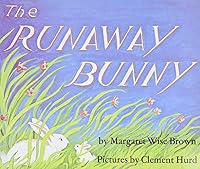
You guys know I'm kidding right? Anyway, I could imagine reading this out loud easily, with feeling, and look forward to finding out how it will be received by an actual child. Personally though I still prefer Runaway Bunny. show less
This is obviously also a reminder to parents to immediately teach their kids about Stranger Danger. The book is also forgiven for being written in the era that it was, but this could also be a start to open up a good dialogue about how some people don't have just one mother (which makes us wonder where the father is in this show more scenario), but sometimes two mothers or two daddies, or one daddy. Further topics of discussion could lead to the advantages and disadvantages of the nuclear family vs. tribal way of bringing up a child in a large community, and even how, if baby bird (boy) looks for mother (female), and what if it was a girl baby bird, would she look for father? Good intro to Oedipus/Electra complex right there. Out of all the animals though, why is it the machine that ends up being helpful? Why did the other animals either say nothing, or simply deny the connection, without going a step further? Does this mean machines are more capable of compassion? And how could have the baby bird suspected that a plane and ship could be his mother? What does that say about forming emotional attachments to inanimate objects? Could infants display signs of such mental illness so early? Or do they outgrow this as they pick up cues from society on what is and what is not allowed?
You guys know I'm kidding right? Anyway, I could imagine reading this out loud easily, with feeling, and look forward to finding out how it will be received by an actual child. Personally though I still prefer Runaway Bunny. show less
This book is my son’s favourite. It is very descriptive and the illustrations are very helpful for young readers to understand the story. The repetition of events in the story will help kids to follow along while reading the story. The baby bird goes on to ask different animals if they are his mother with using the same structure and phrase. The little bird also asks machinery if it is his mother and I found this really cute and add humor to the story. The main theme of this story is never stop being curious, and never give up.
Although this book has become somewhat of a classic, I am not a huge fan. I think it enforces the fact that your mother has to look like you. Animals were used in this book, but if they were replaced with people the message would be rather racist in my opinion. I may be reaching to far with this, but I don't think teaching children to separate by physical appearance is something that should be taught. A black mother could have a white child, An Asian father could have a Russian child. Diversity is a huge component of families and I think a book like this spreads the opposite message.
This book is good for young students learning how to read as well as children building their vocabulary. I enjoyed reading this book as a child because it was a little funny and silly as to how the little bird was trying to find his mom. I think the illustrations in this book show just how small and dainty the newborn bird is which really shows how young he is while looking for his mom. I also thought this story gave a good message of "don't give up." The little bird kept looking for his mom even though he was consistently getting it wrong and that also encourages readers to think never give up and keep pushing forward even when we are discouraged.
My daughters love this book, and after reading it to them countless times, I know the reason that it is a classic in the picture book genre. The story is simple but powerful. A baby bird cracks open its egg, at the moment when his mom has gone out to find food. The baby bird flaps and falls out of its nest, and sets off on a mission to find his mother. He asks a cat, a dog, a cow, and even starts asking boats and planes, all with no success. He finally asks snort (a power shovel) and the machine lifts the bird high in the air. The baby realizes that the snort is not his mother, either, and as he starts to panic, the snort deposits him safely back in the nest. Fortunately, a bird arrives at that moment as well, and he finally finds his show more mother.
The story is wonderful for read alouds. The reader can ask her audience the same question the baby bird asks everyone he meets - is that his mother? Also, children can identify all the animals and vehicles, and have fun making snort noises for the powerful machine. I love listening to my younger daughter deliver a deep snort sound. The repetitive text and the seeking plot create a story that allows even very young readers to join in the reading. Illustrations are simple but endearing, and the expressions on the baby bird's face bring him to life and inspire sympathy in the reader. A wonderful book, that was popular back when I was a child, and is still drawing eager young readers today. show less
The story is wonderful for read alouds. The reader can ask her audience the same question the baby bird asks everyone he meets - is that his mother? Also, children can identify all the animals and vehicles, and have fun making snort noises for the powerful machine. I love listening to my younger daughter deliver a deep snort sound. The repetitive text and the seeking plot create a story that allows even very young readers to join in the reading. Illustrations are simple but endearing, and the expressions on the baby bird's face bring him to life and inspire sympathy in the reader. A wonderful book, that was popular back when I was a child, and is still drawing eager young readers today. show less
I liked this book for many reasons. One reason I liked this story is because of the characters. I think that the baby bird's character was very well-developed. The baby bird's determination to find his mother was made extremely apparent. For example, he cannot fly but he falls from the tree to go look for her, and then goes to several animals and even a truck to ask if they are his mother. Another reason I liked this book was because of the writing. I like how the author used repetition because it makes it possible to predict what he will say next. For example, every time the baby bird comes to a different animal the first thing he asks is, "Are you my mother?" I also like that it reviews who the baby bird has asked. For example, after show more finding out that the dog was not his mother, it says, "The kitten was not his mother, the hen was not his mother, the dog was not his mother, so the baby bird went on." I believe that the message this story is trying to portray is the strong, everlasting bond between a mother and her child. show less
Members
- Recently Added By
Published Reviews
ThingScore 100
"My daughter got this as a Christmas novel (in 2015) from her Grandfather and recently (in 2017) decided to use it as her first 1st Grade book report book. She has nothing but sweet words to say about it and it was the first novel she was able to read by herself.
It's a great learning novel and it's very silly."
Watch my video about my daughter's book report on this novel here: show more target="_new">http://frommetoyouvideophoto.blogspot... show less
It's a great learning novel and it's very silly."
Watch my video about my daughter's book report on this novel here: show more target="_new">http://frommetoyouvideophoto.blogspot... show less
added by fromjesstoyou
Lists

Favorite Childhood Books
1,646 works; 517 members
1001 Children's Books You Must Read Before You Grow Up
774 works; 100 members

Best children's picture books
377 works; 85 members

Favorite Animal Fiction
359 works; 156 members
Honey For a Child's Heart
1,152 works; 25 members

Brightly Beaming Curriculum Books
281 works; 8 members

CCE 1000 Good Books List
1,033 works; 12 members

Bennett's 30 Great Books Every Preschooler Should Meet
30 works; 3 members

Romalda Spalding's Writing Road To Reading
213 works; 3 members

75 Books for Literacy Block: Fall 2016
75 works; 2 members

75 Books for Fall Literacy Block - Dr. Reed
67 works; 2 members

Recommended Reading List
219 works; 1 member

Early Picture Books
467 works; 9 members

Books We Loved As Children
603 works; 252 members

AR Level 1 in cloudLibrary
81 works; 1 member

Favorite Picture Books
479 works; 160 members

ORCID Book list
27 works; 1 member

Books Read in 2022
5,164 works; 113 members

Before Austen Comes Aesop
318 works; 9 members

Literature for Children and Teens
41 works; 2 members

Best Dog Stories
109 works; 13 members

Dogs -- children's/young adult fiction
1,317 works; 9 members

Ten Books That Have Stayed With Me
160 works; 29 members
The Peaceful Preschool Curriculum
58 works; 1 member
Author Information

62+ Works 45,309 Members
Philip Dey "Phil" Eastman was born on November 25, 1909 in Amherst, Massachusetts. After preparing at Phillips Academy and Williston Academy, he graduated from Amherst College in 1933 and later from the National Academy of Design. From 1936 to 1941, Eastman worked at the story department of Walt Disney Productions. From 1941 to 1943 he worked at show more the story department of Warner Bros. Cartoons. From 1945 to 1952 he worked in the story department of United Productions of America. He contributed to the "Private Snafu" World War II training films, wrote for the animation Mr. Magoo, and the Gerald McBoing-Boing series for UPA. He bacame a protégé of Theodor Geisel (Dr. Seuss). He wrote many books for children such as Go, Dog. Go!, Big Dog....Little Dog and Red Stop! Green Go! His title Are You My Mother? made The New York Times Best Seller List for 2012. Philip Eastman died on January 7, 1986 at the age of 76. (Bowker Author Biography) show less
Awards and Honors
Series
Belongs to Publisher Series
Beginner Books (B-18)
I Can Read It All By Myself (B-18)
Work Relationships
Is contained in
Has the adaptation
Common Knowledge
- Original publication date
- 1960-06-12
- People/Characters
- Baby bird; Mother bird; Kitten; Hen; Dog; Cow (show all 7); Snort
- Dedication
- To My Mother
- First words
- A mother bird sat on her egg.
- Last words
- (Click to show. Warning: May contain spoilers.)“You are a bird, and you are my mother.”
- Original language
- English
Classifications
Statistics
- Members
- 15,747
- Popularity
- 439
- Reviews
- 283
- Rating
- (4.06)
- Languages
- 6 — English, French, German, Japanese, Maori, Spanish
- Media
- Paper, Audiobook, Ebook
- ISBNs
- 61
- UPCs
- 6
- ASINs
- 33