On This Page
Description
Long ago, so the stories say, the old-fathers came to Nanagada through a worm's hole in the sky. Looking for a new world to call their own, they brought with them a rich melange of cultures, religions, and dialects from a far-off planet called Earth. Mighty were the old-fathers, with the power to shape the world to their liking---but that was many generations ago, and what was once known has long been lost. Steamboats and gas-filled blimps now traverse the planet, where people once looked up show more to see great silver cities in the sky. Like his world, John deBrun has forgotten more than he remembers. Twenty-seven years ago, he washed up onto the shore of Nanagada with no memory of his past. Although he has made a new life for himself among the peaceful islanders, his soul remains haunted by unanswered questions about his own identity. These mysteries take on new urgency when the fearsome Azteca storm over the Wicked High Mountains in search of fresh blood and hearts to feed their cruel, inhuman gods. Nanagada's only hope lies in a mythical artifact, the "Ma Wi Jung, " said to be hidden somewhere in the frozen north. And only John deBrun knows the device's secrets, even if he can't remember why or how "Crystal Rain" is the much-anticipated debut novel by one of science fiction's newest and most promising talents." show lessTags
Recommendations



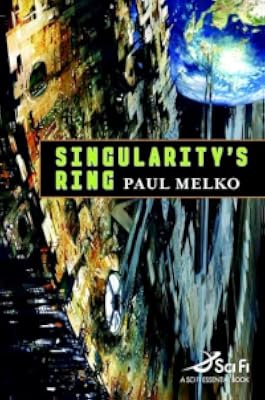
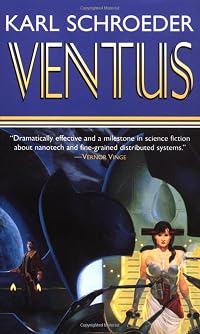
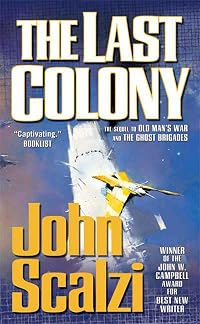
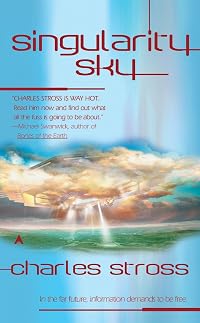

Member Recommendations
Member Reviews
Twenty-seven years ago, John deBrun washed up on the shores of Brungstun with no memory of who he was or where he was from. Some kind of instinct pushed him to attempt a journey to the far, frozen North, where he nearly died, but he returned without answers. He married and had a son, yet his nightmares never faded and he never remembered anything more about himself.
One day the lands of Nanagada are invaded by their old enemies, the Azteca, and the Azteca’s terrifying, alien gods: the Teotl. The Azteca capture Brungstun, but John escapes with the help of an Azteca traitor—a double-spy who seeks to wrest a set of valuable access codes from John’s missing memories so the Teotl will have access to something called the Ma Wi Jung. John show more believes his wife and son to be dead, but his son, Jerome, was saved by a deadly, inhuman, frightening man called Pepper who claims to be an old friend of John’s.
Meanwhile, Dihana, the Prime Minister of Capitol City and the Nanagada, works furiously with General Haidan of the mongoose-men and the infuriating Loa to protect the Nanagada from the vast armies of the Azteca. But unless something changes, it’s just a matter of time until they fail, and all their people are enslaved or, worse, sacrificed to the Teotl.
It’s difficult for me to believe that Crystal Rain is Tobias S. Buckell’s debut novel—it’s that good. The feel is incredibly organic, as though the world unwinds naturally before us. Buckell allows any surprises to come out in natural pieces throughout the story, such that if you figure something out ahead of time there’s no feeling of let-down when it’s revealed, because the story doesn’t rely on that twist of surprise for its pacing and interest.
Buckell tells the story through quite a few different points of view, yet I never feel confused as to who’s doing the telling; each character is quite unique, distinct, and fully fleshed out. He manages to use one of John’s enemies (his accompanying would-be interrogator) as a point of view character without spoiling the plot, ruining the pacing, alienating the reader, or otherwise throwing off the book.
He has his characters speak in their own unusual dialects and rhythms—usually a terrible thing for a writer to attempt as it swiftly gets old and almost never adds anything—yet it works. It only took me a brief time to get used to it, then it felt more and more natural until I found myself thinking in it at times. The use of dialect is extremely consistent, and as a matter of characterization dialect is every bit as important in this book as any other measure.
I’m not sure I can adequately describe the number of ways in which this book succeeds. Suffice it to say, I look forward to devouring each of Buckell’s future novels as they come out!
Full review at ErrantDreams show less
One day the lands of Nanagada are invaded by their old enemies, the Azteca, and the Azteca’s terrifying, alien gods: the Teotl. The Azteca capture Brungstun, but John escapes with the help of an Azteca traitor—a double-spy who seeks to wrest a set of valuable access codes from John’s missing memories so the Teotl will have access to something called the Ma Wi Jung. John show more believes his wife and son to be dead, but his son, Jerome, was saved by a deadly, inhuman, frightening man called Pepper who claims to be an old friend of John’s.
Meanwhile, Dihana, the Prime Minister of Capitol City and the Nanagada, works furiously with General Haidan of the mongoose-men and the infuriating Loa to protect the Nanagada from the vast armies of the Azteca. But unless something changes, it’s just a matter of time until they fail, and all their people are enslaved or, worse, sacrificed to the Teotl.
It’s difficult for me to believe that Crystal Rain is Tobias S. Buckell’s debut novel—it’s that good. The feel is incredibly organic, as though the world unwinds naturally before us. Buckell allows any surprises to come out in natural pieces throughout the story, such that if you figure something out ahead of time there’s no feeling of let-down when it’s revealed, because the story doesn’t rely on that twist of surprise for its pacing and interest.
Buckell tells the story through quite a few different points of view, yet I never feel confused as to who’s doing the telling; each character is quite unique, distinct, and fully fleshed out. He manages to use one of John’s enemies (his accompanying would-be interrogator) as a point of view character without spoiling the plot, ruining the pacing, alienating the reader, or otherwise throwing off the book.
He has his characters speak in their own unusual dialects and rhythms—usually a terrible thing for a writer to attempt as it swiftly gets old and almost never adds anything—yet it works. It only took me a brief time to get used to it, then it felt more and more natural until I found myself thinking in it at times. The use of dialect is extremely consistent, and as a matter of characterization dialect is every bit as important in this book as any other measure.
I’m not sure I can adequately describe the number of ways in which this book succeeds. Suffice it to say, I look forward to devouring each of Buckell’s future novels as they come out!
Full review at ErrantDreams show less
I really liked Crystal Rain. I read it on my own after I was assigned to review Ragamuffin for the SFRA Review.
The reviews I usually write are meant to be balanced, and very heavy on context. That’s my philosophical position on the purpose of most reviews, so it works for me. Context is everything. But since I’m not writing for any particular publication at the moment, I don’t have to be balanced unless it pleases me to be so, and it does not.
I’ve been looking for some good SF to take up the slack left by the lack of new Heinlein novels. He surprised me by posthumously producing For Us, The Living, but I don’t think there are any more. I think that Buckell’s kick-ass characters have some resonance with Heinlein’s show more characters, and I like that. One good thing about having written a reputable review of Ragamuffin is that I can quote it:
…one or two solitary, quasi-immortal characters who are technologically enhanced, augmented human beings hundreds of years old—very much like the characters in Wil McCarthy’s To Crush the Moon, or Heinlein’s Friday. Sometimes the action highlights the separateness of these superhuman people, each of whom is capable of taking out entire squadrons of trained soldiers alone. But the two we meet, Nashara and Pepper, are both part of something larger.
Some of the specific things I liked about Crystal Rain were the vividness of the main characters’ culture, the combat, and the sustained tension of the siege situations.
There is some beautiful stuff in there balancing the threat of something dangerous inside against something dangerous outside. I’m thinking of the journey on the ice, which uses the trope of a dangerous presence in a confined location in a hostile environment to excellent effect—that pays homage to Alien, The Thing, and many others.
And it may just be a matter of taste, but I really love how Buckell constructs almost unkillable protagonists, and then he almost kills them. He made me believe that one of the main characters might die, even though I’d already read the second book and knew he hadn’t. That plot definitely wasn’t on rails, because I knew where it ended up, but I couldn’t plot every move the author was going to make to get there.
Secret underwater cave? Oh, yeah. I want one of those. show less
The reviews I usually write are meant to be balanced, and very heavy on context. That’s my philosophical position on the purpose of most reviews, so it works for me. Context is everything. But since I’m not writing for any particular publication at the moment, I don’t have to be balanced unless it pleases me to be so, and it does not.
I’ve been looking for some good SF to take up the slack left by the lack of new Heinlein novels. He surprised me by posthumously producing For Us, The Living, but I don’t think there are any more. I think that Buckell’s kick-ass characters have some resonance with Heinlein’s show more characters, and I like that. One good thing about having written a reputable review of Ragamuffin is that I can quote it:
…one or two solitary, quasi-immortal characters who are technologically enhanced, augmented human beings hundreds of years old—very much like the characters in Wil McCarthy’s To Crush the Moon, or Heinlein’s Friday. Sometimes the action highlights the separateness of these superhuman people, each of whom is capable of taking out entire squadrons of trained soldiers alone. But the two we meet, Nashara and Pepper, are both part of something larger.
Some of the specific things I liked about Crystal Rain were the vividness of the main characters’ culture, the combat, and the sustained tension of the siege situations.
There is some beautiful stuff in there balancing the threat of something dangerous inside against something dangerous outside. I’m thinking of the journey on the ice, which uses the trope of a dangerous presence in a confined location in a hostile environment to excellent effect—that pays homage to Alien, The Thing, and many others.
And it may just be a matter of taste, but I really love how Buckell constructs almost unkillable protagonists, and then he almost kills them. He made me believe that one of the main characters might die, even though I’d already read the second book and knew he hadn’t. That plot definitely wasn’t on rails, because I knew where it ended up, but I couldn’t plot every move the author was going to make to get there.
Secret underwater cave? Oh, yeah. I want one of those. show less
While I don’t think this will be considered a classic S.F. novel along the lines of an Ender’s Game or Neuromancer, it’s a pretty damn good read. The pacing for action is pretty fast, but kept slow for characterization. I thought the slow reveal of John deBrun’s background along with the history of the world was fairly expertly accomplished. The world and it’s culture were really interesting.
Longer review at http://jimhines.livejournal.com/355859.html
Crystal Rain has a lot going for it. Some readers have complained about the Carribean dialect, but I enjoyed it. Seriously, why do we expect everyone in the future to talk like midwesterners? Buckell's dialogue took a few pages to get used to, but there's an almost musical quality to the words which brings the book alive in a way many stories never achieve.
The latter part of the book was more engaging than the beginning for me. That's not to say that the first part is in any way bad. John's struggle to escape the Azteca and his drive to fight back against them are very powerful. But later on, Buckell's worldbuilding skills become more apparent, and the book sucks you in even show more deeper.
This isn't necessarily a pleasant book. Buckell's Azteca are bloody, and even the heroes are often vicious. (Pepper is a bad-ass, but not someone I'd want anywhere near me ... unless he was between me and something scarier.)
If memory serves, Crystal Rain was a Nebula finalist when it came out. The sequel, Ragamuffin, is on this year's final Nebula ballot. Buckell is clearly doing something right. show less
Crystal Rain has a lot going for it. Some readers have complained about the Carribean dialect, but I enjoyed it. Seriously, why do we expect everyone in the future to talk like midwesterners? Buckell's dialogue took a few pages to get used to, but there's an almost musical quality to the words which brings the book alive in a way many stories never achieve.
The latter part of the book was more engaging than the beginning for me. That's not to say that the first part is in any way bad. John's struggle to escape the Azteca and his drive to fight back against them are very powerful. But later on, Buckell's worldbuilding skills become more apparent, and the book sucks you in even show more deeper.
This isn't necessarily a pleasant book. Buckell's Azteca are bloody, and even the heroes are often vicious. (Pepper is a bad-ass, but not someone I'd want anywhere near me ... unless he was between me and something scarier.)
If memory serves, Crystal Rain was a Nebula finalist when it came out. The sequel, Ragamuffin, is on this year's final Nebula ballot. Buckell is clearly doing something right. show less
I've been on a massive fantasy bender recently. It was about time that I took on a little something different, and I'd heard enough good things about this book to give it a whirl. What a nice jump back into science fiction. A very interesting world, with a back story that hits you at just the right pace--no long boring info-dumps, yet always enough information so that the story and action are credible. It bookended the month interestingly, where both this novel, and Lion's Blood, had "Aztecs" as the opposing force. As well, the heroes are of African descent in both works. That is about where the similarities end. Nanagada feels like an island itself, a world stranded among the stars. Though there has been a regression of technology, a show more sort of post cataclysmic (not apocalyptic) world, we see the mostly Caribbean descended culture in a phase of rebirth, when the feared enemy the Azteca are thrust upon the scene and life is no longer idyllic. I enjoyed seeing the layers involved in the war, and characters who are not easily broken down into white hats and black hats. Sure, there's no question in the end for whom a reader should be rooting, but there are no perfectly clean hands here. The war takes its toll, and the resolution felt all the more real for it. show less
Vibrant adventure quest novel that falls somewhere between Military SF and Space Opera, with a vigorous dashes of clash-of-civilizations, war-with-aliens, seafaring adventure, and arctic expedition thrown in. I must say, I was quite tickled by Buckell's ability to so deftly shift tropes and mash seemingly unrelated genre-loves of mine. (Except perhaps these genres are not as unrelated as I imagine? There is more than one author who has successfully put Hornblower in space, after all.)
The most distinctive thing about this novel, of course, is the world-building: the human settlement is Caribbean Diaspora (the planet itself named New Anegada), a blessed departure from North American Generic In Space. I struggled sometimes with the dialect show more that most characters used -- I don't parse the grammar correctly, and thus often missed emotional nuance -- but I liked seeing a human colony that had a specific heritage that extended beyond a one-note label. Also, as someone who grew up with far too many Erich von Däniken books in the house, I'm endlessly amused that the gods in both of these colonies really are super-advanced aliens.
Some things about the book bothered me. Even though the role normally cast within the fantasy genre as "POC/non-human hordes" was filled by light-skinned Aztecs (overrunning mostly dark-skinned Nagandans), they still felt like traditional POC hordes. (Also, I'm still not satisfied as to where this ultra-traditional Aztec culture was supposed to have sprung from?) And, as always, I pick at the xenobiology -- where does the energy for repeated, within-hours regeneration come from, especially given (as is revealed in a throwaway line in the sequel) that the aliens' metabolism is incompatible with the world they are trapped on?
But as ever, that is picking at the world-building, a reflexive habit of my brain, and unrelated to whether I enjoyed the book or not. Which I did, very much, because Buckell tells a darn good yarn, and throws in lots of interesting mind-candy for me to play with to boot. show less
The most distinctive thing about this novel, of course, is the world-building: the human settlement is Caribbean Diaspora (the planet itself named New Anegada), a blessed departure from North American Generic In Space. I struggled sometimes with the dialect show more that most characters used -- I don't parse the grammar correctly, and thus often missed emotional nuance -- but I liked seeing a human colony that had a specific heritage that extended beyond a one-note label. Also, as someone who grew up with far too many Erich von Däniken books in the house, I'm endlessly amused that the gods in both of these colonies really are super-advanced aliens.
Some things about the book bothered me. Even though the role normally cast within the fantasy genre as "POC/non-human hordes" was filled by light-skinned Aztecs (overrunning mostly dark-skinned Nagandans), they still felt like traditional POC hordes. (Also, I'm still not satisfied as to where this ultra-traditional Aztec culture was supposed to have sprung from?) And, as always, I pick at the xenobiology -- where does the energy for repeated, within-hours regeneration come from, especially given (as is revealed in a throwaway line in the sequel) that the aliens' metabolism is incompatible with the world they are trapped on?
But as ever, that is picking at the world-building, a reflexive habit of my brain, and unrelated to whether I enjoyed the book or not. Which I did, very much, because Buckell tells a darn good yarn, and throws in lots of interesting mind-candy for me to play with to boot. show less
An excellent, very engaging read - I stayed up way past my bedtime to finish it. I loved the world-building & the culture-building, and the technology, both pre-apocalyptic and what happens with it post-apocalypse. There's lots of interesting ideas packed into the book - it would easily hold up under another more leisurely read or three. & I adored that this was a book where the heroes were of Caribbean origin, where the whole reason their people are on the planet is because two guys decided to help their communities get off Earth (yes, profit motivated them too, but not exclusively). The world needs more well-written sf/f about people of color, and this one is a welcome addition to my library.
My one complaint is that it's all about show more men. There's one awesome female leader, and she is indeed awesome, but there's one of her and a slew of awesome male characters. What's up with that? I have the sequel, and I'm hoping it does better on this front. show less
My one complaint is that it's all about show more men. There's one awesome female leader, and she is indeed awesome, but there's one of her and a slew of awesome male characters. What's up with that? I have the sequel, and I'm hoping it does better on this front. show less
Members
- Recently Added By
Author Information

89+ Works 4,723 Members
Tobias S. Buckell is a Caribbean-born speculative fiction writer who grew up in Grenada, the US, and the British Virgin Islands. He now lives in a small college town in Ohio with his wife, Emily. Buckell was a first place winner for the Writers of the Future, and has been nominated for the John W. Campbell Award for Best New Writer and the Nebula show more Award. He is also a graduate of the Clarion Science Fiction Writing Workshop. His title, Envoy, made the IBook Bestseller List in 2017. (Bowker Author Biography) show less

Tobias S. Buckell is a LibraryThing Author, an author who lists their personal library on LibraryThing.
Some Editions
Awards and Honors
Awards
Distinctions
Series

Common Knowledge
- Canonical title
- Crystal Rain
- Original title
- Crystal Rain
- Original publication date
- 2006
- People/Characters
- John deBrun; Pepper
- Important places
- Nanagada (Human colony)
Classifications
Statistics
- Members
- 738
- Popularity
- 38,406
- Reviews
- 35
- Rating
- (3.53)
- Languages
- English, French, German, Lithuanian
- Media
- Paper, Audiobook, Ebook
- ISBNs
- 10
- ASINs
- 6