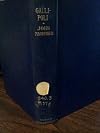
Gallipoli
by John Masefield
On This Page
Description
Few accounts of the disastrous Gallipoli campaign are as famous as that of John Masefield, and justly so, for so few have captured the danger, death and heroism on the Peninsula. He saw service as a Red Cross orderly in France and sought to alleviate the plight of the soldier and volunteered his services to motor boat ambulance seeing the battles first-hand. Masefield was a poet of great power, later becoming Poet-Laureate, and set to use all of his skills in describing the feats and show more achievements of the expedition. Published in London and New York simultaneously to wide acclaim this account is a still a classic described by one critic as 'a book to strike the critical faculty numb' and 'too sacred for applause'- W.H. Hamilton. This edition contains the numerous maps and illustrations that enrich and aid the readers experience. Author - Masefield, John, 1878-1967. Text taken, whole and complete, from the edition published in New York, The Macmillan company, 1916. Original Page Count - 245 pages. Illustrations - 9 maps and Illustrations show lessTags
Recommendations




























Member Reviews
A short book on the Australian Gallipoli campaign in 1915. Written soon afterwards, for the most part it is written as a piece of prose.
Ratings
Members
- Recently Added By
Author Information

181+ Works 4,035 Members
Once one of the most popular English poets of the century, Masefield has fallen into undeserved neglect since his death. He was born in a Victorian house with rural vistas, which he later recalled as "living in Paradise." In childhood, he had a series of intense, visionary experiences inspired by both nature and literature, which gave him a show more habitual sense of participation in a greater life. These had weakened by 1891, when he entered training for the merchant naval service. An officer on the White Star Line's Adriatic, he jumped ship in New York in 1895 and roamed across America. He returned to England two years later when a recovery of his intense childhood visions convinced him he could succeed as a writer. Masefield excelled more at narrative than at symbolism. His first book, "Salt Water Poems and Ballads" (1902), displayed the allegiance to outcasts and wanderers that marks his subject matter. The musicality of that volume derives partly from the strong early influence of W. B. Yeats. Increasingly, Masefield experimented with colloquial diction, particularly from the lower classes. His "The Everlasting Mercy" (1911) recounted the conversion of a rural scoundrel in language that astonished many readers. Highly prolific, he produced more than 20 volumes of fiction, 17 plays, and other prose work besides his major volumes of poetry. Masefield still appeals particularly to the common reader. He was appointed poet laureate in 1930. (Bowker Author Biography) show less
Common Knowledge
- Original publication date
- 1916
- People/Characters
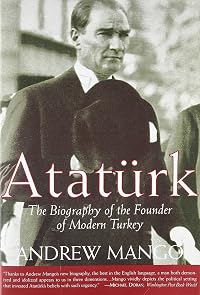
- Ian Hamilton; Herbert Kitchener; Mustafa Kemal Atatürk
- Important places
- Gallipoli, Turkey; Turkey; Middle East; Ottoman Empire
- Important events
- World War I (1914 | 1918); Gallipoli Campaign (1915-04-25 | 1916-01-09)
- Epigraph
- Oliver said … “I have seen the Saracens: the valley and the mountains are covered with them; and the lowlands and all the plains; great are the hosts of that strange people; we have here a very little company.”
– The Song of Roland. - Dedication
- Dedicated
With Deep Respect and Admiration to
General Sir Ian Hamilton, C.G.B., D.S.O.
and
The Officers and Men under his Command,
March to October, 1915 - First words
- A LITTLE while ago, during a short visit to America, I was often questioned about the Dardanelles Campaign. People asked me why that attempt had been made, why it had been made in that particular manner, why other courses had... (show all) not been taken, why this had been done and that either neglected or forgotten, and whether a little more persistence, here or there, would not have given us the victory.
- Last words
- (Click to show. Warning: May contain spoilers.)Even so was wisdom proven blind,
So courage failed, so strength was chained,
Even so the gods, whose seeing mind
Is not as ours, ordained.
Classifications
Statistics
- Members
- 71
- Popularity
- 444,641
- Reviews
- 1
- Rating
- (3.75)
- Languages
- English
- Media
- Paper, Ebook
- ISBNs
- 16
- ASINs
- 9