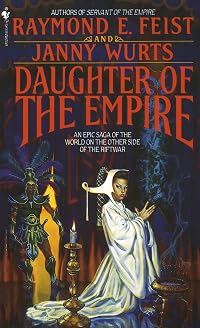
Daughter of the Empire
by Raymond E. Feist (Author), Janny Wurts (Author)
The Empire Trilogy (1), The Riftwar Cycle, Alternative Reading Order (04 (Empire Trilogy 01)), The Riftwar Cycle: Publication (Series Name) (The Empire Trilogy, 1), The Riftwar Cycle: Chronological (05 (Empire Trilogy 01)), The Riftwar Cycle: Publication (Series Blocks) (9)
On This Page
Description
An epic tale of adventure and intrigue, Daughter of the Empire is fantasy of the highest order by two of the most talented writers in the field today. Magic and murder engulf the realm of Kelewan. Fierce warlords ignite a bitter blood feud to enslave the empire of Tsuranuanni. While in the opulent Imperial courts, assassins and spy-master plot cunning and devious intrigues against the rightful heir. Now Mara, a young, untested Ruling lady, is called upon to lead her people in a show more heroic struggle for survival. But first she must rally an army of rebel warriors, form a pact with the alien cho-ja, and marry the son of a hated enemy. Only then can Mara face her most dangerous foe of all--in his own impregnable stronghold. show lessTags
Recommendations


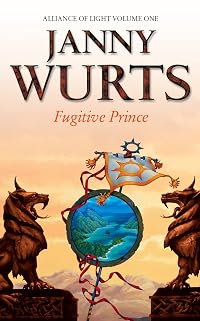
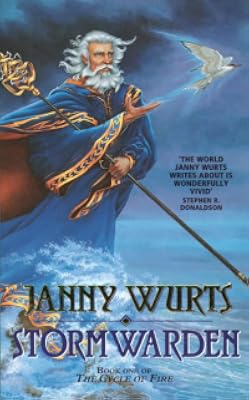
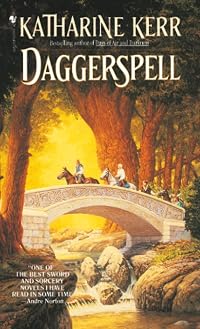
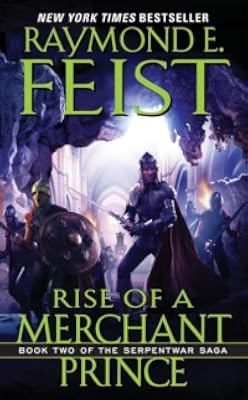
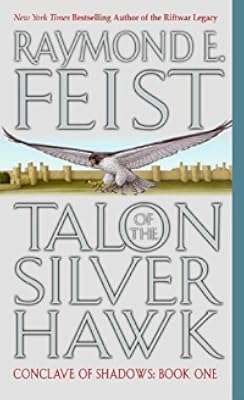
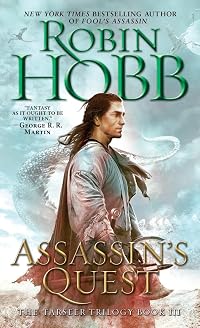
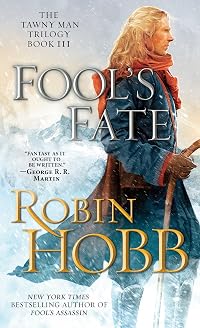
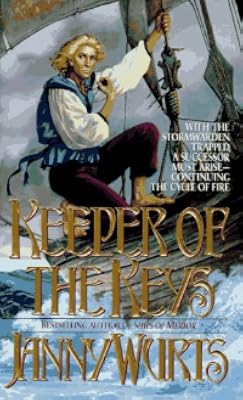

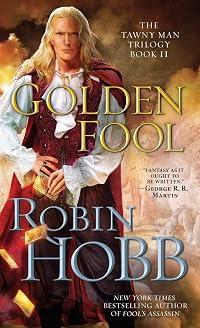
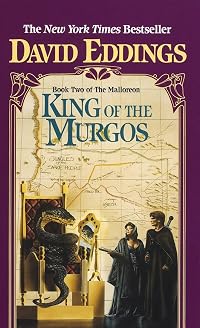
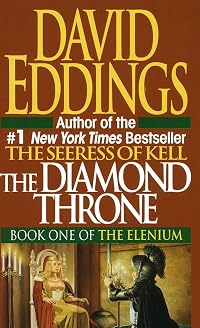
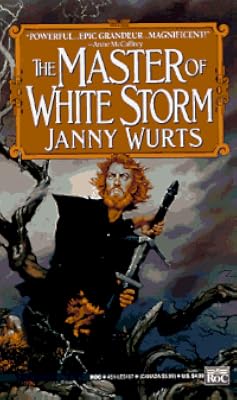
Member Recommendations
hindins Another strong young female character, diplomacy and intrigue, amazing world-building and a non-european culture.

sandstone78 Feist and Wurts' setting of Kelewan is highly derivative of Barker's Tekumel; fans of the original looking for more may enjoy the Empire trilogy and fans of the Empire trilogy interested in the source material may enjoy the Tekumel books.
kaydern Awesome female lead character, similar genre.
Member Reviews
Surprisingly good, given how boring and cardboard Feist's Midkemia characters tend to be. The protagonist is not really a nice person--she is a slaver after all-but she is interesting, and I was caught up in her courtly intrigues. It is tempting to attribute the uptick in quality to departing the generic Tolkien-esque Midkemia setting for the vaguely Asian/Mesoamerican Kelewan. In reality, I suspect Feist's coauthor Jenny Wurts deserves the credit. My main complaint is that the novel focuses on how the protagonist navigates the aristocratic circles of the Tsuranuanni Empire, governed by byzantine rules of honor and gentility, and often the narrative progresses by the authors introducing a new rule that works in favor of the protagonist. show more It is a common trope in science fiction but oh well. show less
Collaborations can be a challenging way to tell a story, especially when both authors have an established voice. Ultimately, if done well, they are like an interesting ice cream swirl, something of the flavor of both authors creating a pleasant compination. Andre Norton is one of those authors that seem to collaborate well, although I'm not sure if that's partly because she was the idea generator and then had a co-writer do more of the heavy lifting, especially in her later years. One of the best examples of co-writing I remember is [b:Sorcery & Cecelia: or The Enchanted Chocolate Pot|64207|Sorcery & Cecelia or The Enchanted Chocolate Pot (Cecelia and Kate, #1)|Patricia C. show more Wrede|http://d202m5krfqbpi5.cloudfront.net/books/1328875743s/64207.jpg|505], largely because it used letters between two young girls as the primary framing device, allowing the voices of both authors to shine. Daughter of the Empire was the result of a collaboration between Janny Wurts and Raymond Feist, and though I haven't read any Feist, I have to say it blends well, and Feist's influence tempered Wurt's writing and made it infinitely more palatable.
I've avoided writing about Wurt's books since meeting her in one of my GR groups, as she is a truly wonderful, generous and respectful person. Her contributions to different book discussions are thoughtful and circumspect, and she's willing to share her time if readers are interested. The information she shared about the collaboration was interesting, and gave a great deal of insight into the process. If you've read this book or are a fan of Wurts, I highly recommend checking out her comments.
To the book itself: it is a detailed epic fantasy, and would likely appeal to those who are looking for something in the genre that is more female-centered than most. It follows young Mara as she is pulled from a life of religious devotion and into the political games of the local fiefdoms, to both survive and to defend the honor of her house.
A note on style: Wurts' writing usually has too many superlatives for my taste, and she ends up resorting to italics in order to make her points in the more emotional sections. It must be Feist's or the editor's influence, because for one of the first times reading her books, I found myself able to concentrate on the story and characterization without being distracted by the writing. In this sense, the book worked for me.
Plotting is acceptable. However, Mara develops the habit of keeping her plans to herself, since she doesn't want to argue with her former nursemaid or her man-at-arms. This both aids and detracts the story; aiding because it keeps the reader in suspense about what she will do, but detracting because it means her actions are often not quite comprehensible to the reader. If she explains it over-much to her people. the story risks losing its sense of legitimate dialogue; if it isn't explained, readers are left with a culture and heroine that is just slightly incomprehensible. Thus, after I finished reading, I wasn't sure if I disliked Mara because of a lack of understanding, or because I disliked her because she was a truly dislikeable person. It reminds me, just a little, of the issues I faced in [a:Joe Abercrombie|276660|Joe Abercrombie|http://d202m5krfqbpi5.cloudfront.net/authors/1207149426p2/276660.jpg]'s First Law series, only he was able to build a sense of complexity that lent itself to compassion. Mara just seems largely incomprehensible, except for the single-minded goal of avenging her family, a fact itself that seems inconsistent with a woman who had left her family for a religious life some time ago.
The only spot that the collaboration seemed not to have worked quite as well was the introduction of the cho-ja, the insect-like sentient beings. They played an enormous role in one chapter, and despite "Gaining this new hive would do more to preserve Acoma survival than any dozen clever plots on the High Council," they are only mentioned twice more in the rest of the book. It felt a little intrusive, and when I understood they were of Feist's creation for another aspect of the world, it made more sense. Less for the story, but more sense for the collaboration.
One of my largest barriers to enjoyment was Mara's marriage and the subsequent abuse she endured. The cynical part of me wonders if Feist wanted Wurts involved for that perspective alone, and to help legitimize a storyline that was extremely unpalatable. Regardless, my personal issues with that type of plotline are such that I will almost never like a book that involves that kind of abuse, unless done very, very, well. This was not, as it seemed mostly designed to create sympathy for Mara and how her husband was destroying her heritage--sort of. I actually ended up wondering how calculating she really was from the start, which made me like her less. It seemed clear that her intent was all along to kill her husband; to be fair, it seemed none of the choices would have been willing co-rulers, but I'm not sure she ever genuinely tried .
I have other small quibbles that I won't go into, save to note they were there. Ultimately, though I read fantasy, this was not my type of sub-genre, so my thoughts are not predisposed to be generous. Two and a half stars. show less
I've avoided writing about Wurt's books since meeting her in one of my GR groups, as she is a truly wonderful, generous and respectful person. Her contributions to different book discussions are thoughtful and circumspect, and she's willing to share her time if readers are interested. The information she shared about the collaboration was interesting, and gave a great deal of insight into the process. If you've read this book or are a fan of Wurts, I highly recommend checking out her comments.
To the book itself: it is a detailed epic fantasy, and would likely appeal to those who are looking for something in the genre that is more female-centered than most. It follows young Mara as she is pulled from a life of religious devotion and into the political games of the local fiefdoms, to both survive and to defend the honor of her house.
A note on style: Wurts' writing usually has too many superlatives for my taste, and she ends up resorting to italics in order to make her points in the more emotional sections. It must be Feist's or the editor's influence, because for one of the first times reading her books, I found myself able to concentrate on the story and characterization without being distracted by the writing. In this sense, the book worked for me.
Plotting is acceptable. However, Mara develops the habit of keeping her plans to herself, since she doesn't want to argue with her former nursemaid or her man-at-arms. This both aids and detracts the story; aiding because it keeps the reader in suspense about what she will do, but detracting because it means her actions are often not quite comprehensible to the reader. If she explains it over-much to her people. the story risks losing its sense of legitimate dialogue; if it isn't explained, readers are left with a culture and heroine that is just slightly incomprehensible. Thus, after I finished reading, I wasn't sure if I disliked Mara because of a lack of understanding, or because I disliked her because she was a truly dislikeable person. It reminds me, just a little, of the issues I faced in [a:Joe Abercrombie|276660|Joe Abercrombie|http://d202m5krfqbpi5.cloudfront.net/authors/1207149426p2/276660.jpg]'s First Law series, only he was able to build a sense of complexity that lent itself to compassion. Mara just seems largely incomprehensible, except for the single-minded goal of avenging her family, a fact itself that seems inconsistent with a woman who had left her family for a religious life some time ago.
The only spot that the collaboration seemed not to have worked quite as well was the introduction of the cho-ja, the insect-like sentient beings. They played an enormous role in one chapter, and despite "Gaining this new hive would do more to preserve Acoma survival than any dozen clever plots on the High Council," they are only mentioned twice more in the rest of the book. It felt a little intrusive, and when I understood they were of Feist's creation for another aspect of the world, it made more sense. Less for the story, but more sense for the collaboration.
One of my largest barriers to enjoyment was Mara's marriage and the subsequent abuse she endured. The cynical part of me wonders if Feist wanted Wurts involved for that perspective alone, and to help legitimize a storyline that was extremely unpalatable. Regardless, my personal issues with that type of plotline are such that I will almost never like a book that involves that kind of abuse, unless done very, very, well. This was not, as it seemed mostly designed to create sympathy for Mara and how her husband was destroying her heritage--sort of. I actually ended up wondering how calculating she really was from the start, which made me like her less.
I have other small quibbles that I won't go into, save to note they were there. Ultimately, though I read fantasy, this was not my type of sub-genre, so my thoughts are not predisposed to be generous. Two and a half stars. show less
As the only daughter of Lord of the Acoma, Mara was expected to marry and bear children to continue the Acoma line and bring honor to her house. Instead, Mara has chosen a life of chastity and service of Lashmina, the Lady, Goddess of Inner Light. In the temple of Lashima seventeen-year-old Mara is about to take her oaths and join the Order of Lashima. Before the last gongs can sound there is a commotion in the temple as a warrior breaks through with news. Mara's father and brother are dead to treachery of a rival house. Mara must return home and take up her inheritance as Ruling Lady of the Acoma lest her house fall into ruin. Untried and untested Mara now must lead her people in her society's complex game of honor among the great show more houses if the Acoma are to have a future. Let the Game of the Council begin!
Daughter of the Empire is the first in the Empire Trilogy by Raymond E. Feist and Janny Wurts. Overlapping the timeline of the Riftwar, we get a look into the life and world on the other side of the Rift in the empire of Tsuranuanni. It has been many years since I read the Riftwar quartet so I was a little concerned going in that I would be missing out on something as I don't remember many details at this point. Turns out that this book only has a couple mentions of the war and the context for what you need to know are given in the book. I would say you can probably read these first though I imagine you'll have a deeper experience if you read the series in publishing order and closer together than I did.
The Empire of Tsuranuanni has a lot of Asian influences with touches of Mayan/Incan cultures. The society is based on Great Houses and heavily caste based with a highly complicated and strict system of honor. The people of the world hold their cod of honor so high they will often choose death over dishonor. It also makes navigating society an interesting game, the Game of the Council as it's called, as the slightest change in expression or wording can take people from being the best of friends to the most hated of enemies. While the rules are not well explained I felt like I understood it well enough to follow along with Mara's decision making in her society's context.
The story is told from Mara's point of view. She is the type of heroine I love in fantasy. She meets her challenges head on and proves she's up to the task. Highly intelligent, she constantly proves that people underestimate her abilities at political intrigue. She tackles her problems logically and it's with her rigid political structure in mind that she's able to manipulate events to turn in her favor. She goes on quite a character arc that by the end of the book most of Tusarni society knows that Mara of the Acoma is a force to be reckoned with.
Overall this was an intriguing read. There were some great moments though it is a slow burn in general as the story takes a lot of setup for each situation to come to fruition. It made for some uneven pacing as I blew through some parts and the book was easy to set aside others. There were also a couple other minor annoyances that I won't get into save to note they are there. I enjoyed the book enough I will definitely be continuing on to the second. show less
Daughter of the Empire is the first in the Empire Trilogy by Raymond E. Feist and Janny Wurts. Overlapping the timeline of the Riftwar, we get a look into the life and world on the other side of the Rift in the empire of Tsuranuanni. It has been many years since I read the Riftwar quartet so I was a little concerned going in that I would be missing out on something as I don't remember many details at this point. Turns out that this book only has a couple mentions of the war and the context for what you need to know are given in the book. I would say you can probably read these first though I imagine you'll have a deeper experience if you read the series in publishing order and closer together than I did.
The Empire of Tsuranuanni has a lot of Asian influences with touches of Mayan/Incan cultures. The society is based on Great Houses and heavily caste based with a highly complicated and strict system of honor. The people of the world hold their cod of honor so high they will often choose death over dishonor. It also makes navigating society an interesting game, the Game of the Council as it's called, as the slightest change in expression or wording can take people from being the best of friends to the most hated of enemies. While the rules are not well explained I felt like I understood it well enough to follow along with Mara's decision making in her society's context.
The story is told from Mara's point of view. She is the type of heroine I love in fantasy. She meets her challenges head on and proves she's up to the task. Highly intelligent, she constantly proves that people underestimate her abilities at political intrigue. She tackles her problems logically and it's with her rigid political structure in mind that she's able to manipulate events to turn in her favor. She goes on quite a character arc that by the end of the book most of Tusarni society knows that Mara of the Acoma is a force to be reckoned with.
Overall this was an intriguing read. There were some great moments though it is a slow burn in general as the story takes a lot of setup for each situation to come to fruition. It made for some uneven pacing as I blew through some parts and the book was easy to set aside others. There were also a couple other minor annoyances that I won't get into save to note they are there. I enjoyed the book enough I will definitely be continuing on to the second. show less
Mara is een geweldig karakter dat al na één hoofdstuk in je hart zit en haar avonturen om in leven te blijven en de Acoma te laten overleven slepen mij volledig mee. Spanning, vreugde, verdriet, alles zit in dit boek. De politiek die in dit boek een grote rol speelt is een zeer bloederige en absoluut niet saai maar juist heel erg persoonlijk en intrigerend. De karakters, en zeker die dicht bij Mara staan zijn stuk voor stuk geweldig goed beschreven en mij zeer lief geworden. Keyoke, Papewayo, Nacoya en Arakasi zijn stuk voor stuk mijn helden, waarbij natuurlijk de grootste heldin Mara is. Heerlijk om een boek te lezen waarin een vrouw haar mannetje staat puur en alleen vanwege haar vernuft en mensenkennis.
Daughter of the Empire is the first book in The Empire Trilogy by Raymond E. Feist and Janny Wurts. It takes place at the same time as Magician from the Riftwar Saga, but it’s set on a different world and focuses on different characters. There are a few references to the first subseries, but it would be easy to jump in here without any familiarity with the other books.
The story focuses primarily on Mara, a seventeen-year-old girl whose father and brother, not to mention a large portion of their military, are killed when an enemy house betrays them. Mara learns of this at the very beginning of the book, just as she’s in the middle of a ceremony to be initiated into a religious order. Mara is the only one left alive to lead her house, show more so her future is about to change drastically, if she can survive leading a house with depleted military forces and enemies determined to see her house fall.
I really enjoyed this. The story held my attention from beginning to end, and I felt like it had more depth and nuance as compared to the first subseries. There are a lot more shades of gray, both in the plot and in the characters. Mara is an easy character to sympathize with and root for, and I couldn’t help but cheer her every success, but at the same time I often felt uncomfortable about some things she did to achieve those successes. She isn’t a character I can love with blind devotion like I do some of the characters from the Riftwar Saga, but she feels real and she’s a lot of fun to read about. I loved her cleverness and her boldness, and her ability to adapt to a role that her upbringing had not prepared her for.
I also very much liked some of the other characters. The story is full of politics and scheming and some military action. I really didn’t think there were any slow parts, although it never quite became a compulsive read that I couldn’t put down. I’m rating this at 4.5 stars and rounding up to 5 on Goodreads. Despite being the first book in a trilogy, this book tells a complete story and would be satisfying on its own. I, however, am moving straight on to the next book. :) show less
The story focuses primarily on Mara, a seventeen-year-old girl whose father and brother, not to mention a large portion of their military, are killed when an enemy house betrays them. Mara learns of this at the very beginning of the book, just as she’s in the middle of a ceremony to be initiated into a religious order. Mara is the only one left alive to lead her house, show more so her future is about to change drastically, if she can survive leading a house with depleted military forces and enemies determined to see her house fall.
I really enjoyed this. The story held my attention from beginning to end, and I felt like it had more depth and nuance as compared to the first subseries. There are a lot more shades of gray, both in the plot and in the characters. Mara is an easy character to sympathize with and root for, and I couldn’t help but cheer her every success, but at the same time I often felt uncomfortable about some things she did to achieve those successes. She isn’t a character I can love with blind devotion like I do some of the characters from the Riftwar Saga, but she feels real and she’s a lot of fun to read about. I loved her cleverness and her boldness, and her ability to adapt to a role that her upbringing had not prepared her for.
I also very much liked some of the other characters. The story is full of politics and scheming and some military action. I really didn’t think there were any slow parts, although it never quite became a compulsive read that I couldn’t put down. I’m rating this at 4.5 stars and rounding up to 5 on Goodreads. Despite being the first book in a trilogy, this book tells a complete story and would be satisfying on its own. I, however, am moving straight on to the next book. :) show less
What a wonderful book. Daughter of the Empire is set in a world inspired by Asia. There's not a lot of magic, instead it's all about intrigue and politics. In addition, expect a kick-ass female character.
Mara is simply one of the best female fantasy characters I've ever encountered. She is cunning and intelligent. This entire book is one big chess game filled with politics and betrayal, and Mara does not use strength and violence to win this game but her wit. It's a joy to watch her decimate her opponents using only her brain. More of this, please.
The entire cast of characters is well developed. The villains are intriguing and relatable. On one page you want to punch them, on the next they break your heart! There was one scene show more especially which was a punch in the gut, and only a few pages prior I thought I'd be throwing a party.
I recommend this to anyone who loves fantasy with a lot of politics and intrigue. If several houses attempting to outwit each other in a bid to rule appeals to you, then this is for you. If you're at all interested in Feist's work and the rest of the Riftwar Cycle, start with the Riftwar Saga Trilogy before you dive into the Empire Trilogy. show less
Mara is simply one of the best female fantasy characters I've ever encountered. She is cunning and intelligent. This entire book is one big chess game filled with politics and betrayal, and Mara does not use strength and violence to win this game but her wit. It's a joy to watch her decimate her opponents using only her brain. More of this, please.
The entire cast of characters is well developed. The villains are intriguing and relatable. On one page you want to punch them, on the next they break your heart! There was one scene show more especially which was a punch in the gut, and only a few pages prior I thought I'd be throwing a party.
I recommend this to anyone who loves fantasy with a lot of politics and intrigue. If several houses attempting to outwit each other in a bid to rule appeals to you, then this is for you. If you're at all interested in Feist's work and the rest of the Riftwar Cycle, start with the Riftwar Saga Trilogy before you dive into the Empire Trilogy. show less
This review is also featured on Behind the Pages: Daughter of the Empire
Within the courts, Ruling Lords play the game of the council. Behind the guise of honor, they plot and scheme, choosing which families to eradicate to rise in power. One such plot took the life of Mara’s father, brother, and most of her family’s soldiers. In one fell stroke, her family’s greatest rival left her Ruling Lady, thinking she would be easy to conquer. But Mara will not bow before her rivals, nor will she allow her family name to be erased. With the few loyal members of her household left, she will play the game of the council, and she refuses to lose.
Politics are a heavy theme in this novel. Just about every page is filled with political maneuvers show more and Mara’s deft ways of dealing with the challenges placed against her. But I give props to the writing style for developing these politics in a way that kept my attention. Mara is extremely clever and plays the long game. She’s not afraid to think outside of the box and play around with the rules. She never breaks them but pushes against the norms to attain greater outcomes. Despite everything revolving around the game of the council, the authors were able to keep me engaged by creating a balance of tension and action within the politics.
However, the pacing of this novel was a bit off. The plot constantly moved forward from one new drama to the next, barely giving pause between each new confrontation. That’s not to say I didn’t enjoy it, but there were moments I had to take breaks from reading. The increasing amount of drama created a sort of fatigue for me, where I needed to divert to lighter reads before diving back into Daughter of the Empire. While I enjoy fast-paced books, the conflicts that arise in this novel are full of so many different angles and possibilities that it became a bit too much for my mind.
Daughter of the Empire does have a dated writing style, but it is still a great read! Just approach it knowing there will be concepts and ideas common in the 80s that may not be as well received in the modern age of reading. One of the main focal points of this novel is every Ruling Lord’s misconception that females cannot successfully rule. To the men of this world, women are to be in charge of the household and raising children. But keep in mind, Mara strives to prove them wrong by outwitting any man who dares to underestimate her. And she uses their assumptions to her advantage, twisting everything she can back on her foes and hitting them where it hurts.
If you're the type of reader who thrives off of reading politics, Daughter of the Empire is surely the book for you. While it is labeled as a sci-fi/fantasy novel, much of the story is driven by the characters and their conceptions of honor and loyalty. There is little magic and a brief mention of an alien race. This is a book you read for the ongoing struggle between ruling houses and to watch the underdog fight for their rightful place. show less
Within the courts, Ruling Lords play the game of the council. Behind the guise of honor, they plot and scheme, choosing which families to eradicate to rise in power. One such plot took the life of Mara’s father, brother, and most of her family’s soldiers. In one fell stroke, her family’s greatest rival left her Ruling Lady, thinking she would be easy to conquer. But Mara will not bow before her rivals, nor will she allow her family name to be erased. With the few loyal members of her household left, she will play the game of the council, and she refuses to lose.
Politics are a heavy theme in this novel. Just about every page is filled with political maneuvers show more and Mara’s deft ways of dealing with the challenges placed against her. But I give props to the writing style for developing these politics in a way that kept my attention. Mara is extremely clever and plays the long game. She’s not afraid to think outside of the box and play around with the rules. She never breaks them but pushes against the norms to attain greater outcomes. Despite everything revolving around the game of the council, the authors were able to keep me engaged by creating a balance of tension and action within the politics.
However, the pacing of this novel was a bit off. The plot constantly moved forward from one new drama to the next, barely giving pause between each new confrontation. That’s not to say I didn’t enjoy it, but there were moments I had to take breaks from reading. The increasing amount of drama created a sort of fatigue for me, where I needed to divert to lighter reads before diving back into Daughter of the Empire. While I enjoy fast-paced books, the conflicts that arise in this novel are full of so many different angles and possibilities that it became a bit too much for my mind.
Daughter of the Empire does have a dated writing style, but it is still a great read! Just approach it knowing there will be concepts and ideas common in the 80s that may not be as well received in the modern age of reading. One of the main focal points of this novel is every Ruling Lord’s misconception that females cannot successfully rule. To the men of this world, women are to be in charge of the household and raising children. But keep in mind, Mara strives to prove them wrong by outwitting any man who dares to underestimate her. And she uses their assumptions to her advantage, twisting everything she can back on her foes and hitting them where it hurts.
If you're the type of reader who thrives off of reading politics, Daughter of the Empire is surely the book for you. While it is labeled as a sci-fi/fantasy novel, much of the story is driven by the characters and their conceptions of honor and loyalty. There is little magic and a brief mention of an alien race. This is a book you read for the ongoing struggle between ruling houses and to watch the underdog fight for their rightful place. show less
Members
- Recently Added By
Lists

Best Fantasy Novels
821 works; 361 members
Favourite High Fantasy Books
113 works; 23 members

Female Protagonist
1,056 works; 57 members

Fantasy novels with a female protagonist
76 works; 15 members

Recommend the 20 best books you've read in the last five years
2,168 works; 606 members

Diversity in Fantasy and Science Fiction
219 works; 32 members

Favourite Books
1,819 works; 316 members

Books Read in 2023
5,638 works; 147 members

Novels Published in 1987
81 works; 19 members

Survey of Fantasy Classics
111 works; 23 members
Recommend Fantasy Books
100 works; 1 member
Author Information

Fantasy writer Raymond E. Feist was born in Southern California. He received a B.A. in Communication Arts with honors from the University of California at San Diego in 1977. His first novel, Magician, published in 1982 is the first book of The Riftwar Saga. His other series include The Serpentwar Saga, The Empire Trilogy, The Riftwar Legacy, show more Krondor's Sons, Legends of the Riftwar, Conclave of Shadows, Darkwar Saga, Chaoswar Saga, Demonwar Saga, and The Firemane Saga. Feist's work appears regularly on the bestseller lists of The New York Times and The Times of London. He has also worked with Sierra Studios and PyroTechnix to produce a role-playing game. (Bowker Author Biography) show less

Janny Wurts Janny Wurst began her writing career while still in high school, when she wrote several novels which she never published. After graduation and a self-financed trip to Europe, Wurts knew that she wanted to create something spectacular but needed life experiences to add a flavor of reality to it. While still in college, she conceived the show more idea for "The Wars of Light and Shadow." But she was also drawn to painting, and first achieved success as a commercial illustrator for major New York publishing houses, with the intention of using her skill to create covers for her own books. After years of working as an illustrator, Wurts sold her first novel, "Sorcerer's Legacy," in 1982. It was followed by the "Cycle of Fire" coming of age trilogy: "Stormwarden" in 1984, "Keeper of the Keys" in 1986 and "Shadowfane" in 1988. Raymond E. Feist, a fellow fantasy author, asked Wurts to co-author a series set on the Tsurani world that he had created. The resulting Empire trilogy of "Daughter of the Empire," published in 1987, "Servant of the Empire" in 1990 and "Mistress of the Empire" in 1992, was an international bestseller which placed Wurts in the spotlight and named her a true fantasy writer. The project for which she is best known is the "Wars of Light and Shadow" series, of which new stories are still being written. (Bowker Author Biography) show less

Janny Wurts is a LibraryThing Author, an author who lists their personal library on LibraryThing.
Some Editions
Series

The Empire Trilogy
3 works (1)

The Riftwar Cycle, Alternative Reading Order
33 works (04 (Empire Trilogy 01))

The Riftwar Cycle: Publication (Series Name)
31 works (The Empire Trilogy, 1)

The Riftwar Cycle: Chronological
32 works (05 (Empire Trilogy 01))

The Riftwar Cycle: Publication (Series Blocks)
30 works (9)
Work Relationships
Is contained in
Common Knowledge
- Canonical title
- Daughter of the Empire
- Original title
- Daughter of the Empire
- Original publication date
- 1987-06
- People/Characters
- Almecho (Warlord); Mara of the Acoma (Ruling Lady of the Acoma); Arakasi (Spy Master); Ayaki of the Acoma; Jican (hadonra); Keyoke (show all 16); Lujan; Nacoya (First Adviser of House Acoma); Papewaio; Buntokapi of the Anasati (Ruling Lord of the Acoma); Jiro of the Anasati; Desio of the Minwanabi; Jingu of the Minwanabi (Ruling Lord of the Minwanabi); Incomo (First Adviser of House Minwanabi); Tasaio of the Minwanabi; Jidu of the Tuscalora
- Important places
- Sulan-Qu, Empire of Tsuranuanni, Kelewan
- Epigraph*
- Wat men maar niet wil inzien, is dat fantasy de schatkamer is van alles wat de mens in de loop der eeuwen aan dromen, verhalen, mythen, sagen en sprookjes heeft verzameld. En dat is niet niks, dat is een geestelijk erfgoed da... (show all)t gekoesterd dient te worden. Elke tijd voegt daar nieuwe elementen aan toe en zo ontstaat een reusachtig, laten we zeggen 'bezinksel' dat het onderbewuste van de mens van nu van kleur voorziet, dat hoop en vertrouwen in de toekomst geeft. - Raymond E. Feist
- Dedication
- This book is dedicated to Harold Matson with deep appreciation, respect and affection.
- First words
- The priest struck the gong.
- Last words
- (Click to show. Warning: May contain spoilers.)She had a household full of guests to attend to ... and the Game of the Council would continue.
- Original language*
- Englisch
*Some information comes from Common Knowledge in other languages. Click "Edit" for more information.
Classifications
Statistics
- Members
- 4,166
- Popularity
- 3,691
- Reviews
- 67
- Rating
- (4.13)
- Languages
- 8 — Czech, Dutch, English, French, German, Hungarian, Polish, Portuguese
- Media
- Paper, Audiobook, Ebook
- ISBNs
- 31
- ASINs
- 17