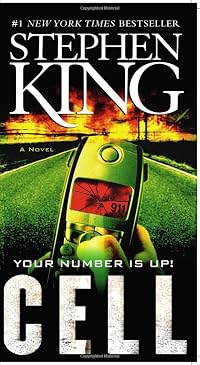
Cell
by Stephen King
On This Page
Description
Civilization doesn't end with a bang or a whimper. It ends with a call on your cell phone. What happens on the afternoon of October 1 came to be known as the Pulse, a signal sent though every operating cell phone that turns its user into something...well, something less than human. Savage, murderous, unthinking-and on a wanton rampage. Terrorist act? Cyber prank gone haywire? It really doesn't matter, not to the people who avoided the technological attack. What matters to them is surviving show more the aftermath. Before long a band of them-"normies" is how they think of themselves-have gathered on the grounds of Gaiten Academy, where the headmaster and one remaining student have something awesome and terrifying to show them on the school's moonlit soccer field. Clearly there can be no escape. The only option is to take them on. show lessTags
Recommendations




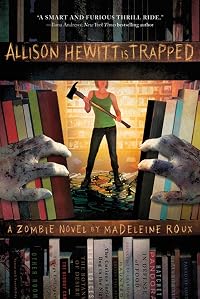
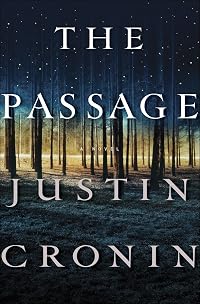
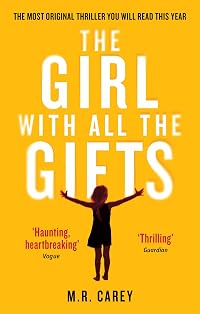
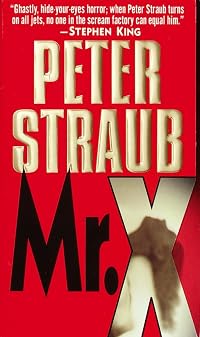
Member Recommendations
Member Reviews
Literary critics can moan all they want about Stephen King's "penny dreadful" oeuvre, but his mastery at the craft of storytelling is indisputable. King writes his novels like a seduction, the story unfolding delicately and deliberately. As any Stephen King fan knows, his coy expository chapters often take up the first hundred pages or more. In Cell, however, the reader is brutally dragged into the main action--unspeakable, senseless violence--within the first seven pages. Cell is by far King's most brutal, transgressive work to date.
Many have compared Cell to his earlier epic, The Stand. On the surface, the novels are quite similar: an apocolyptic event threatens the very existence of the human race as a band of survivors struggle to show more come to terms with the carnage and avert further catastrophe. Cell, however, is the far more mature novel of the pair. The Stand was, in many ways, a novel by an idealistic youth, whereas Cell is filled with the trenchant and world-weary observations of an adult. The subtext is laden with so much chillingly apt futurist rhetoric that it is as though the author had Marshall McLuhan whispering plot devices and metaphors into his ear as he labored over his typewriter. King manages to explore several of the major sociocultural conflicts of our time, most persuasively the end of the era of individualism and the rise of collectivism, here symptomatic of heavy reliance on technology. Whereas many dystopian novels are almost comically blunt when expounding upon the dangers of collectivism, King's horrific plot and action give his metaphors a sort of subtlety that renders his subtext much more graceful and easier to stomach than the work of Ayn Rand.
As the epigraphs indicate, it is also a meditation on the intrinsic violence of the human race. King clearly feels as though the world is out of control and wants to find out why. His preferred genre, horror, is an excellent one with which to consider the depravaties of modern life. The Stand was a novel that, if not upbeat, was at least optimistic--a reflection of the times in which it was written. There was also violence, but it had its own biblical logic, if violence can ever be called logical. In Cell, the violence is senseless, oppressive, and omnipresent. There seems to be little promise for a better world... at least not one inhabited by human beings.
Many reviewers took issue with the unresolved ending. Considering the subtext of the novel, however, the reader will find that the ending's abruptness actually informs the sense that Cell, besides being an excellent horror yarn, is a meticulously painted portrait of the horrors of global culture. The many crises of our time are still developing and mutating. The end is not yet, it seems, in sight. show less
Many have compared Cell to his earlier epic, The Stand. On the surface, the novels are quite similar: an apocolyptic event threatens the very existence of the human race as a band of survivors struggle to show more come to terms with the carnage and avert further catastrophe. Cell, however, is the far more mature novel of the pair. The Stand was, in many ways, a novel by an idealistic youth, whereas Cell is filled with the trenchant and world-weary observations of an adult. The subtext is laden with so much chillingly apt futurist rhetoric that it is as though the author had Marshall McLuhan whispering plot devices and metaphors into his ear as he labored over his typewriter. King manages to explore several of the major sociocultural conflicts of our time, most persuasively the end of the era of individualism and the rise of collectivism, here symptomatic of heavy reliance on technology. Whereas many dystopian novels are almost comically blunt when expounding upon the dangers of collectivism, King's horrific plot and action give his metaphors a sort of subtlety that renders his subtext much more graceful and easier to stomach than the work of Ayn Rand.
As the epigraphs indicate, it is also a meditation on the intrinsic violence of the human race. King clearly feels as though the world is out of control and wants to find out why. His preferred genre, horror, is an excellent one with which to consider the depravaties of modern life. The Stand was a novel that, if not upbeat, was at least optimistic--a reflection of the times in which it was written. There was also violence, but it had its own biblical logic, if violence can ever be called logical. In Cell, the violence is senseless, oppressive, and omnipresent. There seems to be little promise for a better world... at least not one inhabited by human beings.
Many reviewers took issue with the unresolved ending. Considering the subtext of the novel, however, the reader will find that the ending's abruptness actually informs the sense that Cell, besides being an excellent horror yarn, is a meticulously painted portrait of the horrors of global culture. The many crises of our time are still developing and mutating. The end is not yet, it seems, in sight. show less
[Originally posted on "The Harrow" Vol 10, No 5 (2007) http://bit.ly/wIv9OC]
I just finished reading Stephen King's "Cell", so now I'm going to change my name.
What changing my name has to do with the book, you will ask. The answer is "everything". I have discovered that by putting the right name on the jacket you can get away with anything and become the #1 New York Times Bestseller. I want to try it too.
Graphic artist Clay Riddell, the main character, finds himself in the middle of the apocalypse, which begins with the ring of a cell phone. He's lucky not to own one, but everybody who does becomes instantly crazy, his or her animal instincts are unleashed and all hell breaks loose. The net result is mass murder and destruction, while show more Clay and a few friends whom he collects along the way try to survive among heaps of decaying corpses of various descriptions.
The cell crazies (the phonies) start behaving in an orderly manner after a while. They move in flocks and sleep in flocks, listening to music through boomboxes and loudspeakers. They also develop telepathic powers, which they use to communicate with Clay and friends in their dreams and to influence their acts in various ways. Their behavior remains unexplained, however, and the reader uselessly searches for clues as to where all the boomboxes come from and who is putting batteries in them. This is only one of the many unexplained puzzles of this book, however, although probably the most annoying one.
King's prose is, as usual, outstanding, and the idea of the cellular phone starting it all is definitely brilliant. So what's wrong with this picture?
Apparently, The Master has failed to read James Herbert's "The Fog", and may have overlooked John Wyndham's "The Day of the Triffids". In "The Fog" it is a poisonous fume coming from a crack in the earth (not a cell phone) that starts it all. In "The Day of the Triffids" it is a mutant plant that goes around killing people who have been blinded so as to make an easy prey. The madness that ensues in "Cell" very much reminds one of the crazy people in "The Fog". Most of the pages in "Cell" are spent among mutilated and badly decayed bodies, while Clay and his friends break into other people's houses – which is how William Masen and his friends while away the time in "The Day of the Triffids". Masen's world is dominated by grotesque creatures (the Triffids), while Clay's is dominated by grotesque creatures (the phonies).
There are many parallels between "Cell", "The Fog" and "The Day of the Triffids". In Wyndham's classic the vast majority of the population goes blind, and in "Cell" it goes mad, just like in "The Fog". The three books are post-apocalyptic stories in which humanity has to rebuild after a single event that destroyed civilization. In Wyndham's thriller the triffids are technology gone out of control, and so are the cellular phones in "Cell". So, incidentally, is Herbert's fog.
But the fact that "Cell" plays riff on those two classics is by no means the only flaw of the book. While both in "The Fog" and in "The Day of the Triffids" the reasons for the apocalypse and their origins are well and plausibly explained, in "Cell" we never learn who or what caused "the pulse" that started it all, how he did it and what happened to people's brains when he did. Not being a great fan of closure I wouldn't normally complain about it being missing, but this time King leaves us with all loose ends dangling before our eyes. Not only we don’t know what the fate of the various characters will be, but we are also left in the middle of the evolution of the phonies, not knowing which way the whole thing will go.
Some inexplicable defects of the book also ruin your reading pleasure (or what's left of it) along the way. You'll find a girl of fifteen who, every now and then and without prior warning, speaks with the wisdom and language of an aged schoolteacher, as well as a boy of twelve whose knowledge of electronic and software is comparable to that of a top NASA scientist. You can't help wondering whether the four hundred and fifty pages of the book couldn't have been trimmed down to two hundred. By the time you reach the middle of the book you certainly wish they had.
Because King is in a class of his own, he can afford to write a book like this, if only to see whether reviewers will fall into the trap and hail it as the greatest zombie book ever. However, I'm afraid that those who gave "Cell" a stellar review out of reverence for The Master failed to fulfill their duty toward their readers. This book has taught me a few facts of life, however, so I'm going to change my name soon and I need to pick a good one. I rather lean toward H. P. Lovecraft, Jr., but I haven’t made up my mind, yet. I'll let you know. show less
I just finished reading Stephen King's "Cell", so now I'm going to change my name.
What changing my name has to do with the book, you will ask. The answer is "everything". I have discovered that by putting the right name on the jacket you can get away with anything and become the #1 New York Times Bestseller. I want to try it too.
Graphic artist Clay Riddell, the main character, finds himself in the middle of the apocalypse, which begins with the ring of a cell phone. He's lucky not to own one, but everybody who does becomes instantly crazy, his or her animal instincts are unleashed and all hell breaks loose. The net result is mass murder and destruction, while show more Clay and a few friends whom he collects along the way try to survive among heaps of decaying corpses of various descriptions.
The cell crazies (the phonies) start behaving in an orderly manner after a while. They move in flocks and sleep in flocks, listening to music through boomboxes and loudspeakers. They also develop telepathic powers, which they use to communicate with Clay and friends in their dreams and to influence their acts in various ways. Their behavior remains unexplained, however, and the reader uselessly searches for clues as to where all the boomboxes come from and who is putting batteries in them. This is only one of the many unexplained puzzles of this book, however, although probably the most annoying one.
King's prose is, as usual, outstanding, and the idea of the cellular phone starting it all is definitely brilliant. So what's wrong with this picture?
Apparently, The Master has failed to read James Herbert's "The Fog", and may have overlooked John Wyndham's "The Day of the Triffids". In "The Fog" it is a poisonous fume coming from a crack in the earth (not a cell phone) that starts it all. In "The Day of the Triffids" it is a mutant plant that goes around killing people who have been blinded so as to make an easy prey. The madness that ensues in "Cell" very much reminds one of the crazy people in "The Fog". Most of the pages in "Cell" are spent among mutilated and badly decayed bodies, while Clay and his friends break into other people's houses – which is how William Masen and his friends while away the time in "The Day of the Triffids". Masen's world is dominated by grotesque creatures (the Triffids), while Clay's is dominated by grotesque creatures (the phonies).
There are many parallels between "Cell", "The Fog" and "The Day of the Triffids". In Wyndham's classic the vast majority of the population goes blind, and in "Cell" it goes mad, just like in "The Fog". The three books are post-apocalyptic stories in which humanity has to rebuild after a single event that destroyed civilization. In Wyndham's thriller the triffids are technology gone out of control, and so are the cellular phones in "Cell". So, incidentally, is Herbert's fog.
But the fact that "Cell" plays riff on those two classics is by no means the only flaw of the book. While both in "The Fog" and in "The Day of the Triffids" the reasons for the apocalypse and their origins are well and plausibly explained, in "Cell" we never learn who or what caused "the pulse" that started it all, how he did it and what happened to people's brains when he did. Not being a great fan of closure I wouldn't normally complain about it being missing, but this time King leaves us with all loose ends dangling before our eyes. Not only we don’t know what the fate of the various characters will be, but we are also left in the middle of the evolution of the phonies, not knowing which way the whole thing will go.
Some inexplicable defects of the book also ruin your reading pleasure (or what's left of it) along the way. You'll find a girl of fifteen who, every now and then and without prior warning, speaks with the wisdom and language of an aged schoolteacher, as well as a boy of twelve whose knowledge of electronic and software is comparable to that of a top NASA scientist. You can't help wondering whether the four hundred and fifty pages of the book couldn't have been trimmed down to two hundred. By the time you reach the middle of the book you certainly wish they had.
Because King is in a class of his own, he can afford to write a book like this, if only to see whether reviewers will fall into the trap and hail it as the greatest zombie book ever. However, I'm afraid that those who gave "Cell" a stellar review out of reverence for The Master failed to fulfill their duty toward their readers. This book has taught me a few facts of life, however, so I'm going to change my name soon and I need to pick a good one. I rather lean toward H. P. Lovecraft, Jr., but I haven’t made up my mind, yet. I'll let you know. show less
This is basic light and fluffy King with a lot of crowd-pleasing elements: an overabundance of disgusting violence, mindless zombies, the end of the world, a gang of survivors journeying toward some supersized climax. The twist is that this time the end of the world occurs as a result of a computer virus in the cell phone network that rewires and reboots the brains of anyone who hears it (don’t think about that too much).
It’s a lot of fun from start to finish, though, even if there’s nothing particularly groundbreaking here. King almost—but not quite—phoned it in (ha ha).
It’s a lot of fun from start to finish, though, even if there’s nothing particularly groundbreaking here. King almost—but not quite—phoned it in (ha ha).
What if a pulse sent out through cell phones turned every person using one of them into a zombie-like killing machine? That's what happens on page six of King's latest, a glib, technophobic but compelling look at the end of civilization—or at what may turn into a new, extreme, telepathically enforced fascism. Those who are not on a call at the time of the pulse (and who don't reach for their phones to find out what is going on) remain "normies." One such is Clayton Riddell, an illustrator from Kent Pond, Maine, who has just sold some work in Boston when the pulse hits. Clay's single-minded attempt to get back to Maine, where his estranged wife, Sharon, and young son, Johnny-Gee, may or may not have been turned into "phoners" (as those show more who have had their brains wiped by the pulse come to be called) comprises the rest of the plot. King's imagining of what is more or less post-Armageddon Boston is rich, and the sociological asides made by his characters along the way—Clay travels at first with two other refugees—are jaunty and witty. The novel's three long set pieces are all pretty gory, but not gratuitously so, and the book holds together in signature King style show less
What happens when the world can no longer use cell phones because everyone who was using a cell phone got turned into a feral, homicidal killing machine? Well, things go to hell in a handbasket, basically. This is easily one of King's best books in recent memory--not overblown, not too long, not too heavily cliched, and creepy as hell at points.
What was really fascinating to me was his picture of American society crumbling into chaos--it's so heavily influenced by 9/11 and Hurricane Katrina. It's so of the moment, I could see it being looked at twenty years from now as an illustration of the American Psyche, circa 2007.
What was really fascinating to me was his picture of American society crumbling into chaos--it's so heavily influenced by 9/11 and Hurricane Katrina. It's so of the moment, I could see it being looked at twenty years from now as an illustration of the American Psyche, circa 2007.
King's take on the zombie apocalypse novel! For him, the root cause is "The Pulse" as delivered through a cell phone! From then on, it's the phone crazies vs. the normals! It's a pretty good, quick read, and it gets to the action right away! The main character is Clay and he picks up some help along the way. And his main adversary is the Raggedy Man, who is pretty dang creepy! I'm still not sure how I feel about the ending, but it does work.
Spoler alert:
I did not like that the origin of "The Pulse" is never given. Nor how it would enable the phone crazies to gain the powers of telepathy and levitation. Very frustrating for me.
Spoler alert:
I did not like that the origin of "The Pulse" is never given. Nor how it would enable the phone crazies to gain the powers of telepathy and levitation. Very frustrating for me.
I call this book the mini-Stand. The Stand was Stephen King's epic about an apocalyptic flu and the people who survived it. "Cell" is much like The Stand, but instead of the flu, people get infected via their cell phones, which turn them into zombies (do you get the feeling this book practically wrote itself?). The "normies" who survive uninfected scramble to try to survive the phoners' attacks. It's much shorter than The Stand though, because instead of following a large group of characters, it follows only 3-5 at most. This makes for a streamlined post-apocalyptic world that's limited to the New England region, though you can easily imagine the same events happening all over the world. I enjoyed it, like I do most King novels, and I show more appreciated it more today waiting in line for lunch at Subway behind cell yakkers, wishing they would turn into zombies too. King readers will recognize allegories in the characters (Raggedy Man is a lot like Randall Flagg, etc), but in the end, the story is about a father trying to find his son, which makes it different from King's other novels. show less
Members
- Recently Added By
Published Reviews
ThingScore 69
If you have ever worried that using mobile phones might scramble your brain, Stephen King suggests you may just be right. It all happens at 3.02pm one afternoon, when everyone in the world using a cellphone suddenly becomes a violent maniac.
added by stephmo
Stephen King is supposed to have retired. A year ago, he published the final part of his seven-book Dark Tower saga with the book of the same name - a novel so crushingly disappointing that, reluctantly, all but King's most ardent fans were forced to agree with the author himself that it was probably time for him to stop and enjoy the royalties from his 40 or so bestsellers.
added by stephmo
Cell is Stephen King's first full-length novel since his threatened retirement in 2003. Of course, this most prolific of authors has not been idle during this period, penning a collaborative non-fiction book about baseball, a regular column for the popular US magazine Entertainment Weekly, several short stories, and even a short (and slightly puzzling) noir novel, The Colorado Kid, for small show more publisher Hard Case Crime. This is the first of two new novels to be published this year, with Lisey's Story to follow in October. show less
added by stephmo
Lists

Best Post-Apocalyptic Stories
143 works; 88 members

Best Books About Plagues and Epidemics
99 works; 17 members

Best Horror Books
281 works; 85 members

Best Zombie Books
77 works; 8 members

Dystopian and Apocalyptic Literature
350 works; 74 members

Books Read in 2008
335 works; 8 members

Fiction With Familiar Settings
279 works; 92 members

Eerie eTales
192 works; 3 members

2023 Reads
26 works; 1 member

Books Read in 2022
5,164 works; 113 members

Post-Apocalyptic Fiction
57 works; 3 members

Books Read in 2018
4,360 works; 110 members

Unread books
1,063 works; 82 members

2000s (the decade, not the century)
184 works; 11 members

Stephen King books
81 works; 1 member

Speculative Fiction to Read
706 works; 32 members
Stephen King Bibliography
77 works; 3 members

New England Books
101 works; 10 members
Talk Discussions
Past Discussions
July 2013’s SK Flavor of the Month – Cell in King's Dear Constant Readers (September 2014)
Author Information

Stephen King was born in Portland, Maine, on September 21, 1947. After graduating with a Bachelor's degree in English from the University of Maine at Orono in 1970, he became a teacher. His spare time was spent writing short stories and novels. King's first novel would never have been published if not for his wife. She removed the first few show more chapters from the garbage after King had thrown them away in frustration. Three months later, he received a $2,500 advance from Doubleday Publishing for the book that went on to sell a modest 13,000 hardcover copies. That book, Carrie, was about a girl with telekinetic powers who is tormented by bullies at school. She uses her power, in turn, to torment and eventually destroy her mean-spirited classmates. When United Artists released the film version in 1976, it was a critical and commercial success. The paperback version of the book, released after the movie, went on to sell more than two-and-a-half million copies. Many of King's other horror novels have been adapted into movies, including The Shining, Firestarter, Pet Semetary, Cujo, Misery, The Stand, and The Tommyknockers. Under the pseudonym Richard Bachman, King has written the books The Running Man, The Regulators, Thinner, The Long Walk, Roadwork, Rage, and It. He is number 2 on the Hollywood Reporter's '25 Most Powerful Authors' 2016 list. King is one of the world's most successful writers, with more than 100 million copies of his works in print. Many of his books have been translated into foreign languages, and he writes new books at a rate of about one per year. In 2003, he received the National Book Foundation Medal for Distinguished Contribution to American Letters. In 2012 his title, The Wind Through the Keyhole made The New York Times Best Seller List. King's title's Mr. Mercedes and Revival made The New York Times Best Seller List in 2014. He won the Edgar Allan Poe Award in 2015 for Best Novel with Mr. Mercedes. King's title Finders Keepers made the New York Times bestseller list in 2015. Sleeping Beauties is his latest 2017 New York Times bestseller. (Bowker Author Biography) Stephen King is the author of more than thirty books, all of them worldwide bestsellers. Among his most recent are "Hearts in Atlantis", "The Girl Who Loved Tom Gordon", "Bag of Bones", & "The Green Mile". "On Writing" is his first book of nonfiction since "Danse Macabre", published in 1981. He served as a judge for Prize Stories: The Best of 1999, The O. Henry Awards. He lives in Bangor, Maine with his wife, novelist Tabitha King. King's book, The Bazaar of Bad Dreams: Stories, made the 2015 New York Times bestseller list. (Publisher Provided) show less
All Editions
Awards and Honors
Distinctions
Series
Belongs to Publisher Series
Work Relationships
Is contained in
Has the adaptation
Common Knowledge
- Canonical title
- Cell
- Original title
- Cell
- Original publication date
- 2006-01
- People/Characters
- Clayton Riddell; Tom McCourt; Alice Maxwell; Johnny Riddell; Charles Ardai; Jordan (show all 33); The Raggedy Man; Ulrich Ashland; Noah Chutsky; Gunner; Roscoe Handt; Daniel Hartwick; Ray Huizenga; Kretsky; Denise Link; Beth Nickerson; Heidi Nickerson; Potowami; Ricardi; Sharon Riddell; Judy Scottoni; Franklin [Cell]; George [Cell]; Gregory [Cell]; Harold [Cell]; Natalie [Cell]; Packsack; Portia [Cell]; Rafer; Rolfe [Cell]; Pixie Dark; Pixie Light; Power Suit Woman
- Important places
- Boston, Massachusetts, USA; Malden, Massachusetts, USA; Gaiten Academy; Kent Pond, Maine, USA; Kashwak, Maine, USA
- Related movies
- Cell (2016 | IMDb)
- Epigraph
- The id will not stand for a delay in gratification. It always feels the tension of the unfulfilled urge. - Sigmund Freud
Human aggression is instinctual. Humans have not evolved any ritualized aggression-inhibiting mechanisms to ensure the survival of the species. For this reason man is considered a very dangerous animal. - Konrad Lorenz
Can you hear me now? - Verizon - Dedication
- For Richard Matheson and George Romero
- First words
- The event that came to be known as The Pulse began at 3:03 p.m., eastern standard time, on the afternoon of October 1.
- Last words
- (Click to show. Warning: May contain spoilers.)"Hey, Johnny-Gee," he said, "Fo-fo-you-you." And pressed the cell against his son's ear.
- Original language
- English
- Canonical DDC/MDS
- 813.54
- Canonical LCC
- PS3561.I483
Classifications
Statistics
- Members
- 13,028
- Popularity
- 605
- Reviews
- 280
- Rating
- (3.44)
- Languages
- 24 — Bulgarian, Catalan, Chinese, Czech, Danish, Dutch, English, Estonian, Finnish, French, German, Greek, Hungarian, Italian, Polish, Portuguese, Romanian, Russian, Serbian, Slovak, Spanish, Swedish, Turkish, Ukrainian
- Media
- Paper, Audiobook, Ebook
- ISBNs
- 121
- UPCs
- 3
- ASINs
- 34