On This Page
Description
Cat on a Hot Tin Roof first heated up Broadway in 1955 with its gothic American story of brothers vying for their dying father's inheritance amid a whirlwind of sexuality, untethered in the person of Maggie the Cat. The play also daringly showcased the burden of sexuality repressed in the agony of her husband, Brick Pollitt. In spite of the public controversy Cat stirred up, it was awarded the Pulitzer Prize and the Drama Critics Circle Award for that year. Williams, as he so often did with show more his plays, rewrote Cat on a Hot Tin Roof for many years the present version was originally produced at the American Shakespeare Festival in 1974 with all the changes that made Williams finally declare the text to be definitive, and was most recently produced on Broadway in the 2003-04 season. This definitive edition also includes Williams' essay "Person-to-Person," Williams' notes on the various endings, and a short chronology of the author's life. One of America's greatest living playwrights, as well as a friend and colleague of Williams, Edward Albee has written a concise introduction to the play from a playwright's perspective, examining the candor, sensuality, power, and impact of Cat on a Hot Tin Roof then and now. show lessTags
Recommendations






Member Reviews
“What is the smell in this room? Don’t you notice it, Brick? Don’t you notice a powerful and obnoxious odor of mendacity in this room?”
In a “Cat on a Hot Tin Roof”, Tennessee Williams shows us the darker side of a Southern family – lies, cover-ups, desires, frustrations, lovelessness, illness, greed, sex, childlessness, sibling rivalry, hints of homosexuality, alcoholism, and regret. One leads to another, and no one is happy or satisfied. It’s a rather miserable family who simply don’t like each other. This play spans only a few hours’ time where all these themes come to a head, and the cards are revealed. Yet, it doesn’t feel rushed. Bravo.
Originally staged in New York in 1955, this Pulitzer Prize winning play show more unveiled a new reality that was unprecedented in the era of “I Love Lucy”. (My book is the 1974 version where Act III was completely rewritten plus other heavy revisions.) This play was notably named for Margaret who finds herself in a loveless marriage, but not willing to leave it either. “I feel all the time like a cat on a hot tin roof.” Replies her uncaring husband, Brick, “Then jump off the roof…” and “Take a lover!” Yikes.
Some quotes:
The book has this preface from Dylan Thomas – there’s a lot of raging alright…:
“And you, my father, there on the sad height,
Curse, bless, me now with your fierce tears, I pray.
Do not go gentle into that good night.
Rage, rage against the dying of the light!”
On loneliness – so sad..:
“Living with someone you love can be lonelier – than living entirely alone! – if the one that y’ love doesn’t love you…”
A broken marriage – Geez, why do they bother to stay together…:
Brick: “I don’t have to do anything I don’t want to do. You keep forgetting the conditions on which I agreed to stay on living with you.”
Margaret [out before she knows it]: “I’m not living with you. We occupy the same cage.”
On life that has lost its luster:
“…My only point, the only point that I’m making, is life has got to be allowed to continue even after the dream of life is – all – over.”
On post war Europe:
“… That Europe is nothin’ on earth but a great big auction, that’s all it is, that bunch of old worn-out place, it’s just a big fire-sale, the whole fuckin’ thing…”
On death:
“—the human animal is a beast that dies and if he’s got money he buys and buys and buys and I think the reason he buys everything he can buy is that in the back of his mind he has the crazy hope that one of his purchases will be life everlasting! -- Which it never can be…”
And
“Ignorance – of mortality – is a comfort. A man don’t have that comfort, he’s the only living thing that conceives of death, that knows what it is…” show less
In a “Cat on a Hot Tin Roof”, Tennessee Williams shows us the darker side of a Southern family – lies, cover-ups, desires, frustrations, lovelessness, illness, greed, sex, childlessness, sibling rivalry, hints of homosexuality, alcoholism, and regret. One leads to another, and no one is happy or satisfied. It’s a rather miserable family who simply don’t like each other. This play spans only a few hours’ time where all these themes come to a head, and the cards are revealed. Yet, it doesn’t feel rushed. Bravo.
Originally staged in New York in 1955, this Pulitzer Prize winning play show more unveiled a new reality that was unprecedented in the era of “I Love Lucy”. (My book is the 1974 version where Act III was completely rewritten plus other heavy revisions.) This play was notably named for Margaret who finds herself in a loveless marriage, but not willing to leave it either. “I feel all the time like a cat on a hot tin roof.” Replies her uncaring husband, Brick, “Then jump off the roof…” and “Take a lover!” Yikes.
Some quotes:
The book has this preface from Dylan Thomas – there’s a lot of raging alright…:
“And you, my father, there on the sad height,
Curse, bless, me now with your fierce tears, I pray.
Do not go gentle into that good night.
Rage, rage against the dying of the light!”
On loneliness – so sad..:
“Living with someone you love can be lonelier – than living entirely alone! – if the one that y’ love doesn’t love you…”
A broken marriage – Geez, why do they bother to stay together…:
Brick: “I don’t have to do anything I don’t want to do. You keep forgetting the conditions on which I agreed to stay on living with you.”
Margaret [out before she knows it]: “I’m not living with you. We occupy the same cage.”
On life that has lost its luster:
“…My only point, the only point that I’m making, is life has got to be allowed to continue even after the dream of life is – all – over.”
On post war Europe:
“… That Europe is nothin’ on earth but a great big auction, that’s all it is, that bunch of old worn-out place, it’s just a big fire-sale, the whole fuckin’ thing…”
On death:
“—the human animal is a beast that dies and if he’s got money he buys and buys and buys and I think the reason he buys everything he can buy is that in the back of his mind he has the crazy hope that one of his purchases will be life everlasting! -- Which it never can be…”
And
“Ignorance – of mortality – is a comfort. A man don’t have that comfort, he’s the only living thing that conceives of death, that knows what it is…” show less
A southern family gathers to celebrate its patriarch Big Daddy’s birthday. His two sons are as different as can be. The elder, Gooper, is married to a nauseating woman and has five obnoxious kids with another on the way. The younger, Brick, is an alcoholic struggling with a horrible depression. His wife Maggie is beautiful, but is cracking under the strain of trying to hold her marriage together. Their complicated relationship seems irrevocably broken, though we don’t know why at first.
The play won the Pulitzer Prize for its deft portrayal of a family full of secrets. Contempt, greed, adultery, etc. the story is ripe with issues. Williams has a wonderful talented for capturing the fissure in relationships and people’s psyches. show more Brick is horrible to Maggie, talking to her with utter contempt. His treatment of his wife is a learned behavior. His father, Big Daddy, has treated his own wife with disdain for forty years. In his own words…
“All I ask of that woman is that she leave me alone, but she can’t admit to herself that she makes me sick.”
Maggie the Cat’s loneliness is palpable. I’ve never encountered a character so isolated and trapped in her own life. Her husband Brick is so broken, whether it’s because of his feelings for his dead friend Skipper or his guilt over Skipper’s death or both. We know that Skipper loved Brick, but we don’t know whether Brick felt the same, only that he was so bothered by Skipper’s confession that he hung up on him.
BOTTOM LINE: The play is an enthralling portrait of loneliness. You can't look away.
**The edition I read had two versions of the third act. The first was the ending as Williams originally imagined it. The second was a rewrite that Elia Kazan encouraged Williams to do. Both are interesting, the major change is the absence or presence of Big Daddy.
“Living with someone you love can be lonelier – than living entirely alone! – if the one that y’ love doesn’t love you.”
The 1958 film version makes a few major changes, notably the absence of any reference to homosexuality. It completely leaves out the bits about the former owners of the plantation. It makes Brick and Skipper’s relationship into a dependant friendship, but never touches on the issue of homosexuality. It stars Paul Newman and Elizabeth Taylor; she is particularly mesmerizing as Maggie. show less
The play won the Pulitzer Prize for its deft portrayal of a family full of secrets. Contempt, greed, adultery, etc. the story is ripe with issues. Williams has a wonderful talented for capturing the fissure in relationships and people’s psyches. show more Brick is horrible to Maggie, talking to her with utter contempt. His treatment of his wife is a learned behavior. His father, Big Daddy, has treated his own wife with disdain for forty years. In his own words…
“All I ask of that woman is that she leave me alone, but she can’t admit to herself that she makes me sick.”
Maggie the Cat’s loneliness is palpable. I’ve never encountered a character so isolated and trapped in her own life. Her husband Brick is so broken, whether it’s because of his feelings for his dead friend Skipper or his guilt over Skipper’s death or both. We know that Skipper loved Brick, but we don’t know whether Brick felt the same, only that he was so bothered by Skipper’s confession that he hung up on him.
BOTTOM LINE: The play is an enthralling portrait of loneliness. You can't look away.
**The edition I read had two versions of the third act. The first was the ending as Williams originally imagined it. The second was a rewrite that Elia Kazan encouraged Williams to do. Both are interesting, the major change is the absence or presence of Big Daddy.
“Living with someone you love can be lonelier – than living entirely alone! – if the one that y’ love doesn’t love you.”
The 1958 film version makes a few major changes, notably the absence of any reference to homosexuality. It completely leaves out the bits about the former owners of the plantation. It makes Brick and Skipper’s relationship into a dependant friendship, but never touches on the issue of homosexuality. It stars Paul Newman and Elizabeth Taylor; she is particularly mesmerizing as Maggie. show less
I know I'm supposed to adore this book. It's one of America's premiere plays. "Winner of the Pulitzer Prize" is proudly stamped on the cover. Unfortunately, it just doesn't seem to resonate with me. Perhaps it's because I'm a minister, and this is a story of horrible relationships that would take any pastoral counselor ages to sort out.
The dialogue is quick and brilliant—I'd love to see it performed live. Williams did a fantastic job of displaying broken relationships; he just forgot to provide any hope for his characters' future. In both versions of the third act, the resolution can hardly be considered even a minor step forward between husband and wife.
If you're the sort of person who draws hope from relationships that are more show more damaged than your own, this might interest you. If you're looking for an example of the human condition—family dynamics gone awry—this is an excellent case-study. I suppose I was looking for something more. show less
The dialogue is quick and brilliant—I'd love to see it performed live. Williams did a fantastic job of displaying broken relationships; he just forgot to provide any hope for his characters' future. In both versions of the third act, the resolution can hardly be considered even a minor step forward between husband and wife.
If you're the sort of person who draws hope from relationships that are more show more damaged than your own, this might interest you. If you're looking for an example of the human condition—family dynamics gone awry—this is an excellent case-study. I suppose I was looking for something more. show less
Williams is one of the playwrights that inspired me to pick up a pen. Before reading this play, I had not realized how much of a story could be told over the course of one night, within one family, even in one room. Of course, it wasn't long before I came to understand that tighter connections and a tighter story meant that the drama would be allowed to raise its stakes even higher, but Williams was the first to open my eyes to that and similar ideas, and he did it with this play. Williams is not taught as frequently as Miller, and when he is, Cat is not the go to text ('Streetcar' usually gets the honor), but I would love to see that changed.
probably the more i think about this the more i'll like it, so maybe those stars will increase, but for now: this is a sad little play about a family full of dislike for each other, lies, secrets, greed, and more. i like that it's staged in the same amount of time that it happens in life, which i think is unusual. speaking of the staging - i think i'd like this more (probably much more) if i'd seen it staged. i suspect it's quite powerful when performed.
i liked the unfolding of our knowledge about maggie and brick's relationship - how we don't know why their marriage is broken, just that it is, at first. and we see hints of why but are never 100% sure. (did he and skipper have a gay relationship? did he act on his feelings? did he not show more feel that way and only feel guilty about skipper's death when skipper revealed his feelings for brick? we don't know for sure, but we suspect.) actually, i like really how it all unfolds; we're given little sips of information, filling in the story that we'd partially told ourselves already, and having to rewrite it each time we get more of the truth. i didn't suspect the dislike between big daddy and big mama. i didn't suspect the scheming of mae and gooper. all in all, it turned my expectations of a family on its head, and that's a good thing.
what i don't understand, in general, is the why of it all. as i think more on it, maybe that'll make more sense to me, and increase my overall feeling for the play because of it. show less
i liked the unfolding of our knowledge about maggie and brick's relationship - how we don't know why their marriage is broken, just that it is, at first. and we see hints of why but are never 100% sure. (did he and skipper have a gay relationship? did he act on his feelings? did he not show more feel that way and only feel guilty about skipper's death when skipper revealed his feelings for brick? we don't know for sure, but we suspect.) actually, i like really how it all unfolds; we're given little sips of information, filling in the story that we'd partially told ourselves already, and having to rewrite it each time we get more of the truth. i didn't suspect the dislike between big daddy and big mama. i didn't suspect the scheming of mae and gooper. all in all, it turned my expectations of a family on its head, and that's a good thing.
what i don't understand, in general, is the why of it all. as i think more on it, maybe that'll make more sense to me, and increase my overall feeling for the play because of it. show less
Three act play staged over the course of a single day in a bed/sitting room of a Mississippi plantation in the '50s. Big Daddy is sick and his two sons with their wives/children have returned to celebrate his birthday/ensure their interests are upheld. Presents two versions of Act III, the original is by far superior - the altered version caters to pansy audiences and their need for rosier endings. The tempo of the dialogue is remarkable, draws you forcibly onward - setting it down mid-act was impossible. Also, I had no idea Paul Newman was so dreamy - the image on his pasta sauce jar doesn't do him justice.
"Time goes by so fast. Nothin' can outrun it. Death commences too early - almost before you're half-acquainted with life - you meet show more with the other." (Big Mama)
"Always lived with too much space around me to be infected by ideas of other people." (Big Daddy)
"I have to hear that little click in my head that makes me peaceful. It's just a mechanical thing, something like a switch clicking off in my head, turning the hot light off and the cool night on. Usually I hear it sooner than this, sometimes as early as noon, but today it's dilatory. I just haven't got the right level of alcohol in my bloodstream yet!" (Brick) show less
"Time goes by so fast. Nothin' can outrun it. Death commences too early - almost before you're half-acquainted with life - you meet show more with the other." (Big Mama)
"Always lived with too much space around me to be infected by ideas of other people." (Big Daddy)
"I have to hear that little click in my head that makes me peaceful. It's just a mechanical thing, something like a switch clicking off in my head, turning the hot light off and the cool night on. Usually I hear it sooner than this, sometimes as early as noon, but today it's dilatory. I just haven't got the right level of alcohol in my bloodstream yet!" (Brick) show less
On a sultry summer evening family meets and secrets are revealed...so far, so a zillion other plays. Here, it's not really what the secrets are that's interesting, it's who the characters are and where the author's sympathies lie.
The first act slowly winds up to a very dramatic finish and tensions are racked up higher still in act 2. Then something strange happens - act 3 occurs twice! Williams has included his original draft of act 3 and the performance version, modified in response to the original director. It's a bit weird. Over-all I think I like the original version more.
Williams does some things I don't recall ever having seen before; he discusses the audience in stage direction and at one point rambles off into philosophising show more about the purpose of drama and such like. That comes as a bit of a shock after previously reading no drama except Ben Jonson this year, where-in you're lucky to get anything beyond entrance and exit instructions.
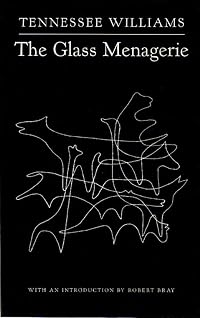
My only other experience with Williams is a production of The Glass Menagerie. There's overlap in theme and setting (the South, isolation) and that experience was excellent - this would clearly be even better in a decent production. I am now keen to pursue Williams a great deal further. show less
The first act slowly winds up to a very dramatic finish and tensions are racked up higher still in act 2. Then something strange happens - act 3 occurs twice! Williams has included his original draft of act 3 and the performance version, modified in response to the original director. It's a bit weird. Over-all I think I like the original version more.
Williams does some things I don't recall ever having seen before; he discusses the audience in stage direction and at one point rambles off into philosophising show more about the purpose of drama and such like. That comes as a bit of a shock after previously reading no drama except Ben Jonson this year, where-in you're lucky to get anything beyond entrance and exit instructions.
My only other experience with Williams is a production of The Glass Menagerie. There's overlap in theme and setting (the South, isolation) and that experience was excellent - this would clearly be even better in a decent production. I am now keen to pursue Williams a great deal further. show less
Members
- Recently Added By
Lists

Plays I Like
230 works; 31 members
Stage Plays/Screenplays/Dialogues/Anything Dialogue-Storytelling Related
81 works; 2 members
My Play Collection
769 works; 3 members

Recommended Reading : 600 Classics Reviewed, Editors of Salem Press, 2015
634 works; 6 members

AP Lit
363 works; 6 members

Overdue Podcast
808 works; 9 members
1:28 p.m.'s 350 Stage Plays Challenge
94 works; 3 members

Pre-1969 LGBTQ Literature
184 works; 67 members

Hulk's Essential Reading List
38 works; 1 member

Every Non-Musical Play Nominated for a Tony Award
64 works; 3 members

1950s
340 works; 22 members

Books I Own But Haven't Read
144 works; 2 members

Five star books
1,767 works; 110 members

Alphabetical Books
211 works; 3 members
Animals in the Title
498 works; 11 members

Top Five Books of 2016
795 works; 229 members

Best Books Read in 2016
12 works; 1 member

Books Read in 2016
4,666 works; 197 members

Inheritance and Succession Literature
24 works; 5 members

American Lit for Eng 11 Research Project
368 works; 6 members

Books Read in 2014
2,344 works; 89 members

el
1,139 works; 1 member
Author Information

337+ Works 32,111 Members
After O'Neill, Williams is perhaps the best dramatist the United States has yet produced. Born in his grandfather's rectory in Columbus, Mississippi, Williams and his family later moved to St. Louis. There Williams endured many bad years caused by the abuse of his father and his own anguish over his introverted sister, who was later permanently show more institutionalized. Williams attended the University of Missouri, and, after time out to clerk for a shoe company and for his own mental breakdown, also attended Washington University of St. Louis and the University of Iowa, from which he graduated in 1938. Williams began to write plays in 1935. During 1943 he spent six months as a contract screenwriter for MGM but produced only one script, The Gentleman Caller. When MGM rejected it, Williams turned it into his first major success, The Glass Menagerie (1945). In this intensely autobiographical play, Williams dramatizes the story of Amanda, who dreams of restoring her lost past by finding a gentleman caller for her crippled daughter, and of Amanda's son Tom, who longs to escape from the responsibility of supporting his mother and sister. After The Glass Menagerie,Williams wrote his masterpiece, A Streetcar Named Desire, (1947), along with a steady stream of other plays, among them such major works as Summer and Smoke(1948), Cat on a Hot Tin Roof (1954), and Suddenly Last Summer (1958). His plays celebrate the "fugitive kind," the sensitive outcasts whose outsider status allows them to perceive the horror of the world and who often give additional witness to that horror by becoming its victims. Stephen S. Stanton has summed up Williams's "virtues and strengths" as "a genius for portraiture, particularly of women, a sensitive ear for dialogue and the rhythms of natural speech, a comic talent often manifesting itself in "black comedy,' and a genuine theatrical flair exhibited in telling stage effects attained through lighting, costume, music, and movements." After The Night of the Iguana (1961), Williams continued to write profusely---and constantly to revise his work---but it became more difficult to get productions of his plays and, if they were produced, to win critical or popular acclaim for them. Williams won the Pulitzer Prize for drama for A Streetcar Named Desire and Cat on a Hot Tin Roof. He won the New York Drama Critics Circle Award for these two and for The Glass Menagerie and The Night of the Iguana. (Bowker Author Biography) show less
Some Editions
Awards and Honors
Series

Belongs to Publisher Series
Work Relationships
Is contained in
Cat on a Hot Tin Roof / The Milk Train Doesn't Stop Here Anymore / The Night of the Iguana by Tennessee Williams
Teatro: La gatta sul tetto che scotta; Improvvisamente l'estate scorsa, La rosa tatuata, Un tram che si chiama desiderio by Tennessee Williams
The Glass Menagerie / A Streetcar Named Desire / Cat on a Hot Tin Roof / Suddenly Last Summer by Tennessee Williams
Has the adaptation
Has as a study
Has as a commentary on the text
Common Knowledge
- Canonical title
- Cat on a Hot Tin Roof
- Original publication date
- 1955; 1975, revised version
- People/Characters
- Brick; Maggie; Big Daddy; Big Mama; Mae; Gooper
- Important places
- Plantation on the Delta; Mississippi, USA; USA
- Related movies
- Cat on a Hot Tin Roof (1958 | IMDb); Cat on a Hot Tin Roof (1976 | IMDb); Cat on a Hot Tin Roof (1984 | IMDb)
- Epigraph
- And you, my father, there on the sad height, / Curse, bless, me now with your fierce tears, I pray. / Do not go gentle into that good night. / Rage, rage against the dying of the light. -Dylan Thomas
- First words
- At the rise of the curtain someone is taking a shower in the bathroom, the door of which is half open.
- Last words
- (Click to show. Warning: May contain spoilers.)BRICK [smiling with charming sadness]: Wouldn't it be funny if that was true?
- Publisher's editor
- Philip C. Kolin (Methuen Student Edition)
- Original language*
- Inglese
- Disambiguation notice
- This work refers to separate editions of the play. Please do not combine with omnibus editions which contain other plays also, nor with any other version that does not contain the full original text (e.g. abridged or simplifi... (show all)ed texts, movie adaptations, student guides or notes, etc.).
*Some information comes from Common Knowledge in other languages. Click "Edit" for more information.
Classifications
Statistics
- Members
- 3,341
- Popularity
- 5,101
- Reviews
- 39
- Rating
- (4.06)
- Languages
- 7 — Catalan, English, French, German, Italian, Norwegian (Nynorsk), Spanish
- Media
- Paper, Audiobook, Ebook
- ISBNs
- 69
- UPCs
- 1
- ASINs
- 31