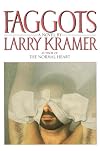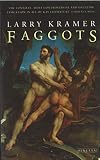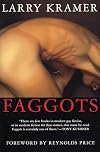
Faggots
by Larry Kramer
On This Page
Description
In print since its original publication in 1978, Larry Kramer's Faggots has become one of the bestselling novels about gay life ever written. The book is a fierce satire of the gay ghetto and a touching story of one man's desperate search for love there, and reading it today is a fascinating look at how much, and how little, has changed.Tags
Recommendations






























Member Reviews
It must be going on for twenty years since the last time I read this - I got it down off the shelf again after seeing Larry Kramer talking about the 70s in a TV programme. It's very much a book that could only have been written at one moment in history: an ironic, satirical, but also very affectionate account of the excesses of gay life in New York in the years between Stonewall and AIDS, with a group of characters looking for love, but finding sex.
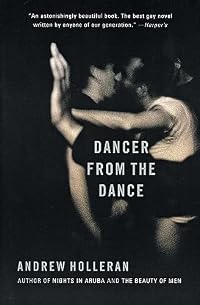
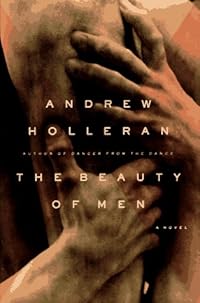
I was going to write "don't read this book if you're easily shocked," but on reflection, that's wrong. The whole point of the book is épater la bourgeoisie. If you're not shocked, ask for your money back. Kramer gleefully depicts in detail almost every imaginable kind of sex act (and some show more you probably prefer not to imagine), in all the classic settings (the Piers, the Baths, Fire Island, ...) and takes a pot shot at pretty much every sacred cow he can think of — religion, race, family, marriage, youth, politics, literature: nothing is safe. The book created a new spirit of harmony and understanding between gay and straight critics when it was first published: they all hated it equally. Andrew Holleran's Dancer from the dance, published the same year, claimed a mystical, liberating, transformative beauty for the New York gay disco culture; Kramer depicts it as selfish, vain, dirty, hedonistic, profitable and dangerous. Not surprisingly, many gay men who were part of that culture felt that Kramer had let them down.
From the distance of thirty years we don't really have to engage with the politics any more. Hindsight has called off all bets. But we can take pleasure in Kramer's powers of observation and description, and in particular his eccentric, ironic stylistic mix - two parts Damon Runyon, one part underground porn film, two parts Woody-Allenesque cod psychology, and an occasional shot of Henry James. There are some great lists, some delightfully bogus statistics and citations from scientific articles, and of course lots of poor-taste jokes. Suffice it to say that one of the principal characters is called Randy Dildough, a name "combining ... allusions to the American Big Three: sex, money, and food". show less
I was going to write "don't read this book if you're easily shocked," but on reflection, that's wrong. The whole point of the book is épater la bourgeoisie. If you're not shocked, ask for your money back. Kramer gleefully depicts in detail almost every imaginable kind of sex act (and some show more you probably prefer not to imagine), in all the classic settings (the Piers, the Baths, Fire Island, ...) and takes a pot shot at pretty much every sacred cow he can think of — religion, race, family, marriage, youth, politics, literature: nothing is safe. The book created a new spirit of harmony and understanding between gay and straight critics when it was first published: they all hated it equally. Andrew Holleran's Dancer from the dance, published the same year, claimed a mystical, liberating, transformative beauty for the New York gay disco culture; Kramer depicts it as selfish, vain, dirty, hedonistic, profitable and dangerous. Not surprisingly, many gay men who were part of that culture felt that Kramer had let them down.
From the distance of thirty years we don't really have to engage with the politics any more. Hindsight has called off all bets. But we can take pleasure in Kramer's powers of observation and description, and in particular his eccentric, ironic stylistic mix - two parts Damon Runyon, one part underground porn film, two parts Woody-Allenesque cod psychology, and an occasional shot of Henry James. There are some great lists, some delightfully bogus statistics and citations from scientific articles, and of course lots of poor-taste jokes. Suffice it to say that one of the principal characters is called Randy Dildough, a name "combining ... allusions to the American Big Three: sex, money, and food". show less
Na "capital homossexual do mundo" (Nova Iorque) dos loucos anos pré-SIDA, seja nos bairros gay de Greenwich, em Washington Sq ou Christopher Street, numa das saunas gay da cidade, na inauguração da super-discoteca gay mais incrível de sempre ou no paraíso homossexual à beira-mar que era Fire Island, ninguém se importa com nada que não seja o prazer físico e sensual, sexo desenfreado, em grupo, anónimo, leather, s-m, fisting, muito... mas Fred compreende que procura apenas amor!
Talvez o livro mais realista e profundamente conhecedor da cena gay novaiorquina dos anos 1970. E enredo é muito solto, os personagens multiplicam-se de tal forma que lhes perdemos o rasto, mas no final da leitura ficamos com a sensação de que show more estivemos a apreciar um quadro complexo, uma obra-prima de um mestre. Jerónimo Bosch, por exemplo. show less
Talvez o livro mais realista e profundamente conhecedor da cena gay novaiorquina dos anos 1970. E enredo é muito solto, os personagens multiplicam-se de tal forma que lhes perdemos o rasto, mas no final da leitura ficamos com a sensação de que show more estivemos a apreciar um quadro complexo, uma obra-prima de um mestre. Jerónimo Bosch, por exemplo. show less
Great works of literature transcend their specific cultural context. "Hamlet," for example, or "Candide" or "Moby-Dick" or "The Canterbury Tales" are still considered masterpieces that resonate with significance and artistic integrity hundreds of years after they were written. Perhaps it is trickier for a satire to preserve its accessibility or its appeal as time passes, since a satire often targets topical rather than timeless concerns. Brilliantly written and insightful satires, such as “A Modest Proposal” and "Don Quixote," however, manage to remain relevant long after their heyday.
Sadly, "Faggots," which fancies itself a satire and has been hailed as a tour de force of modern queer literature, merits none of these distinctions. show more In truth, in can hardly be characterized as a novel at all, since it lacks most of the defining elements of the genre on a very fundamental level—for example, a well-constructed plot or complex and thoughtfully developed characters. The story, such as it is, consists of allegedly witty vignettes or set pieces strung together with little sense of coherence or narrative veracity and populated by an unnecessarily large cast of undeveloped flat characters. A generous reading might presume that Kramer is attempting a stream-of-consciousness style, but if that’s the case, his novelistic skill is not up to the task, since such a style requires profound psychological insight into the complex thought patterns of a character who provides narrative perspective.
Upon its publication in 1978, "Faggots" sowed controversy due to its graphic depiction of gay sex, fetishes, drug use, incest, and other scandalous “perversities.” To be fair, as a depiction of pre-AIDS era gay culture in New York City, the novel retains great cultural value as an artifact of that specific historical moment. But it cannot be considered a work of literature. One suspects that there is good reason why Kramer, who penned the magnificent play (and later screenplay) "The Normal Heart" and contributed greatly to queer activism in the latter part of the 20th century, never wrote another novel. show less
Sadly, "Faggots," which fancies itself a satire and has been hailed as a tour de force of modern queer literature, merits none of these distinctions. show more In truth, in can hardly be characterized as a novel at all, since it lacks most of the defining elements of the genre on a very fundamental level—for example, a well-constructed plot or complex and thoughtfully developed characters. The story, such as it is, consists of allegedly witty vignettes or set pieces strung together with little sense of coherence or narrative veracity and populated by an unnecessarily large cast of undeveloped flat characters. A generous reading might presume that Kramer is attempting a stream-of-consciousness style, but if that’s the case, his novelistic skill is not up to the task, since such a style requires profound psychological insight into the complex thought patterns of a character who provides narrative perspective.
Upon its publication in 1978, "Faggots" sowed controversy due to its graphic depiction of gay sex, fetishes, drug use, incest, and other scandalous “perversities.” To be fair, as a depiction of pre-AIDS era gay culture in New York City, the novel retains great cultural value as an artifact of that specific historical moment. But it cannot be considered a work of literature. One suspects that there is good reason why Kramer, who penned the magnificent play (and later screenplay) "The Normal Heart" and contributed greatly to queer activism in the latter part of the 20th century, never wrote another novel. show less
However lost on critics, not to mention members of the gay establishment at the time, "Faggots" is a brilliant Mepinnean satire that takes as the object of its satire the intellectual conceit of gay sexual liberation, and the notion that gay culture would occupy a leadership position in showing America how to overcome its sexual prudery and commitment to values such as fidelity, monogamy, and true love. In fact, Kramer explores a subculture is which nothing is taboo except for the concept of monogamous love between men, which everyone says they want and no one does anything positive to achieve.
The central protagonist in this epic sexual-cultural-historical novel is the screenwriter Ned Lemish, who is a stand in for Larry Kramer. He show more descends into an underground sex world in New York City, as in Fire Island, in which no position, combination of positions, times and places for sex, or sexual behaviors are off limits. The grand scene occurs when a drop dead gorgeous young man who wants to be a model comes to New York, is given drugs, and is gradually swooped upon by an army of vulturous men, who gang rape him and others until the point of unconsciousness. There is a scene, in Fire Island, of the ultimate sexual masochism, in which a man who refuses to love Fred submits himself to anal fist sex administered by a horde of men who participate in and watch this spectacle as if it has the sacred meaning of a transformational ritual. Kramer deplores the taboo on faithful love, as he deplores the situation where the only way gay men can communicate is through sex and more sex. show less
The central protagonist in this epic sexual-cultural-historical novel is the screenwriter Ned Lemish, who is a stand in for Larry Kramer. He show more descends into an underground sex world in New York City, as in Fire Island, in which no position, combination of positions, times and places for sex, or sexual behaviors are off limits. The grand scene occurs when a drop dead gorgeous young man who wants to be a model comes to New York, is given drugs, and is gradually swooped upon by an army of vulturous men, who gang rape him and others until the point of unconsciousness. There is a scene, in Fire Island, of the ultimate sexual masochism, in which a man who refuses to love Fred submits himself to anal fist sex administered by a horde of men who participate in and watch this spectacle as if it has the sacred meaning of a transformational ritual. Kramer deplores the taboo on faithful love, as he deplores the situation where the only way gay men can communicate is through sex and more sex. show less
Very funny, very messy. I think Kramer's reputation as a moralist is somewhat overblown (not that really I agree with the moral message of this novel). Funnily enough I think some contemporary audiences would levy the same criticism that Kramer made of others onto Kramer. Probably a real love it or hate it title, worth a read if just for the historic context.
As a young gay man, recently come out to my family (Thanksgiving Break, how cliche, right) & having then graduated in May; I found I wasn't the carefree "gay" I thought I was going to feel-like. I decided on a break year (which I would need to fund myself...eek!). I got a job, turned it into a successful launch for various positions & industries I would later hold. However, sexually I was socially isolated, virtually everyone I was close to graduated and moved away. When I was given the book via USPS, I thought it was meant to be a lighthearted ribbing from a close female dorm mate. After thanking her for the gift (ha-ha), she told me to READ the book, it wasn't meant as a gag. She went to the Village, found a bookstore and talked with show more the manager & staff about how she could help her friend wandering lost in his rumpled oxfords, chinos, & Topsiders in DC.
The book was a like looking through a window at a world that looked familar, but spoke a different language. I still can quote lines from the book. When finished, I put on my Calvins & grabbed my favorite Lacoste (pre-RL polo) and headed to the gay bookstore that actually sold books. I found an approachable sales guy & tried to explain my situation and if he had any suggestions for further reading?
Quick escape ending, he was done for the day & asked me to dinner. He told me, like college, I was done reading and needed to start doing! I'll leave it there, but 3 yrs later I met the one and just celebrated our 41st Anniversary (11 legal). Oh, ironically, he was a visiting college friend of one of my DC friend and was currently living in Manhattan. show less
The book was a like looking through a window at a world that looked familar, but spoke a different language. I still can quote lines from the book. When finished, I put on my Calvins & grabbed my favorite Lacoste (pre-RL polo) and headed to the gay bookstore that actually sold books. I found an approachable sales guy & tried to explain my situation and if he had any suggestions for further reading?
Quick escape ending, he was done for the day & asked me to dinner. He told me, like college, I was done reading and needed to start doing! I'll leave it there, but 3 yrs later I met the one and just celebrated our 41st Anniversary (11 legal). Oh, ironically, he was a visiting college friend of one of my DC friend and was currently living in Manhattan. show less
I wanted more insight into the Gay culture of my yesteryear, and so thought this novel a great place to look. While Faggots is technically a satire, I think that what he is depicting is a very real and frank look at what life was like for gay men of that time.
Sex has always been and will always be a huge part of Gay culture, and so, a huge part of this novel. Like 99%!
The extremely graphic aspect didn't bother me too much, I'm no prude, but I did feel it was a bit overdone. You can have graphic scenes and still allow for more of a story and character development, which seemed to be lacking.
In the end I found the writing frustrating. I didn't find a single character likeable. It was so full of characters I had a hard time keeping track show more of who was who. I hated how it sometimes felt like some third party was narrating it and other times it didn't.
I can see why it was such a polarizing novel in its day, as it was clearly a giant spotlight on the gay community and certainly didnt paint them in a pretty light.
I did think that Kramer wrote a beautiful glimpse at just how hard it can be to find love in a world that only values sex. A problem the Gay community still has today in my opinion. Still, while this aspect of the story was the part I enjoyed, the character looking for love was, as mentioned before, not in the least likeable. So I didn't really care if he succeeded or not.
Ultimately I came out of the novel half way between hating it and loving it. show less
Sex has always been and will always be a huge part of Gay culture, and so, a huge part of this novel. Like 99%!
The extremely graphic aspect didn't bother me too much, I'm no prude, but I did feel it was a bit overdone. You can have graphic scenes and still allow for more of a story and character development, which seemed to be lacking.
In the end I found the writing frustrating. I didn't find a single character likeable. It was so full of characters I had a hard time keeping track show more of who was who. I hated how it sometimes felt like some third party was narrating it and other times it didn't.
I can see why it was such a polarizing novel in its day, as it was clearly a giant spotlight on the gay community and certainly didnt paint them in a pretty light.
I did think that Kramer wrote a beautiful glimpse at just how hard it can be to find love in a world that only values sex. A problem the Gay community still has today in my opinion. Still, while this aspect of the story was the part I enjoyed, the character looking for love was, as mentioned before, not in the least likeable. So I didn't really care if he succeeded or not.
Ultimately I came out of the novel half way between hating it and loving it. show less
Members
- Recently Added By
Lists

Good LGBT fiction for LGBT folk and friends
537 works; 51 members
Author Information

24+ Works 1,998 Members
Larry Kramer co-founded Gay Men's Health Crisis, the world's first provider of services to people with HIV and 1987, he founded ACT UP, the worldwide advocacy and protest organization.
Awards and Honors
Common Knowledge
- Original publication date
- 1978
- Important places
- New York, New York, USA; Fire Island, New York, USA; New York, USA; Suffolk County, New York, USA; USA
- Epigraph
- ...the ancients located the deeper emotions in the bowels.
(Evelyn Waugh, Put out more flags) - First words
- There are 2,556,596 faggots in the New York City area.
- Quotations
- Of the 2,639,857 faggots in the New York City area, 2,639,857 think primarily with their cocks.
- Last words
- (Click to show. Warning: May contain spoilers.)I'm 40.
Happy Birthday Me.
Classifications
Statistics
- Members
- 696
- Popularity
- 40,826
- Reviews
- 11
- Rating
- (3.73)
- Languages
- English
- Media
- Paper, Ebook
- ISBNs
- 11
- ASINs
- 4