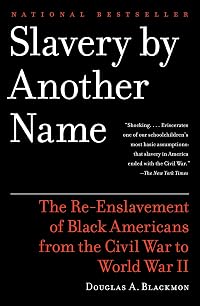
Slavery by Another Name: The Re-Enslavement of Black Americans from the Civil War to World War II
by Douglas A. Blackmon
On This Page
Description
A sobering account of a little-known crime against African Americans, and the insidious legacy of racism that reverberates today. From the aftermath of the Civil War through the dawn of World War II, under laws enacted specifically to intimidate blacks, tens of thousands of African Americans were arbitrarily arrested, hit with outrageous fines, and charged for the costs of their own arrests. With no means to pay these "debts," prisoners were sold as forced laborers to coal mines, lumber show more camps, brickyards, railroads, quarries, and farm plantations. Thousands of other African Americans were simply seized and compelled into years of involuntary servitude. Armies of "free" black men labored without compensation, were repeatedly bought and sold, and were forced through beatings and physical torture to do the bidding of white masters for decades after the official abolition of American slavery.--From publisher description. show lessTags
Recommendations


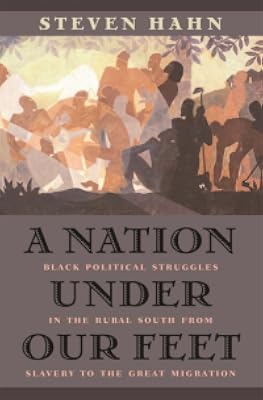


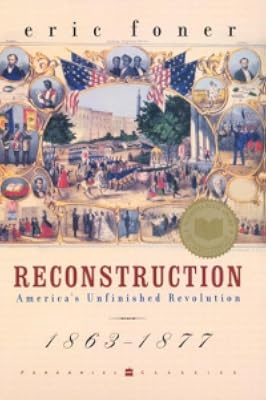
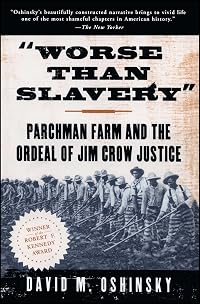
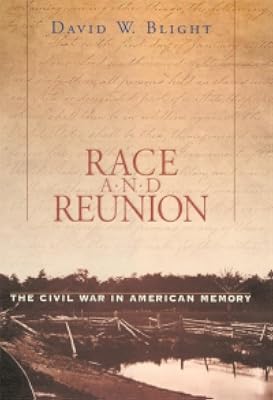


Member Recommendations
Member Reviews
Wow. I grew up in the South, among very educated folks and those not quite so (as in, good ol' Southern culture), and I had no idea. Just none. I am horrified and saddened and it now changes how I see the world.
Blackmon does an excellent job with tracing what must have been horrifying stories about how Reconstruction fell apart, how the Northern states decided that the Southern states had best "tend to their own affairs" when it came to re-enslaving African-Americans, and how both Northern and Southern industrialists (read: railroad and steel barons) benefitted from ghastly practices.
It's set mostly in Alabama, though there is a chapter on Atlanta and Georgia re-enslavement. Basically, a black man could be picked up for vagrancy, theft, show more bearing a firearm, or any number of charges, sent to prison, his fine is paid, and the person who pays his fine gets to use his labor to pay back the fine with interest. Then he is sent to coal mines or forced to work in and around coke ovens till his debt was paid or he died. That practice sheds light on current discussions about cash bail and court costs as further causes of poverty in poorer, African-American communities.
It's gripping, hard to read, and brilliantly written. Definitely deserving of a Pulitzer. show less
Blackmon does an excellent job with tracing what must have been horrifying stories about how Reconstruction fell apart, how the Northern states decided that the Southern states had best "tend to their own affairs" when it came to re-enslaving African-Americans, and how both Northern and Southern industrialists (read: railroad and steel barons) benefitted from ghastly practices.
It's set mostly in Alabama, though there is a chapter on Atlanta and Georgia re-enslavement. Basically, a black man could be picked up for vagrancy, theft, show more bearing a firearm, or any number of charges, sent to prison, his fine is paid, and the person who pays his fine gets to use his labor to pay back the fine with interest. Then he is sent to coal mines or forced to work in and around coke ovens till his debt was paid or he died. That practice sheds light on current discussions about cash bail and court costs as further causes of poverty in poorer, African-American communities.
It's gripping, hard to read, and brilliantly written. Definitely deserving of a Pulitzer. show less
I feel compelled to admit that I struggled with rating this book. On one level, it is wonderfully well-written; on another, it tells some of the most horrific stories I've EVER read...stories that would rival and surpass many horror novels. And they are all true.
Essentially, Blackmon tells in astonishing detail the use of the convict labor system in the deep South to essentially re-instate a kind of neo-slavery that drove the post-Civil War industrial boom. He does a great job of demonstrating the breadth of the problem while offering up a "thick description" of the particular history of convict Green Cottenham, who died as an prison laborer in an Alabama coal mine. Beginning with Cottenham, Blackmon then unfolds an entire network of show more corrupt judges, cruel sherriffs, and greedy businessmen that worked vigorously from just after the end of the Civil War until the beginning of World War II to negate all the hope and promise of the Emancipation Proclamation for the liberation of American slaves. He does a SUPERB job of explicating all the economic, social, and legal aspects of this outrage.
Perhaps one of the most important parts of the book is its conclusion where Blackmon traces the lineages of the companies that profited from the use of neo-slave labor in the first half of the 20th century. He then asks some hard questions about their moral responsibility for the actions of their corporate forbears, noting that companies are held responsible for parent and predecessor companies' ecological crimes...but not for the ways that it has profited from the use of convict labor. Blackmon explicitly says the book is not just a call for financial reparations; however, at the end of the day, he DOES raise that issue, while acknowledging the ambiguities and difficulties that would confront any such project.
The convict labor system is perhaps THE classic example from American history of what theologians call "systemic sin," every bit as dastardly and morally reprehensible as South African aparatheid (perhaps more so given our ever-arrogant claims of the moral high ground). At the end of the day, it is still the product of individual human choices, but we often forget that a system grounded in such sinful choices and dispositions cannot help but be itself "sinful"! And if salvation is, at its most basic, deliverance from sin, that must at some level include the dismantling of sin-laden social systems. Some evangelicals have criticized the renewed call for attention to social justice issues as somehow an "abandonment" of any meaningful doctrine of sin (e.g., blaming "the system" rather than holding people morally responsible); however, I think a book such as this goes a VERY long way to showing that most of those criticisms are short-sighted and ultimately untrue. Recognizing the "sinfulness of systems" is simply a recognition of how sin is "exceedingly sinful" (Rom. 7:13).
At the end of the day, this book deserves every one of five stars for how unflinchingly it reveals this dark chapter of American history and then proceeds to ask the very tough (but exactly appropriate) questions. It is a great book precisely because it is such a challenging book. If you want to understand the REAL nature of race relations in America today, this book is absolutely indispensable, in my opinion. show less
Essentially, Blackmon tells in astonishing detail the use of the convict labor system in the deep South to essentially re-instate a kind of neo-slavery that drove the post-Civil War industrial boom. He does a great job of demonstrating the breadth of the problem while offering up a "thick description" of the particular history of convict Green Cottenham, who died as an prison laborer in an Alabama coal mine. Beginning with Cottenham, Blackmon then unfolds an entire network of show more corrupt judges, cruel sherriffs, and greedy businessmen that worked vigorously from just after the end of the Civil War until the beginning of World War II to negate all the hope and promise of the Emancipation Proclamation for the liberation of American slaves. He does a SUPERB job of explicating all the economic, social, and legal aspects of this outrage.
Perhaps one of the most important parts of the book is its conclusion where Blackmon traces the lineages of the companies that profited from the use of neo-slave labor in the first half of the 20th century. He then asks some hard questions about their moral responsibility for the actions of their corporate forbears, noting that companies are held responsible for parent and predecessor companies' ecological crimes...but not for the ways that it has profited from the use of convict labor. Blackmon explicitly says the book is not just a call for financial reparations; however, at the end of the day, he DOES raise that issue, while acknowledging the ambiguities and difficulties that would confront any such project.
The convict labor system is perhaps THE classic example from American history of what theologians call "systemic sin," every bit as dastardly and morally reprehensible as South African aparatheid (perhaps more so given our ever-arrogant claims of the moral high ground). At the end of the day, it is still the product of individual human choices, but we often forget that a system grounded in such sinful choices and dispositions cannot help but be itself "sinful"! And if salvation is, at its most basic, deliverance from sin, that must at some level include the dismantling of sin-laden social systems. Some evangelicals have criticized the renewed call for attention to social justice issues as somehow an "abandonment" of any meaningful doctrine of sin (e.g., blaming "the system" rather than holding people morally responsible); however, I think a book such as this goes a VERY long way to showing that most of those criticisms are short-sighted and ultimately untrue. Recognizing the "sinfulness of systems" is simply a recognition of how sin is "exceedingly sinful" (Rom. 7:13).
At the end of the day, this book deserves every one of five stars for how unflinchingly it reveals this dark chapter of American history and then proceeds to ask the very tough (but exactly appropriate) questions. It is a great book precisely because it is such a challenging book. If you want to understand the REAL nature of race relations in America today, this book is absolutely indispensable, in my opinion. show less
This is top-notch reporting of an unusually large portion of American history that stretches from the end of the American Civil War and early Reconstruction to the two World Wars. For reasons that are not readily apparent to the less informed, Americans have a strong tendency to simplify black history and have a hard time understanding what did NOT happen is often times more important than what did. For instance, the Emancipation Proclamation is frequently touted as freeing all the slaves, which of course it did not do. It freed the slaves held by just the rebel states, which, of course, meant they were not actually free to leave their captures at the time. Similarly, many Americans presume that Martin Luther King, Jr. and the civil show more rights movement made blacks equal in America. Instead, Fox News reports how we don't have poor blacks because they have refrigerators, which means America has no poverty, so quit your bitching and accept any low paying job white folks haven't given away to foreign countries yet or been underbid by Latino immigrants. The fact is, as one form of slavery ended in 1865, another, more brutal form developed. This over simplifies the situation, but basically the South stopped owning and more "properly" maintaining its "human" equipment and switched to a cheaper, easily replaceable -- and thus easily destroyed and discarded -- temporary equipment, i.e., fraudulently created convict labor. The David Oshinsky book, Worse Than Slavery, touches on the same subject, but this author takes a different, more thorough, more impassioned approach. It could be pointed out that just as Oshinsky and this author cover this important gap in America's understanding of the black experience, books like Michelle Alexander book, The New Jim Crow, covers the new "misunderstanding" of the black experience since Martin Luther King, Jr. and the other Civil Rights Movement leaders populated the news media. Black history isn't just Denzel Washington in "Glory" and Gene Hackman and friends in "Mississippi Burning". It's a long continuous, ever-changing history of whites effortlessly playing whack-a-mole with black equality. show less
This took me a while to get through, but it was well worth the time. Like most white Americans, I had thought American slavery ended in 1865 with the passage of the 13th Amendment. As this book makes clear, the old system of slavery was quickly replaced with a new system of convict slavery, where black people were seized on flimsy charges, convicted without a fair trial, and forced to work under horrific conditions to repay their "debt". That system wasn't effectively dismantled until World War II, when the federal government became concerned that it made America look bad internationally.
I was surprised to learn that some modern excesses of the legal system, like exploitative plea bargains, or bogus court fees tacked onto the nominal show more fine for a crime, have been around since the 19th century.
Also at least that old? White folks insisting that black people are treated quite well, and getting violently angry when anyone suggests otherwise. (For example, Teddy Roosevelt talked about a "square deal" for African Americans... and across the south, people were enraged at the suggestion that the current deal was anything less than square.) show less
I was surprised to learn that some modern excesses of the legal system, like exploitative plea bargains, or bogus court fees tacked onto the nominal show more fine for a crime, have been around since the 19th century.
Also at least that old? White folks insisting that black people are treated quite well, and getting violently angry when anyone suggests otherwise. (For example, Teddy Roosevelt talked about a "square deal" for African Americans... and across the south, people were enraged at the suggestion that the current deal was anything less than square.) show less
I am absolutely gobsmacked. This is a book every white person in the country needs to read. Count me among those who thought slavery ended with the Emancipation Proclamation. Of course, I "knew" about the long Jim Crow era - but I had no idea about how the South perpetuated slavery through peonage up until the 1950's really.
After reading Wildmon's book, I am awestruck by the courage that people showed to stand up for their rights - to the same education enjoyed by whites, to vote, to live where they pleased, to sit where they pleased, etc. I had no idea of the depth and breadth of the threats African-Americans lived under.
We owe Wildmon a debt of gratitude for all the research and work he put into this book. It was a difficult read, show more but I'm glad to have done it. I've gained a much greater understanding of the backstory to today's race relations in this country and more convinced than ever that I could never live in the South. show less
After reading Wildmon's book, I am awestruck by the courage that people showed to stand up for their rights - to the same education enjoyed by whites, to vote, to live where they pleased, to sit where they pleased, etc. I had no idea of the depth and breadth of the threats African-Americans lived under.
We owe Wildmon a debt of gratitude for all the research and work he put into this book. It was a difficult read, show more but I'm glad to have done it. I've gained a much greater understanding of the backstory to today's race relations in this country and more convinced than ever that I could never live in the South. show less
I majored in history in college, but I studied very little American history. My understanding of the post-Reconstruction period from high school history was somewhat hazy. I did understand that after 1876, white Southerners systematically disenfranchised and oppressed African-Americans. I wasn't under any delusion that black people were at any fault for their situation in the US and in the South in particular. I knew that black people had lost any land they gained (but not how) and that landlords had abused tenants. I knew about companies that ensured their workers were always in debt to them.
What I didn't know was that the South had effectively rebuilt slavery, but didn't call it that--through its system of convict and contract labor. show more Blackmon grimly recounts the establishment and entrenchment of the system. Charges were trumped up against African-Americans, they were always convicted, and either they'd be sentenced to labor (and contracted out) or an employer would pay the fine (which the person would never have) and in return acquire them as labor. Forced labor was not simply a consequence of committing a crime; white leaders sought out black men and manufactured charges against them in order to ensure a constant supply of low cost labor for farms and mines.
This was accompanied by a systematic disenfranchisement and oppression of black Southerners, ensuring they would have no political power to resist the new slavery. It criminalized unemployment amongst African-Americans. When the Federal government attempted to take action against the most egregious offenses, and began to discover how widespread the system was, the white South rose up and demanded that the North stay out of interfering in its way of life. Southern lawyers relied on hyper-technical legal strategies to ensure that the federal government was unable to prosecute anyone for slavery, arguing that it was not technically illegal. Eventually, the government gave up. Northerners were not entirely innocent here; they too began to accept the new "scientific racism" and accepted that "good" blacks were subservient, while those who agitated for their rights were "bad." Northern companies accepted the use of slave labor in the South, even directly as when US Steel bought an Alabama coal company and did nothing to change its use of slave labor.
Only during WWII, driven by fears of enemy propaganda, did President Roosevelt instruct the federal government to begin prosecuting cases of peonage and slavery. Changes in the federal legal code were not made until after the war. The system's death knell was a combination of government action and economic change: modern farming and mining relied less on raw strength.
Blackmon insists on telling not just the horrors of slavery, but recounting the justifications and racism of those who practiced and justified it. This is an essential read. He correctly links our history--and our denial and ignorance of it--to the modern day. In order to progress as a nation, we must understand and acknowledge that history. show less
What I didn't know was that the South had effectively rebuilt slavery, but didn't call it that--through its system of convict and contract labor. show more Blackmon grimly recounts the establishment and entrenchment of the system. Charges were trumped up against African-Americans, they were always convicted, and either they'd be sentenced to labor (and contracted out) or an employer would pay the fine (which the person would never have) and in return acquire them as labor. Forced labor was not simply a consequence of committing a crime; white leaders sought out black men and manufactured charges against them in order to ensure a constant supply of low cost labor for farms and mines.
This was accompanied by a systematic disenfranchisement and oppression of black Southerners, ensuring they would have no political power to resist the new slavery. It criminalized unemployment amongst African-Americans. When the Federal government attempted to take action against the most egregious offenses, and began to discover how widespread the system was, the white South rose up and demanded that the North stay out of interfering in its way of life. Southern lawyers relied on hyper-technical legal strategies to ensure that the federal government was unable to prosecute anyone for slavery, arguing that it was not technically illegal. Eventually, the government gave up. Northerners were not entirely innocent here; they too began to accept the new "scientific racism" and accepted that "good" blacks were subservient, while those who agitated for their rights were "bad." Northern companies accepted the use of slave labor in the South, even directly as when US Steel bought an Alabama coal company and did nothing to change its use of slave labor.
Only during WWII, driven by fears of enemy propaganda, did President Roosevelt instruct the federal government to begin prosecuting cases of peonage and slavery. Changes in the federal legal code were not made until after the war. The system's death knell was a combination of government action and economic change: modern farming and mining relied less on raw strength.
Blackmon insists on telling not just the horrors of slavery, but recounting the justifications and racism of those who practiced and justified it. This is an essential read. He correctly links our history--and our denial and ignorance of it--to the modern day. In order to progress as a nation, we must understand and acknowledge that history. show less
This Pulitzer Prize winning book analyzes why blacks did not rise in American society after emancipation until the Civil Rights Movement of the 1960s. It provides an answer to those who counter the lack of black achievement with the “bootstrapping” advancement of immigrant populations. And most importantly it shows that long past the time of the Civil War, slavery was actually still alive and well in the South in all but name, with active support of the state and federal governments.
Here’s how it worked (and a vast record of documents unearthed by the author attests to this system):
"By 1900," Blackmon writes, "the South's judicial system had been wholly reconfigured to make one of its primary purposes the coercion of African show more Americans to comply with the social customs and labor demands of whites." Thousands of random indigent black men were arrested for anything from unemployment, to not being able to prove employment at any given moment, to changing employers without “permission”, or even loud talk. In other words, they were arrested for being young black men. They were sentenced to hard labor, and bought and sold by sheriffs and judges among other opportunists to corporations such as U.S. Steel, Tennessee Coal, railroads, lumber camps, and factories. The prisoners who were sent to mines were chained to their barracks at night, and required to work all day – “subject to the whip for failure to dig the requisite amount, at risk of physical torture for disobedience, and vulnerable to the sexual predations of other miners – many of whom already had passed years or decades in their own chthonian confinement.” Hundreds died of disease, accidents, or homicide, and in fact, mass burial fields near these old mines can still be located.
Blackmon charges that the desire to industrialize the South quickly was central to the restrictions put in place to suppress blacks, since these laws allowed for easy arrest and enslavement of workers. He avers, "Repeatedly, the timing and scale of surges in arrests appeared more attuned to rises and dips in the need for cheap labor than any demonstrable acts of crime.”
But also, and quite importantly, “these bulging slave centers became a primary weapon of suppression of black aspirations.” Millions of blacks lived in a shadow of fear that they or their family members would be taken into this system. It had a profound effect on their behavior and self-esteem.
Meanwhile, the whites in the North were impatient about blacks, and saw their lack of achievement as indicative of inferiority. An 1874 article in the Chicago Tribune asked:
"Is it not time for the colored race to stop playing baby? The whites of America have done nobly in outgrowing the old prejudices against them. They cannot hurry this process by law. Let them obtain social equality as every other man, woman, and child in this world obtain it -- by showing themselves in their lives the social equals of those with whom they wish to consort. If they do this, year-by-year the prejudices will die away."
As Blackmon writes, "There was no acknowledgment of the effects of cycle upon cycle of malevolent defeat, of the injury of seeing one generation rise above the cusp of poverty only to be indignantly crushed, of the impact of repeating tsunamis of violence and obliterated opportunities on each new generation of an ever-changing population out-numbered in persons and resources.”
He insists that any consideration of the progress of blacks in the United States after the Civil War must acknowledge that "slavery, real slavery, didn't end until 1945." Thus the parents of today are the children of those who suffered under this egregious system, and so it can be expected that the repercussions continue to inform the expectations and attitudes of those who grew up with the stories and experiences derived from this very recent chapter in their family histories.
Evaluation: The story told by Blackmon is horrific. In spite of an abundance of evidence about what happened, history about the neo-slavery that survived after the Civil War is virtually non-existent. Moreover, it is clear from the records that these offenses against blacks were permitted by the nation. The legacy of terror and defeatism has had repercussions up to our present day.
Should it be read? Absolutely! But it’s a painful read, and the text includes some ghastly pictures. And yet, as Blackmon concludes:
"Only by acknowledging the full extent of slavery’s grip on U.S. society – its intimate connections to present-day wealth and power, the depth of its injury to millions of black Americans, the shocking nearness in time of its true end – can we reconcile the paradoxes of current American life.” show less
Here’s how it worked (and a vast record of documents unearthed by the author attests to this system):
"By 1900," Blackmon writes, "the South's judicial system had been wholly reconfigured to make one of its primary purposes the coercion of African show more Americans to comply with the social customs and labor demands of whites." Thousands of random indigent black men were arrested for anything from unemployment, to not being able to prove employment at any given moment, to changing employers without “permission”, or even loud talk. In other words, they were arrested for being young black men. They were sentenced to hard labor, and bought and sold by sheriffs and judges among other opportunists to corporations such as U.S. Steel, Tennessee Coal, railroads, lumber camps, and factories. The prisoners who were sent to mines were chained to their barracks at night, and required to work all day – “subject to the whip for failure to dig the requisite amount, at risk of physical torture for disobedience, and vulnerable to the sexual predations of other miners – many of whom already had passed years or decades in their own chthonian confinement.” Hundreds died of disease, accidents, or homicide, and in fact, mass burial fields near these old mines can still be located.
Blackmon charges that the desire to industrialize the South quickly was central to the restrictions put in place to suppress blacks, since these laws allowed for easy arrest and enslavement of workers. He avers, "Repeatedly, the timing and scale of surges in arrests appeared more attuned to rises and dips in the need for cheap labor than any demonstrable acts of crime.”
But also, and quite importantly, “these bulging slave centers became a primary weapon of suppression of black aspirations.” Millions of blacks lived in a shadow of fear that they or their family members would be taken into this system. It had a profound effect on their behavior and self-esteem.
Meanwhile, the whites in the North were impatient about blacks, and saw their lack of achievement as indicative of inferiority. An 1874 article in the Chicago Tribune asked:
"Is it not time for the colored race to stop playing baby? The whites of America have done nobly in outgrowing the old prejudices against them. They cannot hurry this process by law. Let them obtain social equality as every other man, woman, and child in this world obtain it -- by showing themselves in their lives the social equals of those with whom they wish to consort. If they do this, year-by-year the prejudices will die away."
As Blackmon writes, "There was no acknowledgment of the effects of cycle upon cycle of malevolent defeat, of the injury of seeing one generation rise above the cusp of poverty only to be indignantly crushed, of the impact of repeating tsunamis of violence and obliterated opportunities on each new generation of an ever-changing population out-numbered in persons and resources.”
He insists that any consideration of the progress of blacks in the United States after the Civil War must acknowledge that "slavery, real slavery, didn't end until 1945." Thus the parents of today are the children of those who suffered under this egregious system, and so it can be expected that the repercussions continue to inform the expectations and attitudes of those who grew up with the stories and experiences derived from this very recent chapter in their family histories.
Evaluation: The story told by Blackmon is horrific. In spite of an abundance of evidence about what happened, history about the neo-slavery that survived after the Civil War is virtually non-existent. Moreover, it is clear from the records that these offenses against blacks were permitted by the nation. The legacy of terror and defeatism has had repercussions up to our present day.
Should it be read? Absolutely! But it’s a painful read, and the text includes some ghastly pictures. And yet, as Blackmon concludes:
"Only by acknowledging the full extent of slavery’s grip on U.S. society – its intimate connections to present-day wealth and power, the depth of its injury to millions of black Americans, the shocking nearness in time of its true end – can we reconcile the paradoxes of current American life.” show less
Members
- Recently Added By
Published Reviews
ThingScore 75
“Slavery by Another Name”... exposes what has been a mostly unexplored aspect of American history. It creates a broad racial, economic, cultural and political backdrop for events that have haunted Mr. Blackmon and will now haunt us all. And it need not exaggerate the hellish details of intense racial strife. The torment that Mr. Blackmon catalogs is, if anything, understated here. But it show more loudly and stunningly speaks for itself. show less
added by Shortride
Lists

Pulitzer Prize for General Non-Fiction
16 works; 3 members

Books Read in 2013
1,630 works; 51 members

Charleston Syllabus (waitingtoderail)
143 works; 2 members

Books All Georgians Should Read 2010
25 works; 1 member

Books Read in 2021
5,361 works; 114 members

Books in the Bibliography of Digital Lethargy by Tung-Hui Hu
151 works; 3 members
Author Information

Douglas A. Blackmon is the Atlanta Bureau Chief of the Wall Street Journal.
Some Editions
Awards and Honors
Awards
Distinctions
Notable Lists
Work Relationships
Has the adaptation
Common Knowledge
- Canonical title
- Slavery by Another Name: The Re-Enslavement of Black Americans from the Civil War to World War II
- Original title
- Slavery by Another Name: The Re-Enslavement of Black Americans from the Civil War to World War II
- Original publication date
- 2008
- Important places
- USA
- Related movies
- Slavery by Another Name (2012 | IMDb)
- Epigraph
- Slavery:...That slow Poison, which is daily contaminating the Minds & Morals of our People. Every Gentlemen here is born a petty Tyrant. Practiced in Acts of Despotism & Cruelty, we become callous to the Dictates of Humanit... (show all)y, & all the finer feelings of the Soul. Taught to regard a part of our own Species in the most abject & contemptible Degree below us, we lose that Idea of the dignity of Man which the Hand of Nature had implanted in us, for great & useful purposes.
George Mason, July 1773
Virginia Constitutional Convention - Dedication
- To Michelle, Michael, and Colette
- First words
- Freedom wasn't yet three years old when the wedding day came.
- Last words
- (Click to show. Warning: May contain spoilers.)It was a strange irony that after seventy-four years of hollow emancipation, the final delivery of African Americans from overt slavery and from the quiet complicity of the federal government in their servitude was precipitated only in response to the horrors perpetrated by an enemy country against its own despised minorities.
- Publisher's editor
- Creamer, Stacy
- Blurbers
- Garrow, David J.; Winik, Jay; Lewis, David Levering; Young, Andrew; Ogletree, Charles J., Jr. ; Washington, Harriet A. (show all 8); Boyd, Herb; Cosby, Bill
- Original language
- English
Classifications
- Genres
- History, General Nonfiction, Nonfiction, Anthropology, Politics and Government
- DDC/MDS
- 305.896 — Society, government, & culture Social sciences, sociology & anthropology Social group - Age, Gender, Ethnicity Ethnic and national groups Other ethnic and national groups Africans and people of African descent; Blacks of African origin
- LCC
- E185.2 .B545 — History of the United States United States Elements in the population Afro-Americans Status and development since emancipation
- BISAC
Statistics
- Members
- 1,416
- Popularity
- 16,712
- Reviews
- 36
- Rating
- (4.41)
- Languages
- English
- Media
- Paper, Audiobook, Ebook
- ISBNs
- 8
- ASINs
- 12